
Accessible Outdoor Furniture for All Ages
Your patio should be a place where everyone feels welcome and comfortable, from your youngest grandchild to your oldest family member, and everyone in between. But standard outdoor furniture is not always designed with accessibility in mind. Chairs that sit too low are difficult for older adults to rise from. Tables without clearance underneath cannot accommodate a wheelchair. Unstable bases tip when someone leans on the armrest for support.
As the population ages and awareness of universal design grows, more Carolina homeowners are seeking outdoor furniture that accommodates a range of physical abilities without sacrificing style. Accessible outdoor furniture is not a niche category. It is simply good design that serves more people, more comfortably, for more years of their lives.
Seat Height: The Most Important Measurement
If you take only one thing away from this article, let it be this: seat height is the single most important factor in accessible outdoor furniture. Standard indoor dining chairs sit at approximately 17 to 19 inches, a height that most people can sit down on and rise from without difficulty. Many outdoor chairs, however, dip lower, especially deep seating models, Adirondack chairs, and loungers that can sit at 14 inches or below.
For older adults, people with knee or hip issues, and anyone recovering from surgery, getting out of a low seat can be painful, difficult, or even dangerous without assistance. When selecting furniture for accessibility, look for dining chairs in the 17- to 19-inch range and conversation or deep seating options that sit at 17 inches or higher.
Some manufacturers now offer “comfort height” or “accessible height” versions of popular styles. These chairs look identical to their standard counterparts but sit two to three inches higher, making a world of difference for ease of use.
The Importance of Armrests
Armrests are not just a comfort feature. For many people, they are a functional necessity. When standing up from a seated position, armrests provide leverage and stability that takes strain off the knees and hips. Wide, flat armrests at the right height make it easy to push yourself up, while narrow or rounded armrests offer less support.
Poly lumber furniture often excels in this area. Adirondack chairs and dining chairs made from poly lumber typically feature wide, flat armrests that are comfortable and supportive. The material itself is smooth and splinter-free, which matters for anyone with fragile skin. For more on choosing the right Adirondack chair, including accessible options, see our Adirondack chairs buyer’s guide.
What to Look for in Armrests
The ideal armrest for accessibility is wide enough to place your full palm on it, flat or slightly contoured on top, positioned at a height that allows your elbow to rest at roughly a 90-degree angle when seated, and sturdy enough to bear weight when used as a push-off point. Avoid armrests that are wobbly, too narrow, or made from materials that get dangerously hot in direct sun, like bare metal without a coating.
Stable Bases and Non-Tip Designs
Stability is a safety concern for all users but especially for those with balance challenges. Rocking chairs, swivel seats, and spring-action motion chairs may feel fun, but they can be hazardous for someone with limited stability. When accessibility is a priority, choose furniture with fixed, wide-set legs or solid bases that do not shift or rock.
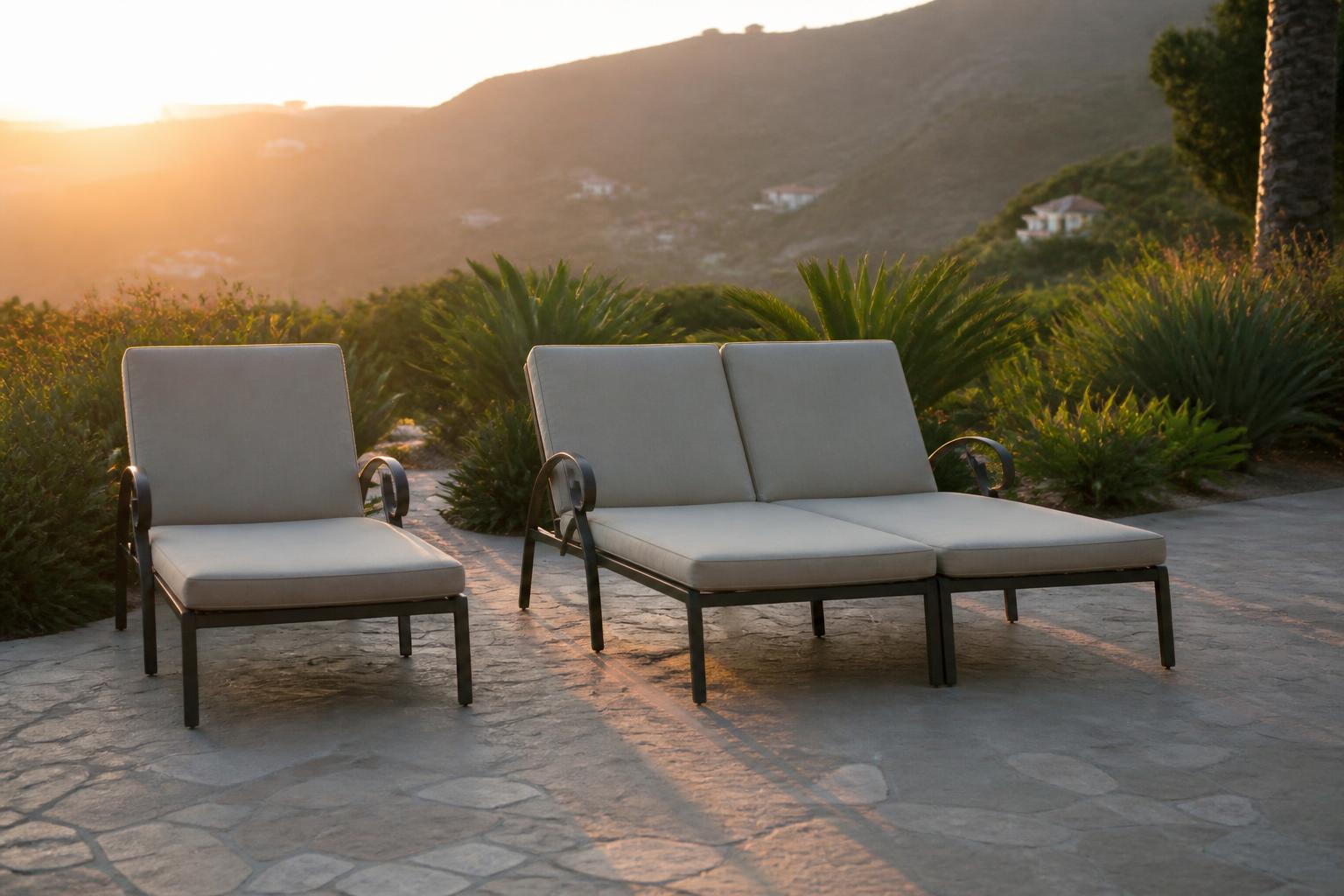
Cast aluminum furniture is particularly good for stability due to its weight. A heavy cast aluminum dining chair is far less likely to slide or tip than a lightweight tubular aluminum chair. Similarly, heavier poly lumber pieces stay firmly planted even on uneven patio surfaces.
If your patio surface itself is uneven, consider adding adjustable leveling glides to chair and table legs. These small rubber feet screw in or out to compensate for surface irregularities, providing a solid, wobble-free base.
Table Design for Wheelchair Accessibility
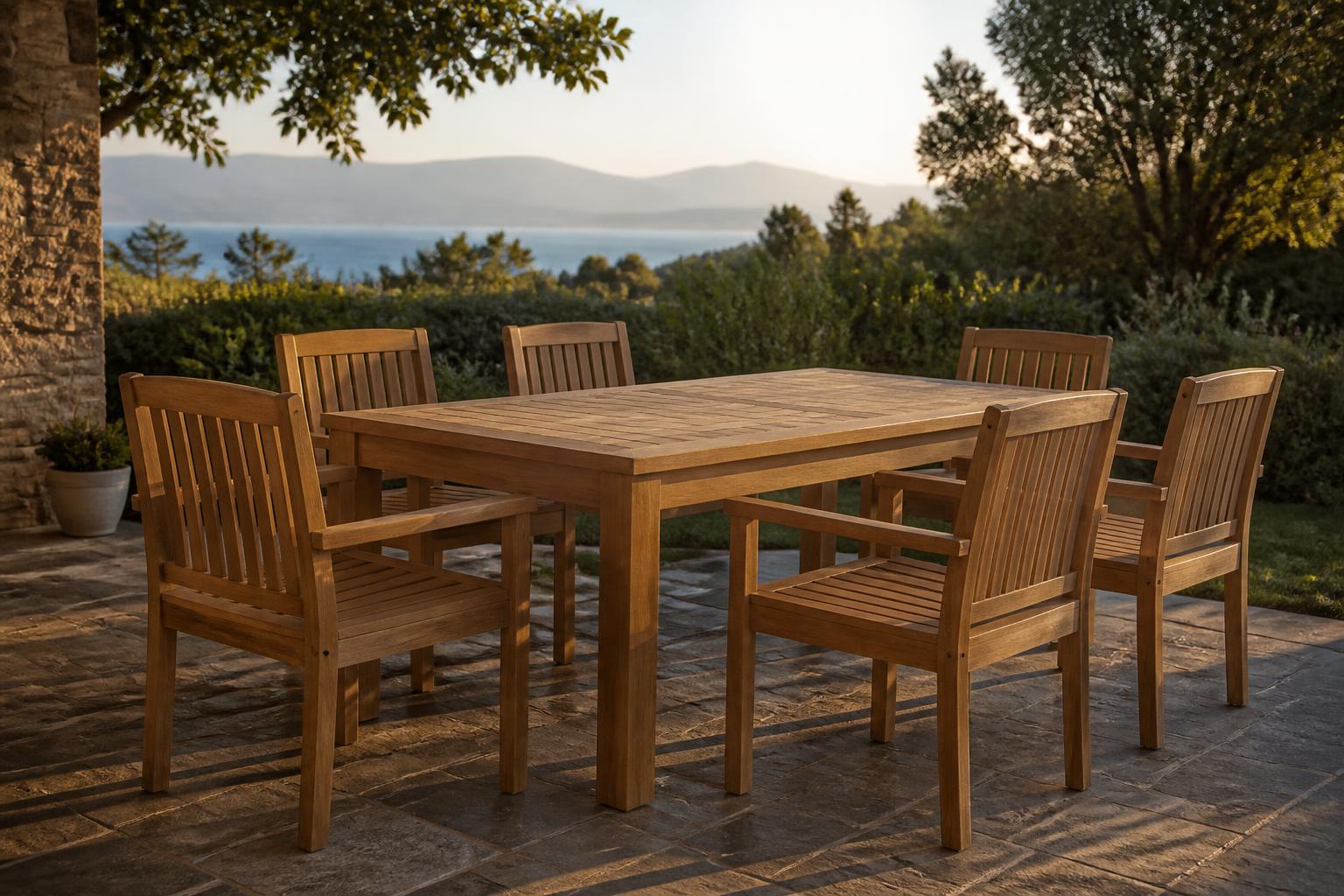
For households where someone uses a wheelchair, table design requires special attention. Standard pedestal-base tables often provide the best clearance for wheelchair access. The Americans with Disabilities Act (ADA) recommends a minimum knee clearance of 27 inches high, 30 inches wide, and 19 inches deep for accessible tables.
While residential furniture is not required to meet ADA standards, using them as a guideline ensures your outdoor dining table is genuinely usable for everyone. Avoid tables with legs or stretcher bars that obstruct knee space, and check that the tabletop height falls between 28 and 34 inches.
Cushion Considerations
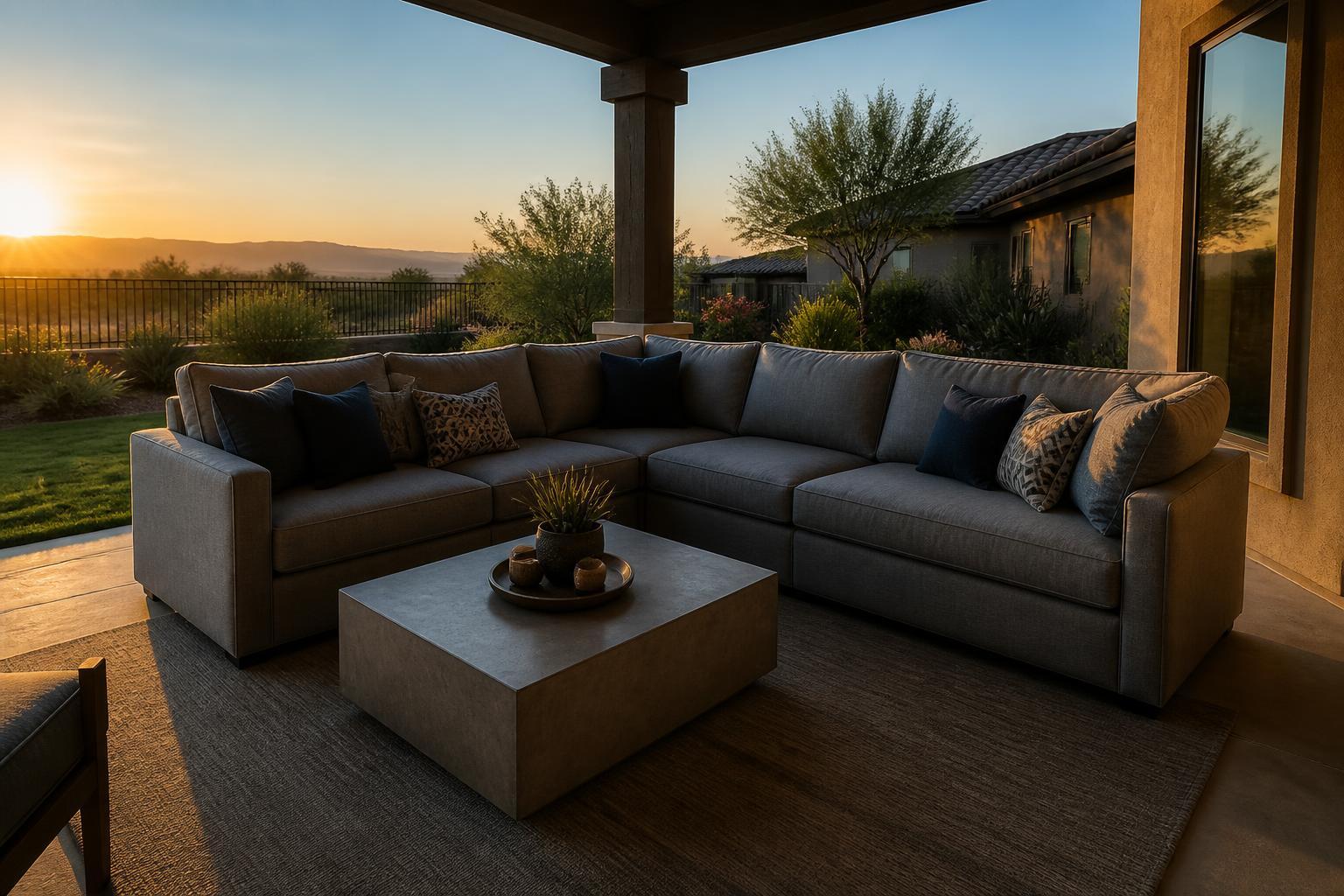
Cushion firmness plays a surprisingly large role in accessibility. Very soft, sink-in cushions make it harder to stand up because they do not provide a stable surface to push off from. For accessible seating, look for cushions with high-density foam that provides support without feeling hard. A firm cushion holds your weight near the surface, making the transition from sitting to standing much easier.
Cushion covers should also be easy to remove and clean. Accidents happen, and being able to pull off a zippered cover for washing is far more practical than trying to clean a permanently attached cushion. Solution-dyed acrylic fabrics are both durable and easy to clean, making them the best choice for accessible outdoor seating.
Pathway and Layout Considerations
Accessible furniture only works if people can get to it. Consider the pathways from your home to your patio. Are there steps that could be replaced with a ramp? Is the path at least 36 inches wide, the minimum for comfortable wheelchair or walker access? Is the surface smooth and stable, or is it loose gravel that makes walking and wheeling difficult?
On the patio itself, arrange furniture with generous spacing between pieces. At least 36 inches between chair backs or between furniture groups allows comfortable navigation. Avoid placing furniture in a way that creates obstacles or requires sharp turns to navigate.
Outdoor Furniture for Families Across Generations
Accessibility does not mean sacrificing style. Many of today’s most attractive outdoor collections are inherently accessible because they are well-designed. A beautifully proportioned dining set with proper seat height, sturdy armrests, and a pedestal table serves an active 30-year-old just as well as a 75-year-old with a hip replacement.
For Carolina families who host multi-generational gatherings, investing in universally accessible outdoor furniture means everyone from the grandchildren to the grandparents can enjoy the patio together, which is really the whole point of having outdoor space in the first place.
Frequently Asked Questions
What is the ideal seat height for outdoor chairs used by elderly family members?
For most older adults, a seat height between 17 and 19 inches provides the best balance of comfort and ease of use. This height allows most people to sit down and stand up without excessive strain on the knees and hips. Some manufacturers offer comfort-height models that sit slightly higher for those who need extra assistance.
Are rocking chairs safe for elderly users?
Traditional rocking chairs can be safe for many older adults and are even therapeutic, providing gentle motion that soothes joints. However, for individuals with significant balance issues or those who need armrest support to stand, a stable, non-rocking chair is safer. If you do choose a rocker, make sure it has wide, flat armrests and a controlled, gentle rocking motion rather than an aggressive arc.
Can outdoor furniture be both accessible and stylish?
Absolutely. Accessible design principles like proper seat height, sturdy construction, and supportive armrests are simply hallmarks of well-made furniture. Many premium outdoor collections meet accessibility needs without any compromise on aesthetics. Cast aluminum dining sets, poly lumber seating, and well-proportioned wicker collections all offer both beauty and function.
At Carolina Patio Furniture, we understand that your outdoor space should work for your whole family. Our team can help you select pieces with the right dimensions, stability, and comfort features for everyone in your household. Contact us today for a personalized consultation, and let us help you create a patio that welcomes everyone to the table.