
How to Arrange Patio Furniture Like a Designer
You have invested in quality outdoor furniture, but somehow the arrangement feels off. The chairs are too far apart for easy conversation. The walkway to the grill is blocked. The lounge area feels disconnected from the rest of the patio. Sound familiar? The good news is that arranging patio furniture effectively does not require a design degree. It requires understanding a few core principles that professional designers use every day.
Whether you are working with a sprawling backyard patio in Ballantyne or a compact condo terrace in Uptown Charlotte, these guidelines will help you create an outdoor space that looks intentional, functions smoothly, and feels genuinely inviting.
Step 1: Measure Your Space Before You Move Anything
The single most common furniture arrangement mistake is skipping measurements. Before you start pushing pieces around, grab a tape measure and document the dimensions of your patio or deck. Note the locations of doors, steps, railings, built-in features like fire pits or planters, and any permanent structures.
Sketch a rough overhead view of your space on paper or use a free online room planner. Mark the measurements and fixed elements. This simple step saves hours of trial-and-error rearranging and helps you identify the real usable area of your patio, which is almost always smaller than it looks when empty.
Step 2: Define Your Zones
Professional designers think in zones, not individual pieces. Every well-arranged patio has at least one clearly defined zone, and larger patios can support two or three. Common zones include:
Conversation Zone: This is the heart of most patios. Seating is arranged to facilitate face-to-face interaction, typically in a U-shape or circular configuration. Chairs and sofas should be no more than eight feet apart for comfortable conversation without raising your voice.
Dining Zone: A table and chairs positioned for easy access to the kitchen or grill. Allow at least 36 inches of clearance around the table so guests can pull out chairs and move comfortably. If your space connects to a kitchen door, keep the path between the door and the dining zone clear and direct.
Relaxation Zone: A quiet area with a chaise lounge, hammock, or a pair of Adirondack chairs set slightly apart from the main activity areas. This zone works best in a corner or along an edge of the patio where it can feel like its own small retreat.
Having distinct zones is what separates a thoughtfully designed patio from one that feels like furniture was placed randomly. Even on a small patio, you can create zones by using different furniture types or angling pieces to suggest separation.
Step 3: Establish Traffic Flow
Traffic flow is the invisible framework of good furniture arrangement. People need clear, intuitive paths to move through the space without bumping into furniture or squeezing through tight gaps. Plan for primary pathways that are at least 36 inches wide, and aim for 48 inches in high-traffic areas like the path from the back door to the yard.
A common mistake is placing a coffee table directly in the main walking path. Instead, position your conversation grouping to one side, allowing a clear corridor along the other. If your patio has multiple entry points, such as a door from the house and steps to the yard, make sure neither pathway is obstructed by furniture.
Step 4: Create a Focal Point
Every well-designed outdoor space has a focal point, something that draws the eye and anchors the arrangement. This could be a fire pit, a water feature, a striking piece of furniture, or even a view of your garden or the Charlotte skyline. Arrange your primary seating to face or surround the focal point.
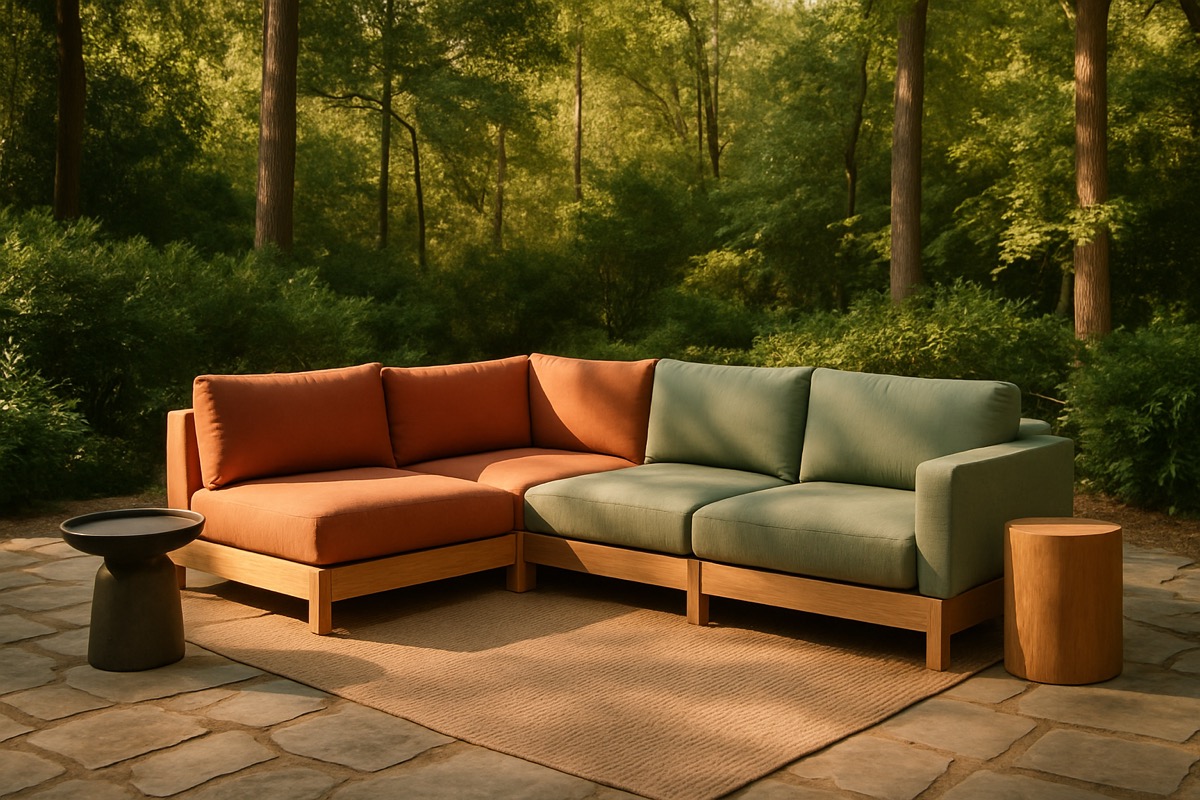
If your patio lacks an obvious focal point, create one. A beautiful outdoor sofa with colorful cushions, a statement dining table, or a large planter with cascading greenery can serve as the visual anchor around which everything else is organized. Browse our outdoor seating collection for pieces that can serve as a stunning focal point for your patio design.
Step 5: Balance the Arrangement
Visual balance means distributing visual weight evenly across the space. If you have a large sofa on one side of the patio, balance it with two chairs or a substantial side table on the opposite side. Avoid clustering all your furniture in one corner while leaving the rest of the patio empty.
Symmetrical arrangements, where matching pieces are placed on either side of a center point, create a formal, orderly look. Asymmetrical arrangements, where different but visually equal pieces are balanced across the space, feel more casual and relaxed. Neither approach is better; choose the one that matches the atmosphere you want.
Step 6: Layer in Accessories
Once the major pieces are placed, add layers that make the space feel complete. Side tables placed within arm’s reach of seating. An outdoor rug that defines the conversation zone. Lanterns or string lights that add warmth after dark. Throw pillows that introduce color and pattern.
Accessories are where your personal style really shows through, and they are the easiest elements to change seasonally if you want a fresh look. Our outdoor accessories page has options to complement any arrangement.
Common Arrangement Mistakes to Avoid
Pushing everything against the walls: This creates a waiting room feel. Pull furniture away from edges and into the center of zones for a more inviting atmosphere.
Ignoring scale: Oversized furniture on a small patio overwhelms the space. Undersized pieces on a large patio look lost. Match the scale of your furniture to the scale of your space.
Forgetting shade: In the Carolina sun, shade is not optional. Position seating where an umbrella, pergola, or tree canopy provides relief during the hottest hours. Nobody wants to sit in furniture that is in full sun at 2 PM in July.
Blocking the view: If your patio overlooks a garden, pool, or natural area, arrange furniture to frame the view rather than obstruct it. Low-profile pieces work well in front of scenic vistas.
For guidance on choosing the right pieces to fill your layout, our patio furniture buying guide covers materials, styles, and sizing considerations in detail.
Frequently Asked Questions
How much space do I need between furniture pieces?
Allow 14 to 18 inches between a sofa or chair and a coffee table so people can move their legs comfortably and set down drinks easily. Side tables should be within arm’s reach, roughly level with the chair arm. Leave at least 36 inches for walkways and 48 inches for primary traffic paths. Around a dining table, ensure 36 inches from the table edge to any wall or obstruction so chairs can be pulled out.
Can I mix different furniture styles on my patio?
Absolutely. Mixing styles adds character and keeps the space from looking like a showroom display. The key is to find a unifying element, whether that is a consistent color palette, a shared material, or a similar design era. For example, modern aluminum dining chairs can pair beautifully with a rustic wood table if they share a similar color tone.
How do I arrange furniture on an irregularly shaped patio?
Irregular shapes are actually an advantage because they naturally suggest separate zones. Use the widest area for your primary zone, such as dining or conversation, and tuck secondary zones into narrower or angled sections. Curved furniture pieces work well in rounded spaces, and angling rectangular furniture at 45 degrees can make odd corners feel intentional rather than awkward.
Need help visualizing the perfect layout for your outdoor space? The team at Carolina Patio Furniture has helped countless Charlotte-area homeowners find the right pieces and arrangements for their patios, porches, and decks. Contact us today to discuss your space and get personalized recommendations that bring your vision to life.