
Resin Wicker vs Natural Wicker: Which Lasts Longer?
Wicker furniture has graced porches and patios for well over a century, and it remains one of the most popular choices for outdoor living spaces across the Carolinas. But today’s wicker market includes two very different products: natural wicker, made from plant fibers like rattan, and resin wicker, a synthetic alternative engineered for outdoor performance. If you are trying to decide between the two, longevity is likely near the top of your priority list, especially given the investment that quality patio furniture represents.
Let us break down the real differences between resin wicker and natural wicker so you can make an informed choice for your Charlotte-area home.
What Is Natural Wicker?
Natural wicker refers to furniture woven from organic plant materials, most commonly rattan, but also bamboo, willow, and reed. Rattan is a climbing palm vine harvested primarily in Southeast Asia, and it has been the traditional material for wicker furniture for generations.
Natural wicker has an undeniable charm. The organic texture, subtle color variations, and handwoven character give it a warmth that many homeowners find irresistible. It feels connected to nature in a way that synthetic materials sometimes struggle to replicate.
However, natural wicker was originally designed as indoor furniture. When exposed to the elements, its plant-based fibers absorb moisture, which leads to swelling, warping, and eventually cracking. UV radiation from the sun breaks down the fibers over time, causing them to become brittle. In a humid climate like Charlotte’s, where summer humidity routinely exceeds 70 percent, natural wicker faces a constant battle against moisture-related deterioration.
What Is Resin Wicker?
Resin wicker, also called synthetic wicker or all-weather wicker, is made from extruded polyethylene (PE) or PVC strands woven over a metal frame, usually powder-coated aluminum. The synthetic strands are manufactured to mimic the look and texture of natural rattan while offering dramatically improved weather resistance.
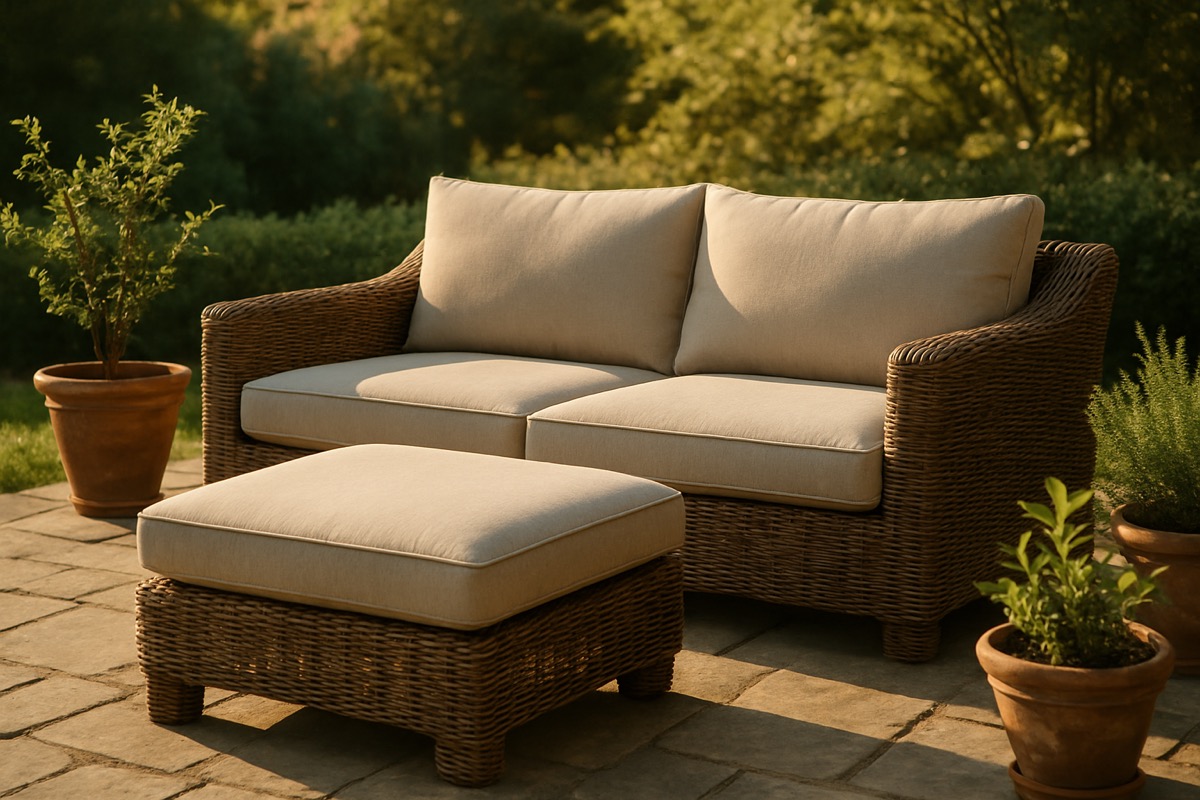
High-quality resin wicker is virtually indistinguishable from natural wicker at a glance. Manufacturers have refined the extrusion process to create strands with realistic color variations, textures, and even the slight irregularities that make natural wicker visually appealing. The result is furniture that captures the aesthetic of traditional wicker without the vulnerabilities.
Durability: The Head-to-Head Comparison
Moisture Resistance
This is where the gap between the two materials is most dramatic. Resin wicker does not absorb moisture at all. Rain, humidity, pool splashes, and morning dew have zero effect on the material. It will not swell, rot, or develop mold within the weave.
Natural wicker absorbs moisture readily. Even with protective coatings, water eventually penetrates the fibers, causing them to expand and contract repeatedly. Over time, this cycle loosens the weave, weakens joints, and creates entry points for mold and mildew. In the Carolina climate, this process accelerates significantly during the hot, humid months from May through September.
UV Resistance
Quality resin wicker includes UV stabilizers that prevent fading and brittleness from sun exposure. While some gradual color change may occur over many years, resin wicker maintains its structural integrity under UV radiation far longer than natural wicker.
Natural wicker fibers break down under UV exposure, becoming dry, brittle, and prone to snapping. If your patio or porch receives direct sunlight for several hours each day, natural wicker will show significant degradation within a few seasons.
Structural Longevity
Resin wicker woven over aluminum frames creates a furniture piece with two highly durable components. The aluminum frame resists rust and maintains its shape, while the resin weave holds firmly over years of use. Well-maintained resin wicker furniture routinely lasts 10 to 15 years or longer.
Natural wicker furniture, when kept indoors or on a well-protected screened porch, can last decades. But used outdoors with regular weather exposure, even high-quality natural wicker typically shows significant wear within 3 to 5 years in a climate like North Carolina’s. Joints loosen, fibers crack, and the overall structure weakens.
Maintenance Requirements
Resin wicker requires minimal maintenance. Periodic washing with soap and water removes dirt, pollen, and grime. No sealing, staining, or protective coatings are needed. If a strand does come loose, which is rare with quality pieces, it can be repaired with a heat tool or adhesive.
Natural wicker demands considerably more attention. It should be kept dry or dried promptly after exposure to moisture. Periodic applications of protective sealant help extend its life. Loose weaves need to be repaired promptly before the damage spreads. And the furniture should ideally be stored indoors or covered during the off-season.
For a deeper exploration of wicker furniture options and care, our wicker patio furniture guide provides comprehensive advice on selection and maintenance.
Cost Comparison
Natural wicker furniture often carries a lower initial price point, especially for mass-produced imported pieces. However, the cost equation shifts significantly when you factor in lifespan and maintenance. Replacing natural wicker every few years quickly exceeds the one-time investment in quality resin wicker.
High-end resin wicker furniture costs more upfront but delivers a much lower cost per year of use. When you also consider the time saved on maintenance, resin wicker represents the better value for most outdoor applications.
When Natural Wicker Makes Sense
Despite its outdoor limitations, natural wicker still has its place. If you are furnishing a fully enclosed sunroom or a well-protected screened porch where the furniture will never face direct weather exposure, natural wicker can be a beautiful choice that lasts for many years. Its authentic texture and handcrafted character are genuinely special, and in a controlled environment, those qualities can be enjoyed without the durability concerns.
When Resin Wicker Is the Clear Winner
For any outdoor application where furniture will face rain, humidity, sun, or temperature swings, resin wicker is the practical choice. Open patios, pool decks, uncovered porches, and garden seating areas all call for the weather resistance that only synthetic wicker provides. Explore our resin wicker furniture collection to see the range of styles available.
Frequently Asked Questions
Can resin wicker be recycled at the end of its life?
Some resin wicker materials, particularly those made from polyethylene, can be recycled through specialized plastics recycling programs. The aluminum frames are highly recyclable through standard metal recycling. Check with your local Charlotte-area recycling center for specific acceptance guidelines, as programs vary by municipality.
Does resin wicker feel like natural wicker?
Modern high-quality resin wicker is very close in appearance and texture to natural wicker. It tends to feel slightly smoother and cooler to the touch. Some people actually prefer the feel of resin wicker because it does not have the rough spots or splinters that natural wicker can develop over time.
Can I paint or stain resin wicker to change its color?
Resin wicker does not accept traditional wood stains. However, it can be spray-painted with paints specifically formulated for plastics. Keep in mind that paint adds a surface layer that can chip or peel over time, reducing one of resin wicker’s main advantages, which is its maintenance-free finish. Choosing the right color at the time of purchase is the better approach.
Whether you are leaning toward resin wicker or exploring other materials for your outdoor space, Carolina Patio Furniture offers expert guidance to help Charlotte-area homeowners choose wisely. Reach out to our team for a personalized quote and recommendations tailored to your patio, porch, or deck.