

Before You Shop: Assess Your Space
The most common patio furniture mistake is buying pieces that are too large — or too small — for the space. Before you visit a showroom or browse online, take these steps:
Measure Your Patio
Grab a tape measure and record the full dimensions of your outdoor space. Note any obstacles: support columns, railings, door swings, grill locations, and planter positions. Sketch a rough layout on paper with measurements. This simple step prevents the most common buying regret: “It looked smaller in the store.”
Consider Your Layout
Think about how you’ll use the space. Do you primarily need a dining area for family meals? A lounge area for relaxation? Both? Here are common layout approaches:
- Dining focus: Table + chairs centered in the space, with enough room to pull chairs out (add 36 inches behind each chair)
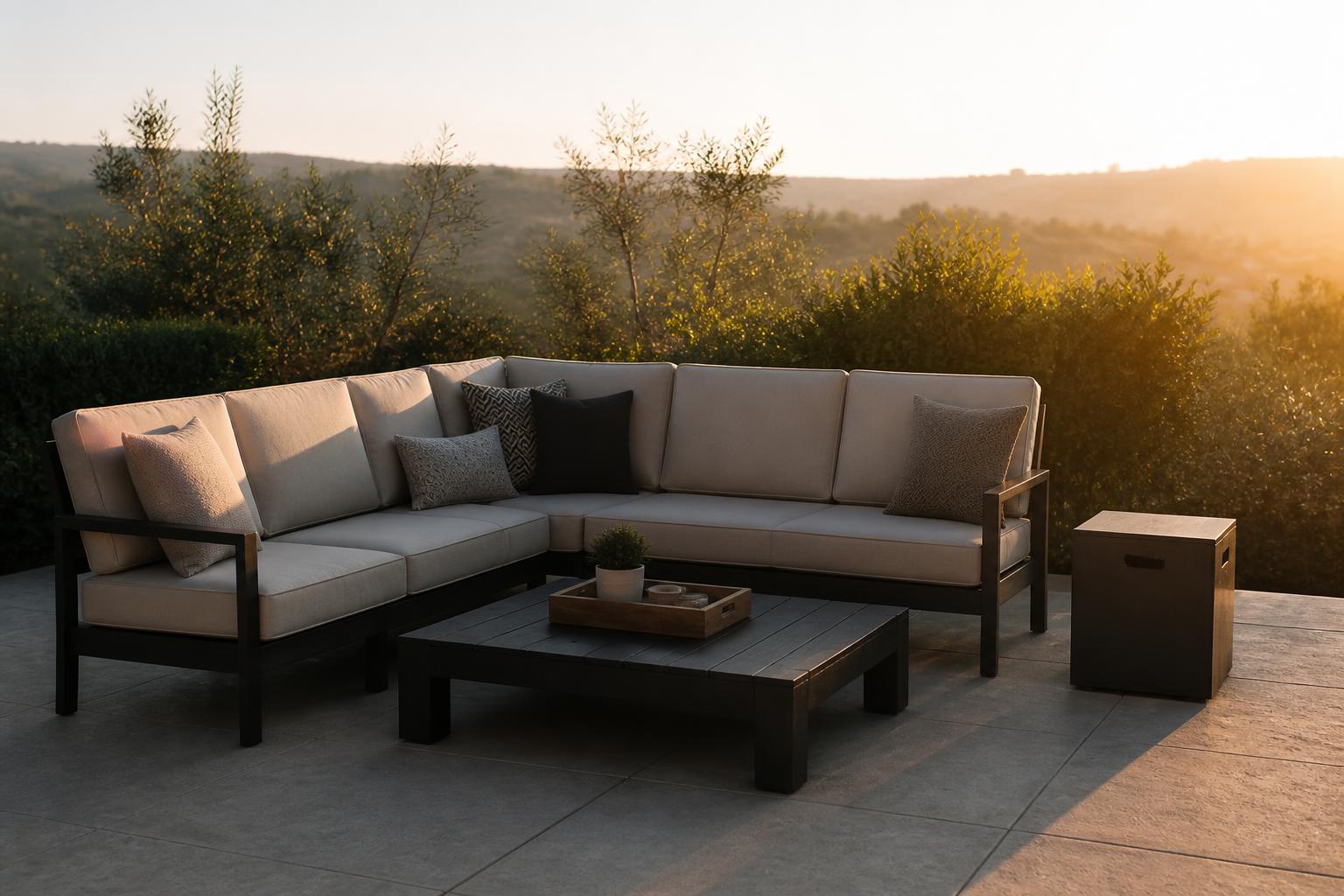
- Lounge focus: Deep seating arranged around a coffee table or fire pit, with side tables for drinks
- Mixed use: Dining set on one side, smaller seating group on the other — requires at least a 14×14-foot space to avoid feeling cramped
- Small space: Bistro set (2 chairs + small table) or a single loveseat with side table
The Complete Material Guide
The material you choose determines how your furniture looks, how long it lasts, and how much maintenance it needs. Here’s an honest comparison of every major material used in patio furniture today.
Wicker (Synthetic Resin)
Synthetic wicker furniture is the most popular choice for residential outdoor spaces — and has been for the past two decades. PE resin strands woven over aluminum frames create furniture that looks warm and inviting while handling anything the weather throws at it. No rust, no rot, no fading, no mildew. Available in multiple colors and weave styles.
Best for: Most patios, covered and uncovered, any climate
Maintenance: Low — occasional soap and water wash
Lifespan: 10-15 years
Aluminum
Lightweight, rust-proof, and available in both modern (extruded/tubular) and traditional (cast) styles. Extruded aluminum furniture has clean, contemporary lines. Cast aluminum offers ornate, traditional patterns. Both types are powder-coated for color and additional weather protection.
Best for: Modern spaces, rooftop patios (weight matters), areas with salt air
Maintenance: Low — wipe down, occasional touch-up of powder coating if chipped
Lifespan: 15-20 years
Cast Aluminum
Molten aluminum poured into decorative molds creates furniture with intricate patterns impossible with other metals. Heavier than extruded aluminum but still lighter than wrought iron. The casting process allows for comfortable contoured seats without cushions.
Best for: Traditional, formal outdoor spaces
Maintenance: Low — touch up with matching spray paint if needed
Lifespan: 20+ years
Poly Lumber (HDPE)
Made from recycled high-density polyethylene, poly lumber furniture is the ultimate “set it and forget it” option. It mimics the look of painted wood without any of the maintenance — no painting, staining, or sealing, ever. Colors go all the way through the material, so scratches don’t show a different color underneath.
Best for: Adirondack chairs, casual dining, poolside, lakefront
Maintenance: Virtually none — soap and water only
Lifespan: 25+ years
Teak
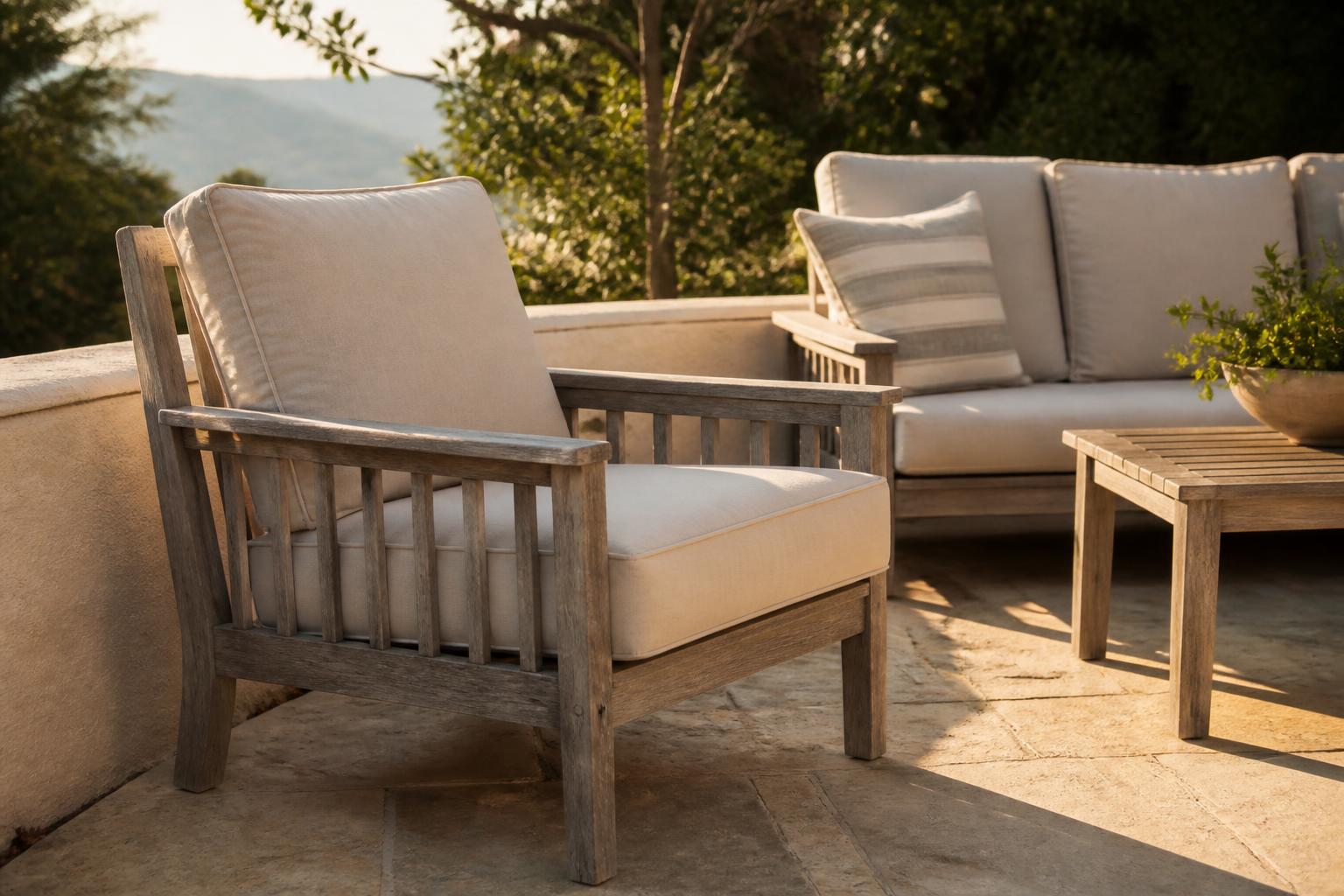
The premium hardwood choice for outdoor furniture. Teak’s natural oils make it naturally resistant to water, insects, and rot without any chemical treatment. It starts golden-brown and weathers to silver-gray over time. Teak furniture is an investment — expect to pay more — but it rewards you with decades of beauty and durability.
Best for: High-end patios, modern and traditional styles
Maintenance: Low to moderate — annual teak oil if you want to preserve the golden color, or let it age naturally
Lifespan: 25-50 years
PVC Pipe
PVC pipe furniture uses marine-grade PVC tubing with UV-stabilized resin. It’s lightweight, completely waterproof, and available with sling-style or cushioned seating. PVC pipe furniture is particularly popular for pool areas and coastal homes because it handles chlorine, salt, and constant moisture without degradation.
Best for: Pool decks, coastal environments, casual outdoor dining
Maintenance: Very low — rinse with hose
Lifespan: 10-15 years
Matching Style to Your Home
Your outdoor furniture should feel like a natural extension of your home’s interior style. Here are general guidelines:
- Contemporary homes: Clean-lined aluminum or modern wicker in neutral tones
- Traditional homes: Cast aluminum, teak, or classic wicker in warm finishes
- Coastal / beach style: White or natural wicker, PVC sling furniture, poly lumber in nautical colors
- Farmhouse: Poly lumber or teak with simple, sturdy designs
- Eclectic: Mix materials — wicker dining with poly lumber accents, or aluminum frames with colorful cushions
That said, outdoor spaces offer more freedom than indoor rooms. Your patio can establish its own personality — don’t feel locked into matching your interior perfectly.
Budget: What to Expect
Patio furniture pricing varies dramatically based on material, brand, and where you buy. Here’s a realistic budget guide:
- Entry level ($500-$1,500): Basic resin or steel frame sets from mass retailers. Functional but typically shorter-lived (2-5 years).
- Mid-range ($1,500-$4,000): Quality synthetic wicker, aluminum, or poly lumber sets. This is where durability meets value — expect 10-15+ years of use.
- Premium ($4,000-$10,000+): Teak, high-end cast aluminum, or designer collections. Investment pieces that last decades.
Factory-Direct vs. Retail Markup
One of the biggest factors in patio furniture pricing isn’t the material — it’s the supply chain. Furniture that passes through a manufacturer, a distributor, a showroom, and a retailer accumulates markup at every step. Factory-direct manufacturers like Carolina Patio Furniture cut out the middlemen, which typically means 20-40% savings compared to retail pricing for comparable quality.
This is why we always recommend visiting a manufacturer or factory showroom if one is available in your area. You’ll get better quality for less money, and you’ll be talking to people who actually build the furniture — not just sell it.
Why Shop Local vs. Online
Online patio furniture shopping offers convenience, but there are compelling reasons to shop in person:
- Comfort testing: You can’t test seat depth, cushion firmness, or back angle online. What looks great in photos might be uncomfortable in person — or vice versa.
- True color matching: Screens display colors differently. A “gray” wicker can lean blue, green, or brown depending on the manufacturer. In-person viewing eliminates color surprises.
- Quality assessment: Feel the weight of the frame. Test the weave tightness. Sit in the chair and shift around. These physical quality checks are impossible online.
- Fabric selection: If you’re choosing cushion fabrics, there’s no substitute for seeing actual swatches. Colors, textures, and patterns all look different in physical form.
- No shipping damage: Large furniture pieces often arrive damaged from online orders. In-person purchases eliminate shipping risk entirely.
- Expert guidance: Staff at specialized patio furniture stores can help with space planning, material selection, and maintenance questions — knowledge that generic online product descriptions can’t provide.
What to Look for in Quality Construction
Regardless of material, quality outdoor furniture shares certain construction characteristics:
- Joint quality: Look for welded (not bolted) aluminum joints. Bolts loosen over time; welds don’t.
- Frame thickness: Thicker-gauge aluminum tubing, wider PVC pipes, and heavier poly lumber all indicate higher quality.
- Weave consistency: In wicker furniture, the weave should be tight and uniform with no loose strands or visible gaps.
- Hardware: Stainless steel hardware resists corrosion. Plated steel hardware will eventually rust, especially in humid climates like Charlotte’s.
- Finish quality: Powder-coated finishes should be smooth and even. Look for consistency — thin spots or rough patches indicate rushed manufacturing.
- Glide/foot pads: Quality furniture has non-marking glides or foot pads that protect your patio surface and prevent wobbling.
Seasonal Buying Tips
Timing your purchase can stretch your budget:
- Best selection: February through April — new collections arrive and full inventory is available
- Best deals: September through November — end-of-season clearance on floor models and discontinued styles
- Avoid: May through July — peak demand means full pricing and some popular items selling out
- Custom orders: Plan 4-6 weeks for custom cushions and special orders. If you want custom furniture ready for spring, order by early March.
Carolina Patio Furniture: Our Charlotte Showroom
We’ve been manufacturing and selling outdoor furniture from our Charlotte location since 1979. Here’s what makes us different:
- Factory-direct: We build our wicker and PVC furniture on-site. No distributor markup, no retail markup.
- Full showroom: See complete collections set up as they’d look on your patio. Sit in every piece. Compare materials side by side.
- Custom capabilities: Custom cushions in any Sunbrella fabric, custom sizing, and custom configurations.
- Expert staff: Our team has decades of combined experience in outdoor furniture — we can help with everything from material selection to space planning.
- Local reputation: Over 45 years serving the Charlotte, NC metro area. Our business has grown through referrals and repeat customers.
Frequently Asked Questions
What patio furniture material lasts the longest?
Teak and poly lumber lead for longevity — both can last 25+ years with basic care. Cast aluminum comes close at 20+ years. Quality synthetic wicker over aluminum typically lasts 10-15 years. The “best” material depends on your aesthetic preference, budget, and willingness to maintain it.
How do I protect patio furniture from the weather?
Choose weather-appropriate materials (synthetic wicker, aluminum, poly lumber, or teak) and use furniture covers during extended non-use periods. For cushions, choose Sunbrella fabric and store cushions during winter months. In Charlotte’s climate, quality outdoor furniture handles year-round exposure — covers just extend the life further.
Is it worth buying expensive patio furniture?
Yes — if you plan to use it regularly. Cheap furniture that lasts 2-3 years and needs replacing actually costs more over 10 years than quality furniture bought once. The key is buying from a factory-direct source where “quality” doesn’t have to mean “expensive.”
What size patio table do I need?
Allow 24 inches of table width per person. A 48-inch round table seats 4 comfortably. A 60-inch round seats 6. Rectangular tables: 72 inches seats 6, 84 inches seats 8. Always add 36 inches around all sides of the table for chair movement.
Ready to Start Shopping?
The best first step is visiting a showroom where you can see, touch, and sit in the furniture. At Carolina Patio Furniture, you’ll find complete collections in wicker, aluminum, poly lumber, teak, and PVC — all at factory-direct prices. Our team will help you find the perfect pieces for your space, style, and budget.
Visit Carolina Patio Furniture in Charlotte, NC. Factory-direct outdoor furniture since 1979 — where quality meets value.
Related Patio Furniture Guides
These related articles cover the material and comfort questions shoppers usually ask before buying.