

During pollen season, outdoor furniture needs a cleaning routine that is simple enough to follow during busy spring weeks and thorough enough to keep cushions, frames, tables, and screened-porch surfaces from turning yellow again the day after you clean. In Charlotte and across the Carolinas, pollen can build up quickly on covered patios, open decks, and front porches, especially after dry windy days.
Carolina Patio Furniture helps homeowners choose outdoor furniture that fits the way they actually live outside. That includes thinking about cleaning before the set comes home. The best schedule depends on your furniture material, cushion fabric, tree cover, shade, and how often the space is used. Use this practical checklist to keep the patio ready for meals, guests, quiet mornings, and weekend use throughout pollen season.
Start With a Pollen Season Baseline

At the start of pollen season, give the whole outdoor area a baseline reset. Remove cushions, pillows, table accessories, umbrellas, covers, and loose decor. Brush or vacuum loose pollen before adding water. Rinsing heavy dry pollen immediately can create a paste that settles into seams, textured frames, cushion welts, and table edges.
Once the dry layer is removed, clean frames and hard surfaces with mild soap, warm water, and a soft cloth or soft-bristle brush. Avoid harsh abrasives on powder-coated aluminum, all-weather wicker, painted frames, glass, or tabletops. Rinse well and let everything dry before replacing cushions. If you are still comparing materials, the patio furniture buying guide can help you think through maintenance differences before you buy.
Daily or After-High-Pollen Quick Reset
During the heaviest pollen weeks, a short reset is better than waiting until the patio looks neglected. After high-pollen days, use a dry microfiber cloth, handheld blower on a gentle setting, or soft brush to remove the top layer from arms, backs, tables, and cushion surfaces. Keep the motion light so pollen lifts away instead of grinding into the fabric.
For dining tables, armrests, and side tables, wipe the surface with a damp cloth after brushing. If the patio is used every day, this five-minute habit keeps pollen from transferring to clothing, plates, and glassware. It also reduces how much buildup gets tracked inside through sliding doors.
The CDC notes that pollen levels vary by season and region, so your schedule should tighten during peak weeks and relax after the yellow layer fades. Treat the calendar as a guide, then adjust based on what you actually see on the furniture.
Weekly Cleaning for Frames, Tables, and Cushions
Once a week, move beyond dusting. Rinse hard surfaces with clean water, then wash with mild soap where pollen has collected around frame joints, woven details, chair backs, and table edges. Wipe glass tabletops on both sides if pollen has settled underneath. For textured pieces, use a soft brush to reach creases without scratching the finish.
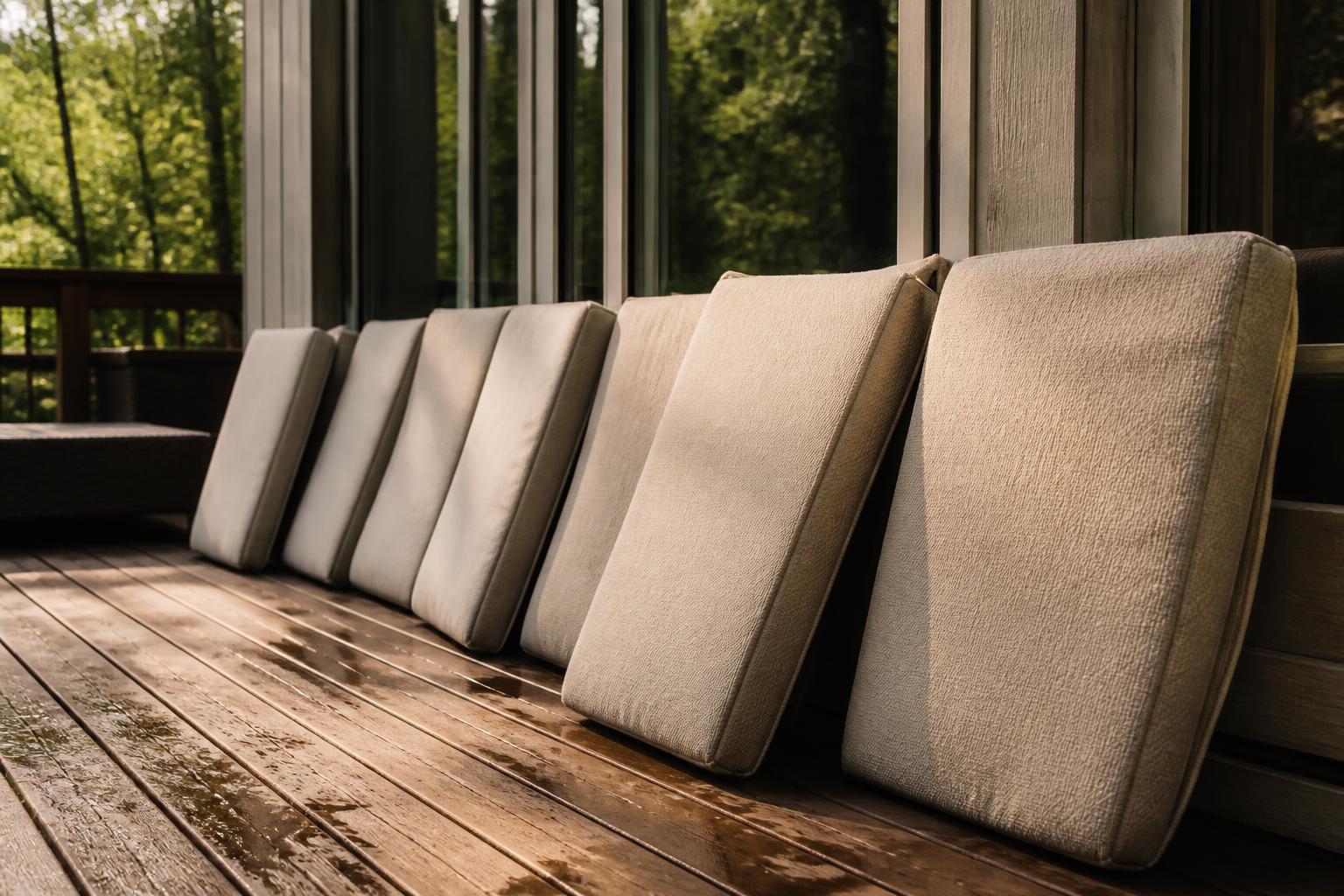
Cushions need a lighter approach. Brush the surface first, then spot-clean with the cleaner recommended for the fabric. Let cushions dry upright with good airflow before placing them flat again. If covers are removable and washable, follow the care label rather than guessing. Do not store damp cushions in a deck box or under a cover, because trapped moisture can create new cleaning problems even after the pollen is gone.
Keep a Small Cleaning Kit Near the Patio
The easiest schedule is the one you can follow without hunting for supplies. Keep a small outdoor cleaning kit nearby with microfiber cloths, a soft brush, mild soap, a bucket, and a breathable place to stand cushions while they dry. If the patio is used for meals, add a separate tablecloth or food-safe surface wipe so dining areas can be cleaned quickly before guests sit down.
Do not mix strong cleaners or use harsh products just because a patio set has a stubborn yellow layer. Most outdoor furniture needs gentler care than indoor hard surfaces. If a stain does not come off with mild soap and patience, check the manufacturer’s care guidance or ask the showroom before trying bleach, solvent, pressure washing, or abrasive pads. That extra caution protects finishes, fabric warranties, and the long-term look of the set.
For larger patios, label the kit by zone: dining table, lounge seating, cushions, and covers. That keeps the work from turning into one long chore and makes it easier for the whole household to help. A zoned approach also makes it easier to clean before a cookout or weekend visit because the highest-use pieces can be handled first. Start with the surfaces people touch most often, then move to frame joints, cushion backs, and less visible storage areas.
- Brush dry pollen before using water.
- Use mild soap and soft tools on outdoor-rated frames.
- Rinse hard surfaces completely so soap residue does not attract more dirt.
- Dry cushions upright before replacing or storing them.
Monthly Deep Clean During the Season

Once a month during pollen season, inspect the furniture more carefully. Check the underside of tables, chair glides, cushion ties, umbrella ribs, storage benches, and any place pollen can hide. Move furniture away from walls or screen panels and clean the floor underneath. This is also a good time to look for loose hardware, worn glides, sagging cushion inserts, or covers that are no longer breathing well.
If your furniture sits near trees, gutters, bird feeders, or heavy landscaping, monthly cleaning may need to happen every two or three weeks until pollen drops. Covered porches still need attention because screens, ceilings, and overhangs slow airflow and let fine dust settle on furniture even when rain is not reaching the space.
Adjust the Schedule by Material
Powder-coated aluminum, poly lumber, all-weather wicker, and outdoor fabrics can all work well, but they do not collect pollen in exactly the same way. Smooth frames usually wipe clean quickly. Woven textures need more brushing around the pattern. Glass shows pollen fastest, while matte finishes can look cleaner than they actually are. Cushions with light fabric may show yellow dust quickly, but darker fabrics still need cleaning because pollen is present even when it is less visible.
When you visit the showroom, ask how each material should be maintained during heavy pollen weeks. A set that looks right but needs a cleaning routine you will not follow may not be the best match. Carolina Patio Furniture can help compare frame materials, cushion fabrics, table styles, and covers with real cleaning habits in mind.
Frequently Asked Questions
How often should I clean outdoor furniture during pollen season?
Plan on a light reset after visibly high-pollen days, a more complete cleaning once a week, and a deeper inspection about once a month. If your patio sits under heavy tree cover, clean more often until the peak pollen layer drops.
Should I rinse pollen off with a hose?
Brush or wipe dry pollen first, then rinse. Water can turn heavy pollen into a sticky film, especially around seams, textured frames, and cushion edges.
Do furniture covers help during pollen season?
They can help when they are breathable and used on dry furniture. Avoid covering damp cushions or wet frames, and clean the cover itself so pollen is not transferred back to the furniture.
For help choosing outdoor furniture that fits your Charlotte patio and cleaning routine, call (704) 274-3222 or visit Carolina Patio Furniture.