

Patio furniture fabric choices affect comfort, color, drying time, maintenance, and how long your outdoor room looks fresh. In Charlotte, fabric has to handle strong sun, humid afternoons, pollen, heavy rain, and regular use from spring through fall. A pretty color is only part of the decision.

The right fabric plan starts with where the furniture sits. A covered porch, open pool deck, and full-sun dining area all need different levels of UV resistance, airflow, and cleanability. Use this guide to compare the most common options before you choose cushions, sling chairs, umbrellas, or accent pillows.
What Matters Most in Patio Furniture Fabric Choices
Outdoor fabric has three jobs. It needs to resist fading, shed or dry after moisture, and feel comfortable against skin. The best fabric for a shaded screened porch may not be the best choice for a sunny pool deck. Before choosing a pattern, think about exposure.
Full-sun spaces need strong UV resistance. The National Weather Service explains that UV and heat exposure increase during clear, hot conditions, and Charlotte patios can feel that strain through the long summer. You can review heat safety basics from the National Weather Service when planning shade and comfort for outdoor living spaces.
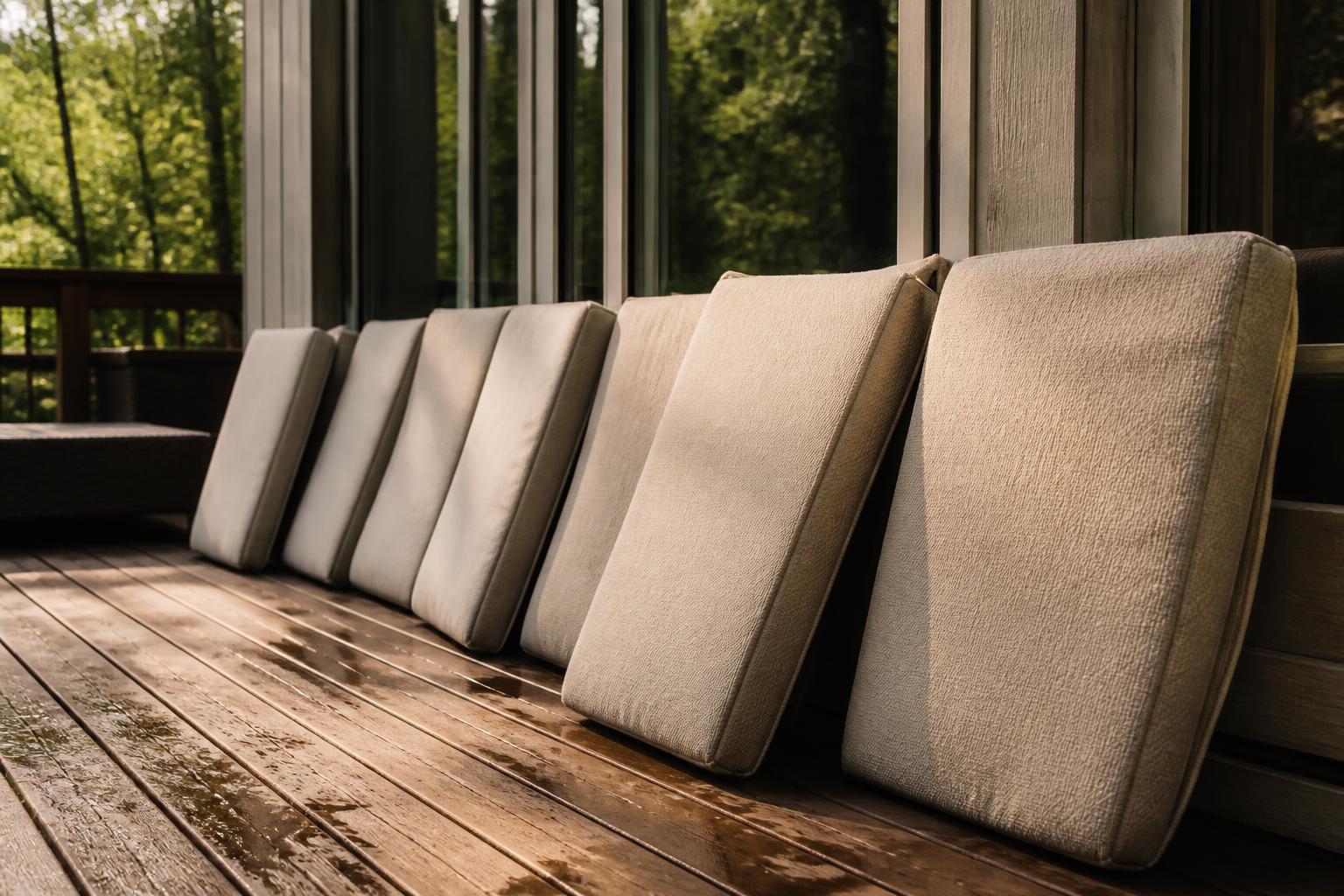
Rain exposure is different. Cushions that hold water feel uncomfortable and can develop odor if they dry slowly. Look for fabric paired with quick-dry foam, mesh bottoms, or construction that allows drainage. Fabric alone cannot solve a cushion design problem.
Solution-Dyed Acrylic for Color and Cushion Comfort
Solution-dyed acrylic is one of the strongest choices for upholstered outdoor cushions. The color runs through the fiber instead of sitting only on the surface, which helps resist fading. This fabric type is common on premium cushions, deep seating, pillows, and umbrellas.
It is a good fit for homeowners who want more color options. Solids, stripes, textured neutrals, and patterned pillows all hold their appearance better when the fabric is made for outdoor use. Sunbrella offers a useful outdoor fabric cleaning guide that explains why routine cleaning and air drying matter.
Solution-dyed acrylic is not maintenance-free. Pollen, leaves, food, sunscreen, and mildew-prone debris still need cleaning. The advantage is that quality fabric can be cleaned without quickly losing color or breaking down.
Olefin, Polyester, and Sling Fabrics
Olefin is another common outdoor fabric option. It usually dries quickly, resists staining, and can be a strong value. It may not always offer the same premium hand or long-term fade performance as top acrylic lines, but it works well for many family patios and casual seating areas.
Polyester varies widely. Some outdoor polyesters include coatings and UV treatments, while lower-grade versions fade faster. If a cushion price looks too good to be true, ask what fabric is actually used and whether replacement cushions will be available later.
Sling fabric is a different category. Instead of a loose cushion, sling chairs use a tight woven fabric panel stretched across a frame. Sling seating dries quickly, takes up less visual space, and works well for dining chairs, poolside seating, and areas where cushions would be a hassle. See our patio furniture options when comparing cushioned seating against sling and mixed-material pieces.

Rain Performance Depends on the Whole Cushion
A fabric can be water resistant and still sit on a cushion that dries slowly. That is why you should ask about the cushion core, seams, zippers, and ventilation. Quick-dry foam or drainable cushion construction helps after a storm. Tight, closed cushions may need to be tilted or moved so water can escape.
For covered patios, you can prioritize softness and style. For uncovered patios, put drying time higher on the list. For pool decks, choose fabric and fill that can handle splashes, sunscreen, towels, and frequent cleaning.
Color and Pattern Choices for Charlotte Homes
Dark fabric can look sharp, but it absorbs more heat. Light neutrals stay cooler but show dirt faster. Mid-tone blues, grays, greens, and textured neutrals often strike a good balance for Carolina patios. If your home has brick, stone, or warm siding, bring photos to the showroom so cushion colors work with the house instead of fighting it.
Patterns are useful on pillows and accent cushions because they hide small marks and add personality. For large sectionals, many homeowners choose a durable neutral for the main cushions and rotate accent pillows seasonally.
Match Fabric to Placement, Not Just Color
The same fabric can perform differently depending on where it sits. Cushions under a covered porch face less direct UV exposure, so comfort, texture, and color coordination may lead the decision. Cushions in an open seating area need stronger fade resistance, faster drying, and easier cleaning because they take the full cycle of sun, rain, pollen, and humidity. Dining chairs may need a different fabric plan than lounge seating because they see more food, sunscreen, and movement.
Before choosing a fabric, look at the patio at the time of day you use it most. Morning sun, late-afternoon heat, and shaded areas all change how dark colors feel and how quickly cushions dry. If the furniture sits near trees, a pool, or a grill, ask how the fabric handles sap, chlorine, smoke, and frequent wiping. A showroom sample is useful, but it should be compared with the real conditions around the furniture.
Build a Cushion Plan That Can Be Maintained
Fabric is only one part of outdoor cushion performance. The cushion fill, seams, airflow, and frame design all affect how quickly moisture leaves the seat after a storm. A dense cushion on a flat base can hold water longer than a cushion designed with drainage and ventilation in mind. That is why two cushions covered in similar-looking fabric may feel very different after several wet weeks.
For busy Charlotte patios, keep the plan practical. Choose a durable main fabric for the largest cushions, use bolder colors on pillows that can be changed later, and keep cleaning expectations realistic. If you know cushions will stay outside most of the season, prioritize fade resistance and drying behavior before choosing a delicate texture. The best fabric choice is the one you still like after sun, rain, guests, and regular cleaning.
It is also worth comparing fabric samples beside the frame finish, flooring, wall color, and nearby landscaping. Outdoor light changes colors quickly, and a fabric that looks muted indoors can read much brighter in direct sun. Seeing the sample in context helps prevent expensive color regrets.
Frequently Asked Questions
What fabric is best for cushions in full sun?
Solution-dyed acrylic is usually the safest premium choice for strong sun because it resists fading better than many standard fabrics.
Do outdoor cushions need to be brought inside when it rains?
Not always, but cushions last longer when they are allowed to dry quickly. Tilt them after heavy rain, store them during long wet periods, and avoid covering damp cushions.
Is sling fabric better than cushions?
Sling fabric is better when quick drying and low maintenance matter most. Cushions are better when plush comfort and decorative flexibility are the priority.
How do I choose fabric color?
Start with the house exterior, shade level, and cleaning expectations. Then choose one durable main fabric and add smaller accents for color.
Carolina Patio Furniture can help you compare fabric samples in person and match them with frames, cushions, umbrellas, and layout needs. Visit our Charlotte showroom team or call (704) 274-3222 for help choosing outdoor fabric that fits sun, rain, comfort, and style.