
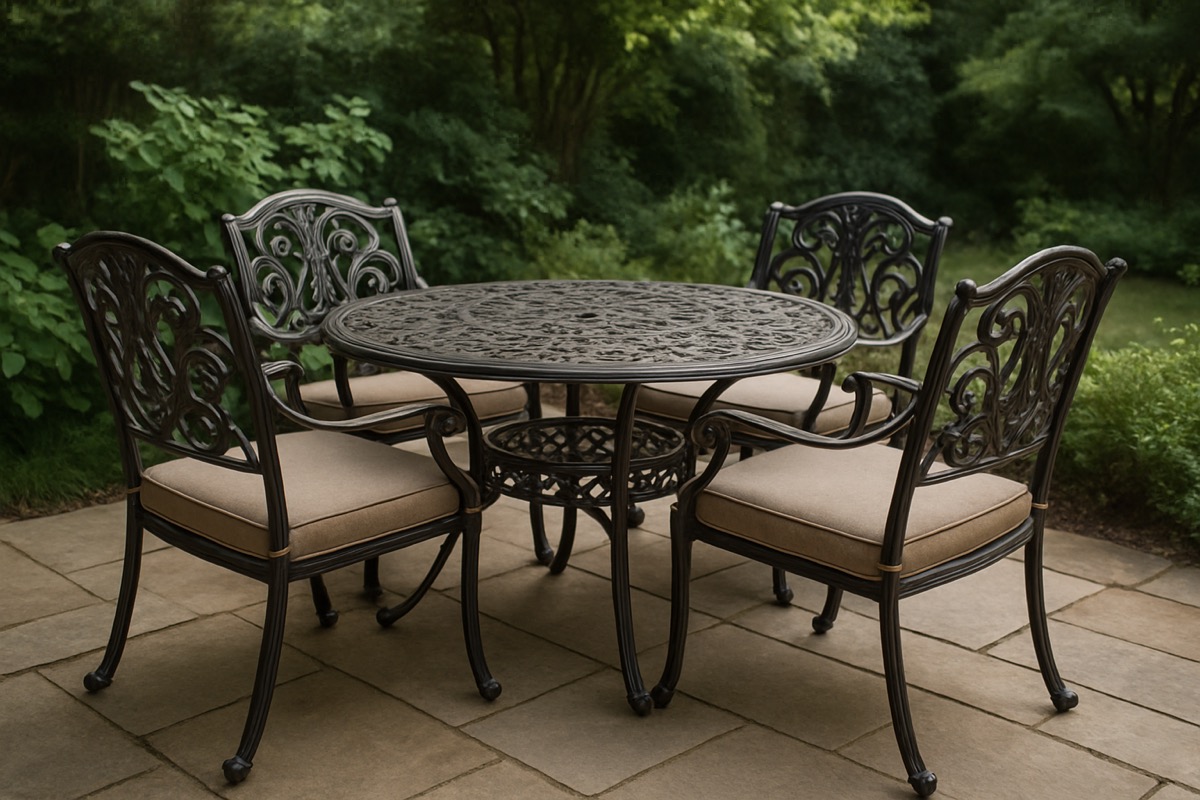
If you love the ornate, timeless look of metal patio furniture, you will quickly run into a choice between cast aluminum and wrought iron. From across the yard the two can look nearly identical, with the same elegant scrollwork and substantial presence. But they behave very differently over years of Carolina weather, and that difference should drive your decision. Here is a practical buyer’s guide.
The weight difference is bigger than you think
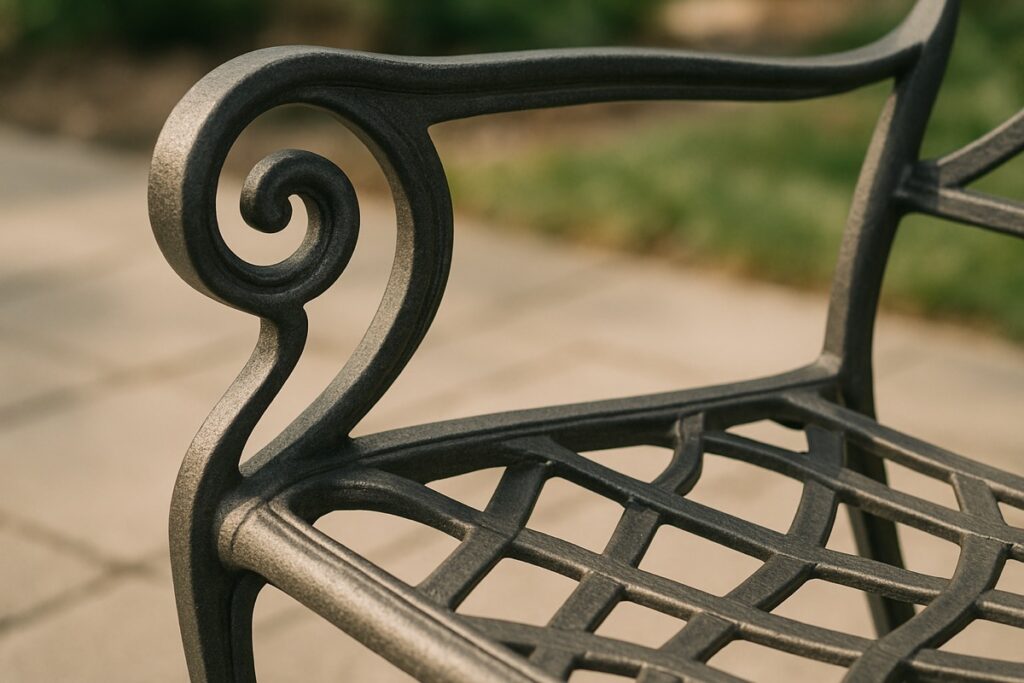
Wrought iron is heavy, and that weight is both its strength and its drawback. A wrought iron set stays put in a storm and feels rock-solid, which some homeowners love. But that same heft makes it a chore to move for cleaning, rearranging, or bringing pieces in for the season. Cast aluminum delivers a very similar ornate look at a fraction of the weight, so chairs are easy to slide out from a table and a set is simple to reconfigure when you entertain. For most homeowners, the lighter weight of cast aluminum is a daily convenience that adds up.
Rust is the deciding factor
This is where the two materials truly part ways. Wrought iron is steel-based, which means it can and eventually will rust where its protective finish is scratched or chipped, especially in the humid Carolina climate. Keeping it rust-free takes vigilance, touch-ups, and occasional refinishing. Cast aluminum simply does not rust. The aluminum itself is impervious to rust, so even a deep scratch will not start the orange creep that plagues iron. For a region with humid summers and plenty of rain, that single difference makes cast aluminum the lower-worry choice by a wide margin.
Comfort and how they feel to use
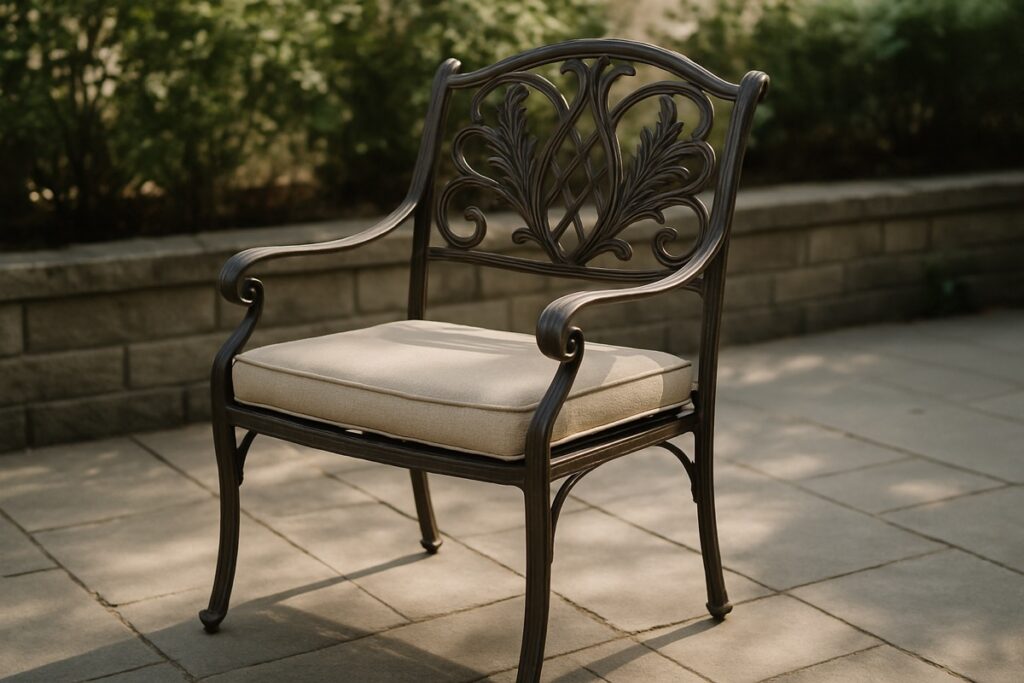
Both materials are firm by nature, so cushions do most of the comfort work in either case. The substantial feel of both cast aluminum and wrought iron means chairs do not flex or wobble, which is part of their appeal. Cast aluminum has the edge in one practical way: it heats up less aggressively in direct sun than dark iron can, though any metal benefits from cushions and a shaded spot during the hottest part of a Carolina afternoon. With quality cushions, both deliver a comfortable, planted seating experience.
Maintenance over the years
Cast aluminum asks very little: a wash with mild soap and water keeps it looking new, and the powder-coated finish holds its color for years. Wrought iron asks more, including regular inspection for chips, prompt touch-ups to prevent rust, and periodic refinishing to keep it looking its best and protected. If you enjoy the ritual of caring for a heirloom-quality set and do not mind the upkeep, iron rewards you. If you would rather spend weekends using the patio than maintaining it, cast aluminum is the clear pick.
Which should you choose?
For the vast majority of Carolina homeowners, cast aluminum is the smarter buy. It gives you the ornate, classic look that draws people to iron, without the weight or the rust worries, and it lasts beautifully with minimal maintenance. Wrought iron still has its devotees who love its unmatched heft and old-world character and are happy to maintain it. Knowing how each behaves in our climate, rather than just how it looks in the showroom, is what leads to a set you will be happy with for many seasons.
Value, longevity, and resale of your patio
It helps to think about a patio set as a long-term purchase rather than a seasonal one. Cast aluminum’s combination of durability and low maintenance means a quality set can serve your patio for many years while still looking its best, which spreads the cost out and makes it the better value for most homeowners despite a comparable upfront price to iron. There is also the matter of how the furniture ages. A cast aluminum set that has been lightly maintained still looks current and clean after years outdoors, while neglected wrought iron can develop rust spots and a tired appearance that are hard to reverse. If you ever sell your home, an attractive, well-kept outdoor space adds to the appeal, and furniture that has held up gracefully reflects well on the whole patio. For buyers who want a set they can enjoy and largely forget about, cast aluminum delivers the look people love with the durability the Carolina climate demands. That balance is why most of our customers end up choosing it.
How each handles a Carolina summer day by day
It helps to picture how each material actually lives through one of our summers. By late morning a dark wrought iron table sitting in full Charlotte sun can get genuinely hot to the touch, which is why bare iron almost always needs a cushion, an umbrella, or a shaded spot to be usable in the afternoon. Cast aluminum warms up too, but it sheds heat faster and tends to be more forgiving once a passing cloud or the shade of a tree moves over the patio. Pollen season is another real consideration around Lake Norman and the wider metro, where a yellow film settles over everything for weeks each spring. On cast aluminum, that pollen rinses off with a quick spray from the hose and a wipe, and the smooth powder-coated finish gives it nothing to cling to. Wrought iron’s more textured, scrollwork-heavy surfaces and any developing rough spots give pollen and grime more places to collect, so cleaning takes a little more effort. Then come the afternoon thunderstorms that roll through almost daily in July and August. Both metals shrug off the rain itself, but the lighter aluminum frame is the one you can quickly slide under cover or stack against a wall when a storm blows in, while a heavy iron set tends to stay exactly where it is and take the weather. None of this makes iron a poor material, but it does mean cast aluminum simply asks less of you across a typical humid Carolina season.
What to inspect before you buy either one
When you are standing in front of a metal set deciding whether to bring it home, a few quick checks tell you most of what you need to know about how it will hold up. Lift a chair and feel the weight and balance; a quality cast aluminum chair feels solid and planted rather than tinny or hollow, and a good iron chair feels substantial without sharp, unfinished edges. Run your hand along the joints and welds, since these are where weaker furniture fails first and where rust starts on iron. Look closely at the finish: on both materials you want a smooth, even powder coat with no thin spots, bubbling, or chips, because that finish is the first line of defense against the weather. On iron especially, ask how the piece is protected against rust and what touch-up the manufacturer recommends, so you know what you are signing up for. Check that the feet sit flat and have caps or glides that protect both the furniture and your patio surface, and gently rock the piece to confirm there is no wobble. Finally, ask about the warranty and what it covers, since the length and terms of a frame warranty are often a good signal of how confident the maker is in the metal and finish. Taking a few minutes to inspect a set this way, rather than judging it on looks alone, is the surest way to avoid a piece that photographs well in the showroom but disappoints on your patio. Our team is always glad to walk through these checks with you in person so you understand exactly what you are buying.
If you want a second opinion before you commit to either metal, Consumer Reports publishes independent, hands-on testing on how patio furniture materials wear over time, and that kind of unbiased data is a useful sanity check to read alongside seeing the actual sets in person on the showroom floor.
Frequently asked questions
Does cast aluminum rust? No. Aluminum does not rust, even when scratched, which makes it ideal for the humid Carolina climate.
Is wrought iron more durable than aluminum? Both are very durable. Iron is heavier and more storm-stable, but it can rust and needs more upkeep, while aluminum resists rust entirely.
Which is easier to move? Cast aluminum, by far. It offers a similar look at much lighter weight, making it easy to rearrange and clean around.
Ready to compare metal patio sets? Browse the collections in our shop, read about us on our about page, and reach out through our contact page or call (704) 274-3222 for help choosing the right set for your patio.