
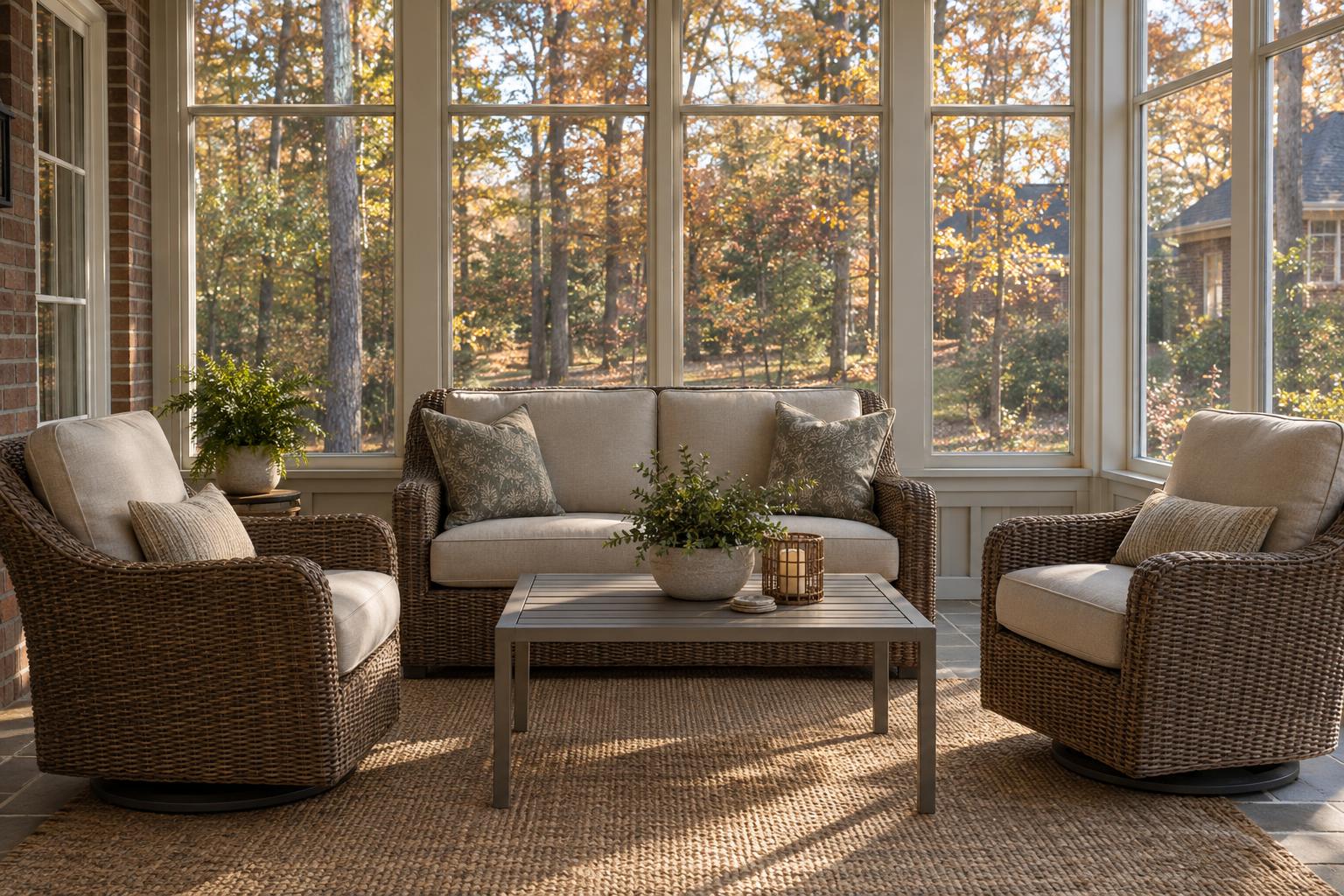

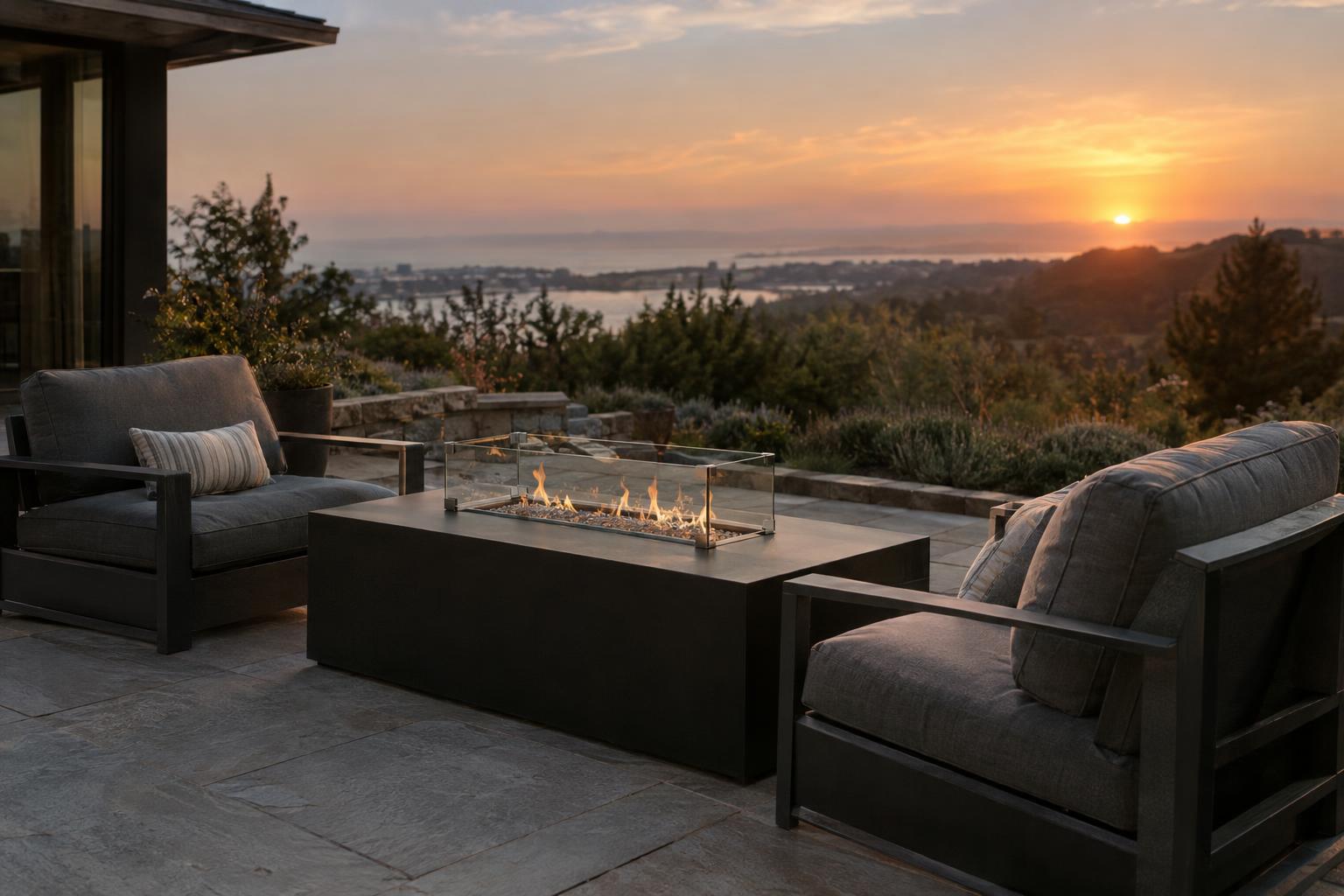
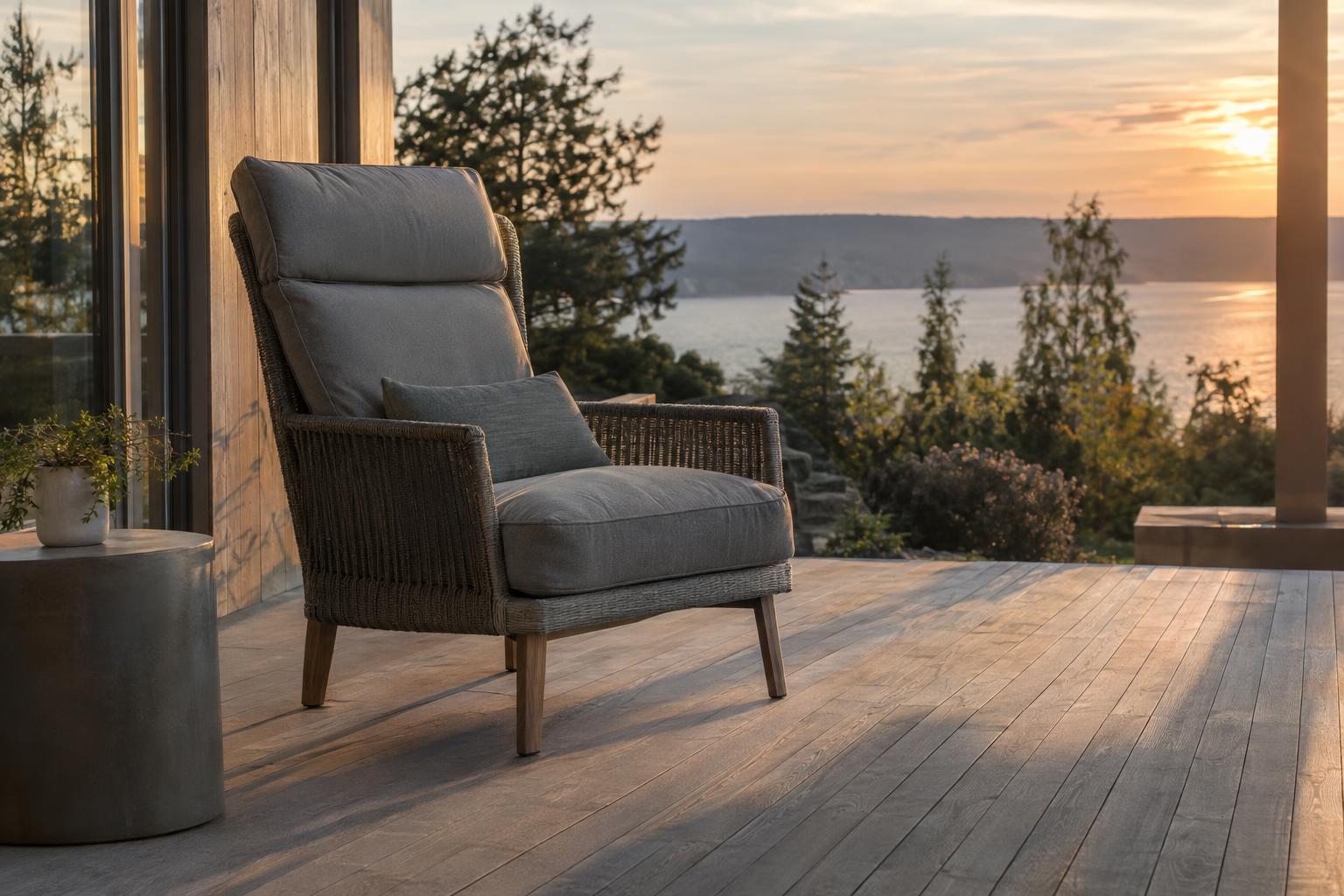
Shopping for outdoor furniture for tall people is mostly a matter of checking five dimensions that spec sheets often skip: seat height, seat depth, back height, arm height and the clearance under the table. A chair that looks generous in a photo can still leave your knees higher than your hips, your thighs unsupported and your shoulders hanging past the top of the back. This guide shows you what to measure and what to look for when you sit in a piece, so you can pick seating that stays comfortable through a long dinner or a lazy afternoon.
Start with seat height and where your knees land
Seat height decides how your legs sit before anything else does. When the seat is low, your knees rise above your hips, you push off with your arms to stand up, and the chair feels like a hole you have to climb out of. For a taller body, a seat that sits a little higher usually feels more natural, because your feet stay flat and your thighs stay roughly level.
Seat heights vary a lot by style. Dining chairs commonly measure somewhere around 17 to 19 inches from the floor to the top of the seat, while deep-seating lounge chairs often sit lower, and a plush cushion that is soft when new will compress further with use. If you want a closer look at how these numbers work, our patio chair seat height guide walks through the typical ranges and what each one feels like.
When you test a chair, sit all the way back and check three things: your feet rest flat without dangling, your knees are about level with your hips or slightly lower, and you can stand up without rocking forward first.
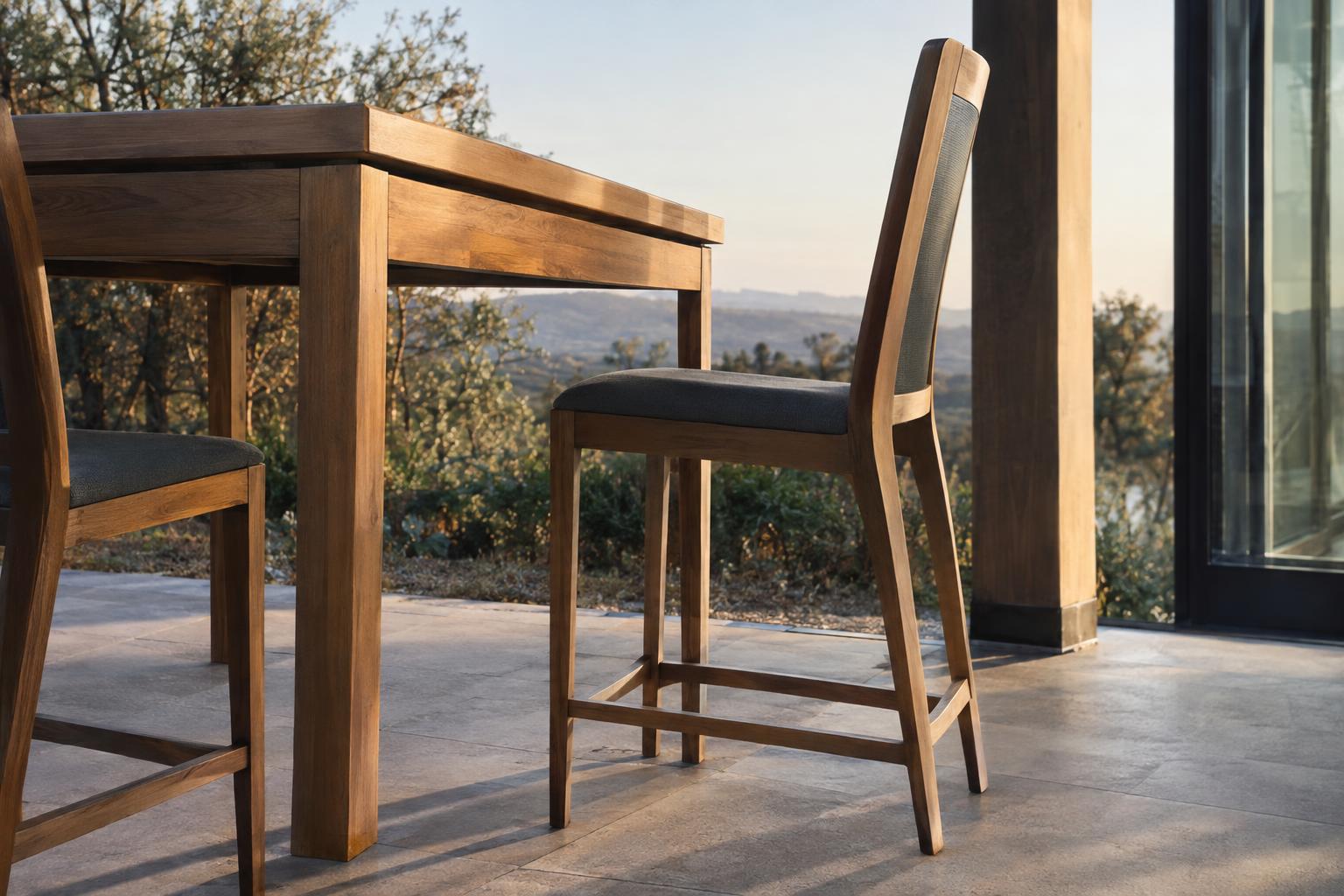
Seat depth: support under your thighs
Taller people have longer thighs, which means a shallow seat leaves part of your leg hanging unsupported. That puts pressure on the back of your hips and makes you feel like you are perched on the front edge. A deeper seat spreads your weight along the thigh and lets you lean into the back.
The opposite problem also exists. If the seat is deeper than your legs can use, the front edge presses into the back of your knees and you slide forward to relieve it. UCLA’s ergonomics guidance on selecting a chair describes the goal for an office chair as feet firmly supported and a gap of about one to two inches between the front edge of the seat and the back of your knees. Outdoor seating is more relaxed than a desk chair, so take that as a starting point rather than a rule.
Lounge seating usually runs deeper than dining seating. Our post on how deep outdoor lounge seating should be covers the typical depth ranges and how a loose back cushion changes the effective depth.
Back height and head support
A back that ends at your shoulder blades is fine for a short stay and tiring for a long one. Taller sitters often notice that the top rail hits the middle of their back, or that their head has nothing behind it when they recline. Look for a back that reaches at least the upper shoulders, and if you plan to lean back and relax, a high-back chair or a sofa with a taller back is worth testing.
Back height and the angle of the seat work together. A tall back on a seat that tilts steeply can push your head forward, while a gentler pitch lets your shoulders rest. Our guide to outdoor sofa back height and seat pitch explains how to read those two features together.
- Sit all the way back and see where the top of the frame meets your shoulders.
- Lean back as you would to talk with a friend and check whether your head is supported or pushed forward.
- Try the loose pillows in place and then without them, since pillows change the fit.
Arm height, table clearance and leg room
Arms that are too low make you hunch or hold your elbows out. Arms that are too high push your shoulders up. Dining armchairs commonly have arms that sit several inches above the seat, and the right height is the one where your forearms rest without lifting your shoulders.
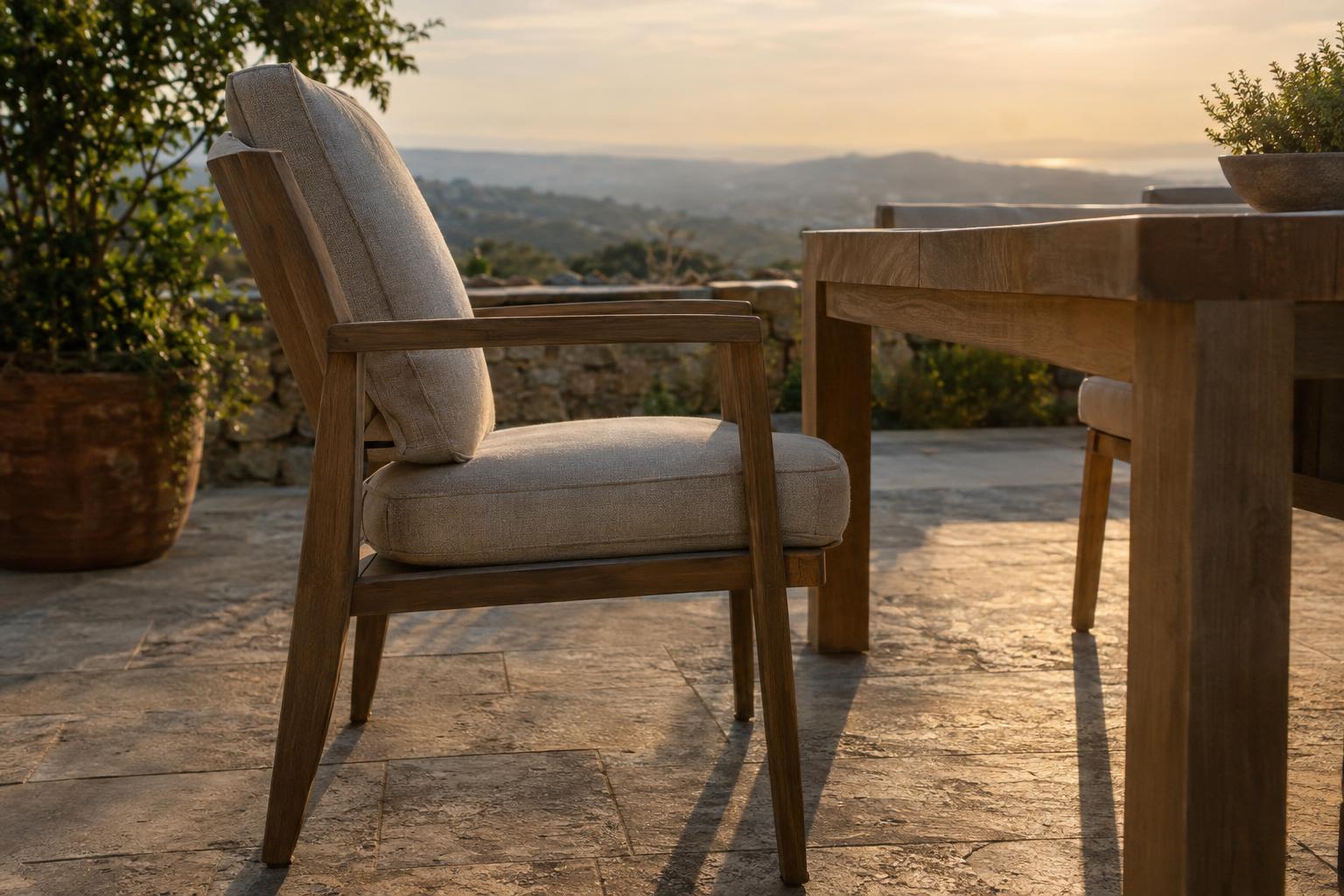
The table matters just as much. Standard dining tables are typically around 28 to 30 inches tall, and the apron (the frame under the tabletop) can reduce the space for your thighs. Before you buy, sit at the table with the chair pulled in as you would at dinner and check that your knees clear the underside. Pedestal bases and open legs usually give you more room than corner legs and deep aprons.
| What to check | What it tells you | What to try when you sit in a piece |
|---|---|---|
| Seat height | Whether your knees end up above your hips | Sit back and stand up without rocking |
| Seat depth | Whether your thighs are supported | Check the gap behind your knees |
| Back height | Whether your shoulders and head have support | Lean back and check the top rail |
| Arm height | Whether your shoulders stay relaxed | Rest your forearms and relax |
| Table clearance | Whether your knees clear the apron | Pull in as you would for dinner |
Chaise length and reclined comfort
A chaise that is too short leaves your feet hanging off the end, and a head cushion that sits too low leaves your neck bent. Chaise lengths vary by style, so do not assume one is long enough. Lie back fully, check where your feet land, and look at where the head rest meets your shoulders. Adjustable backs with several positions help, because you can settle on an angle that supports your neck without lifting your head.
Check how the chaise feels when it is reclined as well as upright. Some designs feel roomy sitting up but short once you stretch out.
Stability and frame strength for a bigger frame
Taller people often need a chair that stays steady when they sit down quickly, lean back or shift their weight. Ask how the frame joins together, whether the legs flare outward at the base, and whether a swivel or rocker moves smoothly without wobble. Rest your weight on the arms to see whether the chair flexes. Check the feet as well, because glides that sit flat on the ground help a chair stay stable on pavers or a deck.
Weight ratings vary by product, so ask about the rating for any specific piece rather than guessing from how it looks. Sit in each piece before deciding.
Frequently asked questions about outdoor furniture for taller people
Should I buy higher seats or lower seats if I am tall?
A slightly higher seat often feels better because your knees stay near hip level and standing up takes less effort. That said, a very high seat leaves your feet dangling, so aim for feet flat and thighs roughly level. Test dining chairs and lounge chairs separately, since their seat heights differ, and remember that cushions compress with use.
Do deep seats work better for taller people?
Often, yes. A deeper seat supports more of your thigh, which reduces pressure on your hips. The caution is that a seat deeper than your legs can use pushes the front edge into your knees. Sit all the way back and check the gap behind your knees, and use back cushions to adjust the effective depth.
What table height gives taller people enough leg room?
Standard dining tables are typically around 28 to 30 inches tall, but the apron and leg placement change your clearance as much as the height does. Sit at the table with the chair pulled in and check that your knees and thighs clear the underside. Pedestal bases or open legs generally give you the most room.
Can I test furniture before I buy?
Testing in person is the most reliable way to judge fit. Photos and spec sheets cannot show you how a seat feels under your legs. When you sit in a piece, sit all the way back, lean back, and check the gap behind your knees. Bring the people who will use the space.
If you are tall, the quickest way to find a good fit is to try the pieces yourself. Call us at (704) 274-3222 or visit our Charlotte showroom at Carolina Patio Furniture to sit in pieces and compare how each one supports you.