
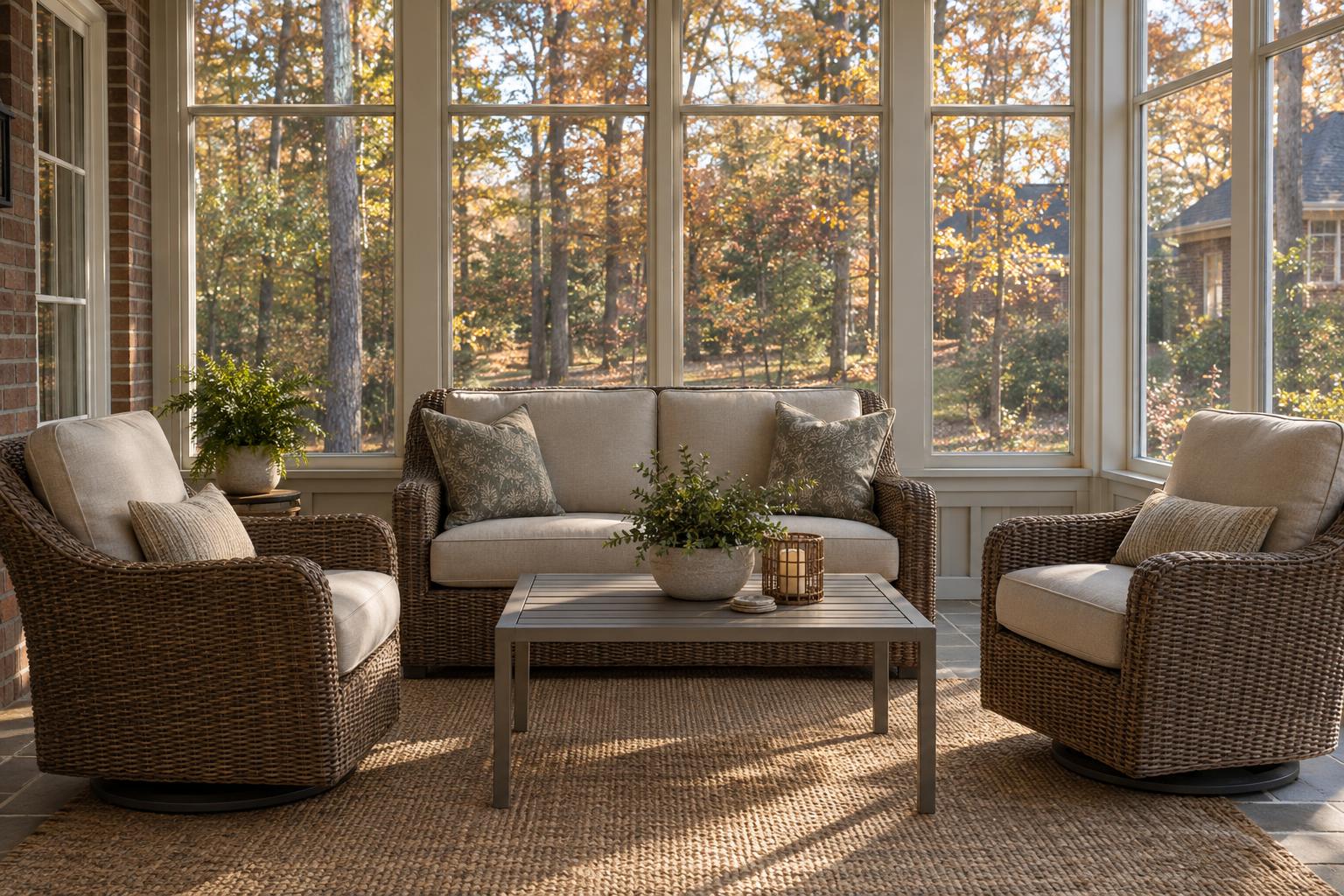
Selecting three season porch furniture for a Charlotte home requires balancing indoor living-room comfort with full outdoor weather resilience. Unlike an open roofed deck, which we cover in our guide to furniture for open-air covered porches, an enclosed three-season room uses vinyl Eze-Breeze panels, sliding glass windows, or convertible storm sashes that trap warm afternoon sun while shielding seating from windblown rain and heavy spring pollen. Because those enclosures remain unheated and uncooled when nobody is using the space, frames and fabrics still experience wide Piedmont temperature swings, damp autumn nights, and intense UV exposure through tall window walls.
Why Indoor Living Room Furniture Struggles in Unconditioned Enclosures
Homeowners converting a screened porch into a windowed three-season room are often tempted to furnish it with upholstered indoor sofas, veneered wood end tables, or iron lamps. Even without direct rainfall hitting the floor, unconditioned Carolina enclosures cycle from crisp 35-degree winter mornings to 85-degree greenhouse afternoons when low-angle sun streams through south- or west-facing panels. Standard indoor kiln-dried hardwood frames expand and contract across glue joints, medium-density fiberboard table cores swell when relative humidity rises after multiday storms, and untreated cotton or linen upholstery absorbs damp air and fades rapidly near glass.
Purpose-built outdoor all-weather resin wicker collections and powder-coated aluminum deep seating give a three-season room the tailored silhouette of an interior den without worrying about condensation on chilly glass or humid summer evenings when panels slide open for cross-breezes. Keeping air moving and choosing non-porous structural frames also aligns with U.S. Environmental Protection Agency moisture guidance for preventing dampness buildup inside semi-enclosed spaces.
Best Frame Materials for Windowed and Convertible Porches
Because sliding vinyl or glass panels block direct downpours and slow down airborne dust, you have wider stylistic freedom inside a three-season enclosure than on an exposed pool deck, while still relying on weather-proof construction:
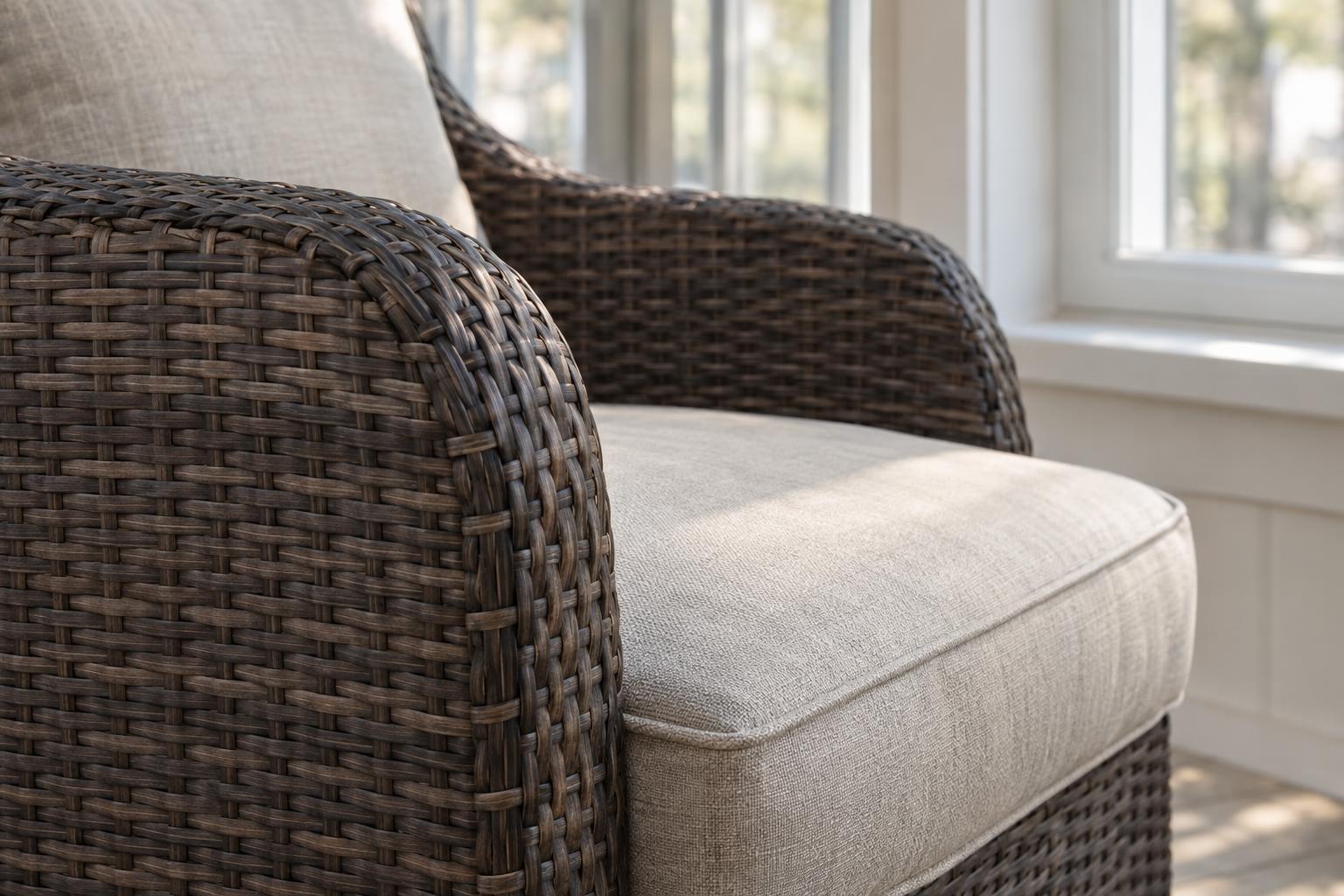
- High-density polyethylene (HDPE) resin wicker over aluminum frames: Woven seating softens the hard architectural lines of aluminum window mullions and brick house walls, creating a warm transitional lounge look without splintering or unraveling during dry winter weeks.
- Extruded and cast powder-coated aluminum: Slimmer arm profiles save valuable inches in narrow 10- or 12-foot-deep porch additions, and light frame weight makes it easy to pivot club chairs toward the backyard view or an indoor doorway when hosting.
- Teak and marine-grade polymer accents: Slatted teak or poly lumber end tables and coffee tables resist condensation rings from cold drinks and tolerate direct sunbeams magnified through clear window panes.
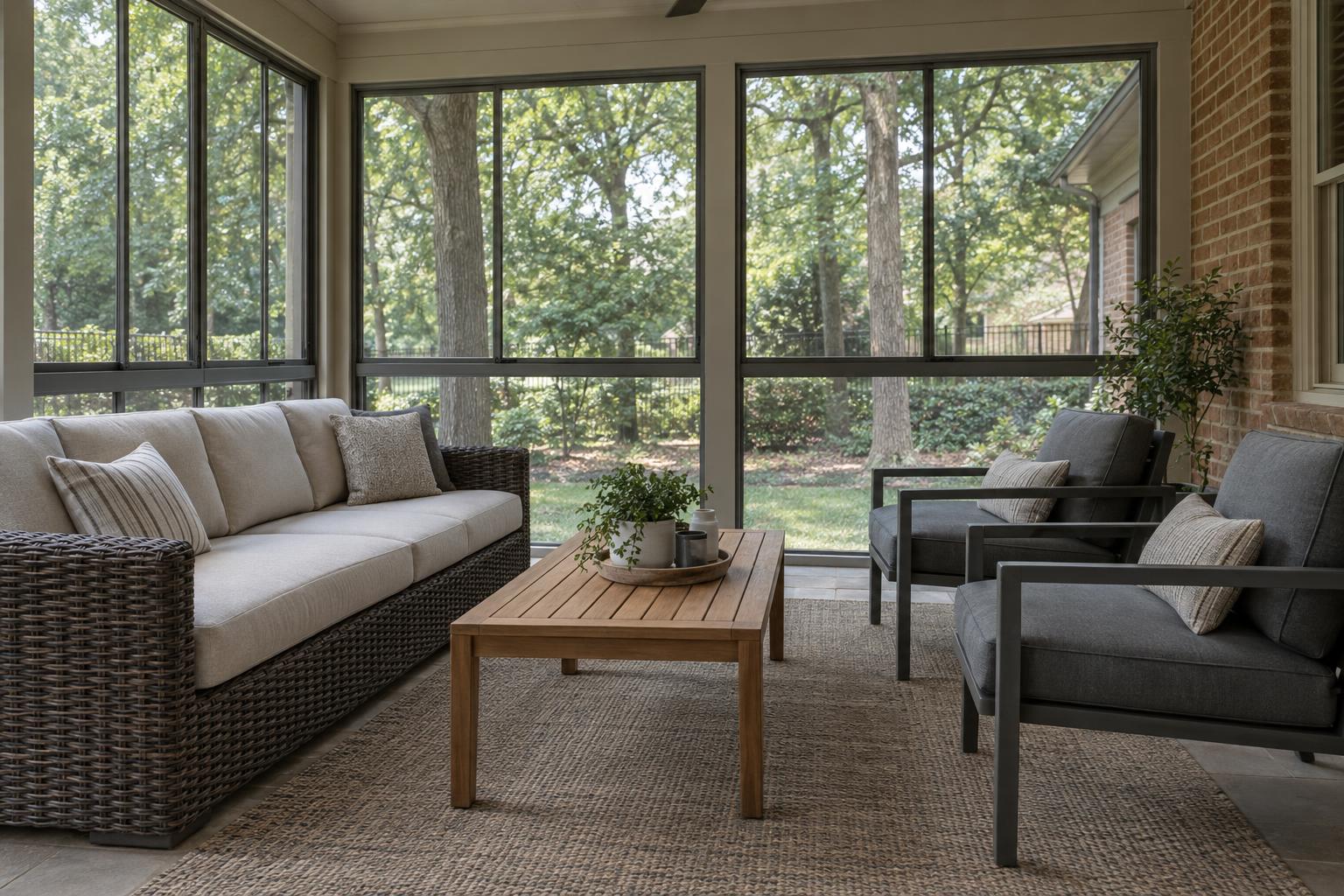
Measuring Narrow Porch Footprints and Sliding Panel Clearances
Most Charlotte three-season rooms are built over existing porch slabs measuring 10 to 14 feet deep, with a house French door or sliding door on the interior wall and operable window tracks wrapping three sides. Before visiting our Park Road showroom, record four critical dimensions on a quick floor sketch:
- Interior house door swing and threshold lane: Reserve a clean 36-inch walkway from the kitchen or family-room door to the exterior porch exit so sofa arms never block tray traffic.
- Window crank, latch, and track reach: Leave 14 to 18 inches of hand access, or place low end tables rather than tall sofa backs, along sections where you frequently raise and lower four-track vinyl panels.
- Ceiling fan blade drop and floor outlet locations: Measure vertical clearance if you plan to add a dining set under a low sloped porch roof, and note wall outlets for table lamps.
- Hallway and doorway delivery turns: Check the narrowest doorway width along the path into the enclosure so modular sectional pieces, loveseats, or dining tabletops pass through cleanly.
Fabric and Cushion Performance Behind Glass and Vinyl Panels
Clear glass and tinted vinyl panels filter some ultraviolet rays, yet concentrated afternoon sunbeams still bleach ordinary indoor textiles within a single season. Solution-dyed acrylic performance fabrics lock pigment all the way through each fiber rather than coating the yarn surface, keeping neutrals, navy blues, and greens crisp year after year. Vented cushion casings and breathable outdoor foam cores also prevent musty odors when you open the windows wide during spring and fall breezes.
In a three-season porch that doubles as a morning coffee nook and an evening card-playing room, pairing a compact two-cushion loveseat and two swivel rockers around an oval coffee table often leaves far better circulation than forcing a bulky indoor-scale sectional wall to wall. Adding a slender drop-in bistro or four-chair dining corner at the opposite end turns one rectangular room into two comfortable zones.
Care Habits That Keep Enclosed Porch Seating Fresh Year-Round
Even though window panels block most yellow pine pollen in April, fine dust still enters whenever screens are exposed. Vacuuming woven wicker crevices with a soft brush attachment once a month, wiping aluminum frames with mild soap and water, and rotating reversible seat cushions evenly between the sunniest window side and the shaded house-wall side keeps every seat wearing evenly across all four seasons.
During humid July afternoons after heavy Piedmont thunderstorms, cracking opposing window panels an inch or running a low-speed ceiling fan prevents warm, stagnant air from lingering around rug backing and under-seat decking. Before cold snaps arrive in January, check that vinyl panel weep holes along the exterior sill track are clear of autumn oak leaves so melting frost drains outward rather than wicking toward rug edges or table glides. Choosing open-weave outdoor area rugs made from polypropylene or solution-dyed acrylic, rather than jute, sisal, or wool indoor rugs, ensures the floor layer breathes just as effortlessly as the furniture resting on top of it.
Coordinating Dining and Lounge Zones in Longer Porch Additions
When a three-season enclosure spans 18 to 24 feet across the back of a two-story Charlotte home, breaking the floorplan into a primary conversation grouping and a secondary game or dining corner keeps furniture from lining the perimeter walls like a waiting room. Floating two swivel rockers in the center of the room acts as a natural divider: spin them toward the loveseat for evening conversation, or pivot them toward a compact 42-inch round bistro table when family visits for weekend brunch. Matching the powder-coat frame finish on your dining chairs to the accent tables beside your woven seating ties both zones together visually without requiring identical silhouettes everywhere.
Frequently Asked Questions About Three Season Porch Furniture
Do I need outdoor furniture covers inside a closed three-season room?
Covers are generally unnecessary when vinyl or glass panels remain closed against rain and pollen. Only use breathable covers if you leave panels wide open to screens for weeks during peak spring tree-pollen drop.
Will dark aluminum frames get too hot inside a sunny windowed porch?
Behind glass or tinted vinyl panels with normal roof overhang shade, powder-coated aluminum frames stay much cooler than furniture sitting in direct midday poolside sun, and cushioned seats insulate contact surfaces comfortably.
Is a loveseat or a three-seat sofa better in a 12-foot-wide porch?
In a 12-foot-wide room, placing a 55- to 60-inch loveseat perpendicular to the house wall or facing two swivel club chairs preserves a clean 36-inch walkway, whereas an 84-inch sofa placed crosswise can pinch traffic lanes.
Can I test resin wicker and aluminum seat depths in person before choosing?
Yes. You can browse collections in our online catalog, save favorites to My List, and sit-test wicker and aluminum deep seating side by side at our single Charlotte showroom on Park Road.
Compare Three-Season Porch Collections at Our Charlotte Showroom
Ready to measure seat depths, compare woven finishes, and plan three season porch furniture around your room dimensions? Stop by Carolina Patio Furniture at our showroom at 2438 Park Rd, Charlotte, NC 28203, call (704) 274-3222, or contact our Charlotte showroom team with your porch measurements before you visit.