
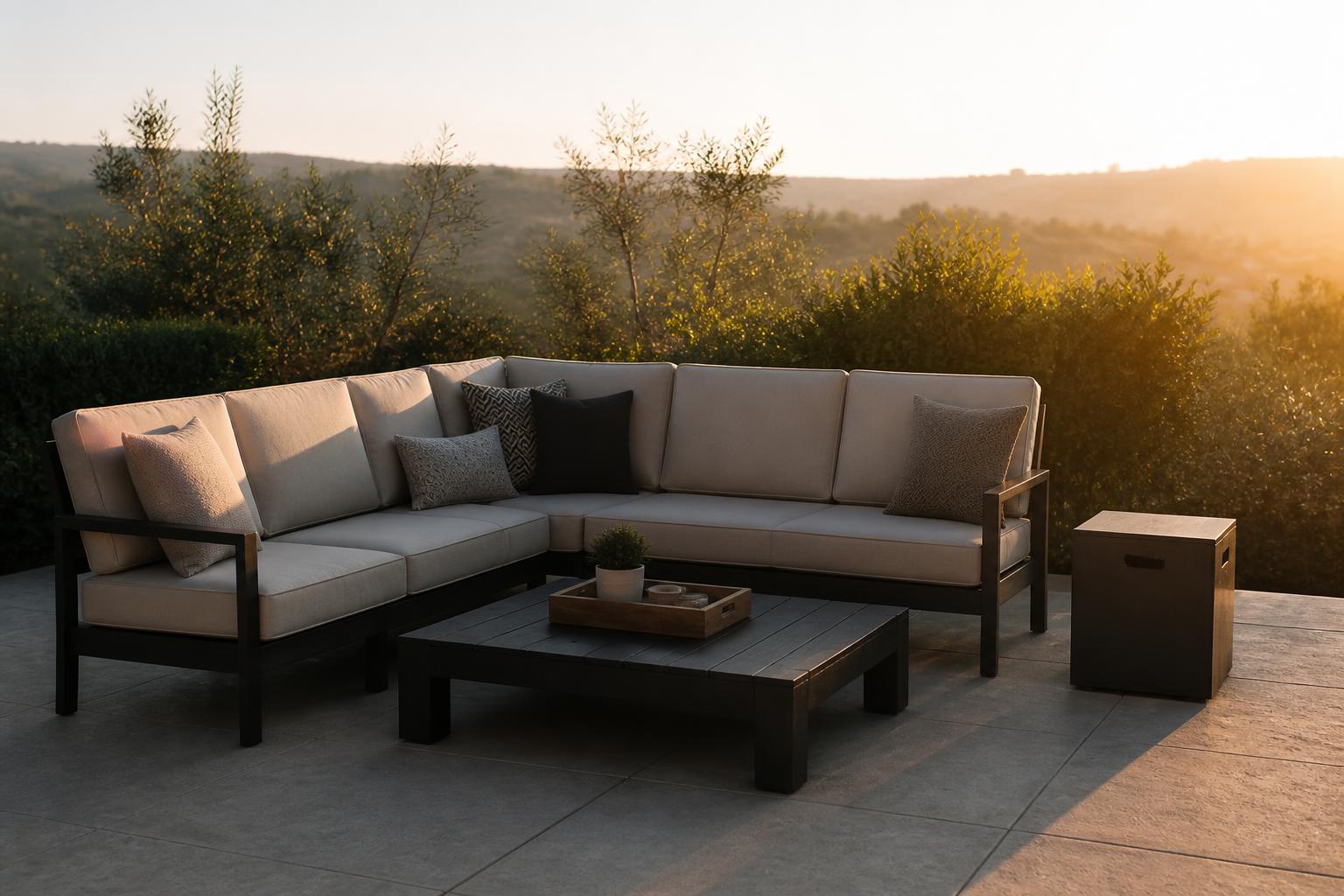
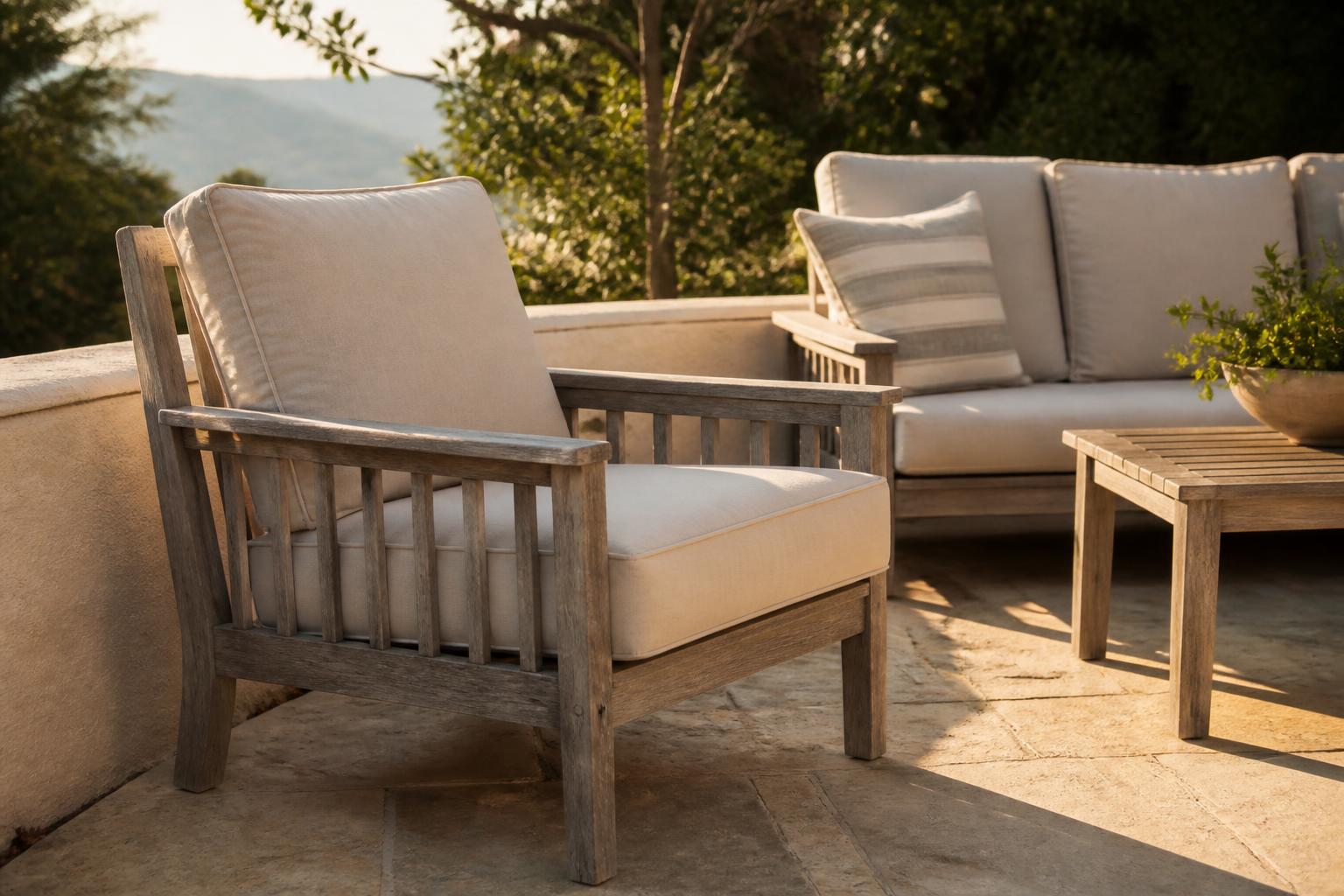
The club chair vs loveseat outdoor decision comes down to how many people you actually seat on a regular Tuesday evening versus how many show up for a holiday cookout twice a year. Both pieces have their place on a Charlotte patio, but they behave very differently once you start measuring floor space, walkway clearance, and how many bodies fit comfortably. This guide walks through the real dimensions, seating math, and layout tradeoffs so you can plan a seating area that works for your space instead of fighting it.
Footprint and Floor Space: What Each Piece Actually Takes Up
A typical outdoor club chair measures roughly 32 to 36 inches wide, 30 to 34 inches deep, and sits with an arm height around 24 inches — close to a standard indoor accent chair, just built with powder-coated aluminum or all-weather resin wicker instead of upholstered wood frames. An outdoor loveseat runs about 50 to 58 inches wide and shares similar depth, so it occupies nearly double the linear wall or wall-adjacent space of a single club chair while seating two.
That difference matters most on covered porches and smaller patios where you’re measuring in feet, not acres. If your seating area is 10 feet by 10 feet, a loveseat plus two club chairs plus a coffee table will likely crowd the walkways. Two club chairs and a loveseat need at least 30 inches of clearance on each side for people to walk through without turning sideways, and BIFMA-referenced commercial seating standards generally recommend similar clearances for stable, accessible traffic flow around furniture groupings.
Weight is another practical factor in the Carolinas, where spring storms and gusty afternoon fronts are common. A cast aluminum club chair typically weighs 25 to 40 pounds, while a loveseat in the same collection can run 60 to 90 pounds. The loveseat’s added weight actually helps it stay put in wind, while lighter club chairs may need tie-downs or a sheltered spot during storm season.
Seating Capacity Per Square Foot
If you’re optimizing for how many people you can seat in a given space, club chairs generally win on flexibility but lose on efficiency. Two club chairs seat two people in roughly 65 to 70 square feet of combined footprint plus clearance. A single loveseat seats two people in about 45 to 50 square feet, making it the more space-efficient choice per seat when floor space is tight.
Where club chairs pull ahead is arrangement flexibility. Because each chair is an independent unit, you can angle them toward a fire table, split them across two different conversation zones, or pull one chair out for extra seating when guests arrive — something a loveseat can’t do without becoming two mismatched pieces of furniture in awkward spots. For a patio under 150 square feet, four club chairs arranged around a 36-inch round table often feels more open than a loveseat-and-two-chairs configuration of the same total seating count.
For larger footprints, mixing both makes sense. A common Charlotte-area layout pairs one loveseat as an anchor against a wall or railing with two club chairs facing it across a coffee table, giving you four to five seats depending on whether an ottoman does double duty as extra perching space. Browsing a full outdoor seating collection side by side helps you visualize scale before committing to a configuration.
Matching Seating to How You Actually Entertain
Everyday Use for One or Two People
If your patio mostly sees morning coffee for two or an evening read after work, a pair of club chairs with a small side table between them often serves better than a loveseat. Each chair can swivel or rock independently in many collections, and you’re not sacrificing a full loveseat’s footprint for seating you’ll rarely fill to capacity.
Regular Small Gatherings of Four to Six
Once you’re regularly hosting four to six people, a loveseat becomes the more efficient backbone of the layout. Anchoring the group with a loveseat frees up floor space for two or three club chairs plus a fire table or ottoman cluster, giving you seating flexibility without eating up every square foot of the patio.
Multi-Purpose Spaces with Dining Nearby
On patios that also house a dining set, club chairs are usually the better neighbor. Their smaller footprint and lighter weight make it easier to shift the lounge area seasonally or pull chairs aside when you need more room for a dining table extension during a larger cookout.
Cushion Depth, Fabric, and Long-Term Comfort
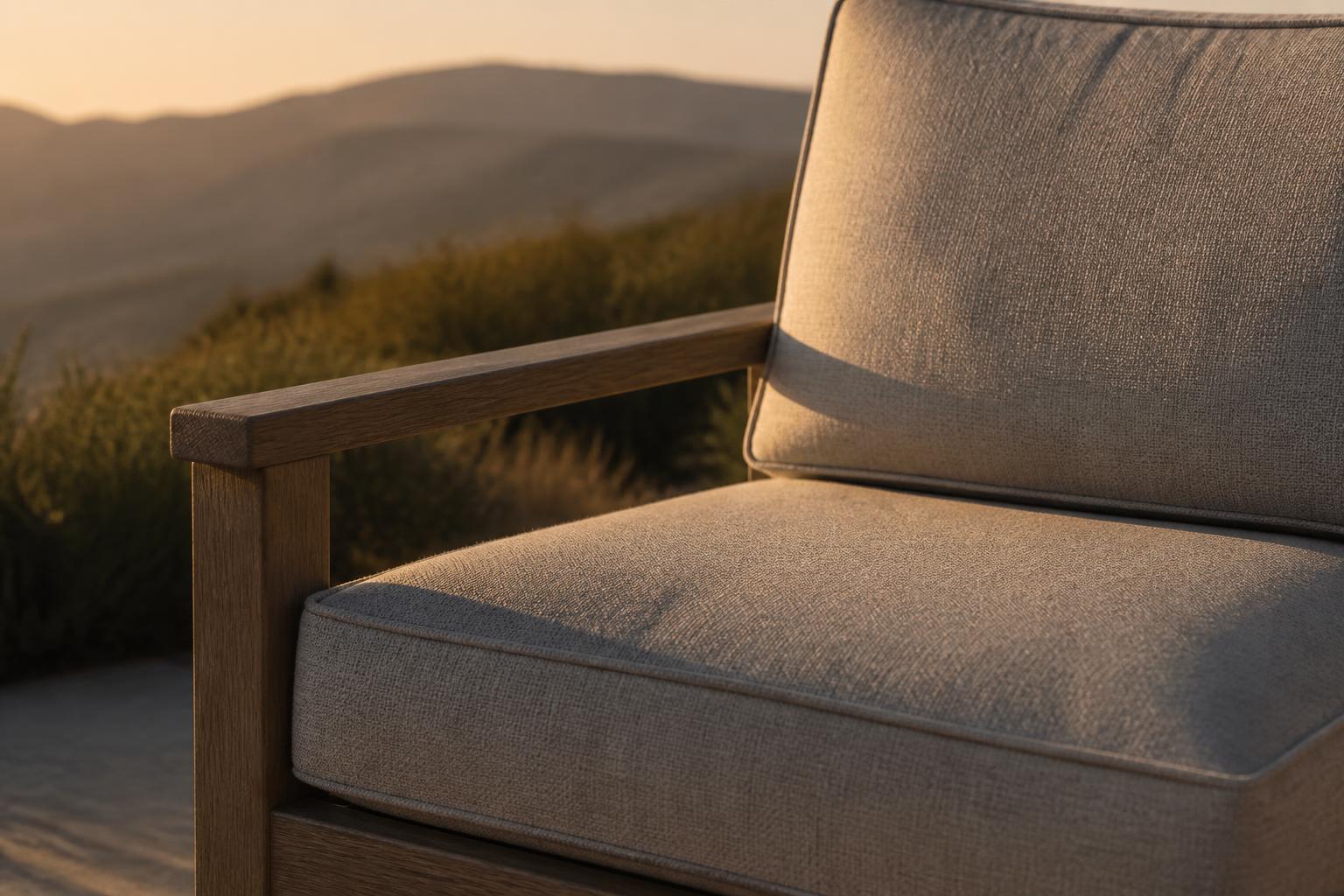
Seating capacity and floor space are only half the equation — comfort over time depends on cushion construction and fabric choice. Outdoor club chair cushions typically run 4 to 6 inches thick with quick-dry foam cores, while loveseat cushions are often slightly thicker, 5 to 7 inches, since the seat spans a wider area and needs more support to avoid a hammock effect in the middle.
Performance fabrics matter more in the Carolinas than almost anywhere else in the country. Between hot, humid summers, heavy pollen seasons, and the occasional winter freeze, cushion fabric needs to resist mildew, fade, and moisture retention. Solution-dyed acrylics like Sunbrella fabrics are the standard recommendation because the color runs through the fiber rather than sitting on top, so pollen and mildew stains clean off without leaving faded patches. Plan on hosing down cushions every 2 to 4 weeks during peak pollen season and giving frames a full wipe-down with mild soap and water every month during regular use.
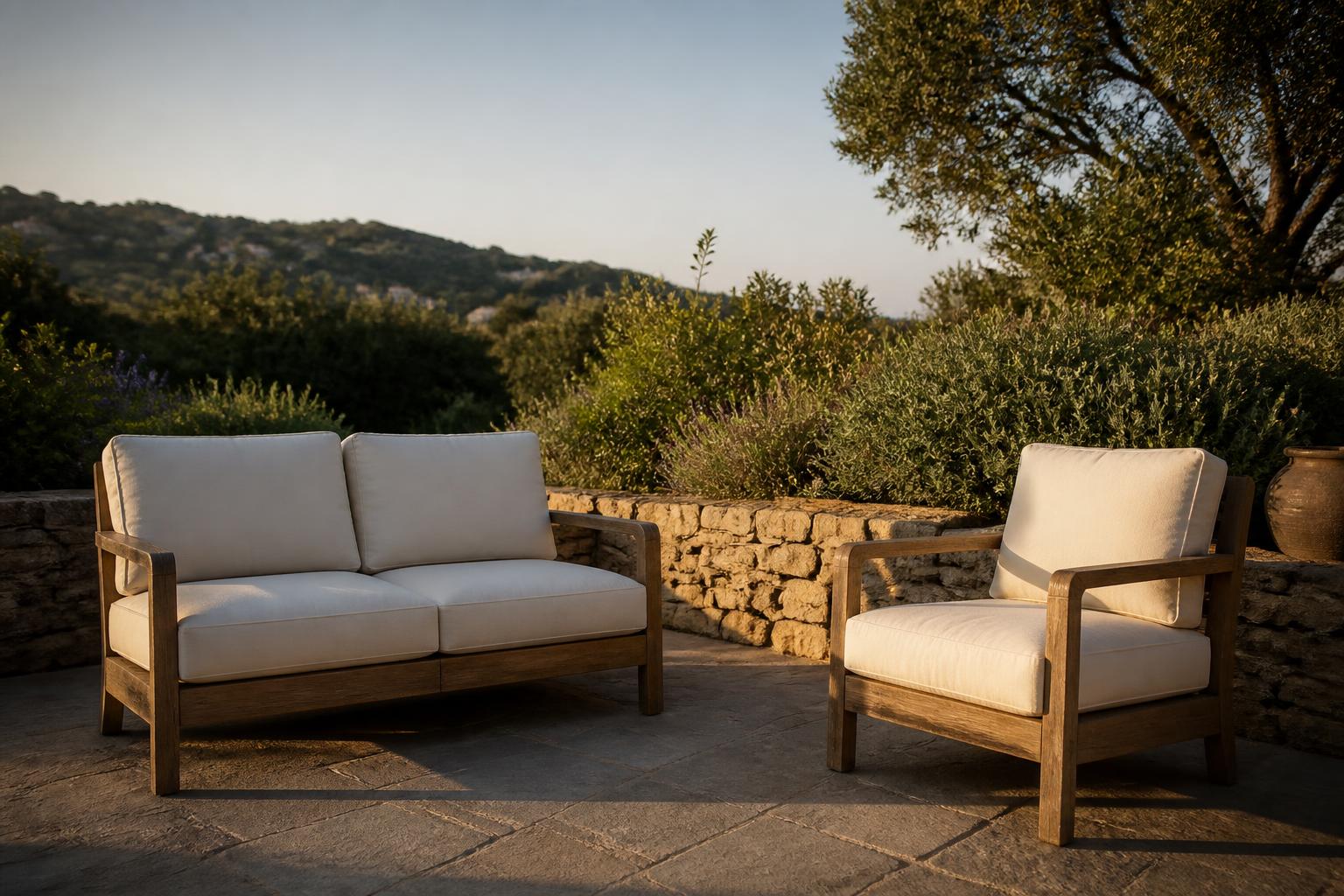
Frame Materials That Hold Up Outdoors
Whichever silhouette you choose, frame material determines how the piece handles a Carolina summer and the freeze-thaw cycles of a mild winter. Powder-coated aluminum is the most common choice for both club chairs and loveseats because it resists rust, stays lightweight relative to cast options, and holds up to 8 to 10 years of regular outdoor exposure with basic care. Cast aluminum is heavier and more substantial-feeling, often preferred for loveseats where added stability against wind is useful.
All-weather resin wicker over an aluminum frame is another strong option for both pieces, especially if you want a woven look without the maintenance of natural wicker. Look for high-density polyethylene (HDPE) wicker rated for UV exposure — lower-grade PVC wicker tends to become brittle and crack within a few Carolina summers. Teak is less common for club chairs and loveseats specifically but shows up in hybrid designs where a teak frame pairs with all-weather cushions for a warmer, furniture-grade look that silvers naturally if left unsealed.
Frequently Asked Questions
Is a loveseat or two club chairs better for a small balcony?
For balconies under 80 square feet, two club chairs usually work better because you can angle them to face each other or the view, and each chair weighs less to maneuver in a tight space. A loveseat’s fixed width often forces it against a railing, which can block sightlines and make the space feel closed in rather than open.
Can I mix a club chair and loveseat from different collections?
You can, but matching frame finish and cushion fabric color makes the grouping look intentional rather than mismatched. If the collections differ in seat height by more than an inch or two, the visual line across the seating area will look uneven, so it’s worth checking specs before combining pieces from separate lines.
How much clearance do I need around outdoor seating?
Plan for at least 30 inches of clear walking space between furniture pieces and 36 inches near main traffic paths like a door to the yard or grill area. This keeps the seating area accessible and prevents guests from having to squeeze past chair arms or a loveseat’s wider frame during gatherings.
Do club chairs or loveseats need to be covered in winter?
Both benefit from covers or storage during freeze events, especially if cushions are left outdoors. Powder-coated aluminum frames handle occasional freezes fine, but cushion foam can hold moisture and mildew if left uncovered through repeated freeze-thaw cycles, so covering or bringing cushions inside during a hard winter stretch extends their lifespan.
If you’re still weighing club chairs against a loveseat for your specific patio dimensions, the team at Carolina Patio Furniture can walk through the measurements with you in person. Stop by our Charlotte showroom to sit in both styles, compare frame and fabric options side by side, and browse the full seating collection, or call (704) 274-3222 to talk through what fits your space before you buy.