
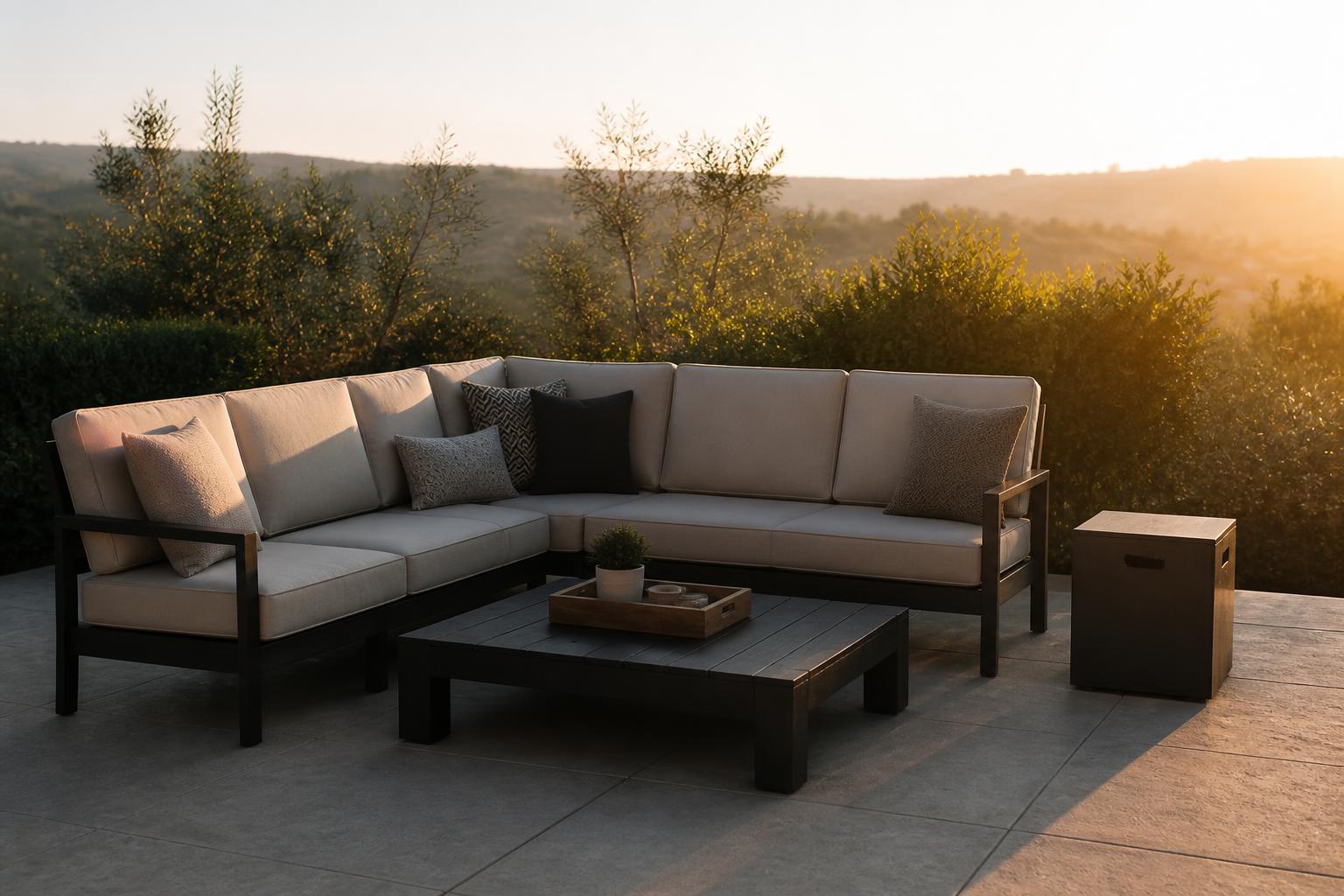

Sliding seat cushions turn a relaxing afternoon into a constant readjustment ritual. Whether the breeze catches a back pillow or a guest stands up and pulls the seat with them, the fix usually comes down to a few small hardware choices. Understanding how to keep patio cushions from sliding starts with matching the attachment method to the frame style, the cushion shape, and the way the seating actually gets used. Charlotte porches see gusty spring afternoons and humid summer stretches, so the solution should hold up to both.
Why Outdoor Cushions Drift in the First Place
Cushions move for predictable reasons: smooth fabric on smooth fabric offers almost no grip, sloped seat pans encourage forward creep, and wind lifts lightweight back pillows off deep-seat frames. Add in pets, children, and the natural shifting that happens when someone rises from a chair, and even a well-fitted cushion will wander. The goal is not to lock everything down like cargo, but to add just enough friction or tethering that normal use keeps pieces where they belong.
Cushion fit itself is the first variable. A seat cushion that is an inch short in either direction has room to travel. Before adding hardware, confirm the cushion dimensions match the frame’s seat deck, and check whether the original manufacturer designed the cushion with tie tabs, hook-and-loop strips, or grommets.
Fabric Ties: The Traditional Anchor
Sewn-in fabric ties are the most common method on deep-seating collections. They loop around the back rail or arm support and knot with a simple bow. Ties work well because they flex with the cushion, wash easily, and can be replaced with matching outdoor thread if they fray.
A few practical notes on ties:
- Tie the knot on the underside or back of the frame so it stays hidden from the seating position.
- Use a square knot or double bow rather than a single overhand, which slips under repeated tugging.
- Leave a small amount of slack so the cushion can be lifted for cleaning without untying every knot.
- Replace ties before they snap. A frayed tie is a signal that UV exposure has weakened the fibers, and the surrounding fabric may need attention too.
If the cushion arrived without ties and the frame has a horizontal rail behind the seat, adding aftermarket ties is straightforward. Solution-dyed acrylic ribbon in a matching color, stitched to the back edge of the cushion with a heavy-duty outdoor thread, does the job.

Hook-and-Loop Strips for a Cleaner Look
Industrial-grade hook-and-loop, commonly called Velcro, is the second workhorse. Adhesive-backed strips stick to the frame while the mating strip is either sewn to the cushion cover or attached to a small fabric patch that ties on. The advantage is a nearly invisible attachment with no dangling ribbons.
Outdoor-rated hook-and-loop is worth seeking out. Standard indoor Velcro loses adhesive tack in direct sun and after a few humid weeks. Marine or outdoor-grade versions use UV-stable adhesives and mildew-resistant loop fibers. Clean the frame with isopropyl alcohol before applying, press firmly for thirty seconds, and let the adhesive cure for at least 24 hours before loading the cushion.
One caveat: hook-and-loop grabs debris. Pollen, dog hair, and cushion fill fibers gradually clog the hook side. A stiff nylon brush restores the grip in a minute or two, and it is worth doing at the start and end of each season.
Non-Slip Pads and Rug Underlayment
For cushions that sit on flat, horizontal seat decks—think aluminum sling chairs converted to cushion seating, or wicker sofas with removable seats—a non-slip pad between the frame and cushion adds friction without any visible hardware. The same open-weave rubber matting sold as rug underlayment works well cut to size. It breathes, drains, and does not trap moisture the way solid rubber would.
This approach pairs nicely with ties on deep-seat sofas. The pad handles day-to-day scoot, while the ties prevent the cushion from being lifted or blown clear during a storm. For sectional pieces where cushions meet at a corner, non-slip pads keep the seams aligned so the sectional looks like one continuous piece rather than a set of drifting islands.
Managing Back Pillows and Throw Cushions
Back pillows are the most frequent runaway. They usually attach with a single short tie or a snap, and both wear out. A few options extend their staying power:
- Dual ties per pillow. Two ties spaced across the back of the pillow prevent the pivot that a single center tie allows.
- Snap tape. Plastic snap tape sewn along the top edge of the back pillow and a mating strip on the frame rail creates a clean, quick-release attachment.
- Weighted inserts. For decorative throw pillows, a small sand-filled sachet tucked inside the cover adds enough mass to resist most breezes without changing the look.
Storing back pillows in a deck box during severe weather is still the surest way to protect them. No tie system is designed to hold a pillow through sustained high winds.
Moisture, Mildew, and the Hidden Enemy of Attachments
Any tie, strip, or pad that stays damp will eventually harbor mildew. That shortens the life of the hardware and can stain cushion fabric. Airflow underneath the cushion is the simplest defense—lift cushions after heavy rain, prop them on edge to dry, and avoid stacking wet cushions on top of one another. The EPA’s general guidance on mold and moisture emphasizes drying wet materials within 24 to 48 hours, and that timeline applies to outdoor cushions and their attachments as well.
Charlotte’s summer humidity means shaded porches sometimes stay damp longer than expected. If a covered patio never seems to fully dry out, a small oscillating fan run for an hour after storms accelerates evaporation and keeps ties and hook-and-loop from staying wet against the frame.

Matching the Method to the Furniture Style
Different frame materials favor different attachments:
- Woven resin wicker: Ties work best because the woven strands provide natural anchor points. Adhesive hook-and-loop struggles to bond to textured resin.
- Powder-coated aluminum: Both ties around cross-rails and outdoor-grade hook-and-loop on flat surfaces perform well.
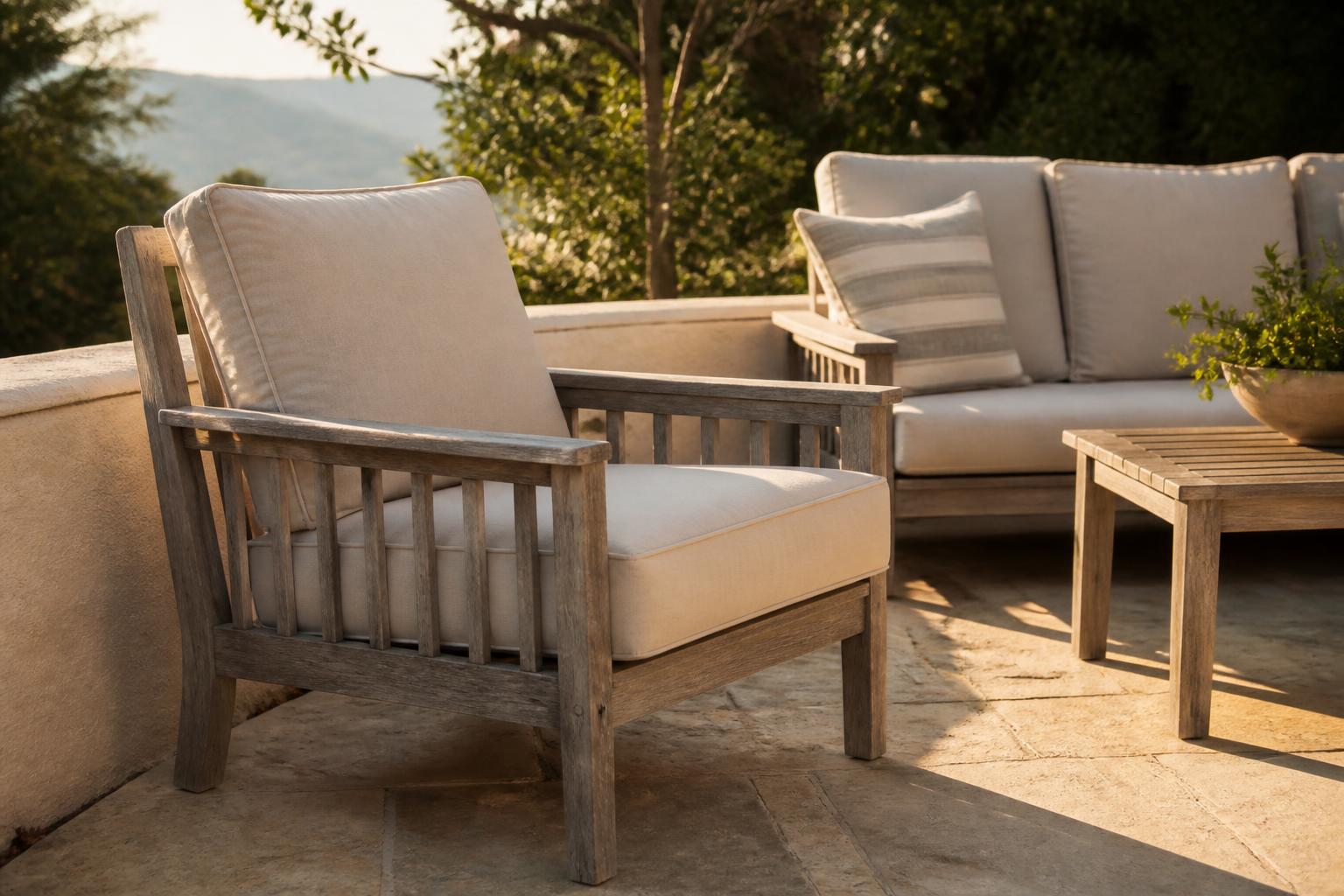
- Teak and hardwood: Ties are the traditional choice. Adhesive strips can leave residue on finished wood, and the residue is harder to remove than on metal.
- Cast aluminum with ornate patterns: Non-slip pads combined with ties routed through decorative openings usually give the cleanest result.
When shopping replacement cushions from the Carolina Patio Furniture collection, note which attachment style the cushion is built for. Retrofitting a tie-style cushion onto a frame designed for hook-and-loop is possible but rarely as tidy as matching original to original.
Frequently Asked Questions about How to Keep Patio Cushions from Sliding
Can ties be added to cushions that did not come with them?
Yes. Solution-dyed acrylic ribbon and outdoor-rated polyester thread allow ties to be sewn onto most cushion covers. The stitching should pass through the seam allowance rather than the face fabric to avoid visible needle holes. A local upholstery shop can handle this quickly if home sewing is not an option.
How long does adhesive-backed hook-and-loop last outdoors?
Outdoor-grade versions typically hold for one to three seasons depending on sun exposure and temperature swings. Reapplication is straightforward: peel off the old strip, clean any residue with an adhesive remover, and apply a fresh piece to a dry frame.
Do non-slip pads trap water against the frame?
Open-weave rubber matting drains and dries quickly, so it generally does not trap moisture. Solid rubber or foam pads can hold water, which is why the perforated rug-underlayment style is preferred for outdoor use.
What is the best fix for cushions on a sloped seat?
Sloped seats benefit from a combination approach: a non-slip pad handles the constant forward pressure, and ties at the back edge keep the cushion from creeping over time. Neither method alone tends to hold on a significant slope.
Bring the Question to the Showroom
Cushion attachment is one of those details that is easier to solve with the actual furniture in front of you. To talk through a specific frame, replacement cushion, or attachment upgrade, call Carolina Patio Furniture at (704) 274-3222 or contact the Charlotte showroom. Bringing a photo of the frame and a measurement of the seat deck makes the conversation faster and the recommendation more accurate.