
Outdoor furniture hardware is the small stuff that holds everything together: the screws, bolts, nuts, washers, glides and swivel parts that sit under the cushions and out of sight. A frame can be made of aluminum, which does not rust, and still develop orange streaks, loose arms or a wobbly seat because one cheap fastener gave up. Knowing the difference between stainless steel, zinc-plated and coated hardware helps you ask better questions when you shop, spot trouble early, and keep a chair or table tight and good-looking for many seasons.
What each type of fastener is made of
Most outdoor fasteners fall into three groups, and they behave very differently once water, humidity and sun get involved.
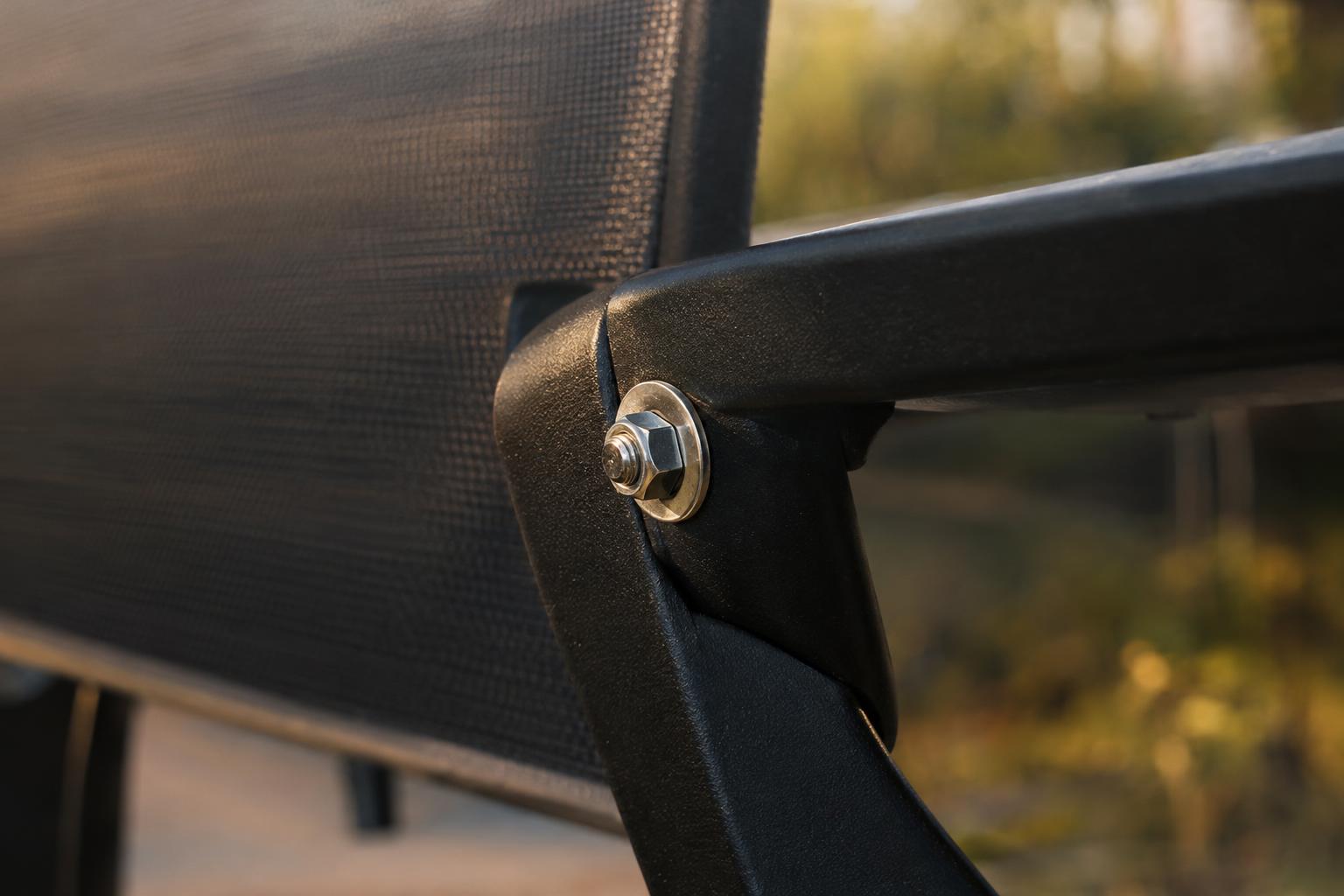
- Stainless steel contains enough chromium to form a thin protective film on the surface, which is why it holds up well in damp, humid conditions. It is the usual choice when you want hardware that resists rust.
- Zinc-plated steel is ordinary steel with a thin zinc layer on top. The coating protects the steel for a while, but once it wears through or gets scratched, the steel underneath can start to rust.
- Coated or painted steel relies on a finish to keep moisture away. It looks tidy at first and tends to fail at the threads, edges and tool marks, where the finish chips.
Not all stainless is equal, and the grade matters when salt air or pool chemicals are involved. If your patio sits near the coast, or you take a piece to a beach house, plain steel hardware will show rust far sooner than stainless, even when the frame itself looks untouched. Stainless is not magic either: it can spot lightly where it is scratched or left wet, so a quick rinse and dry still helps.
Why a rustproof frame can still show rust streaks
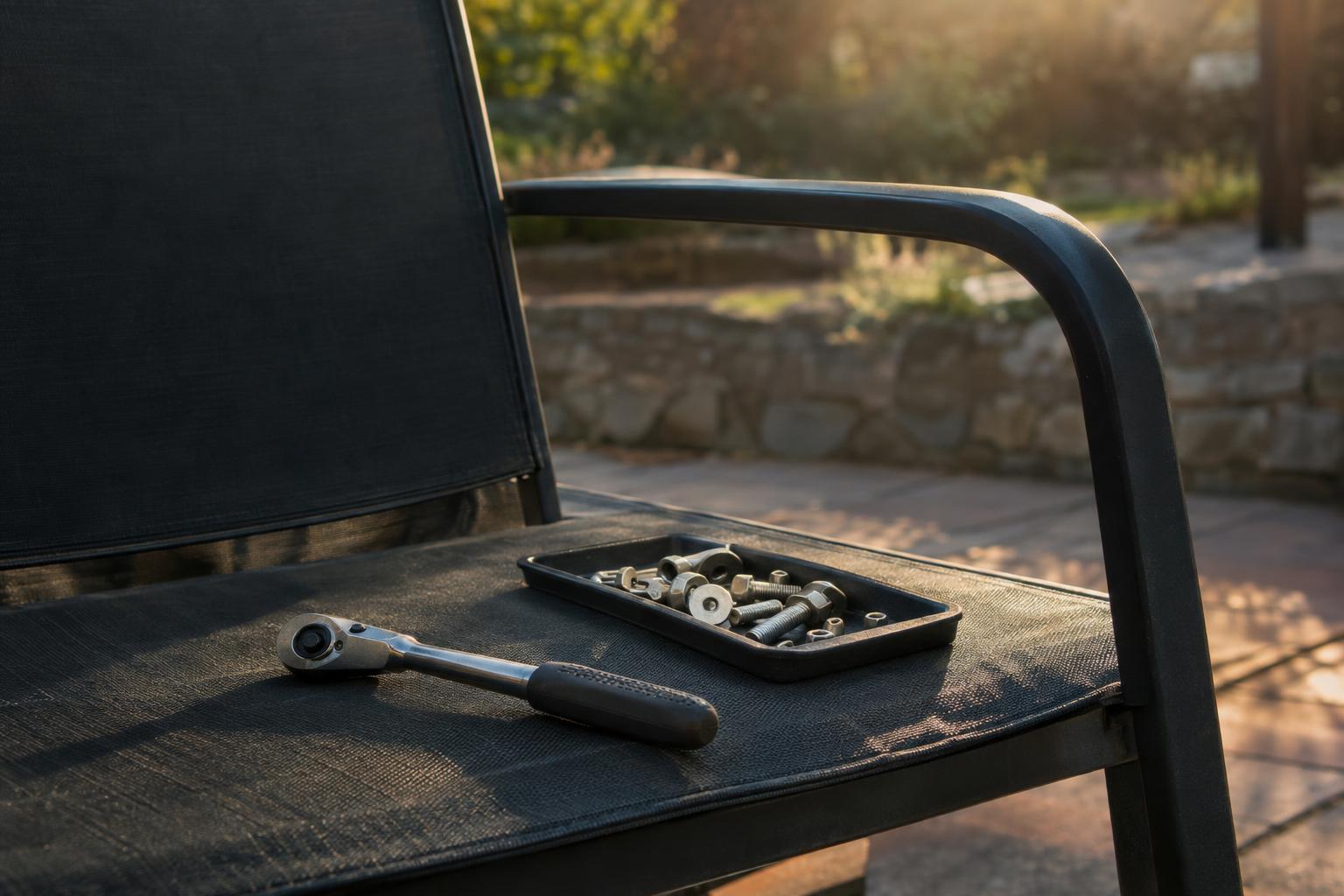
When a rust stain shows up on a chair that is supposedly rust-proof, the culprit is often a plain steel screw or washer rather than the frame. Rain carries rust down the finish and leaves a trail that looks like the frame is failing. Our post on combatting rust on aluminum furniture covers how to deal with the stains themselves, so this article focuses on preventing them at the fastener.
Heat adds to it. Metal hardware expands and contracts as it warms in afternoon sun and cools overnight, which can loosen a bolt just enough to let water creep into the joint. Moisture is the common factor. Hardware sits in crevices where water collects, dries slowly and gets another round of humidity the next morning. In our region, hot humid summers and the occasional freeze make that cycle repeat many times a year, so details that look minor on day one matter by year three.
Mixing metals and galvanic corrosion
When two different metals touch in the presence of moisture, the more reactive one can corrode faster than it would alone. The Association for Materials Protection and Performance describes galvanic corrosion as damage that occurs when dissimilar metals are electrically connected in a corrosive environment, with the less noble metal corroding faster.
On patio furniture, that can show up as white powder or pitting around a fastener, or as a dark stain where a steel bolt meets an aluminum frame. A few habits reduce the problem:
- Match the replacement fastener to the original in size, thread and material.
- Use a nylon or plastic washer between the bolt and the frame where the design allows it.
- Avoid dropping a random steel bolt from the garage into a stainless or aluminum assembly.
Welds, bolts and where hardware matters most
Some frames are welded into one piece, and others are bolted together so they can ship and store in sections. Bolted joints give you more places to check, while welded joints put the focus on the finish. Our comparison of aluminum patio chair welds vs bolted joints explains the trade-offs, including which design is easier to service.
Hardware matters most in the places that carry movement and weight: arm attachments, swivel and rocker bases, folding hinges, table leg brackets and the glides under each foot. These parts flex every time you sit down, which is why they loosen first and why they are worth a look each season.
| Hardware type | Typical behavior outdoors | What to do |
|---|---|---|
| Stainless steel | Resists rust in humid conditions | Check tightness each season |
| Zinc-plated steel | Rusts once the plating wears | Replace at the first sign of orange |
| Coated or painted steel | Chips at threads and edges | Replace chipped pieces promptly |
| Nylon washers and glides | Do not rust, can wear or crack | Swap when worn or flattened |
A simple seasonal check for loose or rusty hardware
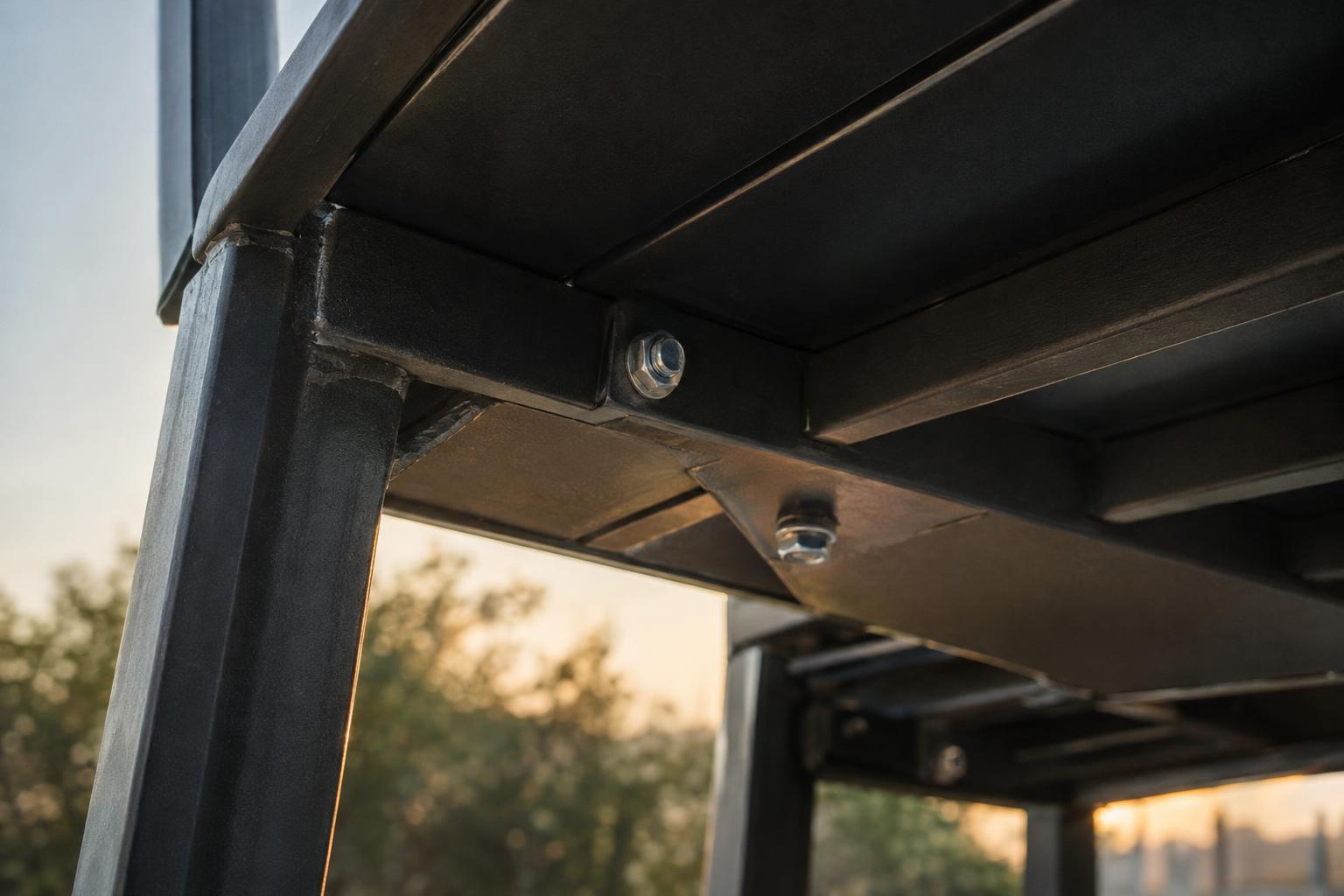
Pick two days a year, such as early spring before the pollen peak and late fall before you cover everything, and walk around each piece with a small wrench or screwdriver.
- Wiggle each chair and table and note any movement at the joints.
- Tighten loose fasteners gently, and stop if the frame resists, since over-tightening can strip threads or crack a plastic part.
- Look for orange or brown spots around bolt heads and under washers.
- Check the glides on the feet for wear, and replace any that have flattened or cracked.
- Wipe the hardware dry and let the frame dry before you put the covers back.
Always follow the maker’s instructions for your piece, and if something seems structural, such as a cracked weld or a bent leg, stop using the piece rather than forcing a repair.
Replacing rusted hardware and what to ask when you shop
Replace a rusted fastener with one of the same diameter, thread and length, and prefer stainless or another corrosion-resistant option over plain steel. Take the old fastener with you to the hardware store to compare. If it came out in two halves or the head is stripped, the frame may need a closer look before you put in a new one.
The question to ask when you shop is not whether the furniture is stainless. It is which fasteners the piece uses, whether the manufacturer can supply replacements, and whether the joints are bolted, welded or both. Every piece is built a little differently, so check the washers and glides yourself, and ask the manufacturer what replacement parts are available later.
Frequently asked questions about outdoor furniture hardware
Is stainless steel hardware really rustproof?
Stainless steel resists rust well, but it is not a guarantee. Lower grades can show surface spotting in salt air or around pool chemicals, and scratches or contact with other metals can cause staining. For most patios, stainless is a sound choice. Keep it clean, rinse away salt or chlorine when it builds up, and check it each season.
Why does my chair have rust streaks when the frame is aluminum?
Aluminum does not rust the way steel does, so streaks usually point to a steel fastener, washer or insert somewhere on the piece. Rain rinses the rust down the frame and leaves a trail. Find the source by looking for orange around bolt heads, then replace that part with a corrosion-resistant one and clean the stain.
How often should I tighten outdoor furniture bolts?
A seasonal check is a reasonable habit, and more often for pieces you use every day, such as dining chairs and swivels. Heat, cold and everyday movement loosen fasteners over time. Tighten gently and consistently, follow any instructions that came with the piece, and replace anything stripped, bent or rusted instead of forcing it.
Can I replace a rusted bolt with any bolt from the hardware store?
It is better to match the original in diameter, thread, length and material. A bolt of the wrong size can strain the frame, and a bolt in a different metal can start galvanic staining. Bring the old fastener along to the hardware store, and ask about corrosion-resistant options that suit your piece.
Shopping for a new set? Call us at (704) 274-3222 or visit our Charlotte showroom at Carolina Patio Furniture, where you can sit in a few pieces and compare them.