

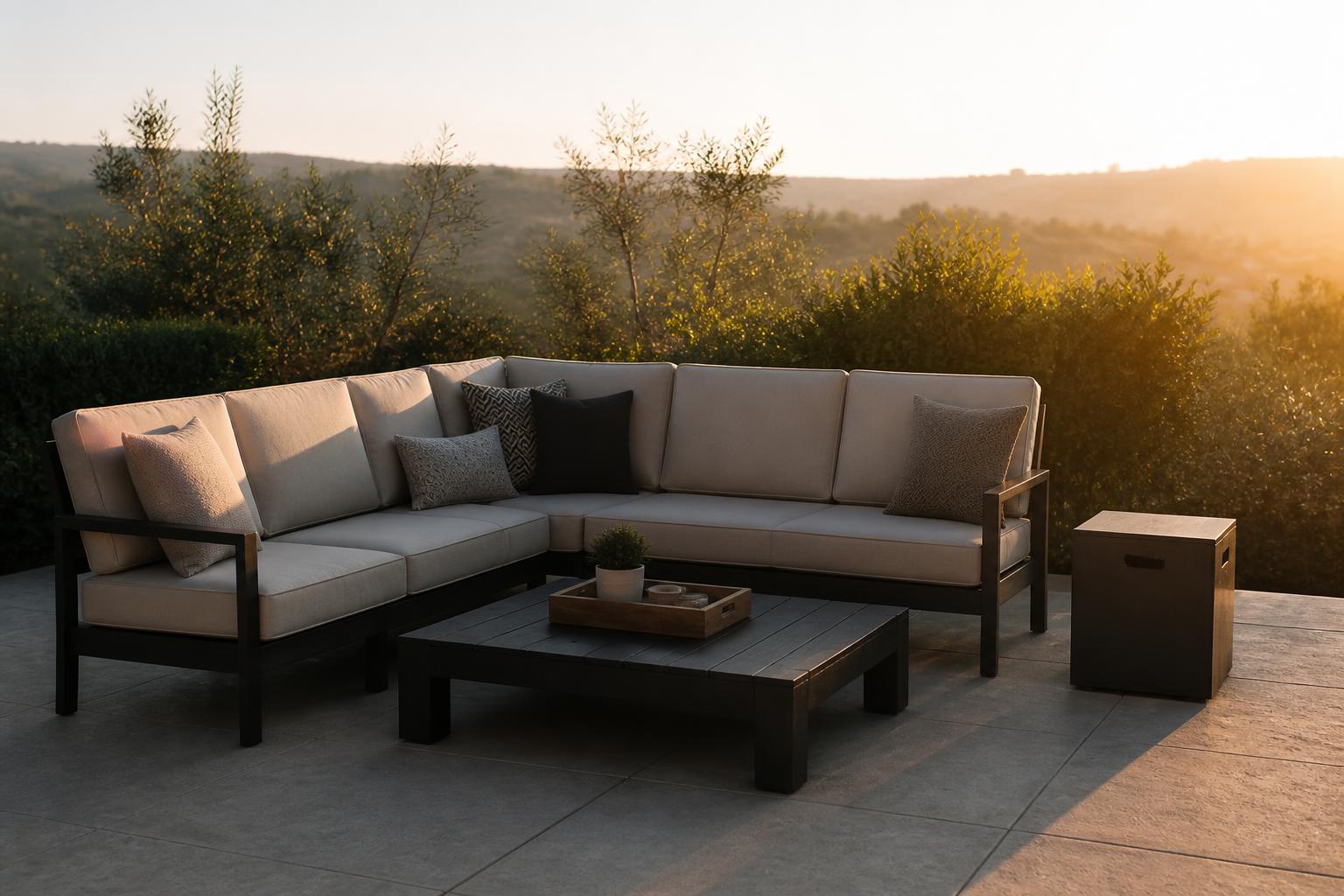
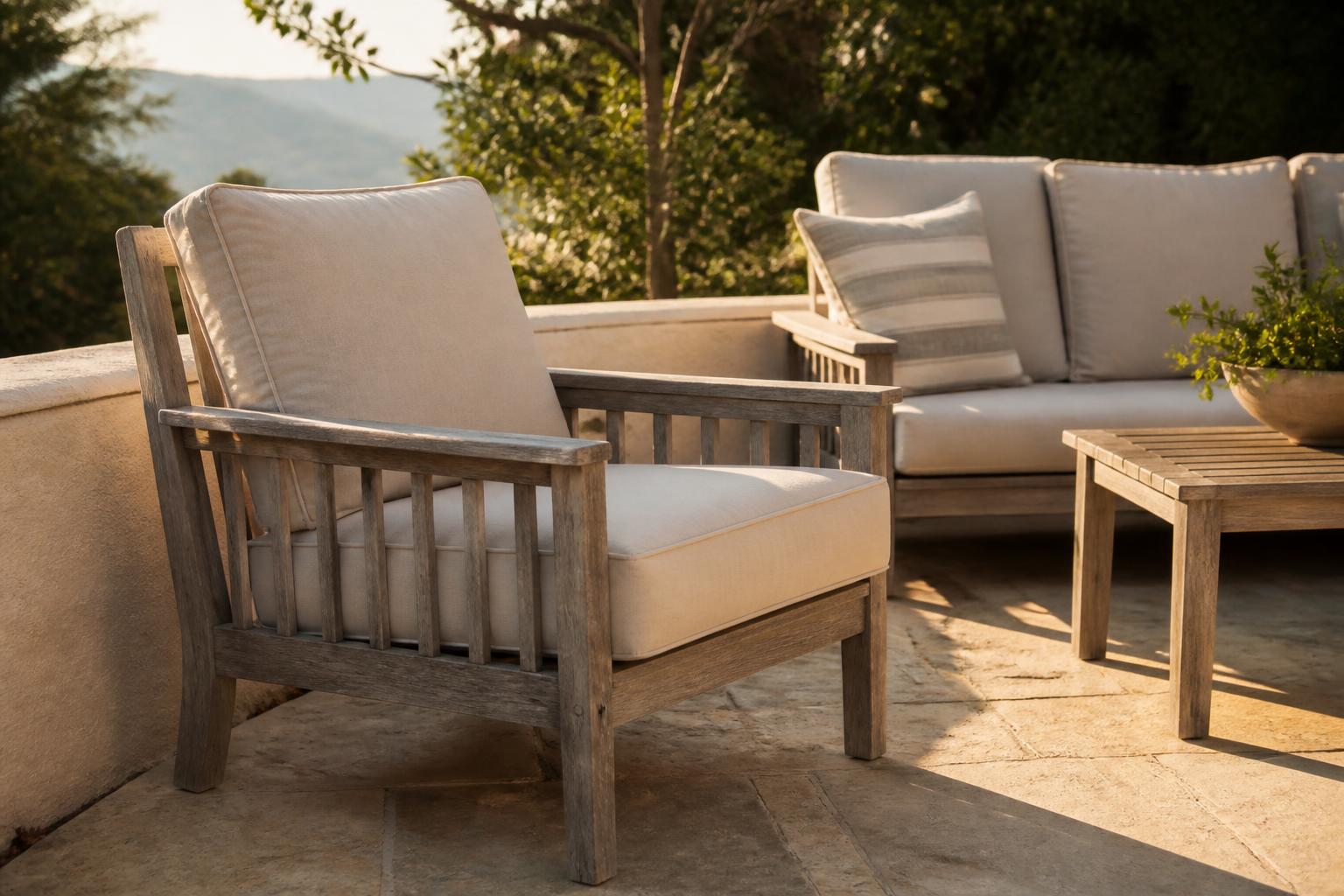

The right patio furniture color palette can make a Charlotte-area outdoor space feel like a natural extension of the house — especially when the home’s exterior is brick or stone. Those materials set a permanent backdrop you can’t repaint, so the smartest approach is to choose cushion colors and frame finishes that work with the masonry rather than against it.
At Carolina Patio Furniture, we help homeowners compare those choices in person instead of guessing from a product photo. Below is how we think about matching outdoor furniture colors to red brick, brown brick, gray stone, and warm tan stone, so the finished patio looks intentional from both the yard and the windows inside.
Start by Reading Your Home’s Brick or Stone
Before you look at a single cushion swatch, study the exterior in daylight. Brick and stone almost always carry an undertone, and that undertone is what your furniture should respond to. Classic red brick leans warm, with orange or rust notes. Brown and tan brick reads as a warm neutral. Gray stone and many manufactured stone veneers lean cool, while buff or sandstone tones lean warm again.
Hold a few swatches against the wall at different times of day. Morning light, harsh afternoon sun, and shade can each shift how a color looks against masonry. Once you know whether your backdrop is warm or cool, choosing a palette becomes far less of a guess.
Palettes That Complement Red and Brown Brick

Red brick already brings a strong warm color to the scene, so the most reliable palettes give the eye somewhere calm to rest. Cooler and neutral cushion tones — navy, slate blue, hunter or olive green, soft cream, and warm gray — balance the brick instead of competing with it. These shades let the brick feel like a feature rather than a clash.
Be cautious with bright reds, oranges, and corals against red brick; they tend to fight the wall and make both read as muddy. If you love a pop of warm color, keep it to a small accent — a single throw pillow or a planter — rather than the main cushion color. Brown brick is more forgiving and pairs beautifully with greens, blues, creams, and espresso tones that echo its natural warmth.
Palettes That Complement Gray and Tan Stone
Gray stone reads cool, so it gives you room to play with crisp, clean palettes. White, soft blues, sage and deeper greens, and charcoal all look sharp against gray masonry. If an all-cool scheme feels stark, warm it up with sand, taupe, or a muted gold accent so the seating area still feels inviting rather than chilly.
Warm tan and buff stone behaves like a large neutral and partners well with greens, blues, and earthy terracotta accents. With stone of any tone, texture matters as much as color: a heavily varied stone wall already has a lot going on, so a simpler, more solid cushion palette usually looks cleaner than a busy pattern that competes with the masonry.
Choosing Frame Finishes Against Masonry

Frame color is the second half of the palette, and it changes the whole feel of a set. Black or dark bronze frames create crisp contrast and a modern look that works against almost any brick or stone. Espresso and warm bronze finishes blend softly with brown brick and tan stone, giving a more relaxed, traditional feel. White and light frames brighten a space but can wash out against pale stone, so they tend to show best with darker brick or plenty of green landscaping behind them.
If you are drawn to bolder furniture color — a yellow, red, or deep blue frame — anchor it to something already in the setting, such as a tone in the brick, a front door color, or the foliage around the patio. Color that echoes an existing element looks chosen; color that comes from nowhere usually looks accidental.
Bring It Together With Cushions and Accents
A simple way to keep a palette balanced is to lead with one dominant neutral for the larger cushions, choose one secondary color for the next-biggest elements, and save your boldest tone for small accents like pillows, an umbrella, or a planter. Pulling that accent color from a shade already in your brick or stone ties the whole space together.
Whatever palette you land on, make sure the fabric can handle Carolina weather. Solution-dyed performance fabrics hold their color through strong sun and frequent storms far better than cheaper alternatives, and they shrug off the pollen and humidity we deal with for months at a time. Care resources such as Sunbrella outdoor fabric care tips can help you set realistic expectations before you buy.
Common Mistakes to Avoid
One common mistake is choosing cushions by color alone, in a showroom, without ever holding the fabric up against the home’s exterior. A color that looks great indoors can clash badly once it is sitting in front of real brick or stone in natural light. Another mistake is using too many competing colors; outdoor rooms usually feel calmer and more expensive when the palette is restrained.
Homeowners also tend to forget the view from inside. The patio is on display through your windows for much of the year, so the palette should look good from the kitchen or living room, not just from a chair on the patio.
Frequently Asked Questions
What cushion colors look best with red brick?
Cooler, calmer tones generally work best: navy, slate blue, hunter or olive green, cream, and warm gray. They balance the brick’s warmth instead of competing with it. Keep bright reds and oranges to small accents.
How do I choose furniture colors for a gray stone home?
Gray stone reads cool, so crisp whites, soft blues, greens, and charcoal look sharp against it. Add a few warm accents in sand or taupe if an all-cool palette feels too stark.
Should the furniture frame match the brick or contrast with it?
Both can work. Black or bronze frames give clean contrast and suit almost any masonry, while espresso tones blend with brown brick and tan stone. The key is choosing the finish on purpose and keeping it consistent across the set.
Plan Your Outdoor Space With Carolina Patio Furniture
If you want help choosing a palette that complements your brick or stone exterior, visit Carolina Patio Furniture, browse relevant collections such as outdoor cushions, or reach the team through the contact page. Bringing a photo of your home’s exterior and a few measurements makes it much easier to match colors and finishes to the space with confidence.