

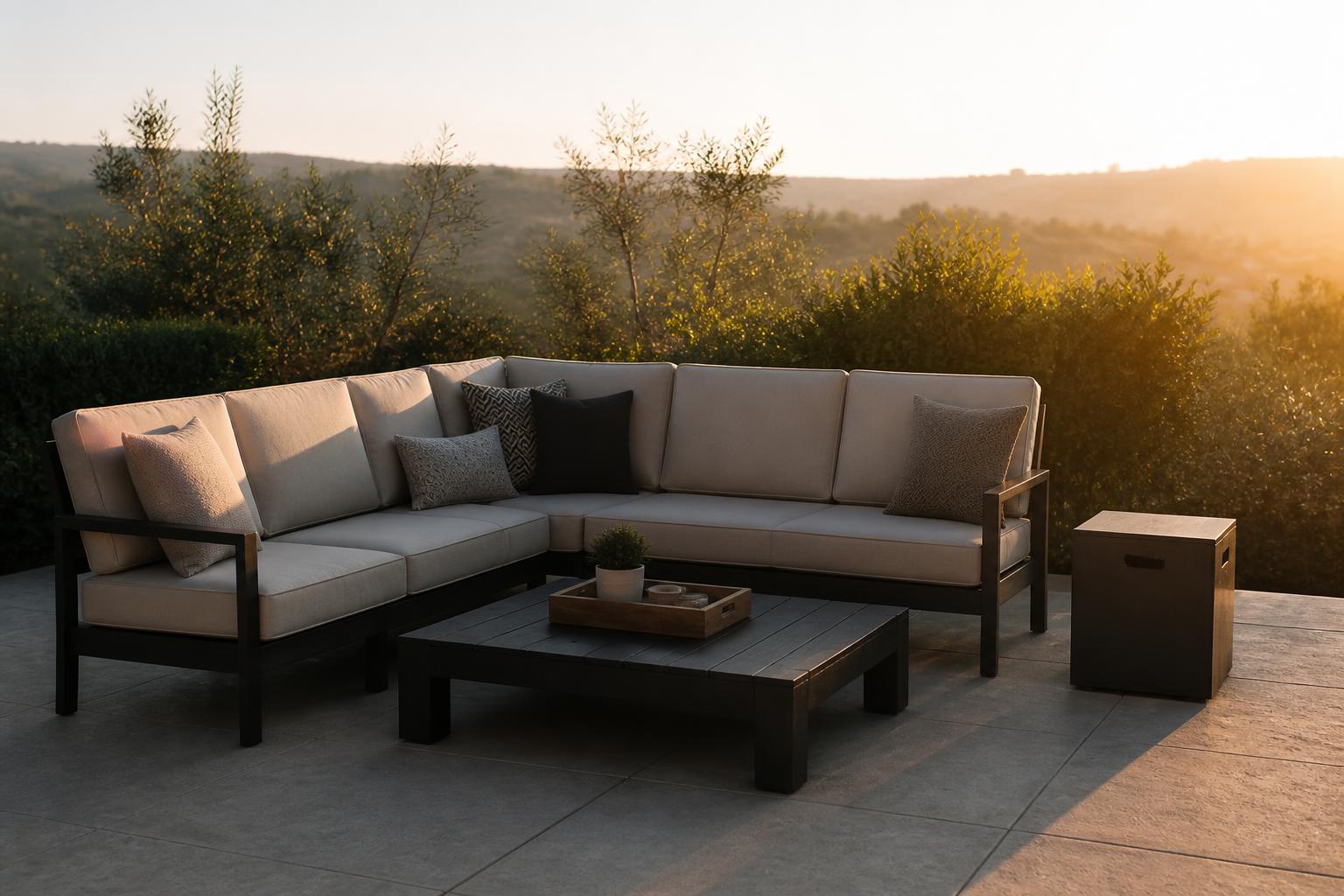
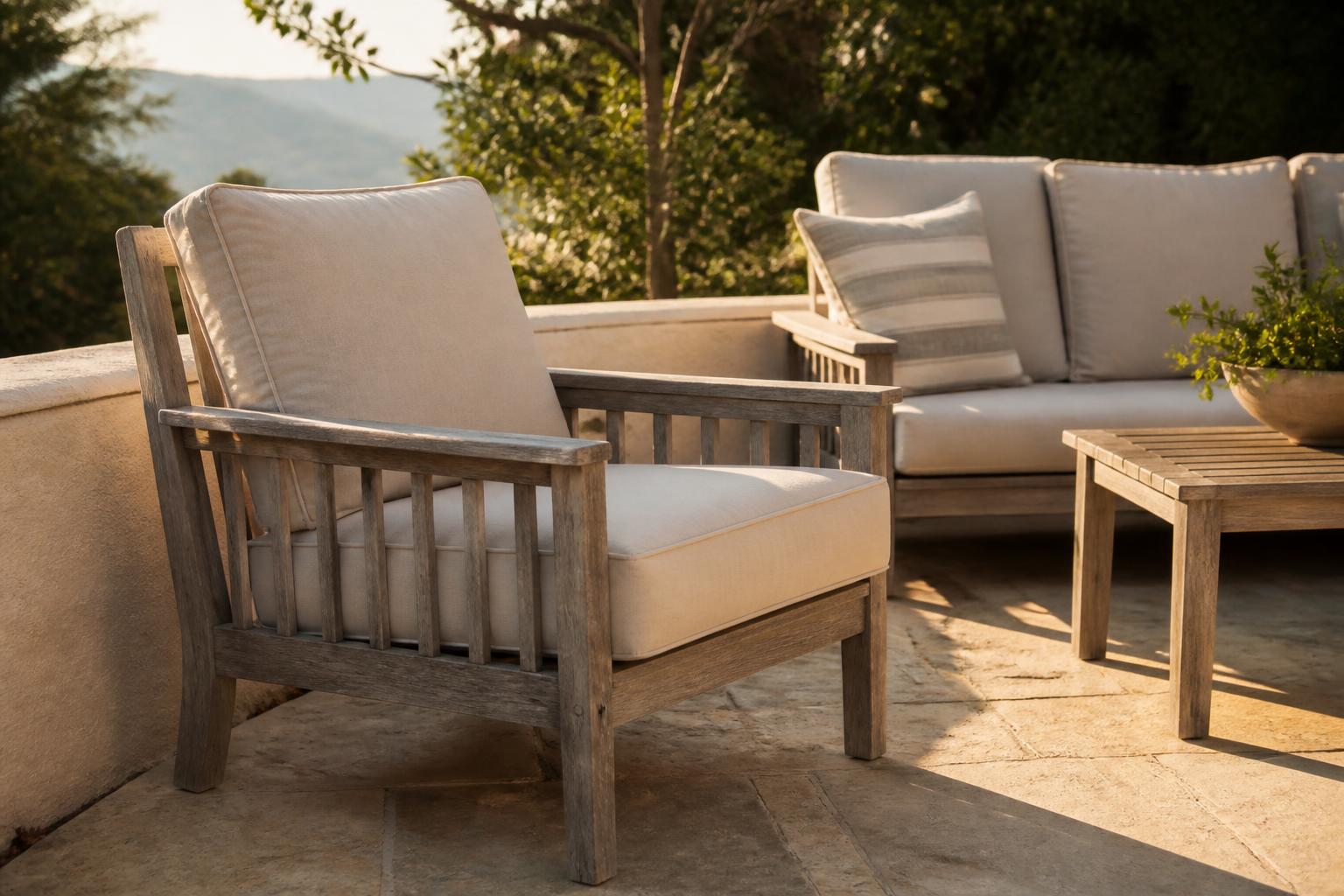
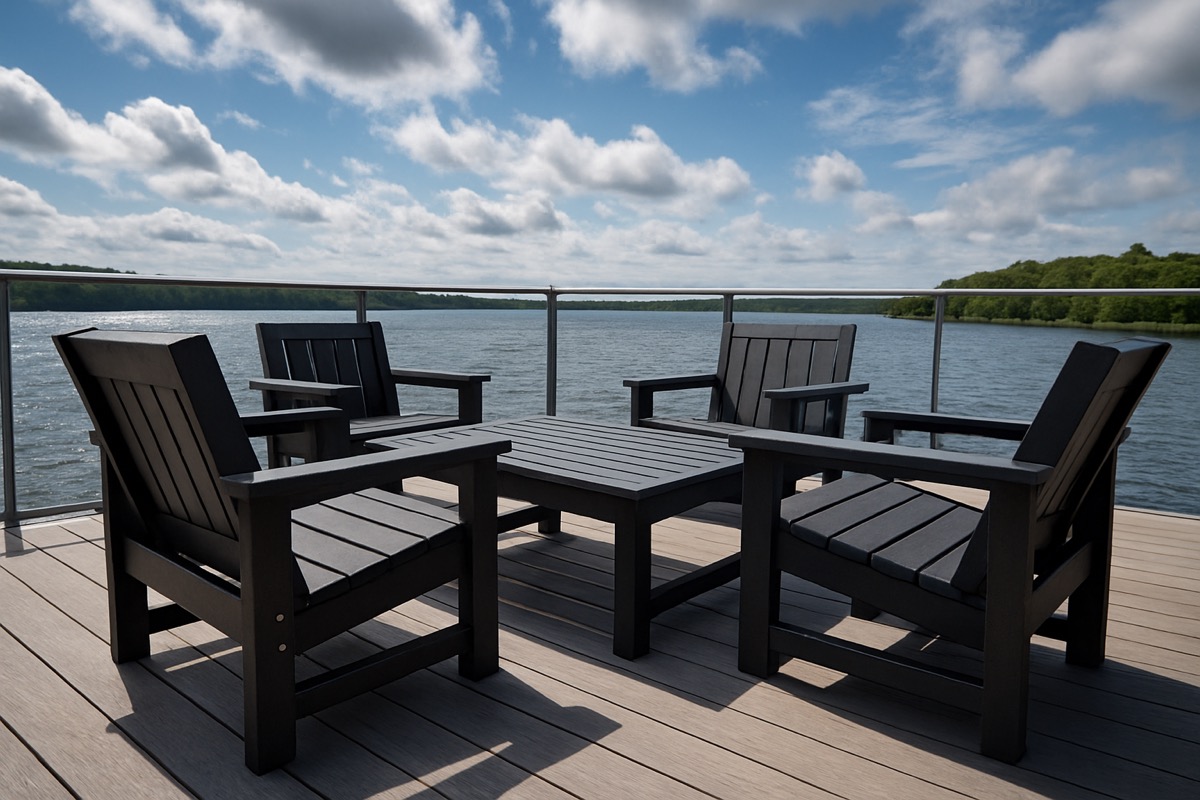
Living on the water comes with a wonderful view and one persistent challenge: wind. Homeowners around Lake Norman and the open decks across the Charlotte area tell us the same story every season, where a beautiful patio set becomes a frustration the moment an afternoon storm rolls in and cushions go sailing or a chair tips over the railing. Choosing patio furniture for windy decks is a real skill, and after years of outfitting lakefront properties, our team has learned what stays put and what does not. This guide walks through how to build an outdoor space that looks great and holds its ground when the breeze picks up.
Why Lakefront Decks Are So Windy
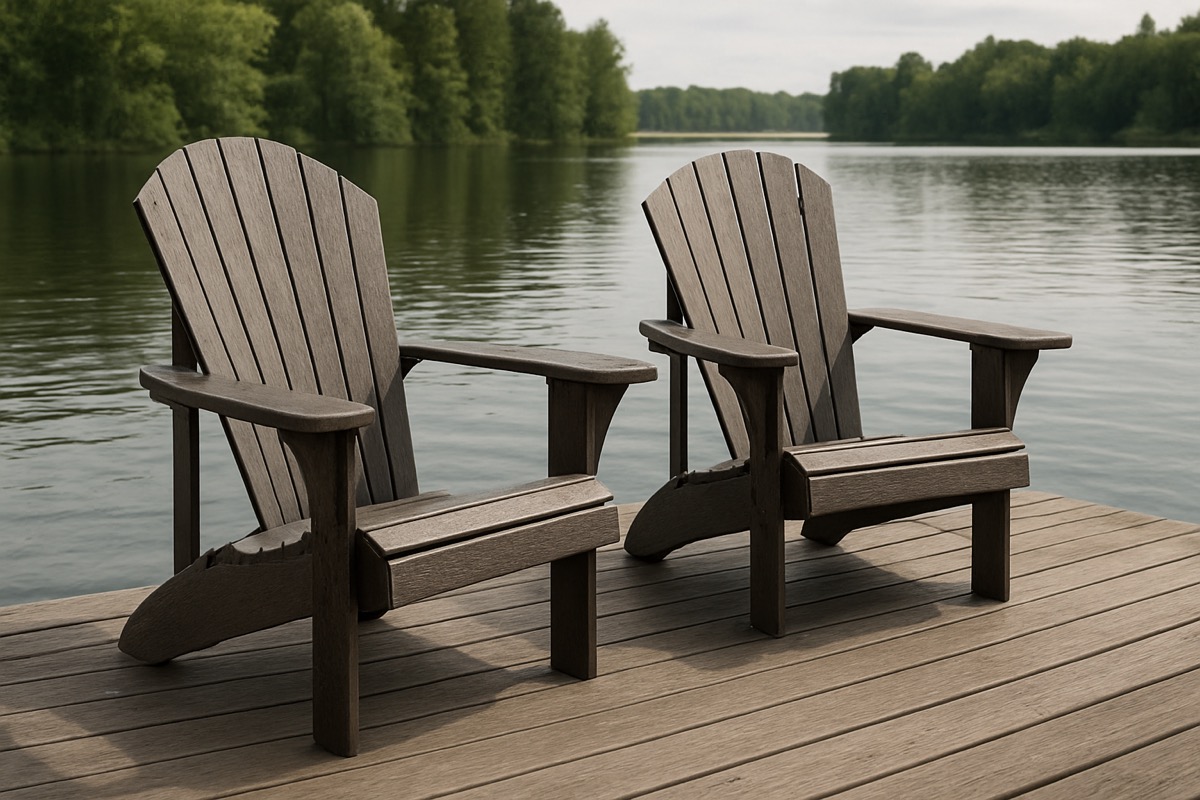
Open water offers nothing to slow the wind, so a breeze that feels gentle inland arrives at a lakefront deck with real force. Elevated decks make it worse, because height exposes furniture to gusts that ground-level patios never feel. Carolina summers add a particular pattern: calm, humid mornings that build into strong afternoon thunderstorms with sudden gust fronts well ahead of the rain. We tell every lakefront customer to plan for those gusts, not the average breeze, because furniture only has to blow over once to break or cause damage. Designing for the worst afternoon of the season is the right mindset.
Weight Is Your First Line of Defense
The single most important factor in windy-deck furniture is mass. Lightweight pieces that are easy to carry are also easy for the wind to move, so on exposed decks we steer customers toward heavier frames. Cast aluminum, for example, offers the corrosion resistance of aluminum with far more weight than tubular versions, so it resists tipping while still being manageable. Heavier all-weather pieces stay planted through gusts that would scatter flimsy furniture. When a customer is choosing between two similar chairs, on a windy deck we almost always point them to the heavier one, because grams of extra weight buy real peace of mind.
Choose Low-Profile, Wind-Friendly Shapes
Shape matters as much as weight. Tall, broad pieces act like sails, catching wind across a large surface, while low-profile furniture gives the wind less to push against. On windy decks we favor lower-backed seating, open-weave or slatted designs that let air pass through rather than catch it, and tables without large solid panels. A solid-back chair or a big umbrella is essentially a sail, so if you love an umbrella, plan to close and secure it whenever you leave the deck. Letting the wind move through your furniture instead of against it makes a dramatic difference in stability.
The Cushion Problem and How to Solve It
Cushions are the most common casualty of a windy deck, because even heavy furniture can lose its lightweight cushions to a strong gust. There are several good fixes we recommend together. Choose cushions with tie-downs or hook-and-loop straps that secure them to the frame. Pick high-density foam wrapped in quick-drying covers, which are heavier and less prone to lifting than thin cushions. Have a deck box ready so cushions can be stowed in seconds when a storm approaches. And for the windiest decks, consider sling-style or fully woven seating that needs no loose cushion at all, eliminating the problem entirely.
Anchoring and Securing Your Pieces
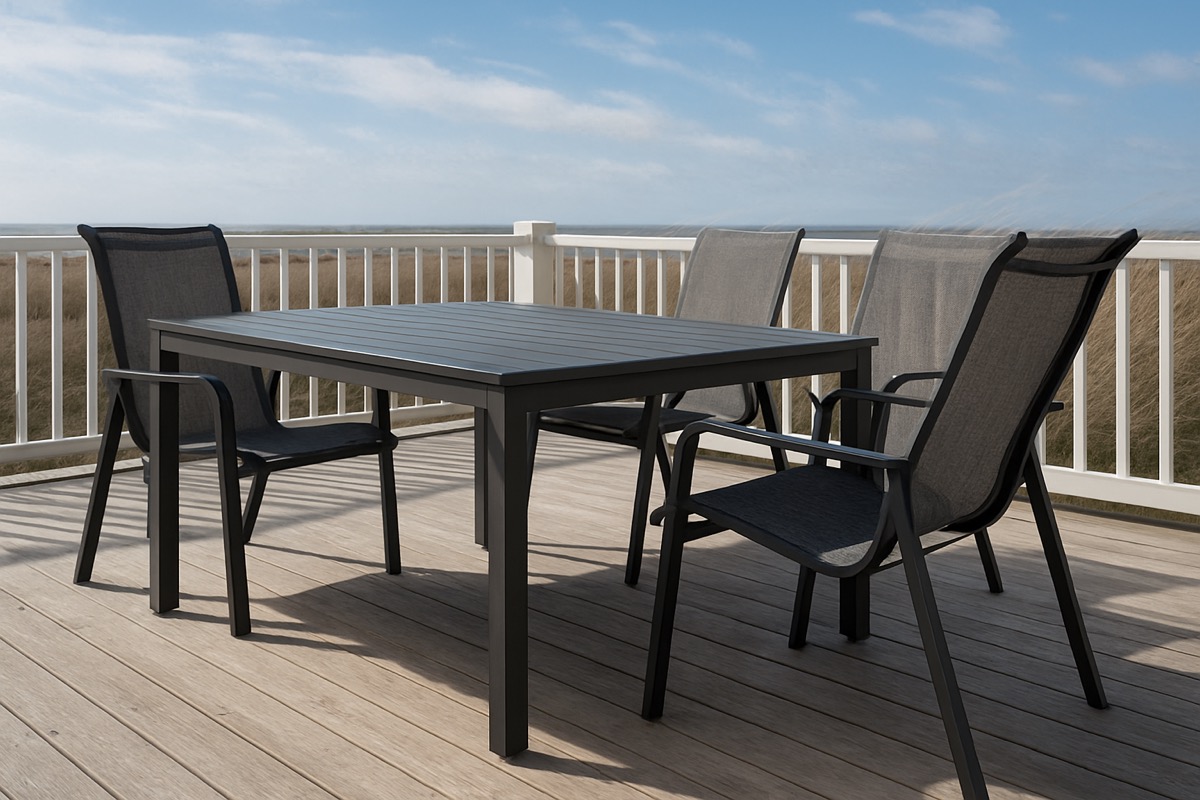
Beyond weight, you can physically secure key pieces. For umbrellas, a heavy freestanding base is essential, and a base rated well above the umbrella’s size adds margin for gusts. Some homeowners add furniture anchors or weighted feet to the lightest items, and tables can be paired with stabilizing umbrella stands that double as ballast. We also suggest grouping furniture so pieces shelter one another and arranging seating away from the railing edge, so that even if something does shift, it is not poised to go over the side. Positioning a heavier table at the most exposed corner can also act as a windbreak for lighter chairs tucked behind it. A few thoughtful precautions turn a vulnerable layout into a resilient one.
Materials That Handle Wind, Sun, and Storms
Lakefront furniture faces wind plus relentless sun, humidity, and rain, so material choice does double duty. Recycled-plastic furniture is a favorite of ours for these conditions because it is genuinely heavy, completely weatherproof, will not rot, fade quickly, or absorb water, and shrugs off the constant moisture near the water. Cast aluminum resists corrosion and carries useful weight. High-grade all-weather wicker over a rust-resistant frame holds up well when the frame is substantial. We generally steer lakefront customers away from very light, hollow pieces and toward materials that combine durability with the heft a windy deck demands.
The Case for Recycled-Plastic on the Water
Because moisture is constant near a lake, recycled-plastic furniture deserves a closer look for these settings. It is engineered to live outdoors permanently, so it does not need to be hauled inside, and its weight is a built-in advantage against wind. It cleans easily after pollen season, never needs sealing or painting, and resists the swelling and warping that plague some natural materials in humid air. For a lakefront deck where you want furniture that simply stays put and stays good-looking with minimal fuss, this category is often the most practical answer, and you can explore the options whenever you are ready.
Smart Habits for Storm Season
Even the best furniture benefits from a few good habits during Carolina storm season. Watch the forecast and close umbrellas before you head inside, never leaving one up overnight or when you are away. Keep cushions in a deck box rather than loose when the deck is unattended. After pollen season and big storms, give everything a quick rinse to keep it looking fresh. And do a seasonal check of umbrella bases, cushion ties, and any anchors to make sure nothing has loosened. These small routines protect both your furniture and your view, and they let you enjoy the lake without worrying every time clouds gather on the horizon. Many of the lakefront families we work with keep a simple end-of-day checklist by the door, and once it becomes routine it takes only a minute before you head inside.
Because windy, lakefront sites also raise broader severe-weather questions, the home preparedness guidance at Ready.gov is a worthwhile additional resource for securing your outdoor space ahead of storms.
Frequently Asked Questions
What is the best material for a windy lakefront deck? Recycled-plastic and cast aluminum are excellent choices because both carry real weight to resist tipping and stand up to constant moisture, sun, and pollen without rotting, fading quickly, or warping near the water.
How do I keep cushions from blowing away? Choose cushions with tie-down straps, opt for heavier high-density foam, store them in a deck box when the deck is unattended, or pick sling and woven seating that needs no loose cushion at all.
Should I avoid umbrellas on a windy deck? Umbrellas act like sails, so use a heavy base rated above the umbrella’s size and always close and secure the canopy whenever you leave the deck or a storm is approaching.
Is heavier furniture really worth it for wind? Yes. Mass is the first line of defense on an exposed deck, so on lakefront properties we consistently recommend the heavier of two comparable pieces because the extra weight keeps furniture planted through sudden gusts.
If your deck catches the wind, we can help you build a setup that stays put through every Carolina storm. Browse our weather-ready patio furniture, explore our recycled-plastic collection built for lakefront conditions, or call us at (704) 274-3222 and our team will help you choose pieces that hold their ground.