


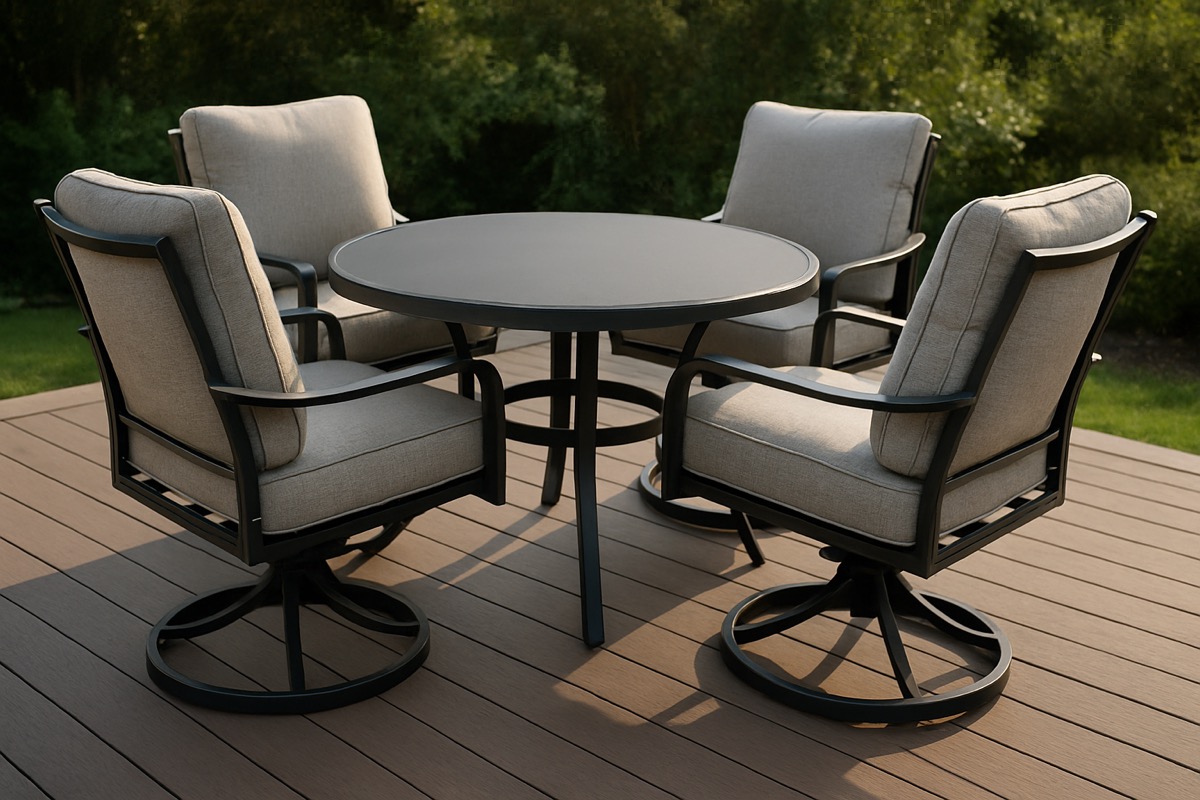
When families come in to put together a patio dining set, the table usually gets all the attention, but the chairs are where the daily comfort really lives. One of the first choices we help Charlotte and Lake Norman homeowners think through is whether to go with swivel chairs or stationary chairs. Both have loyal fans, and neither is wrong, but they create a different feel at the table and hold up differently over years of Carolina weather. Our team sees the long-term results of both, so in this guide we will share what we have learned to help you choose chairs you will still enjoy seasons from now.
How the Two Chair Types Differ
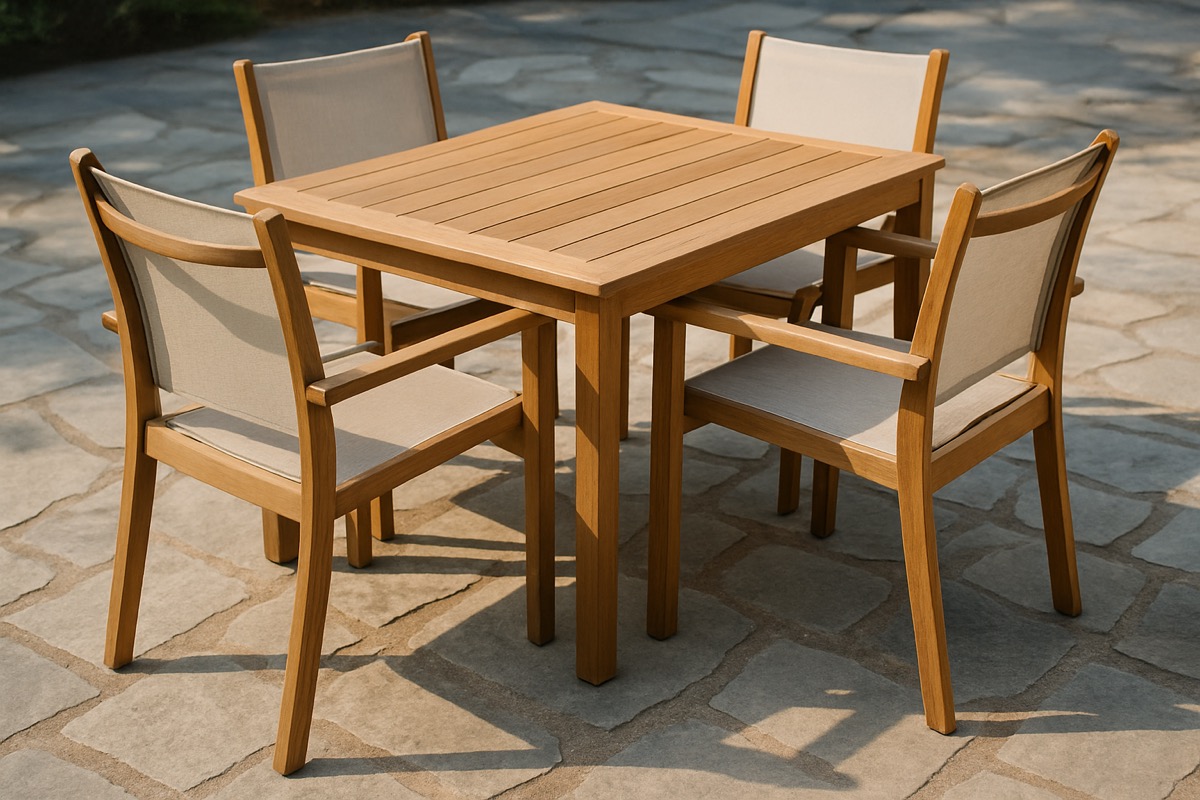
The distinction is simple in concept. Stationary chairs have a fixed frame; they sit where you place them and the seat does not move. Swivel chairs add a rotating base, and many also rock, so you can turn toward a conversation, swing out to stand, or gently rock while you relax. Some swivel models are full 360-degree spinners, while others are gliders that rock on a smooth arc. Knowing which motion you are getting matters, because a true swivel and a glider feel quite different and suit different patios and people.
The Appeal of Swivel Chairs
Swivel chairs are wonderful for sociable patios. When guests are spread around a deck or grouped at a large table, the ability to turn toward whoever is talking makes the whole space feel more connected. They are also genuinely convenient: you can rotate to step out without scraping the chair backward, which is a small thing that adds up over a season of meals. Many homeowners with rocking swivels tell us those seats become the most fought-over chairs on the patio, because the gentle motion is relaxing on a warm evening. For entertaining and lounging, swivel chairs are hard to beat.
The Appeal of Stationary Chairs
Stationary chairs win on simplicity and stability. There is no mechanism to wear out, nothing to wobble, and they tend to feel rock-solid the moment you sit. For households with very young children or older guests, a chair that stays exactly put can feel safer and steadier than one that turns underneath you. Stationary chairs are also typically lighter and easier to stack or move for cleaning, and they pull up neatly to the table without the wider footprint a swivel base needs. If you want fuss-free seating that simply works, stationary chairs deliver.
Comfort and the Feel at the Table
Comfort is partly about motion and partly about fit. Swivel chairs encourage a more relaxed posture because you can shift and turn naturally, which many people prefer for long, leisurely meals. Stationary chairs hold you in a consistent dining position, which some diners actually like for eating at the table. We always encourage customers to sit in both and notice how their body responds. The cushion, the seat depth, and the arm height matter just as much as whether the chair turns, so do not let the swivel question overshadow basic comfort.
Durability and Moving Parts
Any moving part is something that can eventually need attention, and a swivel mechanism lives outdoors through pollen, humidity, and rain. Quality swivel bases are sealed and built to shrug off the elements, but a budget mechanism can stiffen or squeak over time, so this is one area where buying a well-made chair pays off. Stationary chairs have no mechanism to worry about, which makes them inherently low-maintenance. When customers ask us about long-term reliability, we are honest: a good swivel will last for years, but a cheap one is a false economy, while a stationary chair has fewer ways to disappoint. It also helps to give swivel bases an occasional wipe-down after pollen season so grit does not work into the mechanism, a quick habit that keeps the motion smooth for the long haul.
Your Deck Surface Matters More Than You Think
The surface under your chairs influences which type works better, and this is a detail people often overlook. On smooth concrete, pavers, or composite decking, both styles glide and turn easily. On a wood-plank deck with gaps, or on grass and gravel, stationary chair legs can catch and a swivel base sits flatter and turns without snagging. Conversely, a swivel base needs a reasonably level spot to rotate smoothly, so an uneven flagstone patio can make a swivel feel rocky. We always ask customers about their surface before recommending one over the other, because the floor under the chair quietly shapes the experience.
Space, Footprint, and Storage
Practical logistics deserve a moment of thought. Swivel chairs generally have a wider, weightier base and do not stack, so they take up more room and are harder to tuck away during pollen season or a cold snap. Stationary chairs are often stackable and easier to slide aside or store, which matters if your deck does double duty or you cover everything when storms roll through. If you have a compact patio or limited storage, that difference can be the deciding factor. If your space is generous and your chairs stay out year-round, it matters much less.
Mixing Both for the Best of Both Worlds
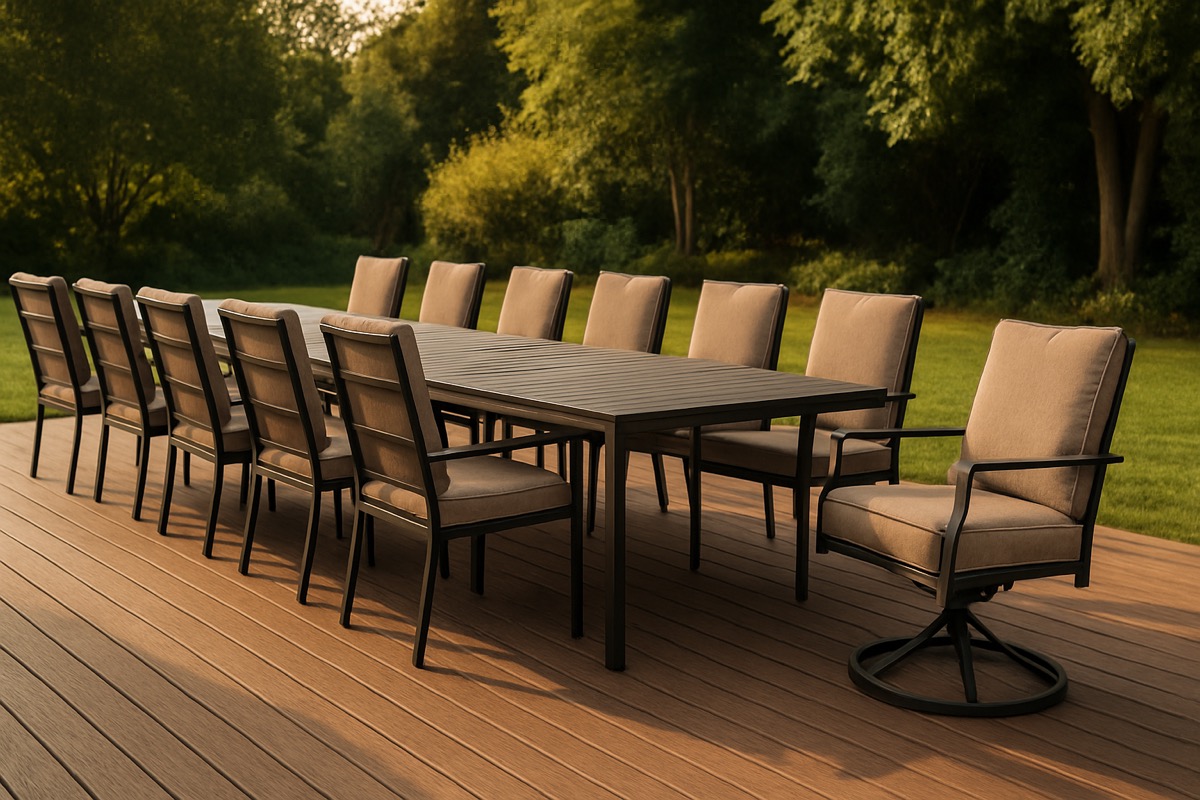
One approach we suggest often is not choosing at all, but blending. Many homeowners put stationary chairs along the sides of a long table where people sit briefly and swivel chairs at the ends or in the lounge area where guests linger. This gives you the planted stability where it helps and the relaxed motion where it shines, and within a single collection the styles usually coordinate so the mix still looks intentional. We often see this work beautifully on larger decks where the lounge zone and the dining zone serve different purposes, with the relaxed swivels reserved for the spot where people unwind after a meal. If you cannot decide, a thoughtful blend often turns out to be the most satisfying answer of all, and it lets different family members gravitate to the seat they like best.
For an independent perspective on selecting outdoor dining seating, the patio furniture buying guidance at Consumer Reports is a helpful additional resource when weighing swivel against stationary chairs.
Frequently Asked Questions
Are swivel outdoor chairs durable in humid Carolina weather? A well-made swivel base is sealed against moisture and pollen and will last for years, but a budget mechanism can stiffen or squeak over time, so swivel chairs are one place where investing in quality construction pays off.
Which is better for families with young kids or older guests? Stationary chairs feel steadier because they stay exactly in place, which many families prefer for very young children and older guests, while swivel chairs offer convenient movement better suited to social, adult-focused entertaining.
Do swivel chairs work on a wood-plank or uneven patio? Swivel bases work best on smooth, reasonably level surfaces like concrete or composite decking. On uneven flagstone they can feel rocky, while on a plank deck with gaps a swivel base often sits flatter than stationary legs that can catch.
Can I mix swivel and stationary chairs at the same table? Yes, and we often recommend it. Many homeowners use stationary chairs along the sides and swivel chairs at the ends or lounge area, and within one collection the styles coordinate so the mix still looks intentional.
The best way to feel the difference is to sit in both. Browse our outdoor dining chairs in swivel and stationary styles, learn how our team helps Charlotte and Lake Norman homeowners choose, or call us at (704) 274-3222 and we will help you find chairs that fit your patio and the way your family relaxes.