
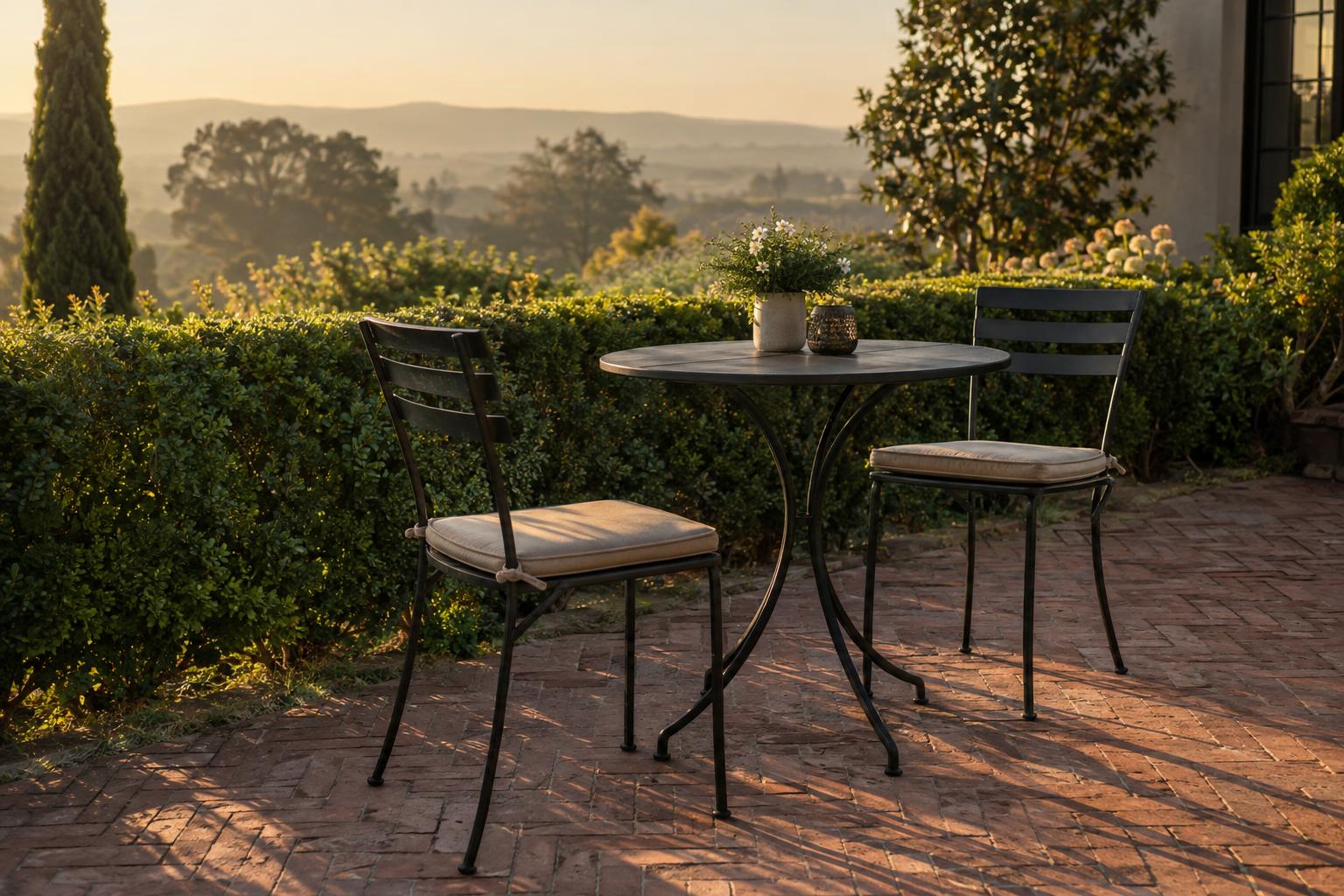


Choosing among outdoor dining table top materials comes down to how you actually use your patio: whether you eat outside daily or occasionally, how much sun the table gets, and how much maintenance you’re willing to do between seasons. Tempered glass, aluminum slat, poly lumber, and teak all show up regularly on Charlotte patios, and each behaves differently once summer humidity, pollen, and afternoon thunderstorms get involved. This guide walks through heat retention, glare, spill cleanup, wind stability, and weight so you can narrow down which tabletop fits the way you actually eat outside.
Tempered Glass Tabletops: Clarity, Heat, and Glare Tradeoffs

Tempered glass gives you a clean, modern look and it’s genuinely low-maintenance for wipe-down spills — sauce, wine, or sunscreen residue comes off with a damp cloth in seconds. Most outdoor dining tables use glass that’s 3/8-inch to 1/2-inch thick, tempered for safety so it fractures into small pebbles rather than sharp shards if it ever breaks. That said, glass has two real drawbacks in the Carolinas. First, direct summer sun heats the surface enough that a dark-tinted top can feel hot to bare forearms by early afternoon, so a table under at least partial shade performs better. Second, glare off a glass top on a bright June day can be uncomfortable for anyone facing west during dinner, which is worth considering based on your patio’s orientation.
On the plus side, glass tops resist pollen staining better than porous materials — a quick hose-off or glass cleaner handles the yellow-green film that coats everything in the Piedmont each spring. Glass also won’t fade, warp, or absorb moisture, so freeze-thaw cycles during a Carolina winter storm aren’t a concern for the top itself, though you’ll want to confirm the frame and glass retainer clips are rated for outdoor use. Weight-wise, a glass insert adds meaningful heft to a table, which actually helps with wind stability on an open deck. If you’re weighing a glass-top table against other frame styles, the patio dining set size guide is a useful next stop for matching table dimensions to your seating count before you commit.
Aluminum Slat and Solid Aluminum Tops
Aluminum tabletops, whether built from slatted planks or a solid poured surface, are one of the more practical outdoor dining table top materials for anyone who wants low weight without sacrificing durability. A powder-coated aluminum top typically runs 8 to 15 pounds lighter than an equivalent teak or poly lumber top, which matters if you rearrange furniture seasonally or need to move the table off the patio ahead of a hurricane remnant moving through in late summer. The powder-coat finish resists rust entirely, since aluminum doesn’t corrode the way steel does, and any scuffs can usually be touched up rather than requiring a full refinish.
Slat Gaps and Drainage
Slatted aluminum tops have small gaps, often 1/8 to 1/4 inch, between planks that let rainwater drain through instead of pooling. That’s genuinely helpful during the frequent pop-up thunderstorms that roll through Charlotte in July and August — you won’t come out to a puddled tabletop. The tradeoff is that small items like ice cubes or diced food can slip through the gaps, and some people find the ridged surface less comfortable for setting glassware flat.
Heat and Surface Feel
Aluminum reflects more heat than it absorbs compared to dark glass or metal with a matte black finish, but a lighter powder-coat color will stay noticeably cooler to the touch at midday than a charcoal or bronze finish. If your dining table sits in full sun rather than under a pergola or umbrella, ask about lighter powder-coat colors when you’re shopping to keep surface temperatures more comfortable through July and August.
Poly Lumber and Recycled HDPE Tops
Poly lumber, often made from recycled high-density polyethylene (HDPE), has become a common choice for outdoor tables because it looks like painted wood but doesn’t rot, splinter, or need annual sealing. A solid poly lumber tabletop typically weighs more than aluminum but less than solid teak, giving it decent wind resistance without being difficult to move for two people. It resists moisture completely, which means the freeze-thaw cycles of a Carolina winter won’t crack or warp the surface the way they might affect natural wood that hasn’t been properly treated.
Cleaning is straightforward: soap, water, and a soft brush handle most grime, and because the color runs through the material rather than sitting as a surface coating, minor scratches don’t expose bare wood or bare metal underneath. Poly lumber does hold heat somewhat differently than aluminum — darker colors like black or brown can get warm in direct sun, though not usually to the point of being uncomfortable the way tinted glass can. One thing to watch for is that inexpensive poly blends can flex or bow slightly across a wide tabletop span if the substructure isn’t well-supported, so check for a reinforced center brace on tables 72 inches or longer. For a broader look at what’s currently available in this category, browse the outdoor dining tables collection to compare poly lumber options against other top materials side by side.
Teak Tabletops: Natural Weathering and Long-Term Care
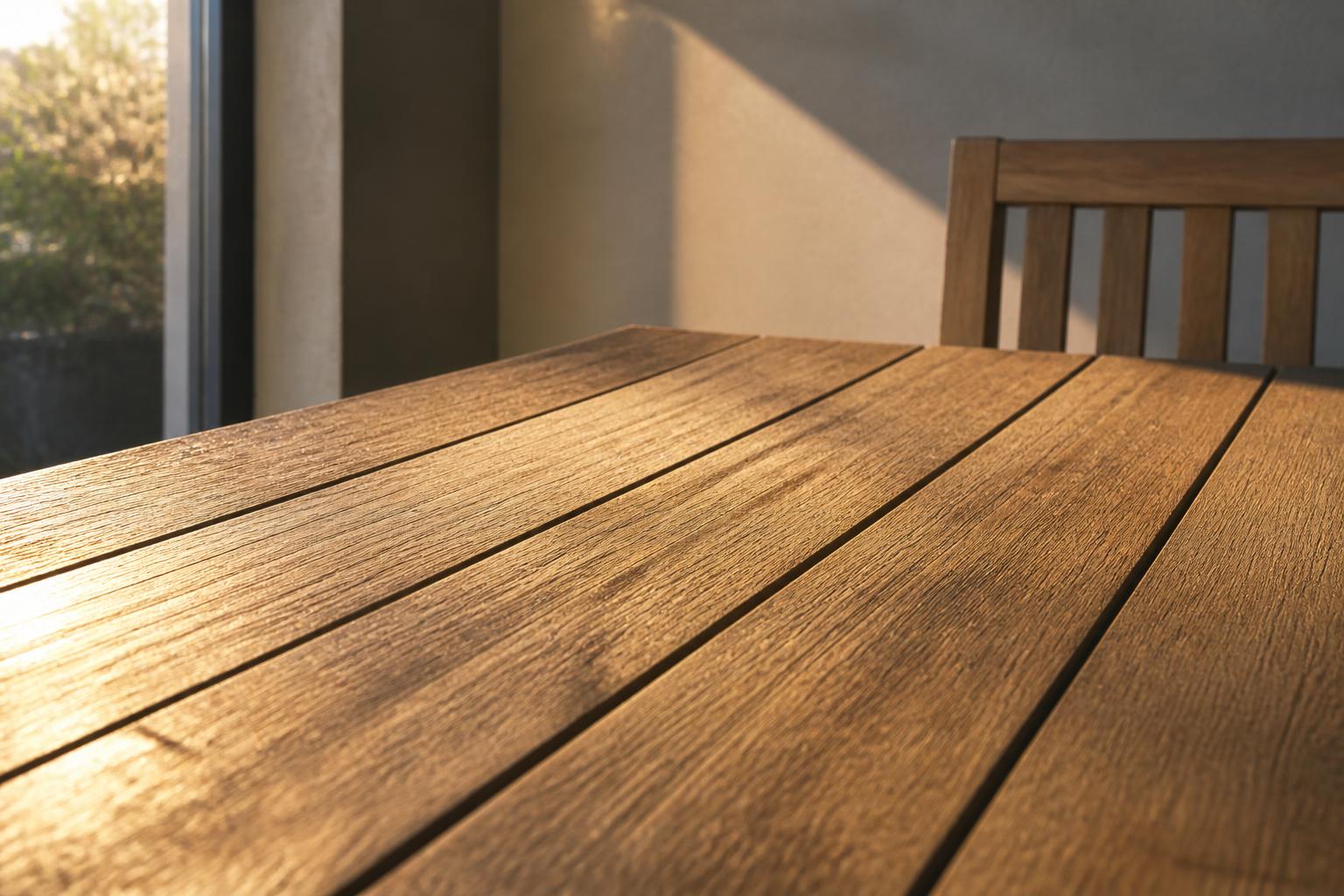
Teak remains a benchmark for outdoor dining tables because of its natural oil content, which resists rot and insect damage without chemical treatment. Left untreated, teak weathers to a silvery gray patina within about 6 to 12 months of consistent sun exposure — many owners prefer this look, while others apply teak oil or sealer every few months to maintain the original honey-brown tone. Neither approach is wrong; it’s purely a maintenance and aesthetic preference, and either way the wood itself holds up structurally for years when properly kiln-dried and finished at the joinery stage.
Teak tops are heavier than aluminum or glass, often adding 10 to 20 pounds more per table depending on thickness, which gives them excellent stability in wind without needing extra bracing. They handle Carolina humidity well since teak’s natural oils resist the moisture absorption that causes lesser woods to swell and crack. Spills wipe up easily on a sealed finish, though on an unsealed weathered surface, red wine or berry stains can take slightly longer to fully lift. If you’re comparing teak against composite or metal options, our teak patio furniture shopping guide covers grading, joinery, and what separates plantation-grown teak from lower-quality substitutes. Natural wood furniture generally requires more routine owner maintenance than metal or synthetic alternatives, which is worth factoring in if you’re not planning to oil or reseal on a schedule. The USDA Forest Products Laboratory publishes research on wood durability and finishing.
Matching Table Top Material to Your Patio Setup
Beyond the material itself, think about how your table top will interact with the rest of your setup. A glass top paired with a market umbrella needs a properly sized umbrella hole and collar, typically 2 inches in diameter, to keep the pole from wobbling in wind. The light weight of aluminum slat tops makes seasonal rearranging easy. Poly lumber suits homeowners who want a low-maintenance farmhouse look without wood upkeep, while teak fits a more traditional or coastal-inspired patio and ages gracefully over a decade or more of Carolina seasons. Whichever direction you lean, sitting at an actual sample table in a showroom tells you more in five minutes than any spec sheet — surface temperature, weight when you lift a leaf, and how your elbows feel against the edge all factor into daily comfort.
Frequently Asked Questions
Which outdoor dining table top material stays coolest in direct sun?
Light-colored powder-coated aluminum generally stays coolest to the touch, since it reflects rather than absorbs heat. Dark tempered glass tends to run hottest, especially by mid-afternoon. Poly lumber and teak fall in between, with color depth playing a larger role than the base material itself in how warm the surface gets by 2 or 3 p.m.
Do poly lumber or teak tabletops need refinishing after a Carolina winter?
Poly lumber needs no refinishing at all after winter weather, since the color runs through the material. Teak doesn’t require it either, but if you prefer the original brown tone rather than a natural gray patina, plan on an oil or sealer application once the pollen season passes each spring, roughly once every 3 to 6 months.
Is a glass-top dining table safe during Carolina thunderstorms and wind gusts?
Tempered glass itself is sturdy, but wind gusts can still shift lightweight tables if the base isn’t heavy enough. Look for a table with a substantial aluminum or steel base and, if you’re in an open area prone to strong gusts, consider securing an umbrella separately rather than relying on the table’s weight alone.
How much heavier is a teak tabletop compared to aluminum for the same size table?
A solid teak top commonly weighs 10 to 20 pounds more than an equivalent aluminum slat top of the same dimensions, depending on wood thickness and table length. That added weight improves wind resistance but makes the table harder for one person to reposition, so factor that into where you plan to keep it long-term.
If you’re still weighing these options, the showroom floor is the fastest way to decide — come run your hand across a glass, aluminum, poly lumber, and teak sample side by side and see which one fits how you actually eat outside. Stop by Carolina Patio Furniture in Charlotte, browse the full outdoor dining tables lineup in person, or call (704) 274-3222 and we’ll help you match a tabletop material to your patio’s sun exposure and your household’s maintenance style.