

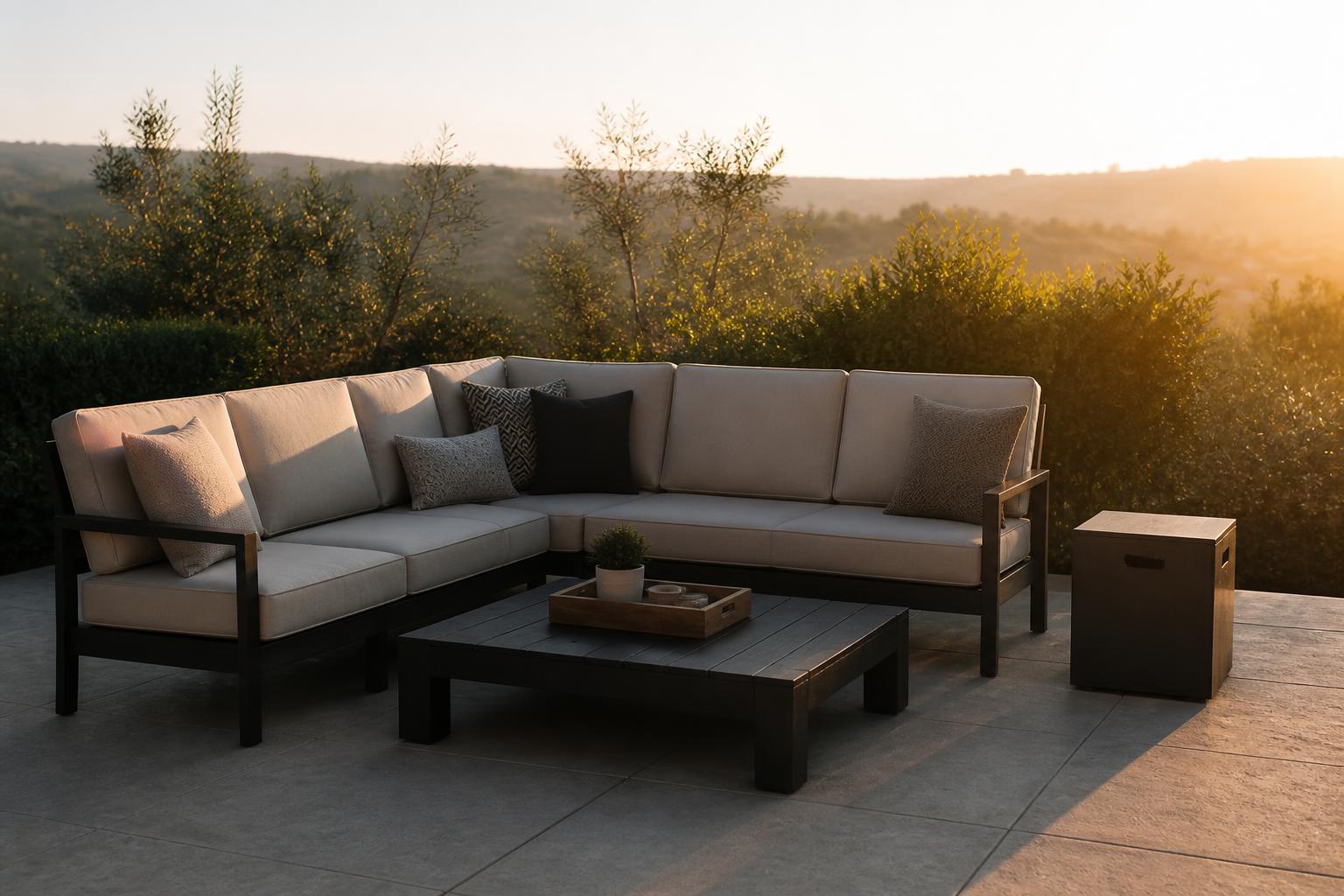
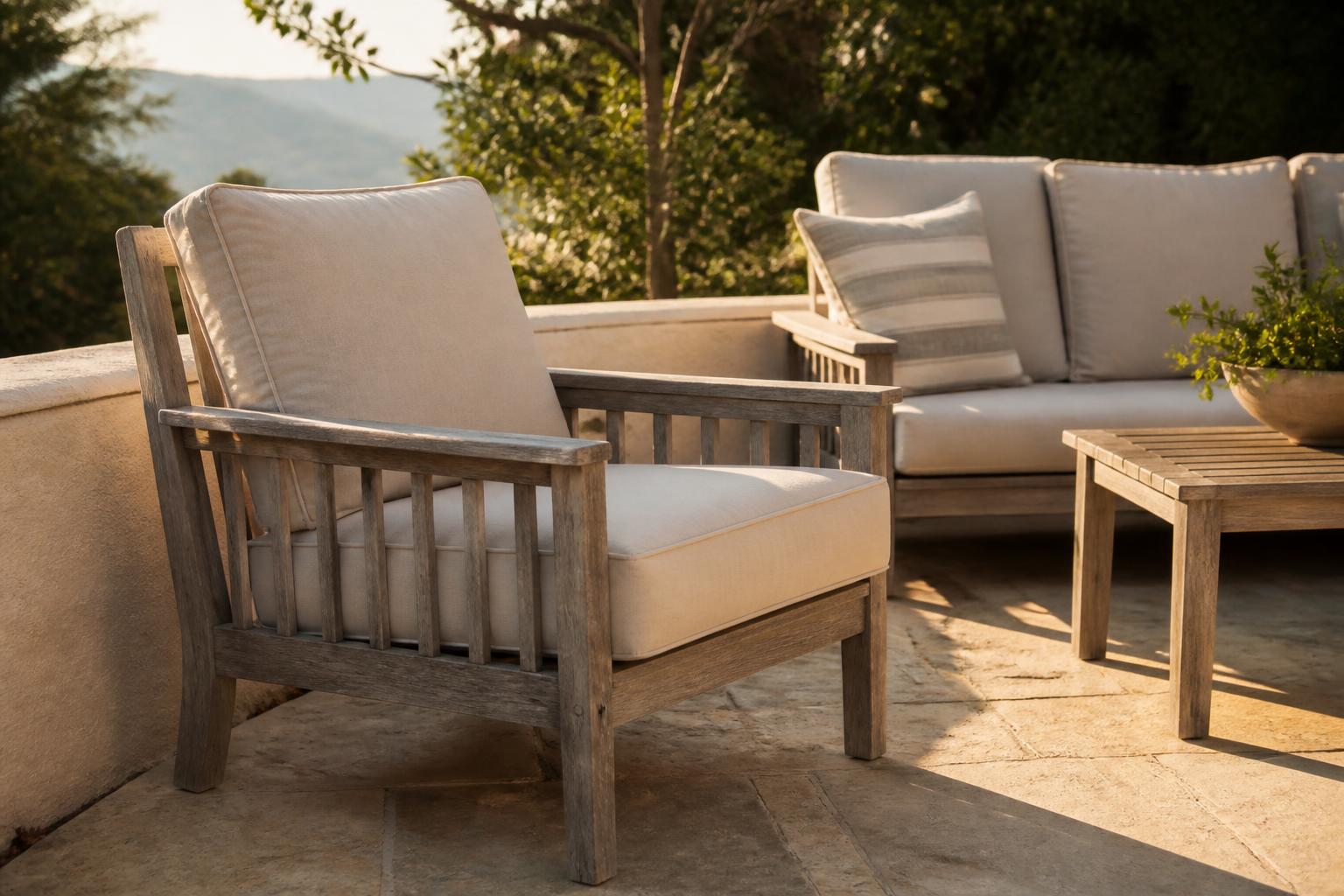

A dining chair that rocks every time someone reaches for the salt, a bistro table that spills coffee when a breeze passes, a chaise that tilts just enough to feel unsettled — these small annoyances almost always trace back to one issue: a patio surface that is not perfectly flat. Outdoor furniture leveling feet solve the wobble without requiring homeowners to relay flagstone, grind concrete, or replace an entire seating group. For the varied patio surfaces around Charlotte — brick pavers that have shifted with clay soil, stamped concrete with drainage slope, wood decks with settled joists — adjustable feet quietly restore balance and make outdoor rooms usable again.
How Adjustable Feet Correct an Uneven Surface
An adjustable foot is a threaded post that screws into or attaches to the bottom of a furniture leg, with a pad or glide at the base. Turning the post extends or shortens the leg by fractions of an inch, letting each corner meet the ground independently. On a four-leg table sitting across two pavers with a 3/16-inch height difference, only one foot needs adjustment. The result is a table that sits firmly on all four contact points, with no diagonal rock and no shim under one leg.
The mechanics are simple, but the effect is significant. Furniture that rests on all four points distributes weight evenly across the frame welds, reducing the flex that can loosen joints over years of use. Glides also lift metal or wood legs slightly off standing water after Charlotte’s summer thunderstorms, which slows corrosion at the leg base and helps wood dry evenly.

Common Leveling Foot Styles for Patio Use
Not every glide works outdoors. Felt pads meant for hardwood floors disintegrate within a season on stone or concrete. The styles most often seen on quality patio pieces include:
- Threaded nylon glides — a plastic pad on a metal stem, screwed into a captive nut welded inside the leg. Turning the pad raises or lowers that corner. Common on aluminum dining sets.
- Cup-style leveling feet — a wider base that cradles the leg tip, offering more surface contact on soft pavers or textured concrete.
- Swivel-pad levelers — the pad tilts independently of the stem, so the full pad meets the ground even when the leg sits at a slight angle over a sloped surface.
- Push-in glides with internal springs — used on some wrought iron pieces to absorb minor surface variation without manual adjustment.
Most quality outdoor dining tables, chairs, and bar-height pieces arrive with threaded glides already installed. Sling chairs and cast aluminum chaises sometimes use press-fit glides that can be swapped for threaded versions if a surface calls for it.
Diagnosing the Wobble Before Adjusting
Before turning any glide, confirm which leg is actually the problem. Place the piece where it will normally live. Push down gently on each corner in sequence. Two opposite corners will feel solid; the other two will alternate — one sits, one lifts. The lifting corner is the short leg on that surface. Mark it with a piece of tape.
Next, check the surface itself with a small level laid across the footprint of the furniture. A patio can be flat side-to-side but pitched for drainage front-to-back, or a single paver can have settled a quarter inch below its neighbors. Knowing whether the issue is one high spot, one low spot, or a general slope changes which foot gets extended and by how much.
Making the Adjustment Correctly
With the short leg identified, tip the furniture back gently and turn the glide counterclockwise (viewed from below) to extend it. A quarter turn typically moves the pad about 1/32 of an inch on standard threading. Set the piece back down and recheck by pressing each corner. Repeat in small increments — over-extending one foot creates a new wobble on a different diagonal.
For tables with heavy stone or tile tops, ask a second person to lift a corner rather than tipping the whole piece. This protects the top from stress at the mounting brackets. For chairs, simply flipping the chair upside down on a soft surface makes the glides accessible.
If a glide has seized from age or oxidation, a drop of silicone lubricant on the threads usually frees it. Avoid petroleum-based sprays, which can degrade certain plastics and stain adjacent stone.
Choosing Feet That Match the Patio Surface
The pad material matters as much as the adjustment range. On smooth concrete or porcelain tile, hard nylon glides slide easily and resist grinding. On brick pavers or flagstone, a wider cup-style pad prevents the glide from wedging into a joint. On composite decking, softer polyurethane pads reduce marring and grip better when a chair is pushed back from a table.
Charlotte patios often combine surfaces — a paver dining area transitioning to a concrete pad under a pergola, for example. Pieces that move between zones benefit from swivel pads that adapt to each surface without needing readjustment. The outdoor furniture collections at the Carolina Patio Furniture showroom include sets built with different glide styles matched to their intended use, and staff can point out which feet come standard on which frames.

Moisture, Mold, and the Space Under Furniture
Leveling feet do more than stop wobble — they also create a small air gap between the leg and the patio surface. That gap lets water evaporate rather than pool against the metal or wood. Patios that stay damp under furniture can develop mildew rings, algae, and in shaded areas, mold on cushions and frames. General moisture guidance from the EPA on mold prevention emphasizes drying wet materials quickly and reducing standing moisture, which applies directly to the microenvironment beneath outdoor furniture.
Homeowners with heavily shaded patios or screened porches may want to lift furniture slightly higher than the minimum needed for leveling, allowing better airflow. Sliding pieces a few feet during weekly outdoor cleaning also helps the surface underneath dry between rains.
When Leveling Feet Are Not Enough
Adjustable feet handle surface variations up to roughly a half inch across the footprint of a piece. Beyond that, the patio itself needs attention. Signs that the issue is structural rather than furniture-related include:
- Water pooling in a single depression after rain
- Pavers that rock underfoot when walked on
- Visible cracks widening across a concrete slab
- A deck board that flexes noticeably under weight
In these cases, a mason or deck contractor should assess the surface before new outdoor furniture is arranged. Placing a heavy dining table on a paver that is already loose accelerates the settlement and can eventually crack adjacent stones.
Frequently Asked Questions about Outdoor Furniture Leveling Feet
Can leveling feet be added to furniture that did not come with them?
In many cases, yes. Aluminum and steel legs often have a captive nut inside that accepts a standard threaded glide, and replacements in various stem diameters are available at hardware suppliers. Solid wood legs may need a T-nut installed first. Bringing a photo of the leg bottom to the showroom helps staff identify what will fit.
How often should outdoor furniture leveling feet be checked?
A quick check at the start of each outdoor season is reasonable, plus any time furniture is moved to a new spot on the patio. Freeze-thaw cycles and heavy rains can shift pavers slightly over winter, meaning the same table that sat level in October may need a small adjustment in April.
Do glides protect the patio surface itself?
Soft polymer glides reduce scratching on porcelain tile, stained concrete, and composite decking compared to bare metal leg tips. On natural stone, they also spread the load across a wider contact area, which helps prevent point pressure on softer stones like travertine.
Will adjustable feet loosen on their own over time?
Quality threaded glides hold their position through normal use, though pieces that are dragged repeatedly across rough surfaces can gradually rotate a glide. A quick check by pressing each corner takes only a moment and catches any drift before it becomes a real wobble.
Visit the Charlotte Showroom
Every patio is a little different, and matching furniture to a specific surface — pavers, poured concrete, wood, tile, or a combination — is easier in person. The team at Carolina Patio Furniture can walk through frame construction, glide styles, and layout options for the space at hand. Call (704) 274-3222 or contact the Charlotte showroom to talk through a specific patio or schedule a visit.