

If you’re weighing a teak vs cast aluminum dining set for your patio or deck, the decision usually comes down to how much weight you want to lift, how much upkeep you’re willing to do, and how the material handles Charlotte’s humid summers and occasional winter freezes. Both materials show up in showrooms because they’ve earned it — teak for its warmth and longevity, cast aluminum for its strength and low fuss. Read on for a practical side-by-side so you can match the right table and chairs to your household, your patio layout, and how you actually entertain.
Weight and Handling: What You’re Actually Lifting
Weight matters more than most shoppers expect, especially if you rearrange furniture for parties, store pieces seasonally, or live somewhere with gusty spring storms. A solid teak dining table with a 1.5- to 2-inch-thick top typically weighs 90 to 150 pounds for a 6-seat rectangular table, while a matching teak side chair runs 15 to 20 pounds. That heft is a benefit in open, breezy locations — teak furniture tends to stay put without tie-downs.
Cast aluminum is lighter per cubic inch than teak but often gets cast with thicker, more ornate frames to add visual weight, so the difference isn’t as dramatic as you’d think. A cast aluminum dining table for six generally weighs 70 to 110 pounds, and chairs run 12 to 18 pounds apiece. The real advantage shows up when you need to move things: two people can reposition a cast aluminum table for cleaning or storm prep far more easily than they can shift solid teak.
If your patio sees regular furniture rearranging — say, sliding the table aside for a fire table gathering or pulling chairs in before a thunderstorm — cast aluminum’s manageable weight is worth factoring in. If your set stays in one spot most of the year, teak’s mass becomes a non-issue and its stability becomes an asset.

Maintenance Routines: Oiling Teak vs Rinsing Aluminum
This is where the two materials diverge the most, and it’s often the deciding factor for busy households. Teak is a dense, oil-rich hardwood that can go untreated and simply weather to a silvery-gray patina — many owners like that look and do nothing more than an occasional soap-and-water wipe-down every 4 to 6 weeks. If you want to preserve the original honey-brown color, though, you’re committing to applying teak oil or sealer two to three times per year, more often in the Carolinas’ intense summer sun, which accelerates fading.
Cast aluminum, by contrast, comes finished with a powder-coated surface that resists rust because the metal itself doesn’t corrode the way steel or iron does. Routine care is simple: rinse with a garden hose every couple of weeks during pollen season, wash with mild soap and water monthly, and touch up any chipped powder coat with a matching paint pen if a chair leg gets scraped. There’s no oiling schedule and no patina decision to manage.
Both materials benefit from covers or a covered patio during the wettest stretches of Carolina winters, and neither should sit in standing water. If your dining set will get heavy weekly use with spills, kids, or entertaining, cast aluminum’s wipe-and-go routine tends to hold up better for people who don’t want a recurring maintenance task on the calendar. For a closer look at fabric-specific care that often pairs with these frames, check out the outdoor dining and seating collection to compare cushion options alongside frame choices.
Climate Performance in Charlotte’s Humid Summers and Winter Freezes
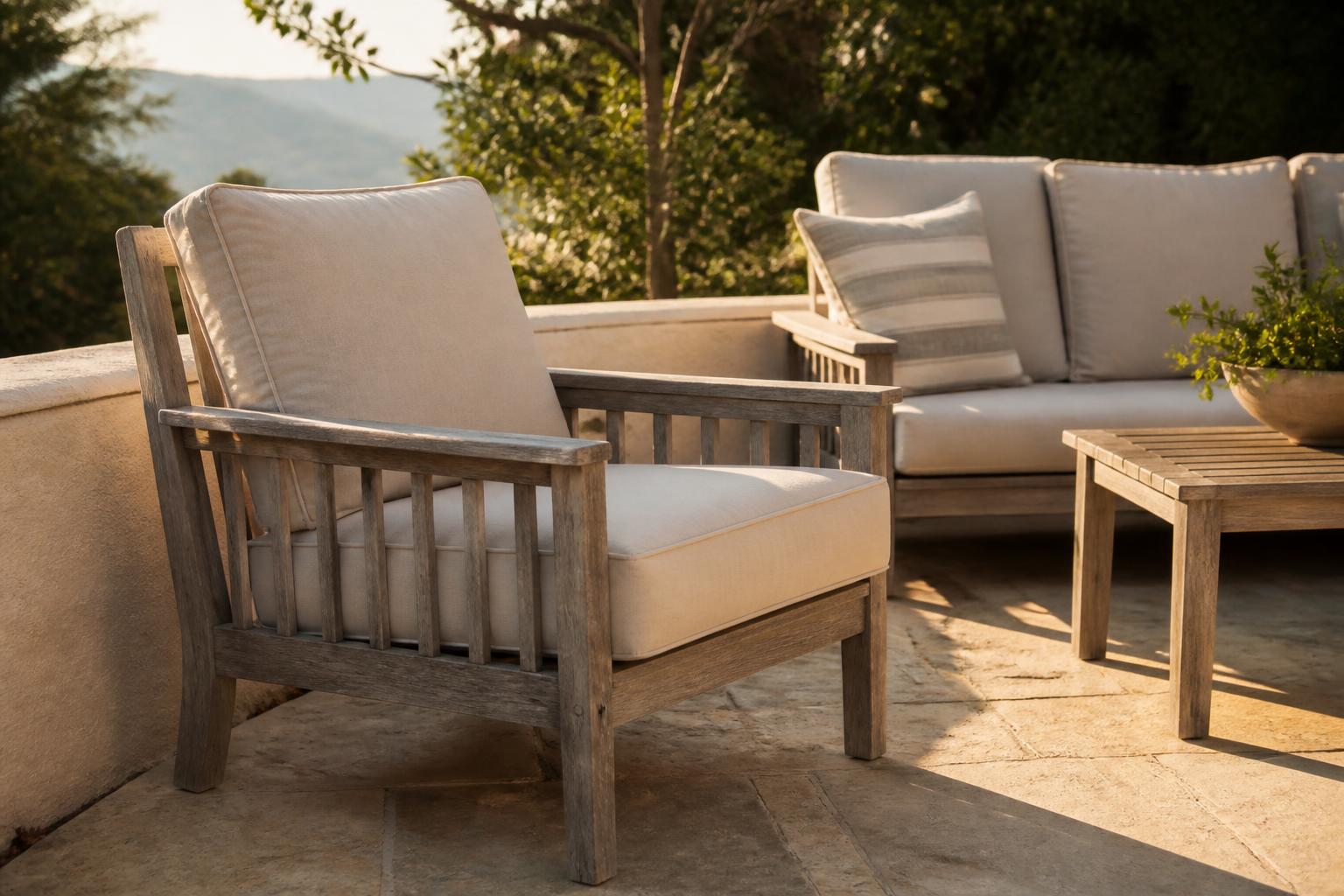
The Piedmont’s climate — hot, humid summers with heavy pollen in spring and occasional hard freezes in January — tests outdoor furniture differently than a dry Southwest climate would. Teak’s natural oils make it naturally resistant to rot, mildew, and insect damage, which is exactly why it’s been used in shipbuilding for centuries. It doesn’t crack or warp significantly with humidity swings the way softer woods do, and it tolerates a freeze-thaw cycle without structural damage as long as joints are properly sealed.
How Teak Handles Moisture
Because teak’s oil content sheds water, mildew is less likely to take hold than on other woods, but pollen film can still build up on the grain each spring and needs a scrub brush and mild soap to fully clear.
How Cast Aluminum Handles Temperature Swings
Cast aluminum won’t rust, rot, or crack from moisture, and it holds up well through freeze-thaw cycles since the metal doesn’t absorb water. Extreme cold can make the powder coat slightly more brittle to impact, so it’s worth handling chairs carefully if you’re moving them in near-freezing temperatures.

Longevity, Appearance, and Choosing Cushions or Fabric
Both materials are built for the long haul, but they age differently. Teak that’s left unoiled will silver over 6 to 12 months and can develop small surface checks (fine cracks) as it dries out — cosmetic, not structural, and part of the material’s natural character. Cast aluminum keeps its painted finish for many years when the powder coat isn’t chipped, and its color stays more consistent over time since it isn’t undergoing the same natural weathering process as wood.
Seat cushions and dining chair pads are where a lot of the comfort and color come from on either frame. Performance fabrics like Sunbrella resist fading, mildew, and moisture far better than standard outdoor fabric, and they pair equally well with teak’s warm wood tones or cast aluminum’s painted finishes — bronze, pewter, and black are common frame colors that photograph well against either bright or neutral cushion fabric. Plan on hosing off cushions monthly during pollen season and letting them air-dry fully before storing, since trapped moisture is what actually causes mildew, not the fabric itself.
If your dining set sees six to eight place settings regularly, check clearance: allow at least 36 inches behind each chair for someone to push back and stand, and a minimum of 24 inches of table length per seated guest. Both teak and cast aluminum tables commonly come in 6-, 8-, and 10-seat configurations, so measure your patio footprint before you fall in love with a particular size.
Budget, Resale, and Which One Fits Your Household
Teak dining sets generally carry a higher upfront cost because the hardwood itself is a slower-growing, more limited resource, and quality frames use mortise-and-tenon joinery that takes skilled labor to construct. Cast aluminum sets are typically more accessible in price while still offering a substantial, high-quality feel, since the casting process allows for detailed, sturdy designs without the material cost of solid hardwood.
If you’re the type of homeowner who enjoys a hands-on maintenance ritual and wants furniture that ages and develops character, teak rewards that attention. If you’d rather spend your weekend hosting instead of oiling wood, cast aluminum gets you a comparable dining experience with less time invested in upkeep. Either way, look for manufacturers whose frames meet recognized durability and safety benchmarks — buying guidance from resources like This Old House is a useful reference point when comparing construction quality between brands.
Frequently Asked Questions
Does a teak vs cast aluminum dining set make a difference for a covered patio versus an open deck?
Yes, somewhat. On a covered patio, both materials are shielded from direct rain and intense UV, so teak keeps its oiled color longer and cast aluminum’s powder coat shows less fading. On an open deck, both hold up structurally, but teak will silver faster and cast aluminum cushions will need more frequent rinsing from pollen and rain exposure.
Can I mix a teak table with cast aluminum chairs, or vice versa?
Yes, plenty of outdoor dining setups pair a teak tabletop with cast aluminum chair frames for a lighter overall weight and easier chair handling, while keeping the warm wood surface for dining. Just confirm the finish colors complement each other and that chair height clears the table’s apron by at least 7 inches for comfortable knee room.
How often should I reseal or oil a teak dining set to keep the honey-brown color?
Plan on applying a teak sealer or oil two to three times a year in the Carolinas, more frequently if the set sits in full afternoon sun. Clean the wood first with a soft brush and mild soap, let it dry completely for 24 to 48 hours, then apply a thin, even coat and wipe off any excess before it dries tacky.
Will cast aluminum furniture rust over time?
The aluminum itself won’t rust since it doesn’t contain iron, but the powder-coated finish can chip from impacts, exposing bare metal that may oxidize with a dull white residue rather than orange rust. Touch up chips promptly with a matching paint pen and rinse the frame every couple of weeks during heavy pollen season to prevent grit from scratching the finish.
Whether you land on solid teak or powder-coated cast aluminum, Carolina Patio Furniture can help you compare frames, cushions, and sizing in person at our Charlotte showroom, where you can see the weight and finish differences for yourself before you buy. Browse our dining set collection online, or call (704) 274-3222 to ask questions before you visit — we’re glad to walk you through which material fits your patio and your maintenance habits.