


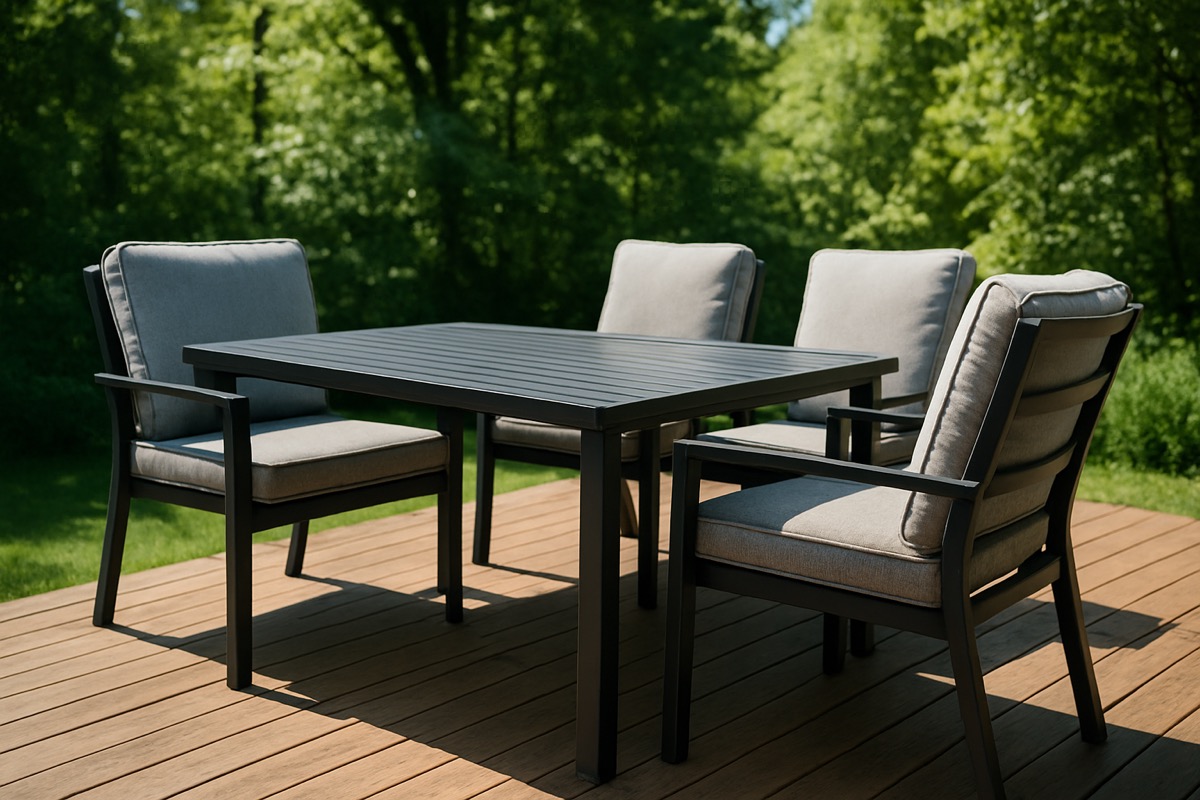
When folks walk into our Charlotte showroom on Park Road, one of the first questions we hear is some version of “which patio set is actually going to survive a Carolina summer?” More often than not, our team points them toward powder-coated aluminum. It is light enough to rearrange on a whim, sturdy enough to ride out a Lake Norman thunderstorm, and the finish keeps its color through years of humidity and pollen. In this guide we want to walk you through how the coating works, why it outlasts so many alternatives, and how to keep yours looking sharp.
What powder coating actually is
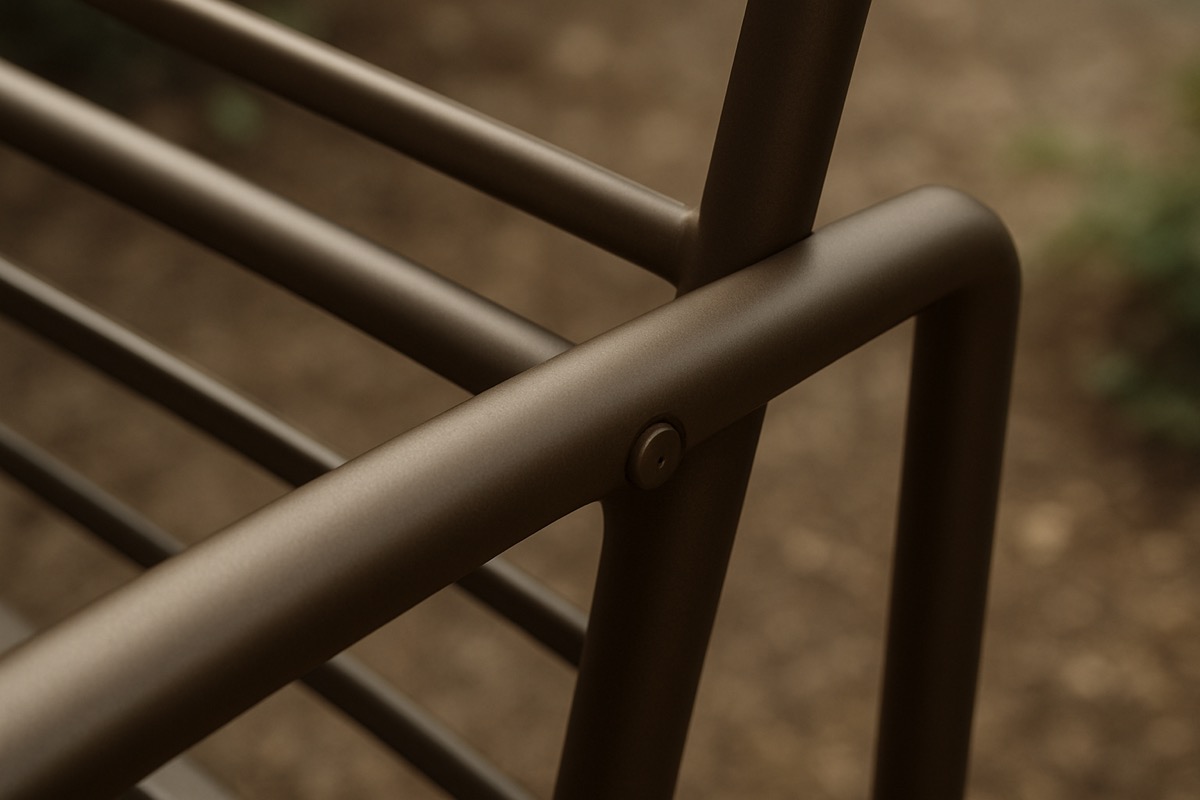
Powder coating is not paint. Instead of a liquid that brushes on and dries, it is a dry, finely milled pigment that gets applied to bare aluminum using an electrostatic charge. The frame then goes into a curing oven where the powder melts and chemically bonds into a single continuous shell. What you end up with is a finish that is fused to the metal rather than sitting on top of it. That bond is the whole reason this furniture handles our climate so gracefully.
Why it beats raw or painted metal in the Carolinas
Charlotte summers are humid, sticky, and long. Add the springtime pollen that coats everything yellow and the pop-up storms that roll through most afternoons, and you have a recipe that punishes ordinary patio finishes. Painted steel chips and rusts at every nick. Raw aluminum resists rust but oxidizes into a chalky gray haze. A properly cured powder coat sidesteps both problems. The surface is sealed, so moisture never reaches the metal, and the pigment is locked inside the cured layer rather than flaking off the surface.
How the color holds up to UV and pollen
The Carolinas get plenty of strong sun, and ultraviolet light is what fades most outdoor color over time. Quality powder coatings are formulated with UV-stable pigments and additives that slow that fade dramatically. We have customers who bought aluminum dining sets from us years ago and still get a near-original color when they give the frames a quick rinse each spring. Pollen, for all its mess, is mostly a cosmetic nuisance on this finish. It wipes away with water because it never bonds to the sealed surface.
Weight, strength, and everyday handling
One of the quiet joys of aluminum is how easy it is to live with. A six-chair dining set is light enough that one person can shuffle the whole arrangement to chase shade across the deck. Yet the alloy frames we carry are engineered with thicker walls and reinforced joints, so light does not mean flimsy. When a storm blows in off the lake, lighter pieces can lift, so we always suggest tucking chairs under the table or stacking them against a wall until the wind passes. That same lightness makes seasonal storage easy too, since you can carry a stack of chairs into the garage without straining your back.
How it compares to wrought iron and wood
Plenty of Charlotte homeowners come in torn between aluminum, traditional wrought iron, and natural wood. Each has its charm, and we are glad to talk through all three. Wrought iron has wonderful heft and a classic look, but it is heavy to move and will rust at any chip if you do not stay on top of it. Wood, especially teak, ages into a beautiful silver patina, yet it asks for regular oiling and cleaning to keep mildew at bay in our humidity. Powder-coated aluminum splits the difference, offering the look of finished metal with a fraction of the upkeep and none of the rust worry. For a busy family that wants to enjoy the patio rather than maintain it, that balance is usually the deciding factor.
Color and style options worth knowing
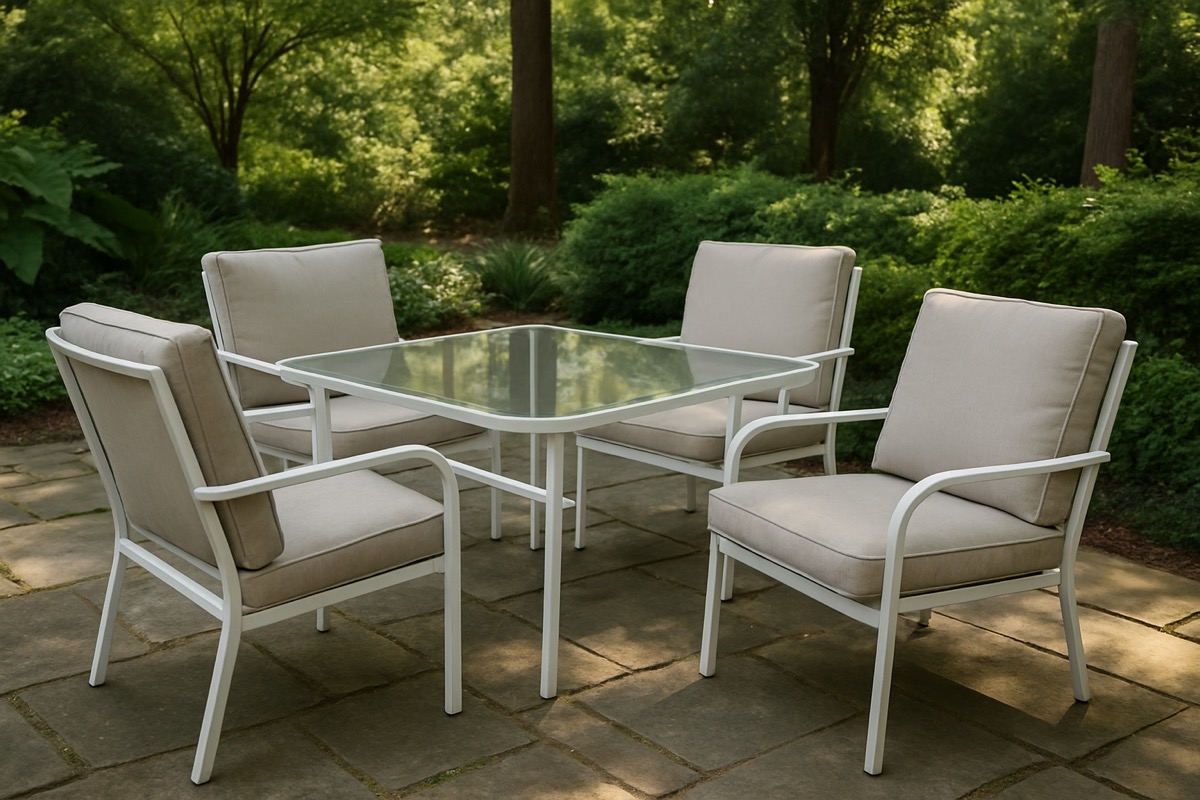
Because the pigment is in the powder, manufacturers can offer a deep range of finishes, from soft matte whites and warm bronzes to charcoals and even textured looks that mimic wrought iron. Lighter shades stay cooler to the touch in direct July sun, which matters when bare legs meet a chair seat at midday. Darker frames hide pollen and dust between cleanings and pair beautifully with the natural greens of a Carolina backyard. When you visit our shop, our team can show you how the same frame reads completely differently depending on the finish you choose.
Pairing aluminum with cushions and other materials
Aluminum frames are a natural partner for performance fabric cushions and for our recycled plastic accent pieces. Many of our customers mix an aluminum dining set with a recycled poly bench or side table to add warmth and texture. The frames also play nicely with glass and stone tabletops. The key is choosing cushions rated for outdoor use, because even the best frame deserves fabric that resists mildew and fading through a humid summer.
Simple maintenance that keeps it looking new
Caring for powder-coated aluminum is refreshingly low effort. A rinse with the garden hose and a wipe-down with mild soapy water two or three times a season removes pollen, dust, and pollen-season grime. Avoid abrasive pads and harsh solvents, which can dull the finish over many years. If you ever get a deep scratch that reaches the metal, dab it with a touch of matching outdoor paint to seal it back up. A cover or a covered porch helps too, though this furniture is built to live outdoors year-round here.
Is it the right choice for your space?
If you want something light, fade-resistant, and genuinely low maintenance, aluminum is hard to beat for a Charlotte-area patio. Families with a busy deck appreciate how easy it is to move and clean. If you crave the heft and permanence of cast metal or the rustic warmth of recycled poly, we carry those too, and we are happy to help you compare them side by side. The best way to feel the difference is to sit in the chairs and lift the frames yourself.
For an independent perspective on the durability of outdoor furniture finishes, the patio furniture buying guidance at Consumer Reports is a useful additional resource on powder-coated aluminum and similar materials.
Frequently asked questions
Does powder-coated aluminum rust? Aluminum does not rust the way steel does, and the sealed powder coat adds another barrier against moisture. Even in our humid summers, a well-cured frame stays corrosion-free for years.
Will the color fade in Charlotte sun? Quality coatings use UV-stable pigments that resist fading well. A light rinse each spring to clear pollen keeps the color looking close to new for a long time.
Can I leave it outside all year? Yes. This furniture is designed to live outdoors through Carolina seasons. We still recommend securing or stacking lighter pieces ahead of strong storms and giving frames an occasional cleaning.
How do I touch up a scratch? For a deep scratch that exposes bare metal, clean the spot and apply a small amount of matching outdoor-rated paint to reseal it. Surface scuffs usually buff out with mild soap and water.
Come see the difference in person. Stop by our Park Road showroom in Charlotte or browse what we carry on our shop page, take a look at our recycled plastic collection for a warmer mix-and-match option, or learn more about our team. You can also reach us at (704) 274-3222 and we will help you find a set built for the Carolina climate.