
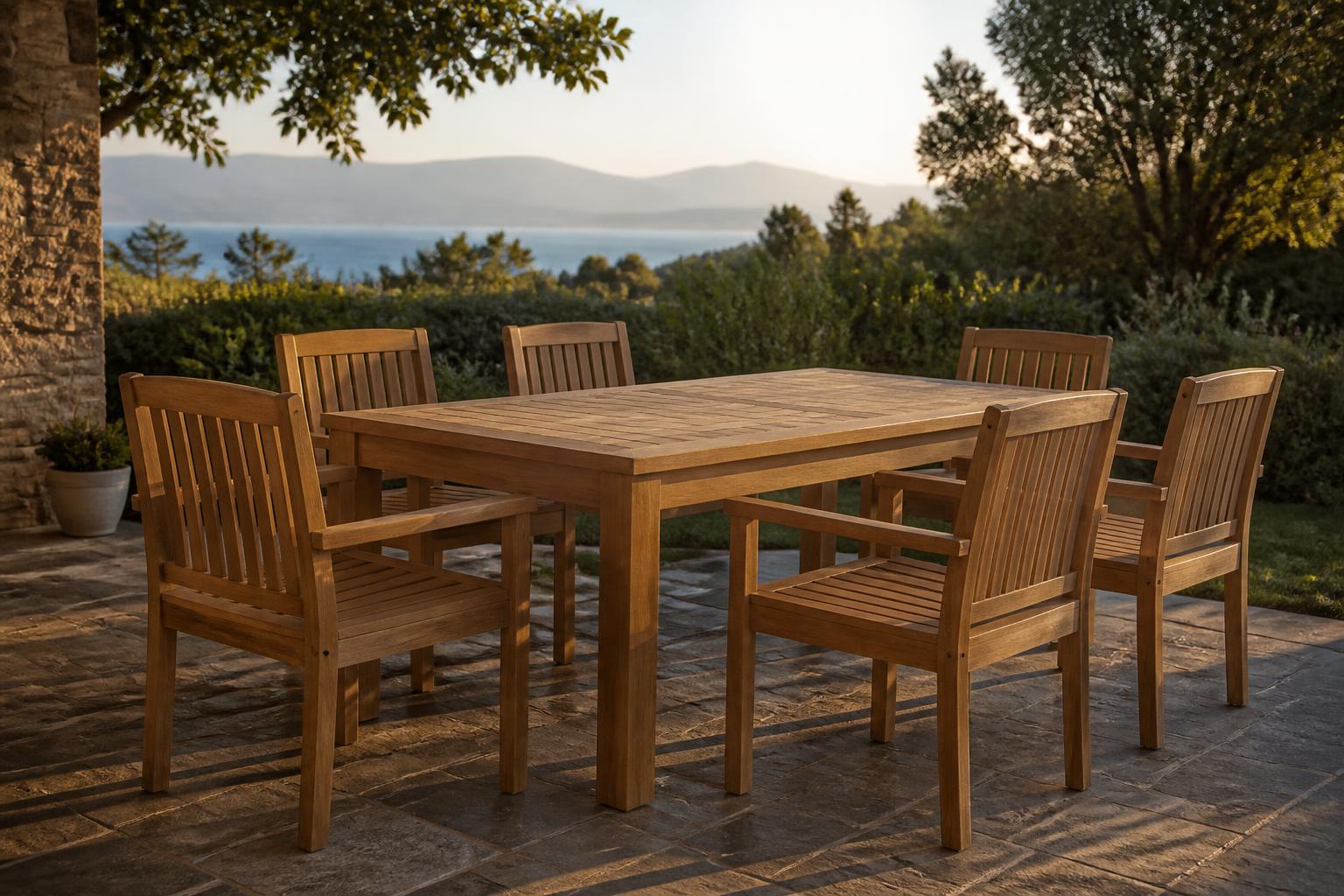
Teak outdoor dining table sizing comes down to two questions: how many people do you actually seat on a typical weeknight versus a full holiday cookout, and how much clear floor space does your patio, porch, or deck really have around the table. Get either one wrong and you end up with guests bumping elbows or a table that looks stranded in too much open space. This guide walks through the lengths, widths, and shapes that work for six to eight guests, plus the clearance measurements you need before you order.
Table Length by Guest Count
Teak dining tables are typically sold by length, and length is the single best predictor of how many people will fit comfortably. As a rule of thumb, plan on 24 inches of table edge per seated guest, though 26 to 28 inches is more comfortable if your household prefers extra elbow room.
For six guests, a rectangular table between 68 and 78 inches long works well, especially when paired with two chairs on each long side and one at each end. If you regularly host eight, look for a table in the 84- to 96-inch range, or choose one with a built-in extension leaf so you can shrink the footprint on ordinary days and open it up when family visits. Extension tables in teak are common because the wood’s natural oils and tight grain hold up to the moving hardware better than softer woods over years of outdoor use.
Width matters too. Most rectangular teak tables run 36 to 40 inches wide, which is enough to set a centerpiece or serving dishes down the middle without guests reaching over each other’s plates. Anything narrower than 34 inches starts to feel cramped once you add place settings for eight.
Choosing Between Rectangular, Round, and Oval Shapes
Shape affects both seating capacity and how a table reads in the space, so it’s worth thinking through before you settle on a length.
Rectangular Tables
Rectangular teak tables are the most efficient shape for six to eight guests because they let you line up chairs evenly along both long sides. They also fit naturally against a wall or railing on a narrower porch, since one side can sit close to a boundary while the other stays open for foot traffic.
Oval Tables
Oval tables soften the footprint of a long rectangular table while keeping nearly the same seating capacity. A 78-inch oval seats six comfortably and can flex to seven or eight if guests don’t mind sitting a bit closer at the rounded ends. Ovals also reduce the number of sharp corners to navigate around on a tighter deck.
Round Tables
Round tables work best for six guests at 60 inches in diameter, since everyone sits an equal distance from the center and conversation flows easily. Round tables larger than 66 inches can technically seat eight, but the center becomes hard to reach for serving dishes, so they suit smaller groups better than large ones.
Clearance Requirements for Patios, Porches, and Decks
Once you’ve settled on a length and shape, the next step is confirming the table actually fits your outdoor space with room to walk around it. This is where a lot of dining sets go wrong, even when the table itself is the right size for the guest count.
Measure at least 36 inches of clear space on all sides of the table for chairs to slide back and for people to pass behind seated guests. If the table backs up to a grill, railing, or planter on one side, that side needs only enough clearance for a chair to pull out, roughly 24 inches, but the opposite side and both ends still need the full 36 inches for comfortable circulation.
For a rectangular table seating eight, plan on a total footprint of about 12 feet by 9 feet once chairs and walking space are factored in. A 60-inch round table for six needs roughly a 9-foot by 9-foot area. Covered porches and screened rooms often have posts, steps, or ceiling fans to account for as well, so measure post-to-post distance, not just wall-to-wall, before finalizing a table length.
If you’re shopping outdoor dining sets for a smaller deck, an extension table or a table paired with a bench on one side can save several inches of required clearance compared to chairs on all four sides.
Teak Construction, Finish, and Long-Term Care
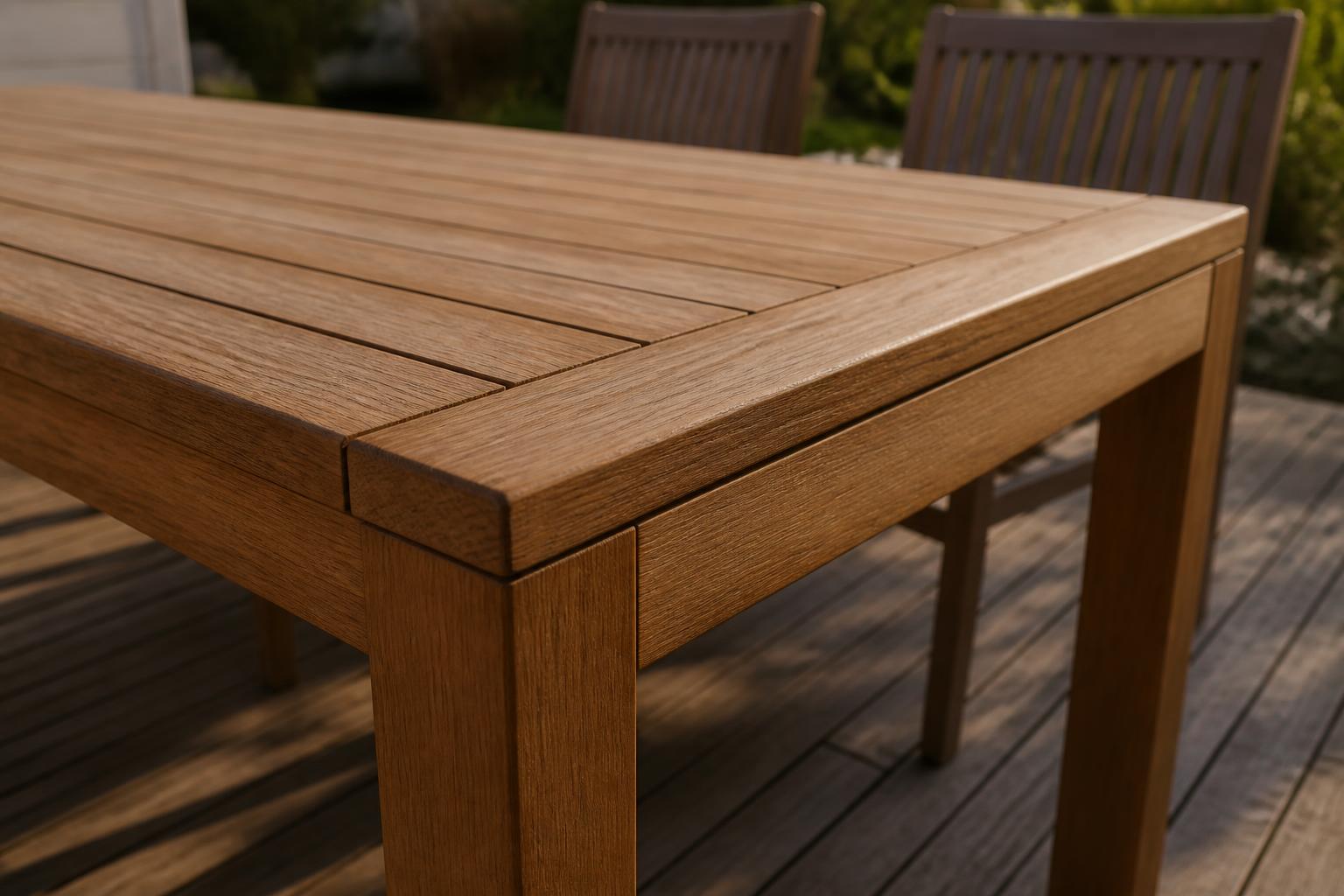
Teak is a popular choice for Charlotte-area patios because its natural oils resist moisture, insects, and rot better than most other woods, which matters given the region’s humid summers and occasional winter freezes. Grade A teak, cut from the heartwood of mature trees, is the standard for outdoor furniture and should be specified when you’re comparing tables, since lower grades from younger wood are more prone to warping.
Left untreated, teak weathers to a silvery gray patina within six to twelve months, which many homeowners prefer for its low-maintenance look. If you’d rather keep the original honey-brown tone, plan on applying a teak protector or sealer two to three times per year, more often during peak pollen season when a film builds up on the surface. Either way, a simple wash with mild soap and water every few weeks keeps pollen, dust, and mildew from settling into the grain.
Check that any table you’re considering uses mortise-and-tenon or comparable joinery rather than metal brackets alone, since solid joinery holds up better to seasonal wood movement. For general background on furniture durability standards, background references such as the Wikipedia overview of teak are a useful reference point when comparing outdoor materials beyond teak, including aluminum and HDPE alternatives.
Matching Table Size to Chair Style and Table Height
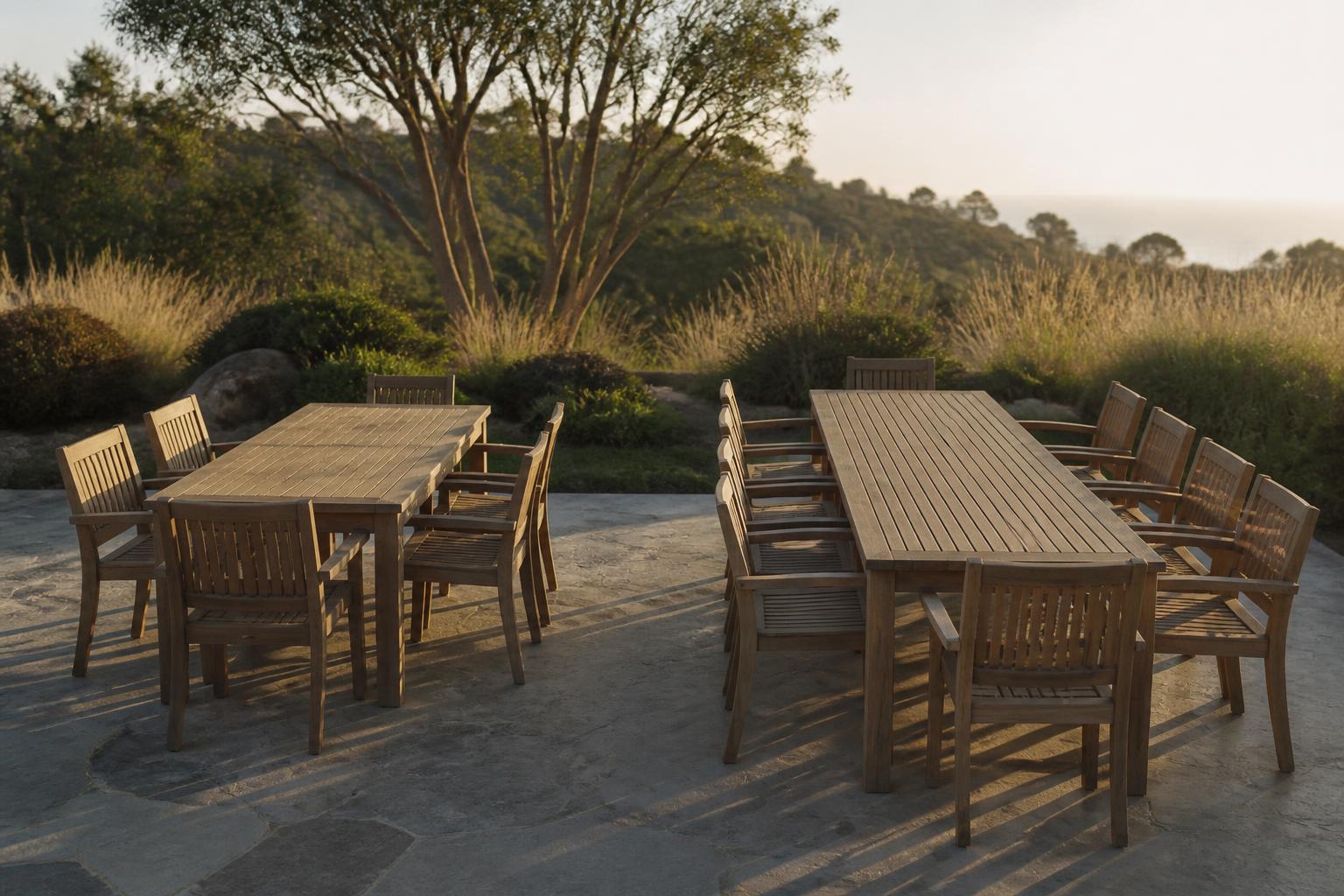
Table sizing isn’t only about length and width; the chair style you pair with the table changes how much room each guest actually needs. Armchairs typically require 26 to 28 inches of table edge instead of the standard 24 inches, since the arms add width on each side. If you’re planning to seat eight around a 96-inch table using armchairs at the ends and side chairs along the length, double-check that the overall math still adds up to eight full place settings rather than six or seven with cramped spacing.
Standard teak dining tables sit at a counter-height range of 28 to 30 inches, which pairs with dining chairs in the 17- to 19-inch seat height range. Bar-height teak tables, typically 40 to 42 inches tall, are less common for large groups because they require taller stools that take up more visual and physical space per guest, but they can work well for a narrower six-top on a rooftop deck or pool patio where a more casual feel is the goal.
Finally, factor in an umbrella if you plan to use one. A table built with a built-in umbrella hole needs a base large enough to anchor a 7- to 9-foot umbrella without tipping, and the umbrella canopy itself will need clearance beyond your seating footprint, so add another foot or two of buffer on that side of the patio.
Frequently Asked Questions
What size teak table do I need to seat 8 people comfortably?
Look for a rectangular or oval teak table between 84 and 96 inches long and at least 38 inches wide. This gives each guest close to 24 inches of table edge with enough width down the middle for serving dishes, without forcing anyone to sit closer than 24 inches apart at the corners.
How much clearance space does a teak dining table need on a patio?
Plan on at least 36 inches of clear space around the full perimeter of the table for chairs to slide back and guests to walk behind seated diners. For a table seating eight, that typically means a total footprint of roughly 12 feet by 9 feet once chairs and walking space are included.
Is an extension teak table a good option for variable guest counts?
Yes. An extension table lets you keep a smaller footprint for everyday use and open it up with a leaf when hosting six to eight guests. Look for tables with sliding or removable leaf mechanisms and mortise-and-tenon joinery, which tend to hold up better outdoors than lighter-duty extension hardware.
Does teak need to be covered or stored during Carolina winters?
Teak can generally stay outside year-round since it resists rot and moisture better than most woods, but covering the table during ice storms or heavy winter rain helps protect the finish and joinery. If you’ve applied a teak sealer, plan on reapplying it in spring after winter weather has passed.
If you’d like to see teak dining table lengths and shapes in person before you measure your patio, porch, or deck, stop by the Carolina Patio Furniture showroom in Charlotte or reach out to our team with your space dimensions and guest count. You can also call us directly at (704) 274-3222 and we’ll help you narrow down the right size and shape for your outdoor dining setup.