
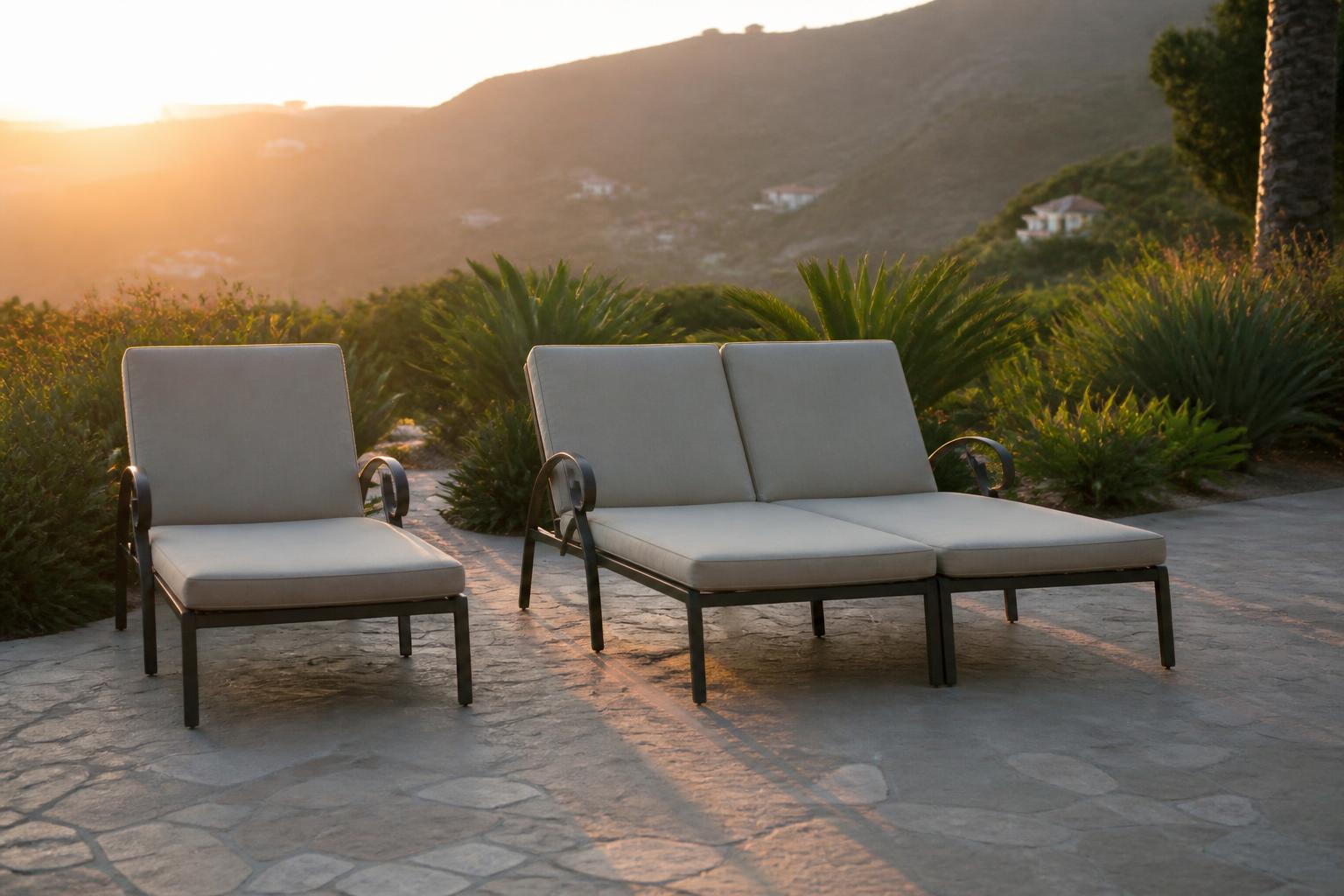
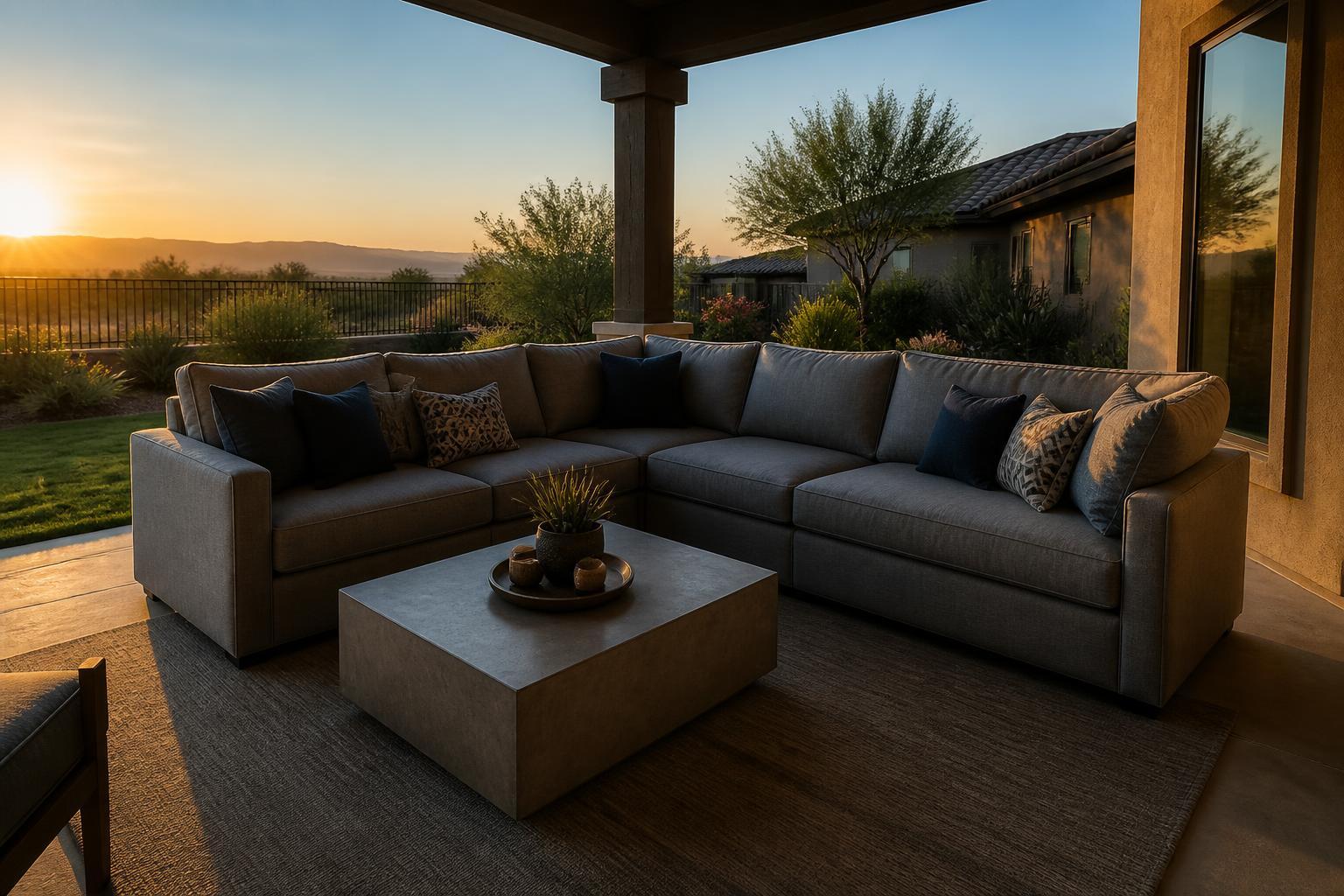
Deciding between a 5-seat vs 6-seat outdoor sectional starts with a tape measure, not a catalog. Both configurations use the same modular pieces — corner units, armless chairs, and sometimes a chaise — but the difference of one seat changes the footprint, the walkway space you need around it, and how many guests can actually sit comfortably. Before you fall in love with a fabric or frame finish, it helps to know how each layout will actually sit on your patio, deck, or covered porch. Below, we break down the real dimensions, clearance needs, and seating math so you can commit to a size with confidence.
Measuring Your Patio Before You Choose a Sectional Size
Start by measuring the usable area where the sectional will sit, not the full patio slab. Subtract space for grills, planters, steps, and any swing radius from doors leading outside. A typical L-shaped 5-seat sectional occupies roughly 8 feet by 8 feet, while a 6-seat L-shaped or U-shaped configuration often stretches to 9.5 to 11 feet on its longest side. If your patio is under 200 square feet, a 5-seat layout usually leaves enough breathing room for a coffee table and a side chair or two; larger patios of 250 square feet or more can generally absorb a 6-seat sectional without feeling cramped.
Pay attention to depth as well as width. Deep-seat sectional pieces commonly run 34 to 38 inches deep per section, which eats into patio space faster than shoppers expect. Sketch your patio to scale on paper or use painter’s tape outdoors to mark the actual sectional footprint before ordering. This single step prevents the most common sizing mistake we see in the showroom: buying a sectional that looks right in a photo but leaves no room to walk around it once it’s in place. Browse our sectional collection with these measurements in mind so you can compare footprints side by side.
Footprint Comparison: 5-Seat vs 6-Seat Configurations
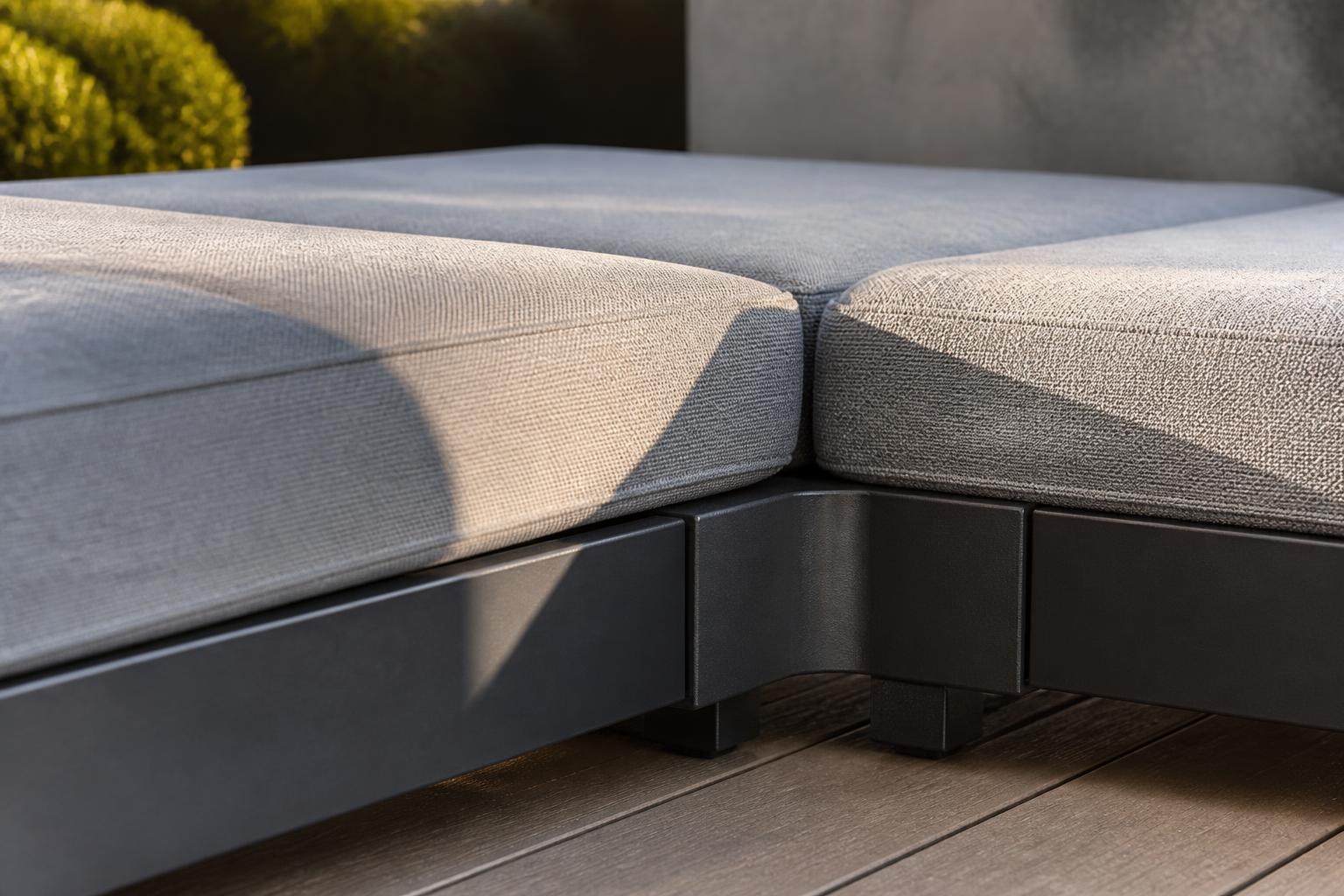
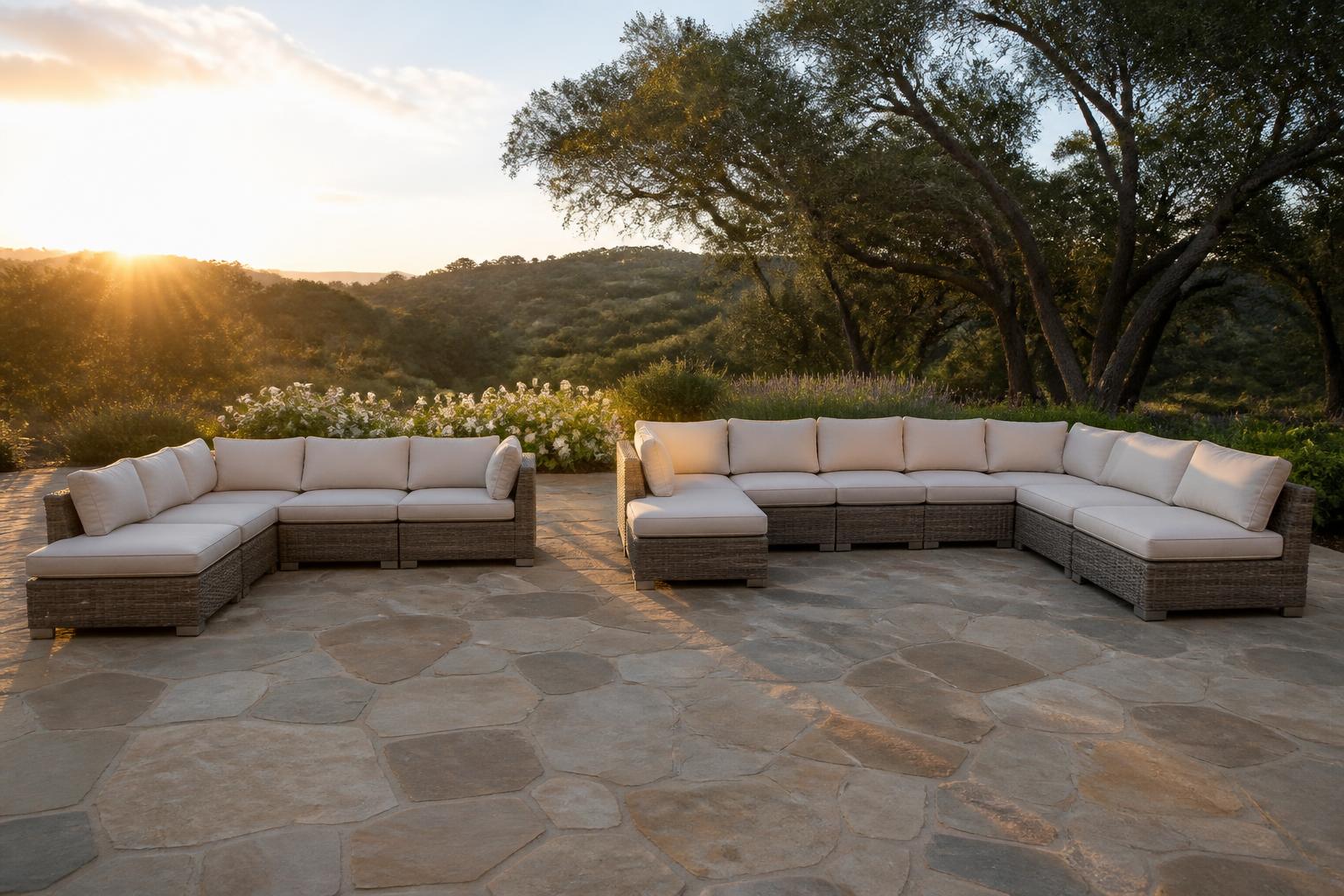
A 5-seat outdoor sectional typically combines two corner chairs, two armless chairs, and one armless chair or ottoman, forming an L-shape that measures approximately 93 inches by 93 inches, though exact dimensions vary by manufacturer and frame material. A 6-seat sectional adds one more armless module or a second corner piece, extending one leg of the L to 117 inches or more, or shifting the shape to a U-configuration that can measure 120 inches across the open face.
The extra seat doesn’t just add width — it adds weight and assembly complexity. Cast aluminum sectional frames run heavier per section (often 40 to 60 pounds per piece) than powder-coated aluminum or all-weather resin wicker over an aluminum frame, which typically weighs 25 to 40 pounds per section. If you plan to rearrange the layout seasonally, lighter aluminum-framed pieces are easier to shift for pollen season cleaning or storm prep, while heavier cast aluminum sectionals resist wind better once positioned.
Also consider chaise-inclusive layouts. Swapping one armless chair for a chaise lounge on either the 5-seat or 6-seat version adds roughly 26 to 30 inches of additional length to that section, which can push a 6-seat U-shaped sectional close to 12 feet along its longest dimension. Measure your intended wall or railing line against that number before finalizing a chaise-style layout, especially on covered porches with support columns or half-walls that limit usable width.
Walkway Clearance and Traffic Flow Around Each Layout
Seating capacity means little if guests can’t move around the sectional without turning sideways. Industry design guidance, similar to interior furniture standards referenced by home design resources like This Old House, recommends at least 30 to 36 inches of clearance for a primary walkway and a minimum of 18 to 24 inches for secondary pass-through space around occasional furniture. Outdoor layouts benefit from staying at the higher end of that range, since patio traffic often includes carrying trays, opening umbrellas, or maneuvering a grill cart.
A 5-seat sectional on an 8-by-8-foot footprint fits comfortably on patios as small as 12 by 14 feet, leaving roughly 2 to 3 feet of clearance on each open side for walking and pulling out a coffee table. A 6-seat sectional needs a patio closer to 14 by 16 feet to maintain that same 30-inch minimum walkway, particularly if you’re adding a fire table or dining set nearby. On smaller patios, homeowners sometimes squeeze in a 6-seat sectional by pushing it against two walls or a railing, which works but limits flexibility if you want to reposition seating for shade or wind direction later in the day.
Don’t forget vertical clearance either. If your sectional sits under a pergola or covered porch, confirm at least 12 to 18 inches of headroom above the highest point of the cushions, especially with high-back corner chairs that can measure 28 to 32 inches from seat to top of backrest.
Seating Capacity, Comfort, and Guest Count Planning
The seat count on a spec sheet doesn’t always match how many people will comfortably use the sectional. A 5-seat sectional genuinely seats five adults for conversation but comfortably hosts three to four people plus room for feet up or a shared side table during casual use. A 6-seat sectional is the more realistic choice if you regularly host gatherings of six or more, since it allows guests to spread out rather than squeeze onto shared cushions.
Standard seat width per person runs 24 to 28 inches on most modular pieces, so five seats total roughly 120 to 140 inches of combined seating width, while six seats total 144 to 168 inches. If your household frequently mixes adults and kids, or if you like to leave one corner open for a pet bed or plant stand, sizing up to the 6-seat option gives you flexibility without feeling like you’re short on room when the whole group shows up.
Also weigh how often you’ll use the full seating capacity versus everyday use. Many Charlotte-area homeowners find that a 5-seat sectional handles weeknight relaxing and small get-togethers just fine, while a 6-seat layout earns its footprint during weekend cookouts, holiday gatherings, or when hosting extended family. If you’re unsure, our team can walk through your typical guest count and recommend a configuration that won’t feel oversized on quieter evenings.
Frame Materials and Fabric Choices for Either Layout
Matching Frame Weight to Your Climate
In the Carolinas’ humid summers and occasional winter freezes, frame material affects long-term performance as much as size does. Powder-coated aluminum resists rust and stays lightweight, making it easier to move a 5-seat sectional off a deck before a storm. All-weather resin wicker over aluminum offers a heavier, more furnished look while still shedding moisture well. Cast aluminum, though heavier, holds up to wind exposure better on open patios where a 6-seat sectional’s larger surface area can catch gusts.
Cushion Fabric and Maintenance Intervals
Whichever size you choose, cushion fabric matters just as much as frame material. Performance fabrics such as Sunbrella resist fading and mildew far better than standard outdoor polyester, which matters through the Carolinas’ pollen season and long humid stretches. Plan to hose down cushions and wipe frames every 2 to 4 weeks during heavy-use months, and store or cover cushions when winter freezes are forecast to extend their usable life by several years.
Frequently Asked Questions
Is a 5-seat or 6-seat outdoor sectional better for a small patio?
A 5-seat outdoor sectional generally suits patios between 12 and 14 feet in each direction, since its roughly 8-by-8-foot footprint leaves enough room for the recommended 30 inches of walkway clearance. A 6-seat sectional needs closer to 14 by 16 feet to avoid feeling cramped, so measure your usable space first before deciding between the two sizes.
How much walkway space should I leave around an outdoor sectional?
Aim for at least 30 to 36 inches of clearance on primary walkways and a minimum of 18 to 24 inches on secondary pass-through areas. This range, drawn from general furniture layout standards, accounts for carrying trays, opening umbrellas, or navigating around the sectional with a grill cart or serving cart during gatherings.
Can I mix a 5-seat sectional with additional chairs to reach 6 or more seats?
Yes, many homeowners add one or two accent chairs alongside a 5-seat sectional to reach six or seven total seats without committing to a larger built-in configuration. This approach also adds flexibility, since accent chairs can be repositioned or removed independently of the main sectional frame for cleaning or seasonal storage.
What frame material holds up best for a larger 6-seat sectional in the Carolinas?
Cast aluminum and powder-coated aluminum both perform well in the Carolinas’ humid summers and occasional freezes, resisting rust better than untreated steel or wood. Cast aluminum’s added weight helps a larger 6-seat sectional stay stable in open, wind-exposed patios, while powder-coated aluminum offers a lighter option if you plan to rearrange or move the sectional seasonally.
If you’re weighing a 5-seat vs 6-seat outdoor sectional for your own patio, the team at Carolina Patio Furniture can help you measure your space and compare real floor samples side by side. Call (704) 274-3222 or stop by our Charlotte showroom to sit in both configurations, check cushion fabrics in person, and get in touch with our team to plan a layout that fits your patio and your guest list.