


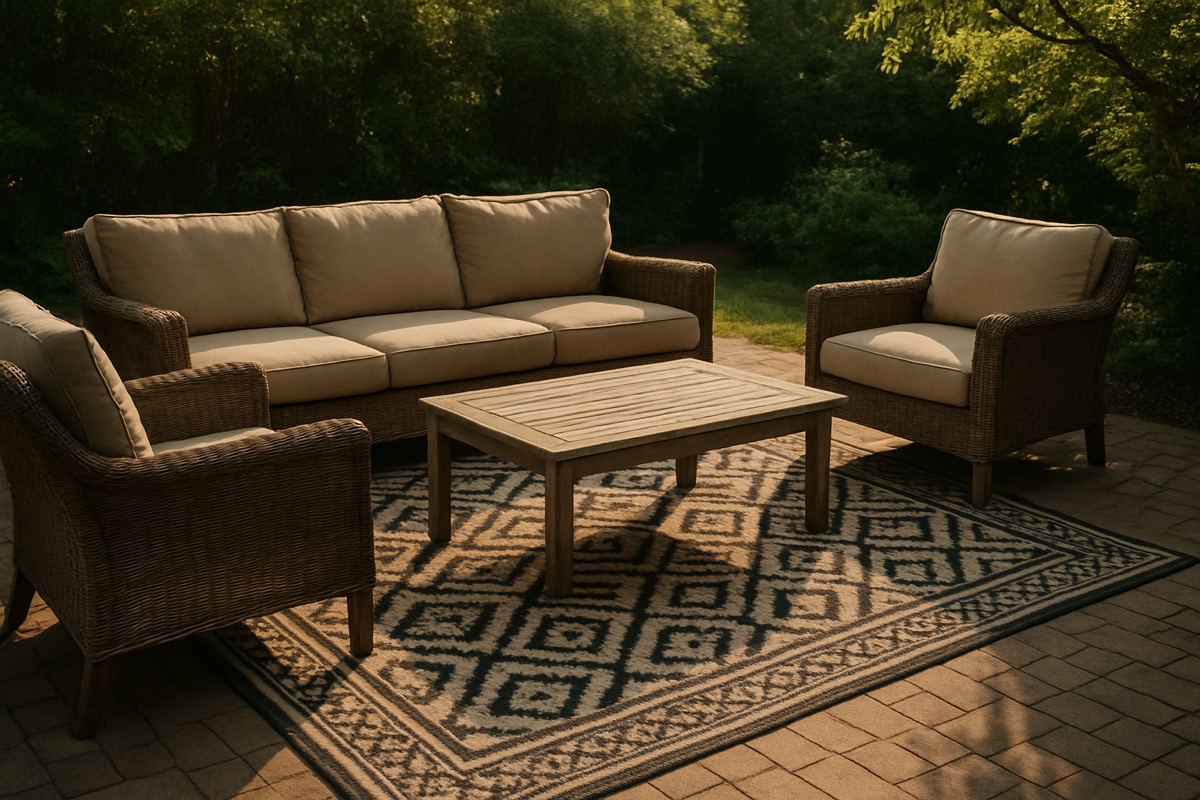
An outdoor rug is one of the easiest ways to make a patio feel finished, and it does more than look good. The right rug anchors a seating area, softens hard surfaces underfoot, and pulls a collection of furniture into a single, intentional room. We help Charlotte homeowners choose outdoor rugs every week, and the questions are always the same: what material lasts here, what size do I need, and how do I keep it from fading or mildewing through a humid Carolina summer? Here is how we think about it.
What an outdoor rug actually does for a patio
A patio without a rug can feel like furniture floating on a slab. A rug defines the footprint of a conversation area, gives the eye a boundary, and visually connects a sofa, chairs, and coffee table into one grouping. On a wood deck or stamped concrete near Lake Norman, a rug also adds warmth and texture that hard surfaces lack. Beyond looks, it cushions bare feet on a hot afternoon and reduces the slick feeling that smooth pavers can get when they are wet from an afternoon storm. The anchoring effect is the real payoff: a well-placed rug makes even a modest set look designed.
Pick a material built for Carolina weather
Material is where most rug decisions are won or lost. For our climate we steer customers toward polypropylene and other synthetic flatweaves, which shed water, resist mildew, and clean up with a hose. These fibers stand up to the humidity and the long, sunny stretches we get from May into September. Avoid natural jute and sisal for uncovered patios, because they hold moisture, attract mildew in our muggy air, and break down quickly. A quality synthetic outdoor rug is the difference between a rug that lasts a season and one that lasts years.
Size the rug to your furniture, not the patio
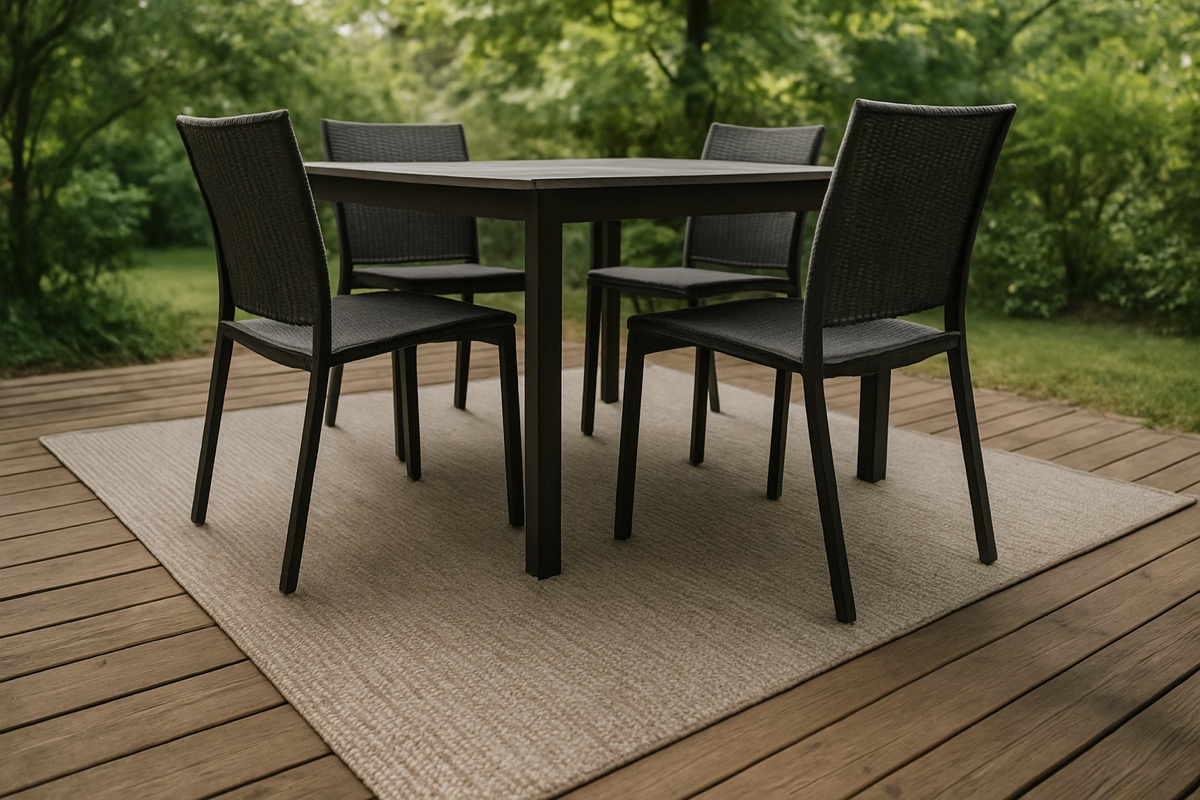
The most common mistake we see is a rug that is too small. A good rule is that the front legs of every seating piece should rest on the rug, which ties the grouping together. For a full seating set, that usually means at least the front feet of the sofa and chairs land on the rug, with the coffee table centered. For a dining set, the rug should extend far enough that the chairs stay on it even when pulled out, which typically means adding at least two feet beyond the table on every side. Measuring your furniture footprint first, then choosing the rug, prevents the floating look.
Match style, color, and pattern to your space
Once material and size are settled, the fun begins. Lighter, neutral rugs keep a small Charlotte patio feeling open and airy, while bold patterns add personality to a larger deck. We often suggest pulling a color from your cushions or a nearby planting bed to tie the whole space together. Stripes can make a narrow balcony feel wider, and geometric patterns hide pollen and everyday dirt better than solids, which matters in spring when Carolina pollen coats everything yellow. The right pattern is both a design choice and a practical one.
Keep the rug from sliding and bunching
An outdoor rug that slides is a trip hazard and an eyesore. On smooth surfaces like sealed concrete or composite decking, an outdoor-rated rug pad keeps the rug flat and adds a little cushion. Rug pads also let air circulate underneath, which helps the surface below dry faster after rain. On windy lakefront decks, anchoring the corners with furniture legs or planters keeps the rug from lifting in a gust. A flat, secure rug looks better and lasts longer because it is not constantly shifting and abrading.
Plan for pollen, humidity, and summer storms
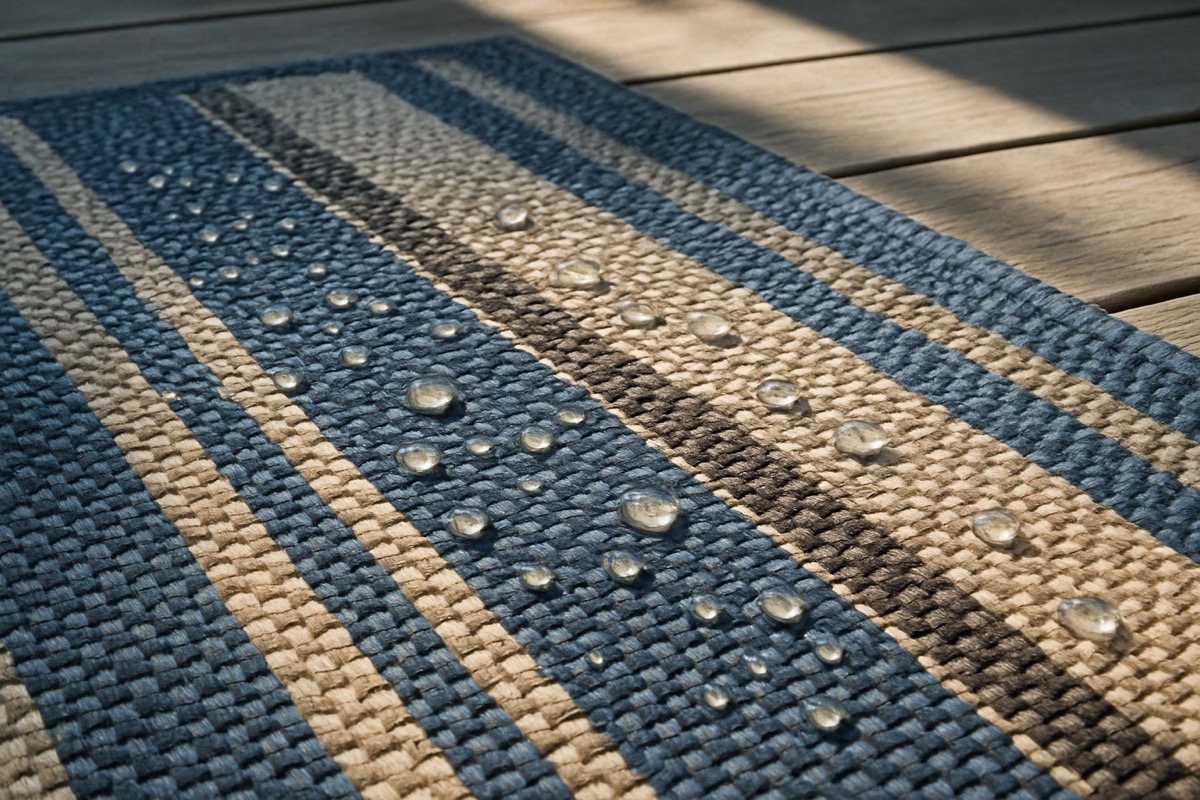
Carolina weather throws three challenges at outdoor rugs: spring pollen, summer humidity, and frequent afternoon storms. The good news is that synthetic rugs handle all three. When pollen season hits, a quick hose-down clears the yellow film. After a storm, lift a corner or hang the rug to let both sides dry so moisture does not get trapped against the deck. Choosing a rug with an open, quick-drying weave makes this maintenance almost effortless and keeps mildew from getting a foothold in our humid months.
Clean and store your rug the easy way
Maintenance for a synthetic outdoor rug is refreshingly simple. For routine cleaning, shake or sweep off debris, then rinse with a hose and mild soap, and let it dry fully before laying it back down. Spot-treat spills promptly so they do not set. While many outdoor rugs can stay out year-round here, rolling the rug up and storing it in a dry deck box during long rainy stretches or over winter extends its life and color. A clean, dry rug holds its appearance season after season.
Layer rugs with the rest of your patio
A rug works best as part of a coordinated patio, not an afterthought. We like to choose the rug alongside cushions, throw pillows, and an umbrella so the colors speak to each other. On a deep-seating set, a rug grounds the lower, lounge-style furniture and makes the area feel like an outdoor living room. Near a dining set, it signals a distinct zone for meals. On larger Lake Norman decks, two rugs can even define separate areas, one for dining and one for lounging, so a big open space reads as a series of comfortable rooms. Thinking of the rug as the foundation layer, then building furniture and accents on top, is the approach that gives Charlotte patios that pulled-together, room-like feel.
Budget and value over the long run
It can be tempting to grab the cheapest rug on the shelf, but in our climate the bargain option often costs more over time. A thin, low-quality rug fades fast in the Carolina sun, frays at the edges, and may need replacing every season. A well-made synthetic outdoor rug holds its color, resists wear, and easily lasts several years with simple care. Spread across those years, the better rug is usually the better value, and it keeps your patio looking intentional instead of tired. We help customers weigh that long-term math so the rug they choose still looks great a few summers from now.
For more on using outdoor rugs to define and anchor a patio, the outdoor decorating ideas at HGTV are a helpful additional resource.
Frequently asked questions
What is the best outdoor rug material for the Carolina climate? Polypropylene and other synthetic flatweaves are ideal. They shed water, resist mildew in our humidity, clean with a hose, and hold up to long sunny summers far better than natural jute or sisal.
How big should my outdoor rug be? Size it so the front legs of your seating pieces rest on the rug. For a dining set, extend the rug at least two feet beyond the table on all sides so chairs stay on it when pulled out.
Will an outdoor rug get moldy in Charlotte’s humidity? A quality synthetic rug resists mildew, especially with airflow underneath from a rug pad. Lifting a corner to dry after storms and rinsing off pollen keeps it fresh through our muggy summers.
How do I keep my outdoor rug from sliding? Use an outdoor-rated rug pad on smooth surfaces and anchor the corners with furniture legs or planters on windy decks. This keeps the rug flat, safe, and looking its best.
A great rug is the foundation of a patio that feels like a room. If you want help matching a rug, cushions, and furniture for your space, our team is happy to help you pull it all together. Browse coordinating sets in our shop, explore our weather-ready recycled plastic furniture, or reach out through our contact page or by phone at (704) 274-3222.