
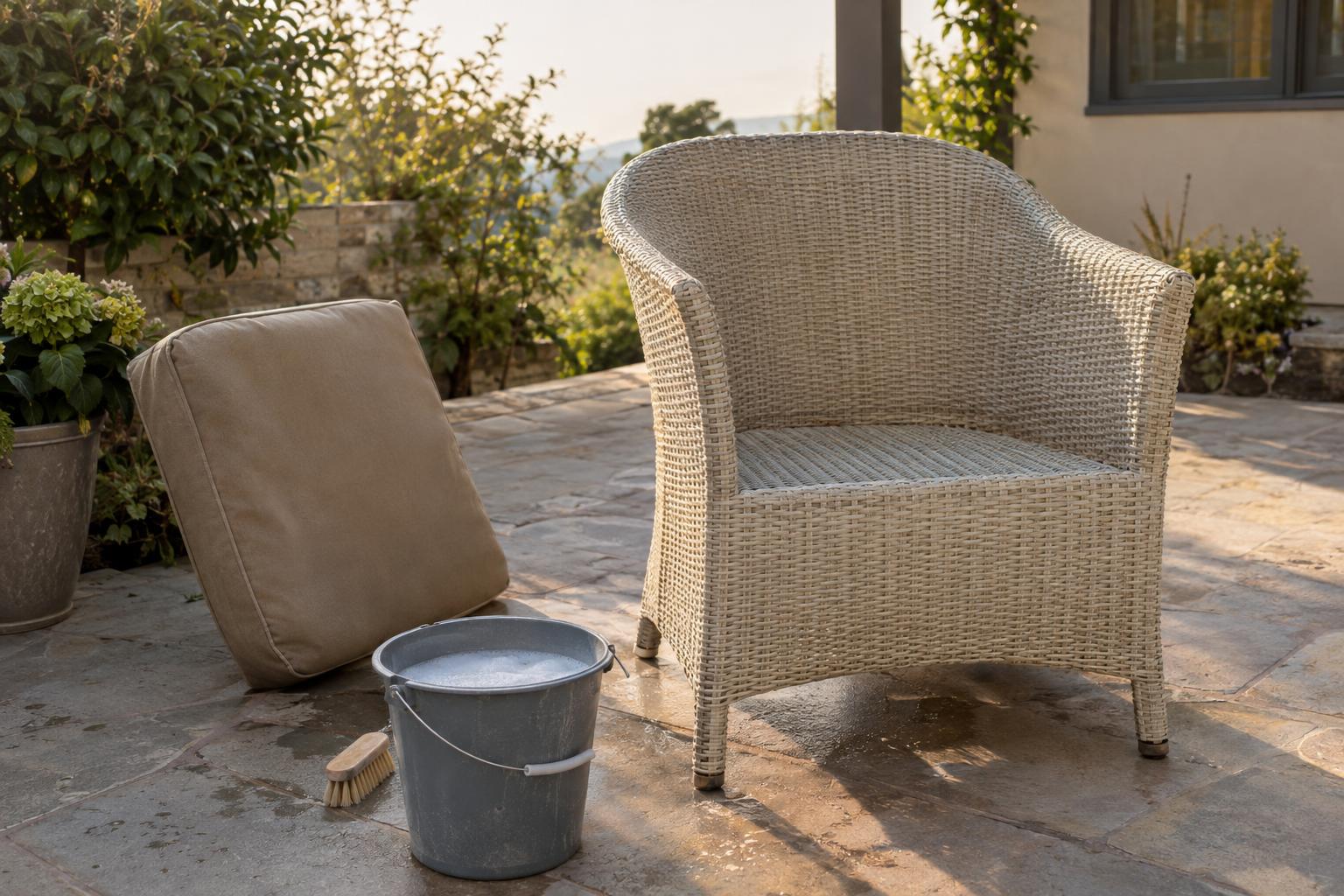


Knowing how to clean wicker patio furniture saves you from the two most common mistakes: scrubbing too hard and rinsing too forcefully. All-weather resin wicker is tougher than the natural material it imitates, but the weave still has crevices that collect pollen, dust and the film that humid air leaves behind. A gentle routine with warm water, mild soap and a soft brush clears that buildup without fraying strands or loosening the weave. This guide walks through the supplies, the steps in order, how to handle mildew, what to avoid, and a seasonal rhythm that suits Charlotte’s pollen-heavy springs and humid summers.
What to gather before you start
You do not need specialty products. Most of what works is already in a kitchen or garage:
- A soft-bristle brush, such as a dish brush, a vegetable brush or a soft paintbrush for tight spots
- A vacuum with a brush attachment, or a dry paintbrush, for loose debris
- A bucket of warm water with a few drops of mild dish soap
- Clean cloths or sponges, plus a few old towels
- A garden hose with a gentle spray setting, not a pressure nozzle
Check the care tag or the maker’s instructions if you still have them. Weave style, finish and frame material vary from one product to the next, and the manufacturer’s guidance always wins over general advice. If you are not sure whether your pieces are resin or natural fiber, our comparison of resin wicker and natural wicker will help you tell the two apart, because natural wicker should never be soaked.
Step-by-step: how to clean resin wicker
Work in the shade if you can. Direct sun leaves streaks as soap dries.
- Remove the cushions and pillows. Set them aside to clean separately, and brush any loose leaves or pollen out of the seat.
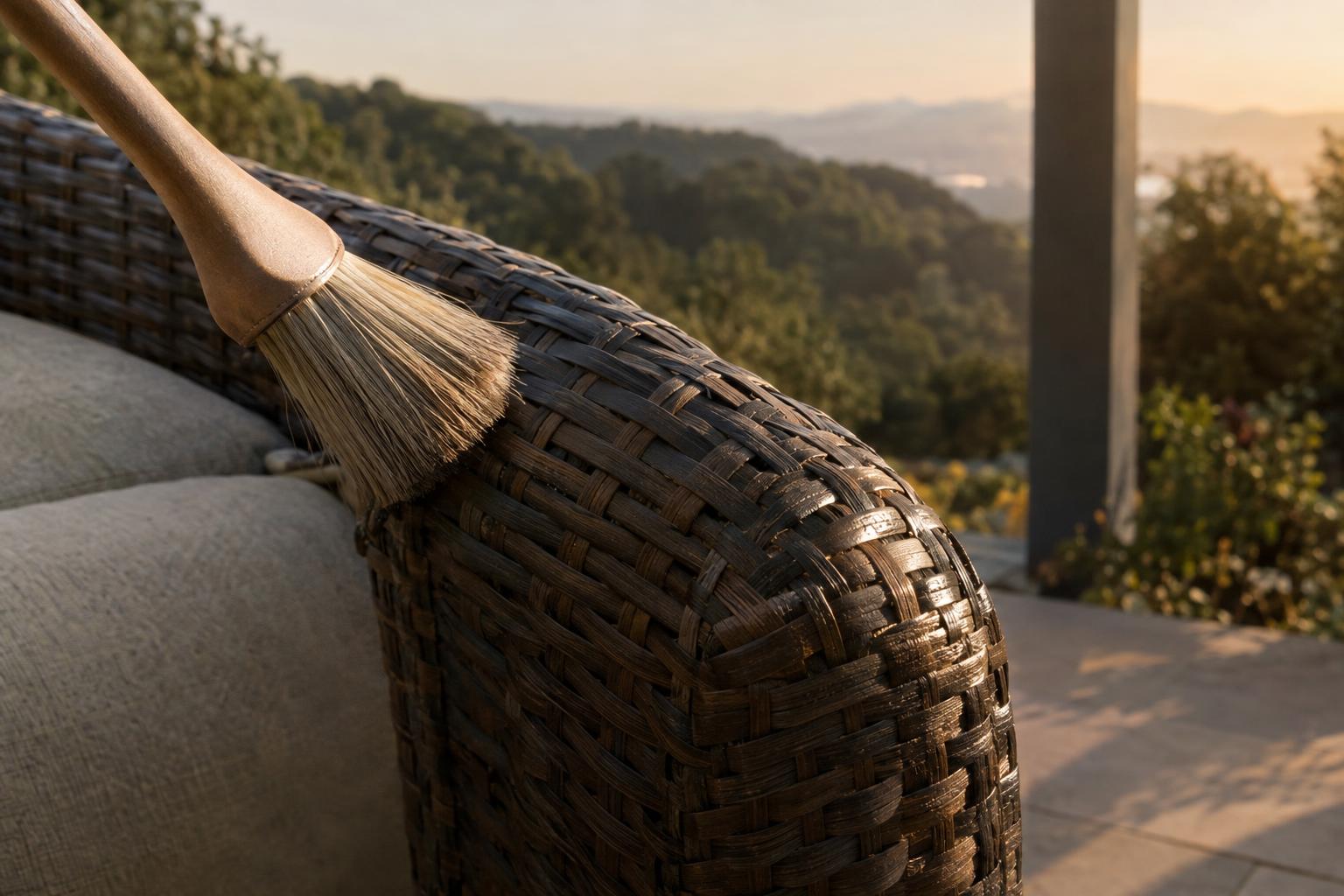
- Dry brush and vacuum. Run the brush attachment over the weave, following the direction of the strands. This lifts dust and grit that would otherwise turn to mud when wet.
- Wash with warm, mildly soapy water. Dip a sponge or cloth, wring it out, and wipe the surface in sections. Use less soap than you think you need; extra soap is harder to rinse out of the weave.
- Brush along the weave. With the soft brush, work along the strands and into the crevices, using light pressure. Let the soap and bristles do the work.
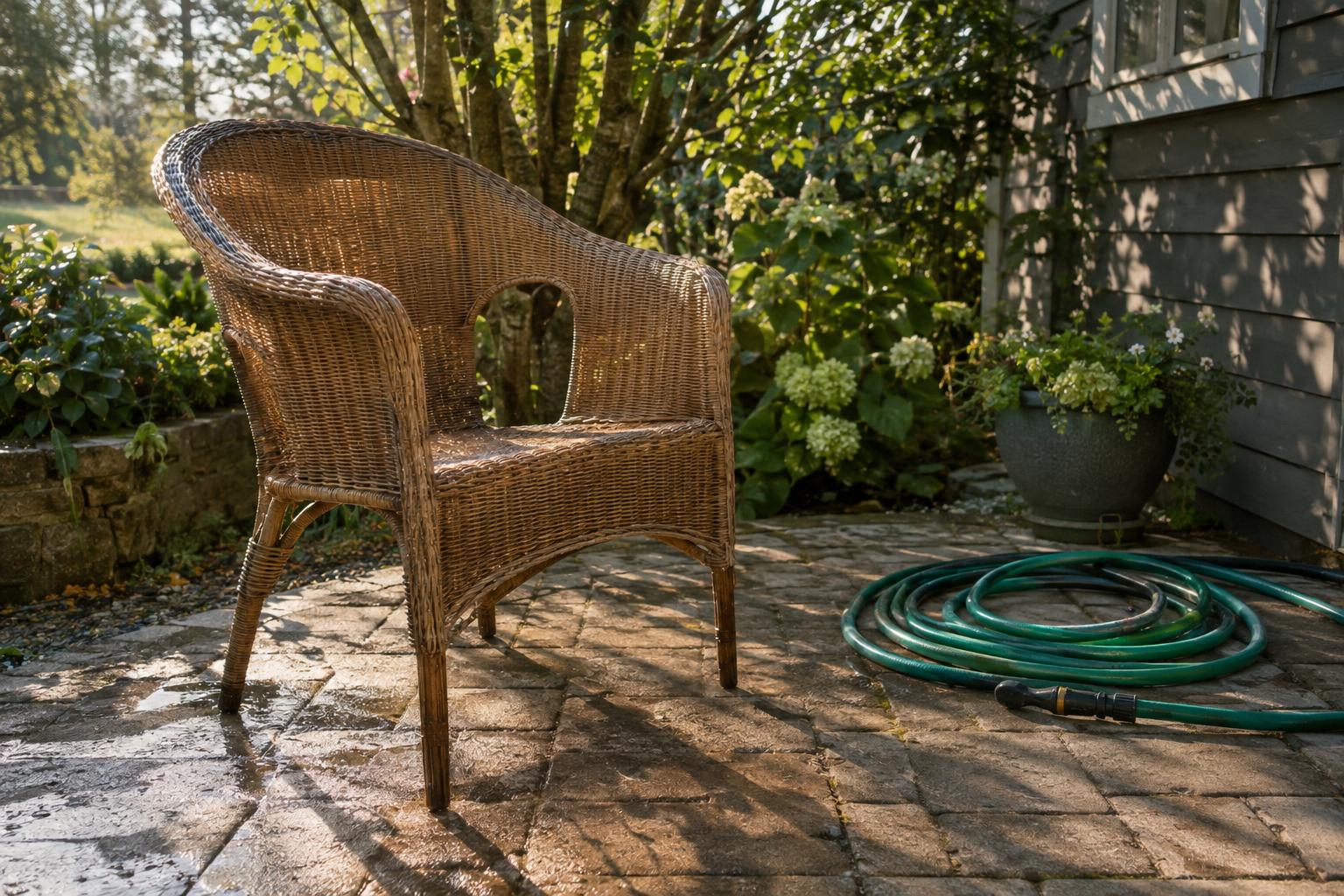
- Rinse gently. Use a low-pressure hose spray and rinse from top to bottom so soap runs off without pooling in the crevices.
- Dry thoroughly. Blot with a towel, then let the piece air-dry in a breezy, shaded spot before putting the cushions back. Water trapped inside the weave and frame can leave spots.
A chair is a short session, while a sofa or a large dining chair takes longer. Work on one piece at a time so the soap never dries on the surface.
Dealing with mildew and stubborn spots
In a humid climate, mildew shows up as dark or gray speckles, often under the arms or along the bottom rail where air moves less. For light mildew, a mix of warm water and mild soap on a soft brush is usually the first thing to try, followed by a thorough rinse. The U.S. Environmental Protection Agency’s page on mold cleanup in your home recommends scrubbing mold off hard surfaces with detergent and water and then drying completely, and the same drying habit helps outdoors.
For a stubborn spot, repeat the wash rather than switching to something harsh. If the maker approves a specific cleaner, follow the label exactly. Never mix cleaning products, and wear gloves if you are working with anything beyond dish soap. If mildew keeps coming back to the same spot, the real issue is usually moisture, so look at shade, airflow and how the piece dries after rain.
What to avoid on the weave
A few habits cause most of the damage that happens to wicker, so it is worth listing them plainly.
- Power washers held close. Strong spray can lift strands, push water into the frame and loosen the weave. If you use one at all, stay far back and use the widest, gentlest setting, though a garden hose is usually plenty.
- Stiff or wire brushes. They scratch resin and snag the weave, leaving rough spots that catch dirt faster next time.
- Concentrated bleach. Strong chemicals can discolor resin and damage cushion fabric nearby. Choose mild soap first.
- Abrasive powders and scouring pads. They dull the finish.
- Cleaning in direct, hot sun. Soap dries before you can rinse it off.
When in doubt, test a small, hidden area first, such as the underside of a rail, and wait for it to dry before you continue.
Cushions, frames and the details people skip
Resin wicker usually sits over a metal frame, and the places where strands meet the frame trap water and grit. After washing, tilt the piece slightly and let any water drain from the legs and the bottom rail. Wipe the metal feet with a damp cloth, since they sit in the dirt and moisture on your patio floor.
Cushions are their own job. Follow the fabric maker’s washing instructions, and make sure the cushions are completely dry before you return them to the chair, because damp foam against wicker is a recipe for mildew. If you want more background on the material itself, the wicker patio furniture guide covers construction, weaves and everyday care.
Storage deserves a thought too. If you cover pieces for the off-season, choose a breathable cover and make sure the furniture is dry first, since a plastic sheet pulled tight over damp wicker holds moisture against the weave. Leave a gap at the bottom for airflow, and lift the legs off bare ground or wet pavers if you can. A few minutes spent drying and covering properly in November can save you a long scrubbing session in March, when pollen arrives and the furniture comes back out.
A seasonal cleaning rhythm for Charlotte
Wicker looks best when you clean it a little often, rather than a lot rarely. A simple calendar works for most homes:
- Early spring: do a full wash before the season begins, then a quick dry brush as pollen peaks.
- Summer: wipe pieces with a damp cloth every few weeks, and give them a full wash if you see mildew or heavy dust.
- Fall: wash again before you store the cushions or cover the furniture, and let everything dry fully first.
- Winter: check for debris or standing water on pieces that stay outside during the occasional freeze, and brush off leaves.
For the pollen weeks in particular, our outdoor furniture cleaning schedule for pollen season gives a week-by-week plan that works for every material.
Frequently asked questions about cleaning wicker patio furniture
Can I use a pressure washer on wicker?
It is better not to. Strong spray can force water into the frame, lift strands and loosen the weave. A garden hose on a gentle setting, plus a soft brush, removes nearly everything a pressure washer would without the risk. If you choose to use one, stay well back and keep the pressure low.
What is the safest soap for wicker?
Mild dish soap in warm water is the usual choice, because it cleans without harsh chemicals. Use only a few drops per bucket, and rinse until the water runs clear. Follow any instructions from the maker of your furniture if they name a specific cleaner or advise against something.
How often should I clean wicker patio furniture?
A full wash once or twice a season is enough for most homes, with quick dry brushing in between. In pollen season or after heavy rain, you may want to wipe the pieces down more often. Furniture under a roof stays cleaner than furniture in the open, so adjust to your patio.
Why does my wicker get mildew in summer?
Mildew needs moisture, and wicker has many small crevices where water and dust settle. Humid air, shade, and damp cushions all add to it. Washing off the dust, drying the piece completely, and letting air move around it are the best defenses. Keep cushions off the chair until they are fully dry.
Questions about caring for your wicker, or thinking about a new set? Call us at (704) 274-3222 or visit our Charlotte showroom, where you can sit in a few pieces and compare how they feel.