
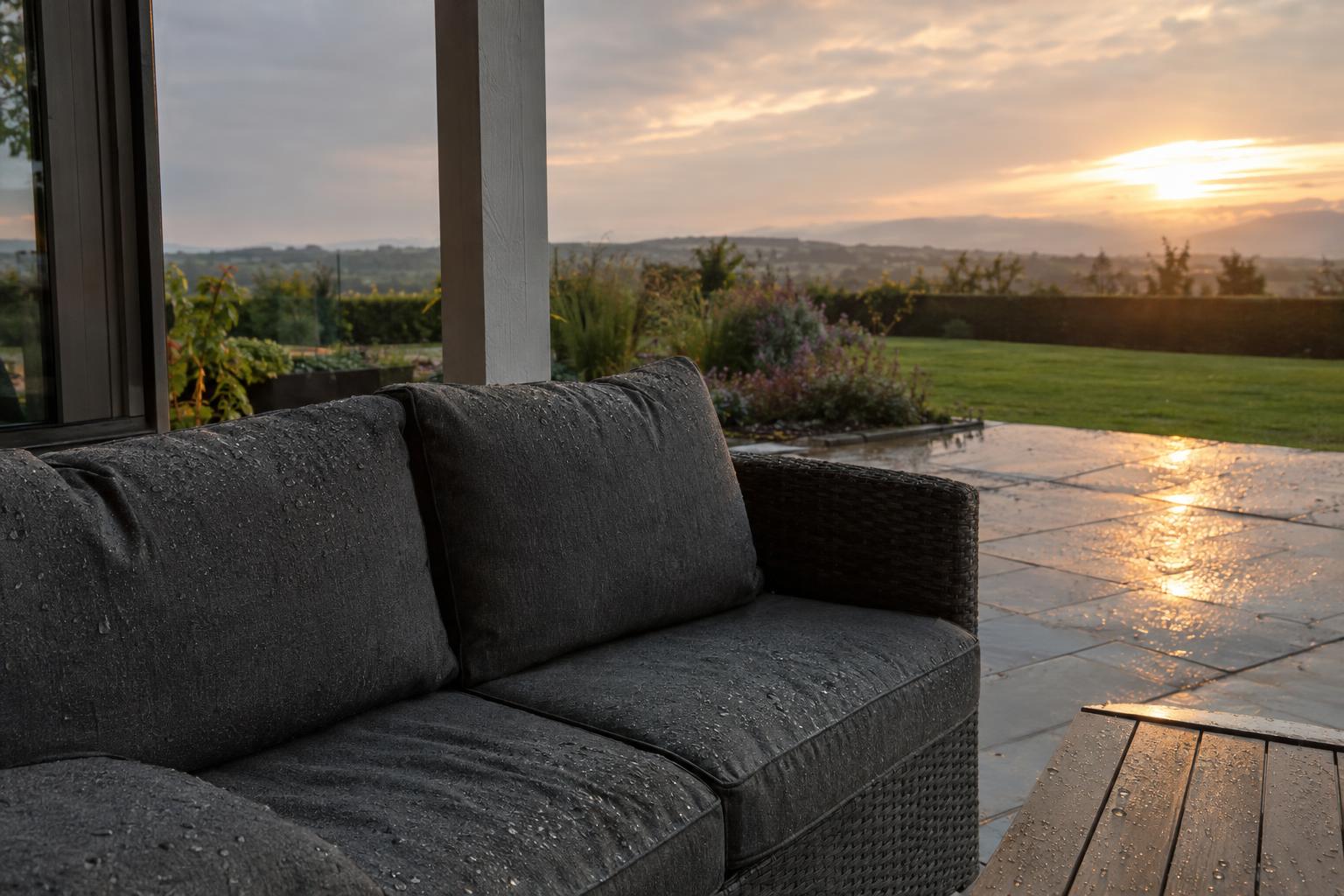

Shoppers who ask for waterproof outdoor cushions are usually hoping for one thing: a seat that stays dry no matter what the weather does. In practice, very few cushions are fully waterproof from every side, and the ones that come close often trade away breathability and drying speed. What you really want is a cushion that sheds rain, resists mildew and dries quickly when it does get wet. This guide explains the difference between water-resistant, coated and waterproof covers, why the foam core and seams matter as much as the fabric, and what to do after a storm, so you can choose with realistic expectations.
Why waterproof outdoor cushions rarely stay dry forever
A cushion is a fabric shell wrapped around a foam core, held together by seams and usually closed with a zipper. Even if the fabric face blocks water, rain can find its way in through stitching holes, zipper tracks, and the bottom of the cover where it sits on a wet seat. Water can also be driven in sideways by wind, or sit under the cushion on a slatted seat and wick upward.
Humidity matters too. In a Carolina summer, a cushion can feel damp simply because the air holds so much moisture, and a cover that does not breathe can hold that dampness inside. So no cushion stays dry if it is soaked for days, and the more useful question is how well it sheds water at first and how fast it dries once wet.
Water-resistant, coated and waterproof covers compared
Product descriptions use these words loosely, so it helps to know the three broad categories.
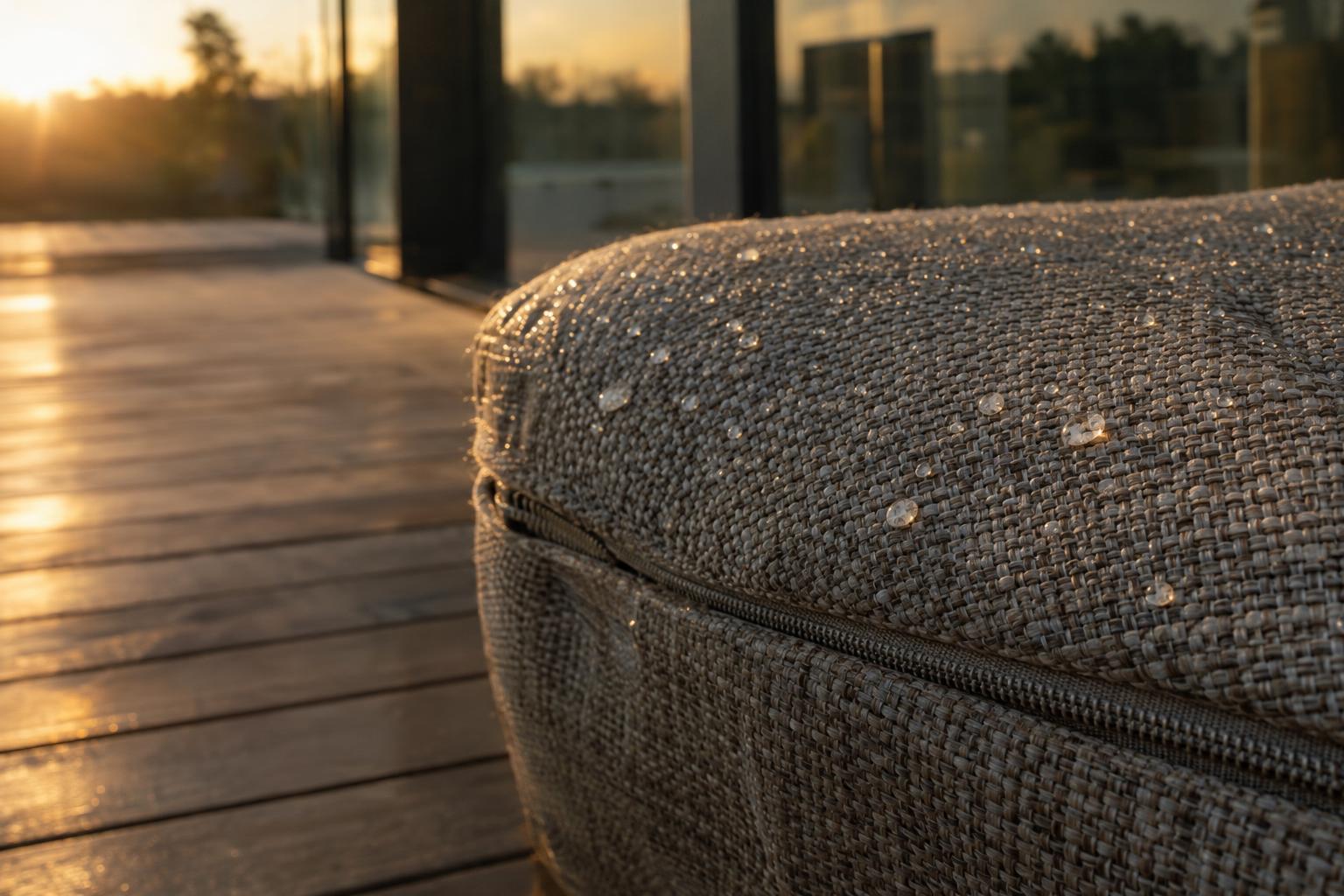
Water-resistant woven fabric. Solution-dyed acrylic, the category that Sunbrella fabrics belong to, is woven from fibers that are colored all the way through and finished to shed water. Rain tends to bead and roll off, and the open weave lets the fabric dry in air. It is not sealed, so a long soaking can still reach the foam. You can browse the Sunbrella fabrics to see the colors and weaves.
Coated or vinyl-backed fabric. A coating or laminate on the back or face blocks water more completely. The tradeoff is that it breathes less, can feel warmer in the sun, and may trap moisture if it gets inside.
Waterproof cushion covers. Separate covers sold to slip over a cushion can keep rain out, but they work as a raincoat, not as part of the seat. They are best thought of as storage protection and not as something to sit on.
| Cover type | Handles rain | Dries after soaking | Best for |
|---|---|---|---|
| Water-resistant woven fabric | Sheds light to moderate rain | Usually quickly, since the weave breathes | Covered or partly exposed patios |
| Coated or vinyl-backed fabric | Blocks water at the face | Slower if water gets inside | Spots that get wet often but are wiped dry |
| Waterproof storage cover | Keeps rain off when in place | Depends on the cushion beneath | Protecting cushions between uses |
The foam core and seams decide how long cushions stay wet
When a cushion stays soggy for days, the fabric is rarely the culprit. Standard foam acts like a sponge, and once water is inside, it can take a long time to leave. Quick-dry foam is built with an open structure so water drains through instead of pooling. Our explainer on quick-dry foam and outdoor cushion fill covers how the different fills behave.
Seams are the second weak point. Every needle hole is a tiny entry for water, and a flat zipper along the back of a cushion can let in rain when the cushion sits on end. A cover with welt cord (a piping sewn into the edge) can look neat, but the cord also adds a seam where water can collect. When you inspect a cushion, check how the zipper is covered, where the stitching runs, and whether the bottom panel is made of a fabric that does not wick moisture from the seat below.
What to do after a storm
Quick action matters more than any single fabric feature. The U.S. Environmental Protection Agency advises drying water-damaged items within 24 to 48 hours to prevent mold growth, and its guide to mold, moisture and your home explains why moisture control is the key to avoiding mold. For cushions, a practical routine looks like this:
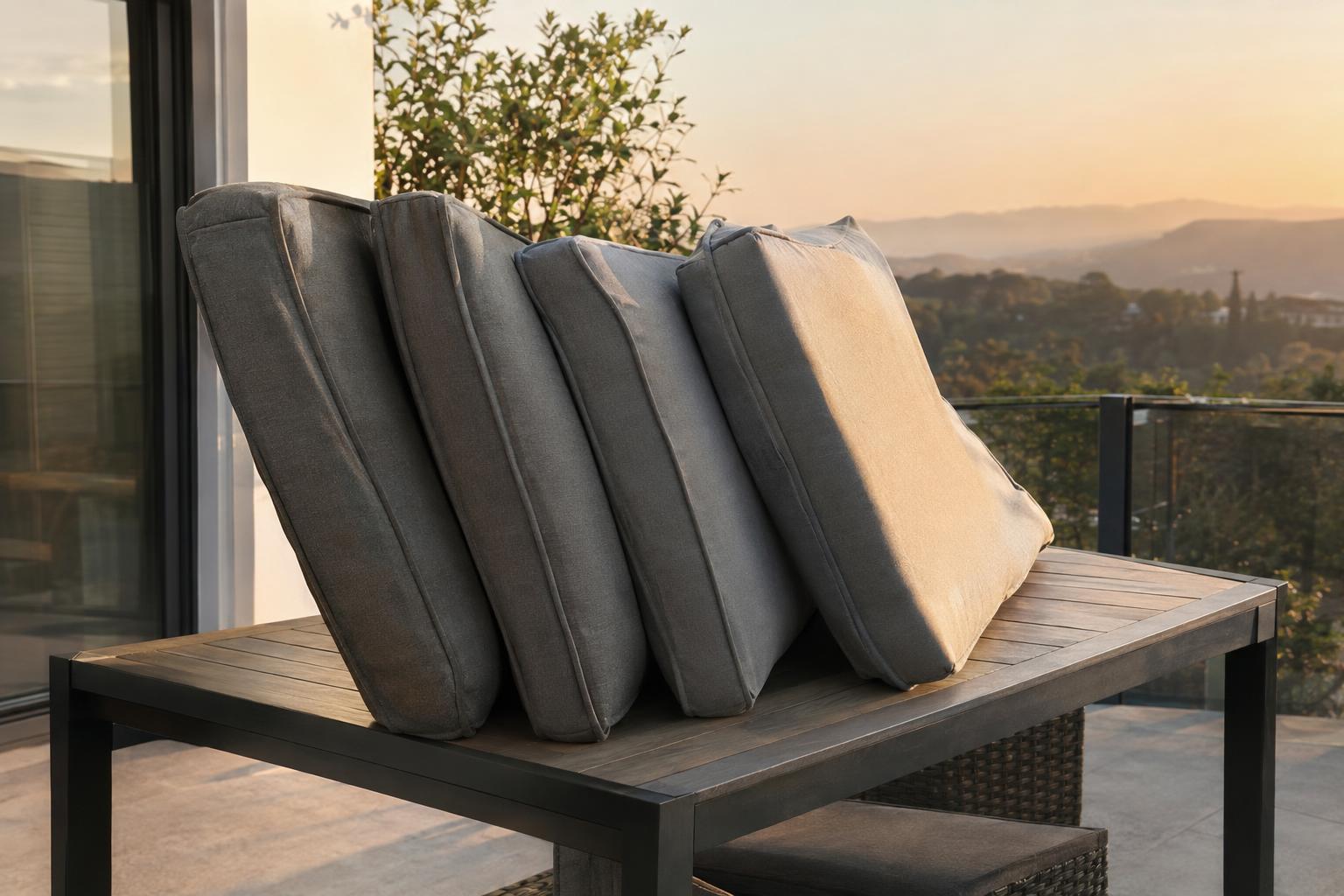
- Stand the cushions on edge so water can drain from the seams and bottom panel rather than pooling inside.
- Blot the fabric with a clean towel and shake out any water trapped in the corners.
- Leave them in open air with a breeze, in shade or gentle sun, with the seat deck underneath wiped dry as well.
- Flip them after a few hours so both sides get air.
- Do not stack or bag them until they feel dry all the way through, because trapped dampness invites mildew.
If you see mildew spots, wash the cover as the fabric maker directs and let it dry fully before using it again.
Choosing waterproof outdoor cushions for your patio
Match the cushion to the weather exposure rather than to the label. A covered porch only sees blowing rain, so a water-resistant woven cover over quick-dry foam is often enough. A fully open patio, or a poolside area that stays wet, may be better served by a coated fabric you can wipe down, along with a habit of standing cushions up between uses.
If your biggest concern is humid summer air rather than rain, take a look at our guide to the best outdoor cushions for humid Carolina summers. It looks at drying time and mildew resistance in more detail than we can here.
Also be honest about your habits. If you will always bring cushions inside before rain, you can choose for comfort and color. If cushions stay out all season, favor fast drying and strong seams over softness.
Replacement covers and custom cushions
If mildew has already set in, our guide to removing mildew from outdoor cushions covers the cleanup. If a frame is solid but the cushions have faded or stayed damp too many times, new ones may be worth considering. Carolina Patio Furniture offers custom replacement cushions with a choice of Sunbrella fabric, welt cord, tie placement and zipper placement. Where a zipper sits and whether a cushion has ties both affect how water behaves along the seams. Bring your old cushions or measurements when you visit.
Frequently asked questions about waterproof outdoor cushions
Are any outdoor cushions completely waterproof?
Very few are, because seams, zippers and the foam core all give water a way in. Some coated fabrics block water well at the surface, but a cushion that is soaked for days will still hold moisture. A more realistic goal is a cushion that sheds rain, dries quickly and resists mildew when you treat it well after a storm.
Is water-resistant fabric good enough for a Carolina patio?
Often yes, especially on a covered or partly covered patio. Woven water-resistant fabrics shed rain and dry in the open air, which suits humid summers. If your cushions sit in the open all season, add quick-dry foam and make a habit of standing cushions on edge after rain so they can drain.
Does quick-dry foam make cushions waterproof?
No. Quick-dry foam is not waterproof; it is designed so that water passes through and out instead of staying trapped. The result is a cushion that recovers faster after rain, but it still needs time to air out. It works best paired with a breathable cover.
How long can wet cushions sit before mildew becomes a problem?
The EPA recommends drying water-damaged items within 24 to 48 hours to prevent mold growth, so that is a sensible target. In warm, humid weather, mildew can start quickly if a cushion stays wet inside. Stand cushions on edge, give them airflow, and avoid covering or bagging them until they are fully dry.
Not sure which cover and foam combination fits your patio? Call us at (704) 274-3222 or visit our Charlotte showroom at Carolina Patio Furniture to sit in pieces and compare them before you decide, and ask about custom replacement cushions in the Sunbrella fabric of your choice.