
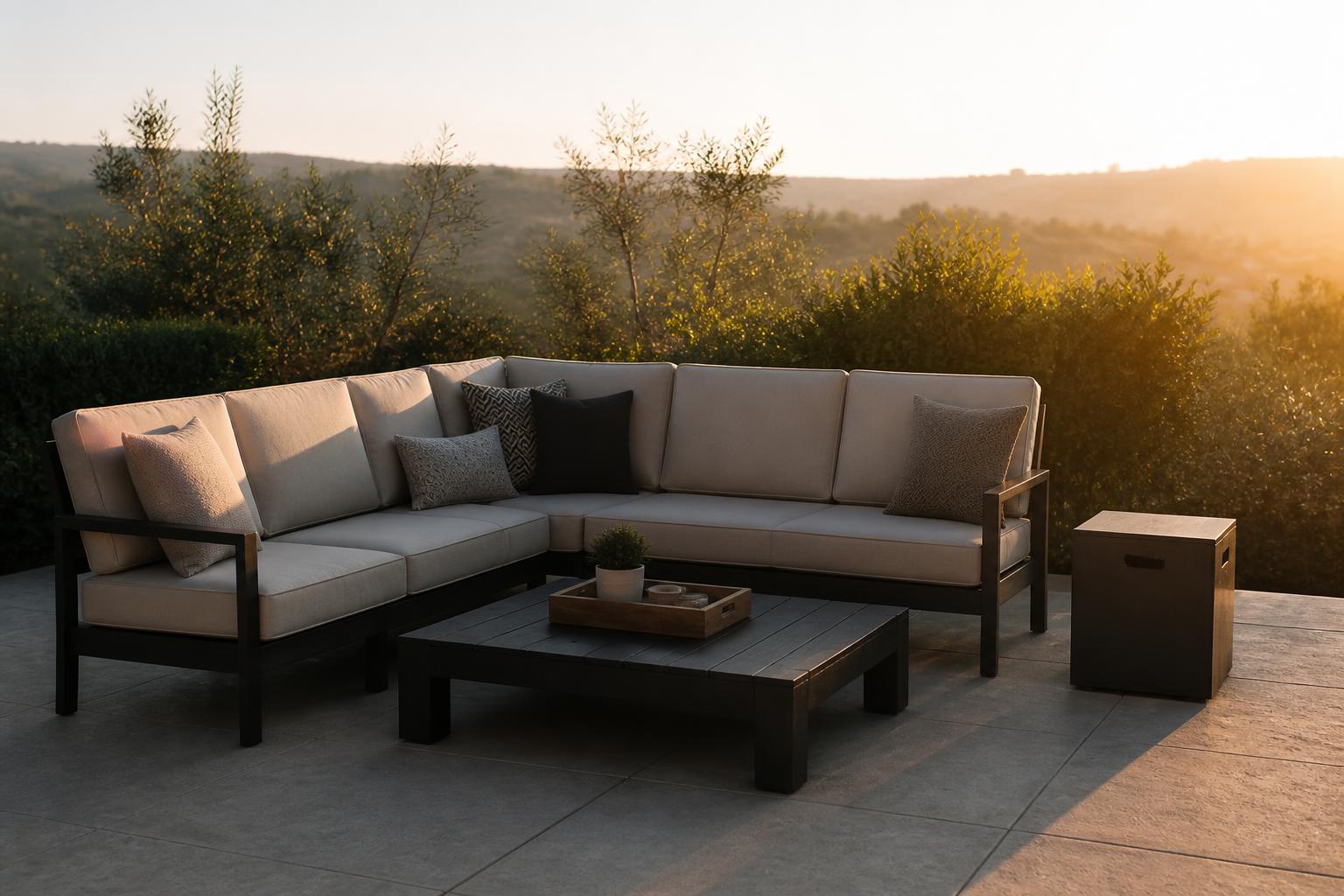
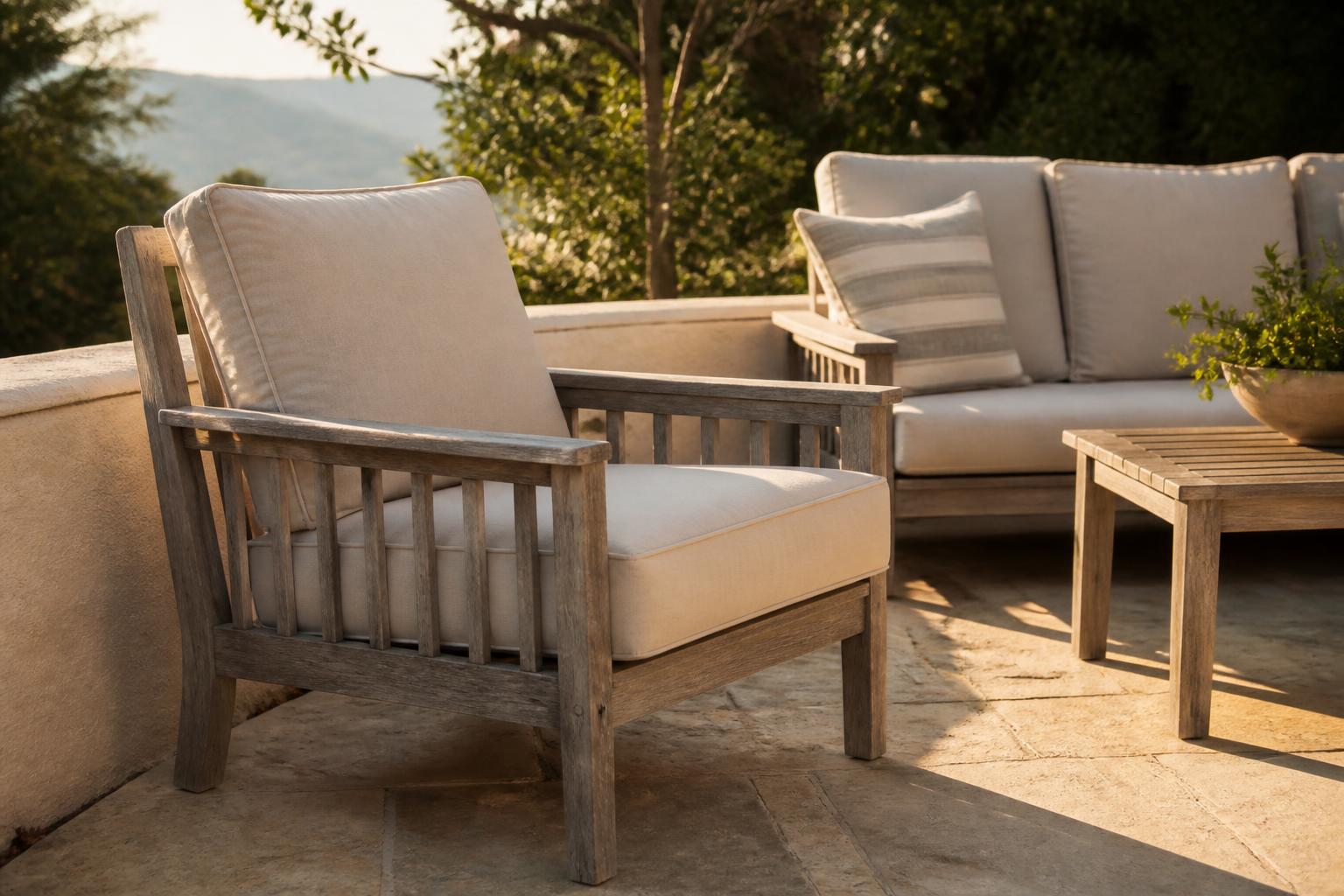
The coffee table vs end table outdoor sectional question comes up in nearly every showroom conversation once a homeowner has picked out their frame and fabric, because the table pieces are what actually make a sectional livable day to day. A coffee table anchors the seating group and gives everyone a shared surface for drinks and snacks, while end tables tuck into corners and armrests for more personal, close-at-hand use. Getting the placement and height right affects walking room, drink safety, and how the whole patio feels once furniture is arranged. Here’s how to decide which one — or which combination — actually works for your space.
Reading Your Sectional’s Footprint Before You Shop
Before you pick a table, measure your sectional’s actual footprint, including any chaise extension. A typical modular sectional with a chaise runs 8 to 10 feet along one side and 5 to 6 feet along the return, and you need at least 30 to 36 inches of walking clearance on the open sides for the space to feel usable rather than cramped. Pull out a tape measure and mark the corners with painter’s tape on your patio surface — this five-minute step prevents the common mistake of ordering a table that looks proportionate in a showroom photo but crowds the seating once it’s home.
Pay attention to the U-shape or L-shape your sectional creates. A U-shaped configuration with an open center is built for a single coffee table, since that void is meant to be filled. An L-shaped sectional with one long run and a corner chaise often works better with an end table at the short end and a smaller accent or drink table near the chaise, because a full-size coffee table can end up too far from the seats on the long side to be practical. If you’re browsing outdoor sectionals and matching tables, look at the modular pieces as a set rather than shopping the sofa and tables separately — manufacturers usually engineer the heights to work together.

Coffee Table Height, Size, and Reach Rules
A coffee table for an outdoor sectional should sit within 1 to 2 inches of your seat cushion height, which typically lands the table between 16 and 18 inches tall. Go much lower and you’ll be reaching down awkwardly for a glass; go higher and it starts competing visually with the seat backs. For reach, keep the table close enough that a seated adult can set down a drink without leaning forward more than a few inches — 14 to 18 inches from the front edge of the cushion to the table edge is the comfortable range.
Sizing depends on your sectional’s open area. For a U-shaped or three-sided sectional, a 40 to 48 inch square or round coffee table fills the center without blocking the walkway to any one seat. Rectangular coffee tables, often 50 to 60 inches long and 24 to 30 inches deep, suit L-shaped sectionals where the table runs parallel to the longer sofa section. Materials matter here too: cast aluminum and powder-coated aluminum frames with tempered glass or HDPE tops hold up to Charlotte’s humidity and pollen season without the surface staining or pitting, and they wipe clean in minutes. Wood tops, including teak, need periodic oiling to resist the yellow pollen film that settles on outdoor furniture every spring.
Leave at least 14 to 16 inches of clearance between the coffee table and any facing chair or ottoman so people can still walk through the seating area without shuffling sideways.
Where End Tables Actually Solve Problems
Corner and Armrest Placement
End tables earn their keep at the outer corners of a sectional and beside single armless sections where a coffee table can’t reach. A standard end table runs 18 to 24 inches square and sits at 20 to 24 inches tall — roughly level with or slightly above the armrest, so a drink or phone doesn’t feel like it’s sitting in a hole. This placement is especially useful on a chaise end, where the chaise’s length puts a centered coffee table too far away to be functional.
Pairing End Tables With a Coffee Table
Many of the best-functioning sectional layouts use both: a central coffee table for shared use plus one or two end tables at the corners for personal drink space. This combination also solves the clearance problem on tight patios, since a narrower end table (often 18 to 20 inches wide) fits into a corner where a full coffee table’s footprint wouldn’t leave the recommended 30-plus inches of walking room.
Freestanding Accent Use
On patios where the sectional sits against a wall or railing on one side, an end table can also double as a plant stand or lantern perch when it’s not needed for seating overflow, which is a practical way to get more use out of a smaller table on a compact deck or balcony.
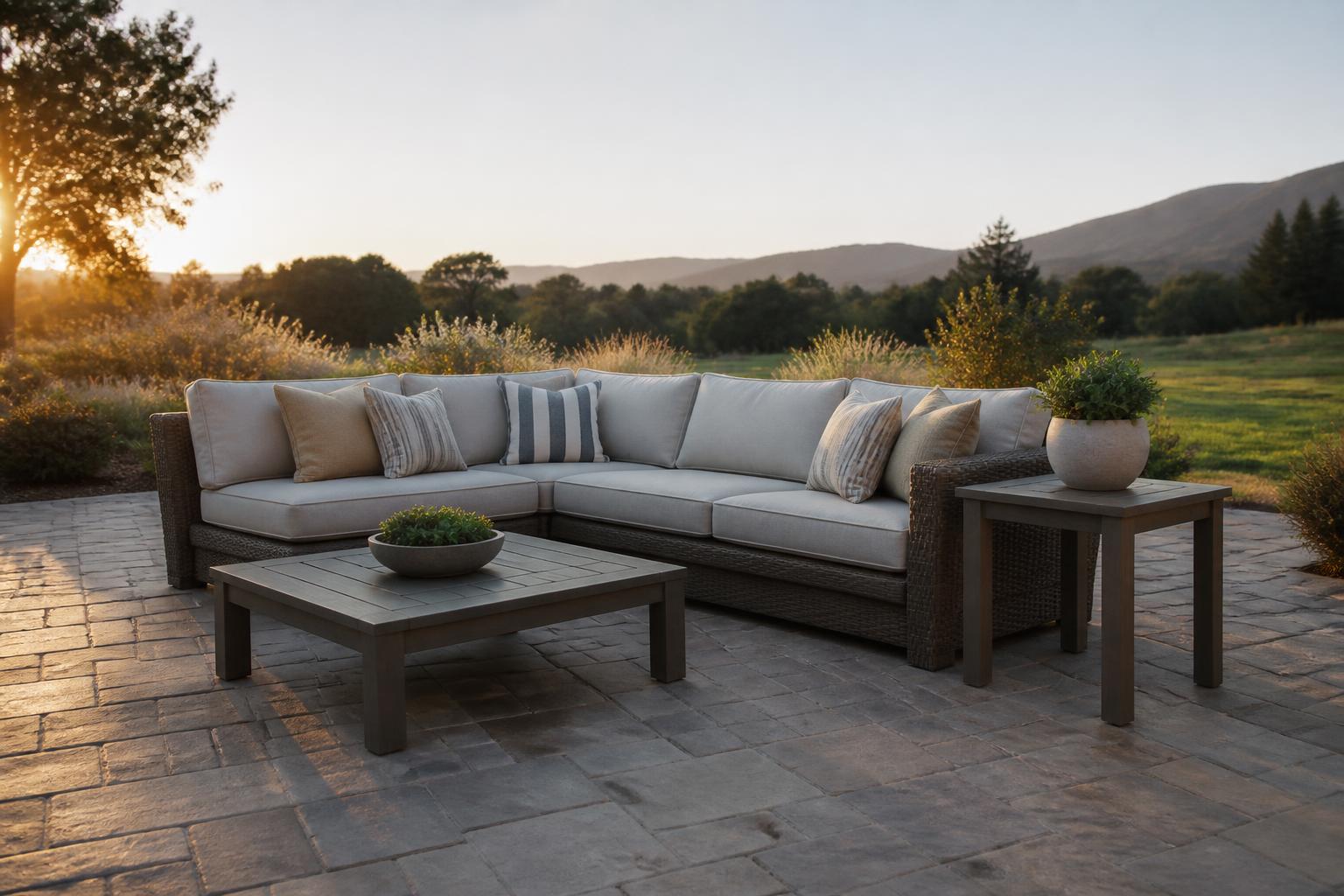
Matching Table Materials and Fabric to the Rest of the Sectional
Once placement is settled, coordinate materials so the tables read as part of the set rather than an afterthought. All-weather resin wicker sectionals typically pair well with aluminum-framed tables that have a woven or slatted apron matching the seating. Cast aluminum sectionals, which run heavier — often 40 to 60 pounds per section — pair naturally with cast aluminum tables in the same finish, since the two won’t weather at different rates. If your cushions are covered in Sunbrella performance fabric, look for tabletops in tempered glass, HDPE, or powder-coated metal, all of which resist the mildew and fading that can affect untreated wood left uncovered through a Carolina summer.
Height consistency across pieces also affects how the group photographs and how it functions. If your armrests sit at 24 inches and your end table matches that height, but your coffee table is only 16 inches, the visual line breaks in a way that reads as unplanned. Many manufacturers solve this by offering coordinated collections where the coffee table, end table, and console are all designed against the same seat height, so buying the tables from the same collection as your sectional — rather than mixing brands — is usually the simpler path to a cohesive result. If you’re unsure which combination fits your existing seating, bring measurements or photos when you reach out to our team and we can walk through options with you.
Frequently Asked Questions
Can I use an indoor coffee table height as a guide for my patio sectional?
Indoor coffee tables typically run 16 to 18 inches, which does overlap with outdoor standards, but indoor tables aren’t built for UV exposure, rain, or humidity swings. Stick to outdoor-rated materials like powder-coated aluminum, HDPE, or tempered glass even if you’re using indoor height as your reference point, since untreated wood or particleboard pieces will warp or delaminate outdoors within a season or two.
How much clearance do I need between a fire table and a sectional?
Most manufacturers recommend at least 24 to 36 inches of clearance between a fire table’s edge and any seating or combustible material, in addition to normal walking clearance. Check the manufacturer’s spec sheet for exact numbers, since propane fire tables often have stricter clearance requirements than the general furniture spacing guidelines used for coffee and end tables.
Is a round or square coffee table better for a curved sectional?
Round and oval coffee tables generally fit curved or U-shaped sectionals better because they avoid the sharp corners that can dig into the walkway or create awkward gaps at the ends of the seating run. Square or rectangular tables work best with straight-line or L-shaped sectionals where the table’s edges can run parallel to the sofa sections.
Do I need to cover or store outdoor tables in the winter?
Aluminum and HDPE tables can generally stay outside through a Carolinas winter, though covering them reduces pollen buildup and moisture staining. Glass tabletops should be covered or have inserts removed before hard freezes, since trapped moisture between a cover and cold glass can occasionally cause stress cracks, and teak tables benefit from an annual application of teak oil before winter.
If you’d like to see how coffee tables and end tables actually sit next to different sectional shapes before you buy, stop by our Charlotte showroom, where you can walk the layouts in person rather than guessing from measurements alone. Our team at Carolina Patio Furniture can help you match table height, size, and material to the sectional you already own or the one you’re considering — browse our current sectional and table collections online, or call us at (704) 274-3222 with your patio dimensions and we’ll help you plan the layout before delivery day.