
If you want to remove mildew from outdoor cushions before it spreads or stains permanently, the process starts with knowing what you’re actually looking at and moving quickly once you spot it. Charlotte’s humid summers and pollen-heavy spring create ideal conditions for mildew to take hold on cushion covers, especially on shaded porches and screened patios where air doesn’t move much. This guide walks through safe cleaning steps that won’t damage fabric or foam, then covers the drying and storage habits that keep mildew from returning once the cushions go back outside.
Mildew vs. Dirt: Knowing What You’re Dealing With
Before you grab a scrub brush, take a close look at the spots. Dirt and pollen tend to sit on the surface in a dusty film and often wipe away with a dry cloth. Mildew looks different — it appears as small black, gray, or greenish-brown dots, sometimes in a speckled pattern, and it’s usually accompanied by a musty smell that gets stronger when the cushion is damp. Mildew is a fungus, not just a stain, so it grows into the fabric weave rather than sitting on top of it.
This distinction matters because treating mildew like ordinary dirt — just hosing it off — won’t kill the spores, and they’ll come right back within days, especially in weather above 70% humidity. On the other hand, treating simple pollen dust with harsh mildew-specific cleaners is overkill and can wear down fabric fibers unnecessarily.
If your cushions use a solution-dyed performance fabric such as Sunbrella, mildew typically grows on surface soil rather than the fiber itself, since the acrylic fibers themselves resist rot. That’s good news: on these fabrics, thorough cleaning usually resolves the problem completely rather than leaving ghost stains behind. Cheaper printed polyester covers are more porous and can hold onto both the stain and the odor even after the mildew is gone, which is one reason cushion fabric quality matters as much as the foam inside.
Step-by-Step: How to Remove Mildew from Outdoor Cushions
Dry-Brush First
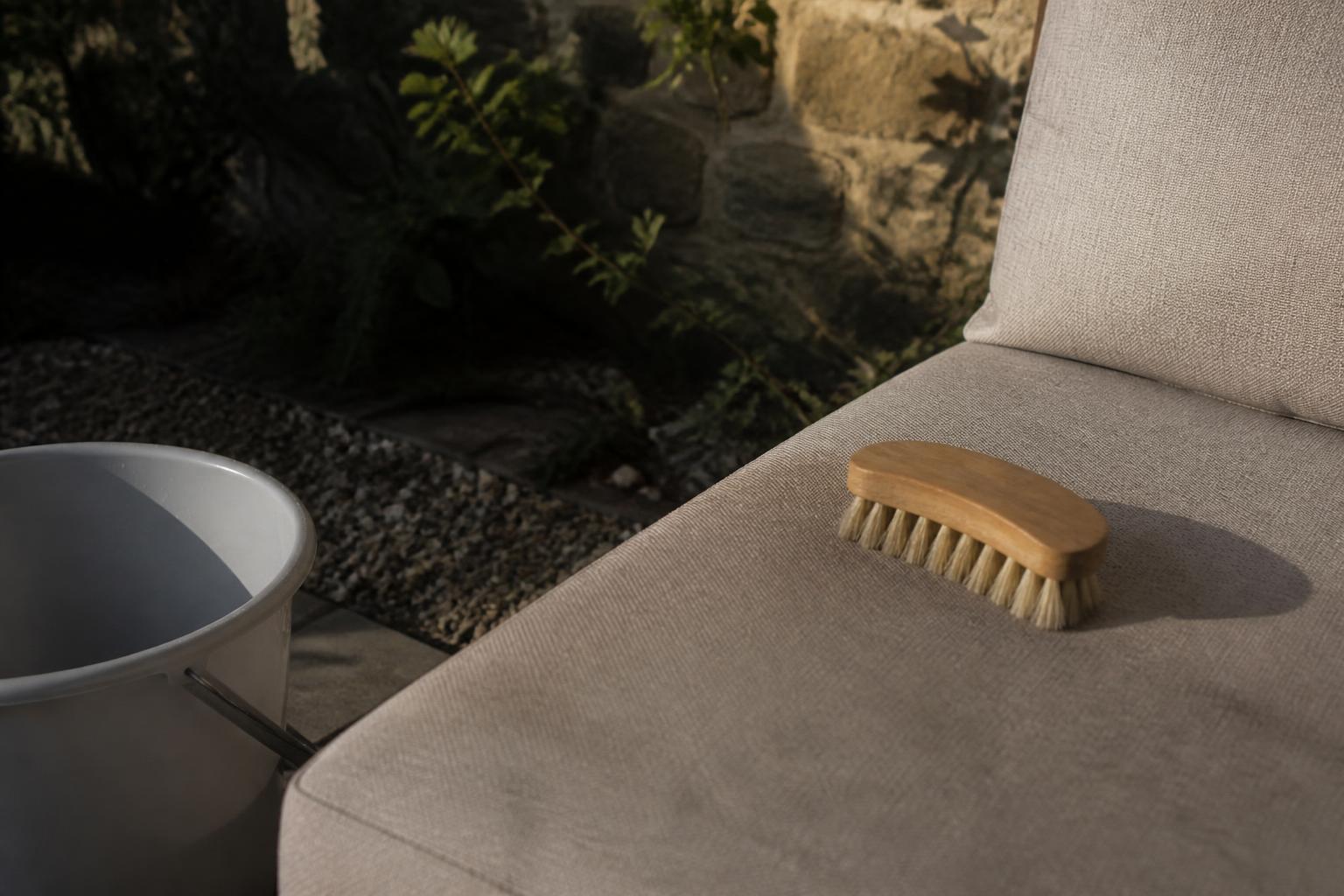
Start dry. Use a soft-bristle brush to knock loose spores and surface debris off the fabric before introducing any water. Brushing while the fabric is dry keeps the growth from smearing deeper into the weave. Do this outdoors, away from other cushions, and brush in one direction rather than scrubbing in circles.
Mix a Mild Cleaning Solution
Combine 1 cup of white vinegar or 1/4 cup of mild dish soap with 1 gallon of warm water, and never mix vinegar with bleach, ammonia, or other cleaners. For tougher mildew stains, follow the fabric maker’s care instructions: solution-dyed acrylics such as Sunbrella tolerate a diluted bleach solution (about 1 cup of bleach and 1/4 cup mild soap per gallon of water, rinsed thoroughly), while other fabrics may call for a gentler oxygen-based cleaner. Apply with a soft brush or sponge, working the solution into the stained areas, and let it sit for 10 to 15 minutes.
Rinse, Dry, and Repeat if Needed
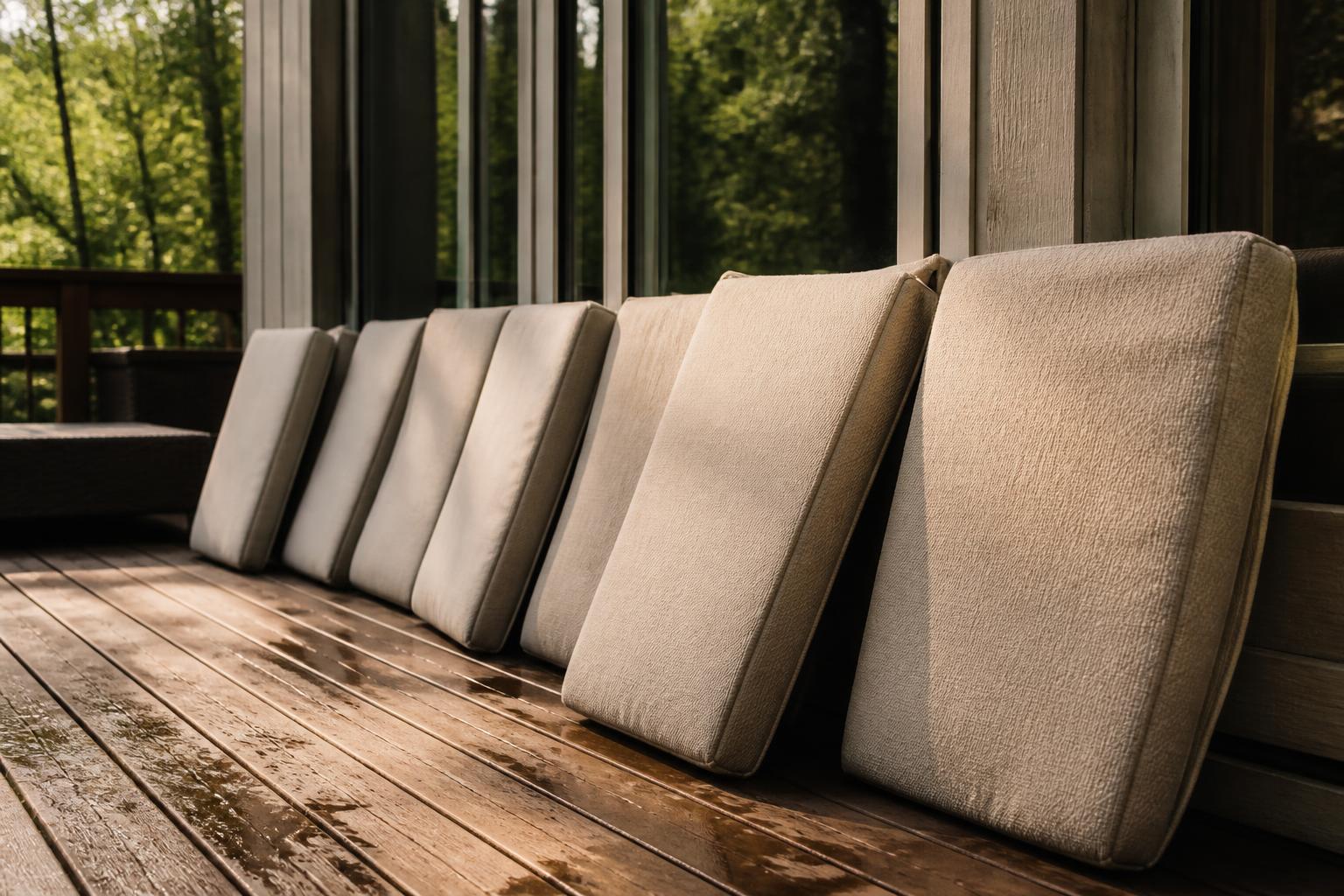
Rinse thoroughly with a garden hose until no soap residue remains — leftover soap actually attracts dirt and speeds up future mildew growth. Squeeze out excess water by hand rather than wringing, which can distort seams. Stand cushions on edge in direct sun and let them air dry completely, which usually takes 4 to 8 hours depending on humidity and fabric thickness. Stubborn spots may need a second treatment; don’t put cushions back into use while still damp, since that trapped moisture is exactly what restarts the mildew cycle.
Cushion Covers vs. Foam Inserts: Different Rules Apply
Removable covers and foam inserts need separate treatment, and mixing them up is a common reason mildew keeps returning even after a thorough cleaning. Covers made from Sunbrella or similar performance fabric can typically handle the full wash process above, and many are machine-washable on a gentle, cold cycle if the care tag confirms it — always air dry, never machine dry, since heat can set stains permanently and shrink seams.
Foam inserts are a different story. Standard polyurethane foam absorbs water and holds onto moisture for days, creating a hidden mildew reservoir even when the cover looks clean. If you find mildew has worked into the foam itself, that’s usually a sign the insert needs replacing rather than cleaning — soaking foam in cleaning solution rarely gets it fully dry again without professional equipment. This is one reason cushions built with quick-dry or open-cell foam, designed to let water pass through rather than pool inside, hold up so much better through a Carolina summer of pop-up thunderstorms. If you’re shopping for replacements, it’s worth comparing options built specifically for humid regions — our guide to outdoor cushions suited to humid Carolina summers breaks down which fabric and foam combinations actually resist mildew rather than just claiming to.
When you’re at the showroom looking at seating options with replaceable cushions, ask whether the insert uses a quick-dry foam core — it’s a small spec detail that saves a lot of maintenance work later.
Airflow, Drying Habits, and Storage That Prevent Mildew Long-Term
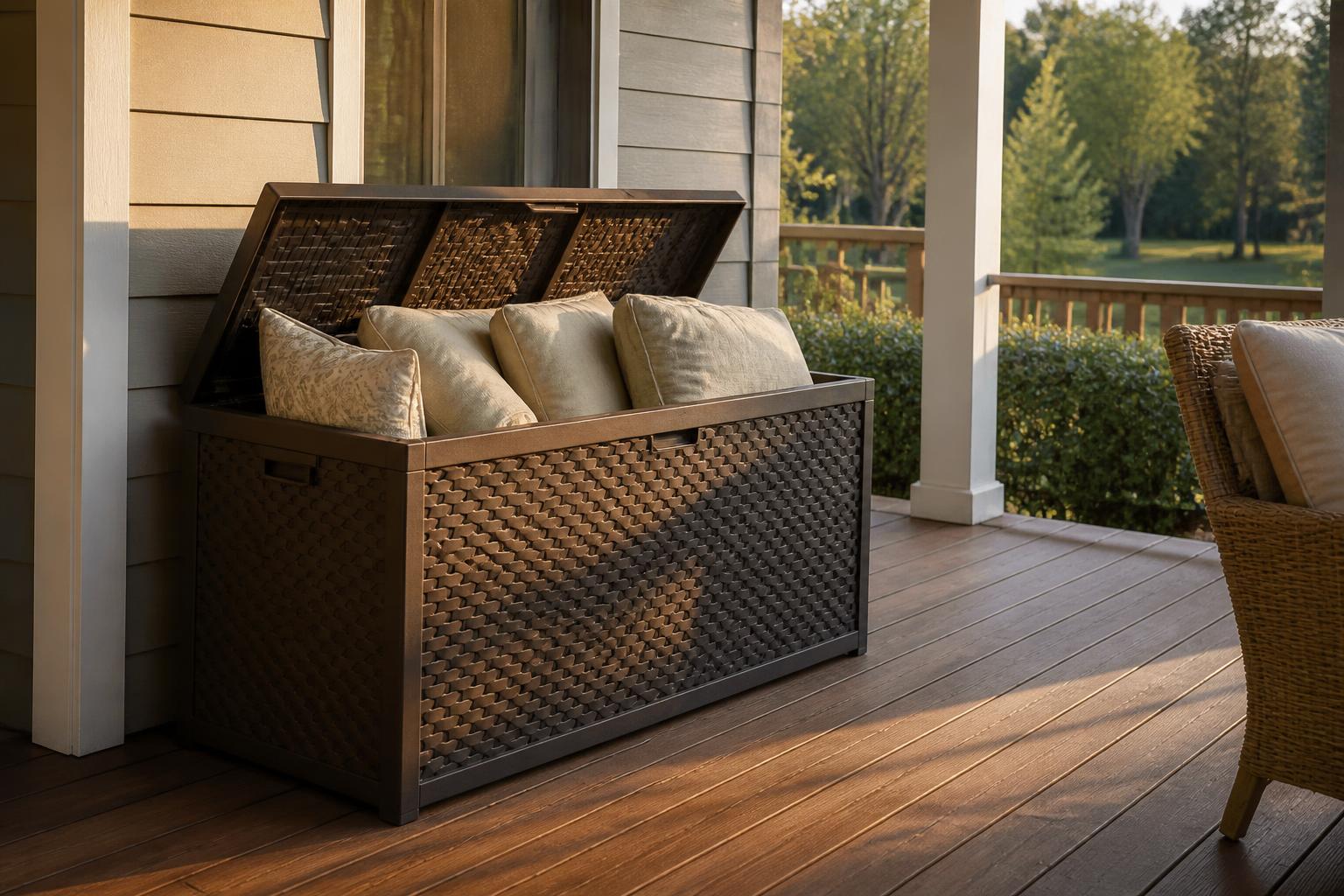
Cleaning solves today’s problem; airflow and drying habits solve the recurring one. Mildew needs three things to grow: moisture, warmth, and still air. You can’t control Charlotte’s humidity, but you can control the other two variables around your cushions.
Prop cushions on edge after every rain rather than leaving them flat on furniture, since flat cushions trap water against the fabric underside where it can’t evaporate. A few inches of clearance between stacked cushions, or between a cushion and a wall, makes a measurable difference — aim for at least 2 inches of airflow space wherever cushions rest for extended periods. If your patio furniture sits under a covered porch with poor cross-ventilation, consider a small fan on humid days to keep air moving across the fabric surface.
Overnight dew is often underestimated as a mildew trigger. Even without rain, cushions left out overnight in Carolina’s humid air can pick up enough moisture to support mold growth within days if they don’t dry out during the day. Bringing cushions inside, or under a dry cover, on nights when you won’t be using the furniture the next morning breaks that cycle.
For longer gaps between use — vacation weeks, the shoulder season between spring pollen and summer entertaining, or winter storage — store cushions somewhere dry with airflow rather than sealed in plastic bins, which trap any residual moisture against the fabric. Our comparison of furniture covers versus indoor storage walks through which approach fits different patio setups and how to choose breathable storage bags over airtight totes.
Rotation and Seasonal Care Routine
A simple rotation habit does more for mildew prevention than any single cleaning product. Wipe down cushion covers with a damp cloth roughly every 2 weeks during peak humidity season, from late May through September, to remove pollen and surface grime before it has a chance to feed mildew growth. Do a full wash-and-sun-dry treatment at the start and end of each season, even if you don’t see visible spots yet, since early-stage mildew can be present before it’s visible to the eye.
Flip and rotate cushions periodically so the same surface isn’t always facing down or shaded. Cushions in constant shade under an umbrella or pergola dry more slowly and deserve extra attention compared to those getting regular sun exposure. Direct sun helps cushions dry faster and discourages mildew growth, which is part of why air-drying in direct light works better than shade-drying for mildew control, not just moisture removal. For background on how moisture drives mildew growth, see the EPA’s mold and moisture resources.
Before winter freezes set in, do a final deep clean and full dry-out, then store cushions somewhere temperatures stay above freezing if possible — repeated freeze-thaw cycles on damp foam can accelerate breakdown of the material even without mildew involved.
Frequently Asked Questions
Can I use bleach to remove mildew from outdoor cushions?
The right product depends on the fabric: solution-dyed acrylics such as Sunbrella tolerate a diluted bleach and mild soap solution, while other fabrics may need a gentler oxygen-based cleaner. Always check the manufacturer’s care tag first, test on a hidden seam area, never mix bleach with vinegar or ammonia, and rinse thoroughly afterward to remove all bleach residue before drying.
How often should I clean my outdoor cushions to prevent mildew?
Plan on a quick wipe-down every 2 weeks during humid summer months and a full wash with soap solution and sun drying at the start and end of each season. Homes near heavy shade, sprinklers, or dense tree cover may need more frequent attention since those spots stay damp longer and support faster mildew growth.
Why does mildew keep coming back after I clean my cushions?
Recurring mildew almost always points to trapped moisture — either the foam insert never fully dried, the cushions sit flat without airflow underneath, or they’re stored in a sealed container while still slightly damp. Address the drying and airflow habits described above rather than just repeating the cleaning step, or the cycle will continue.
Should I replace cushions instead of cleaning them if mildew is severe?
If mildew has worked deep into the foam insert rather than just the cover, or if the fabric has visible staining that doesn’t lift after two thorough cleaning attempts, replacement is usually more practical than continued cleaning. Covers alone can often be replaced separately from the foam if the insert is still in good shape.
If your cushions are past the point of a good cleaning, or you’re ready to move to fabric and foam that hold up better through Charlotte’s humid summers, stop by the Carolina Patio Furniture showroom and sit in a few options built for the Carolinas climate. Call (704) 274-3222 with questions, or browse our selection of seating with replaceable cushions to see fabric and foam combinations in person before you buy.