
If you’re comparing flat weave vs round weave resin wicker for a new sectional or dining set, the choice comes down to more than looks — it affects how the furniture feels under your arms, how easily pollen and pine sap wipe off, and how long the weave holds up against Charlotte’s humid summers and the occasional winter freeze. Both styles are typically woven over aluminum frames from all-weather resin, but the shape of the strand changes the finished piece in ways worth understanding before you sit down in the showroom.
What Flat Weave and Round Weave Actually Mean
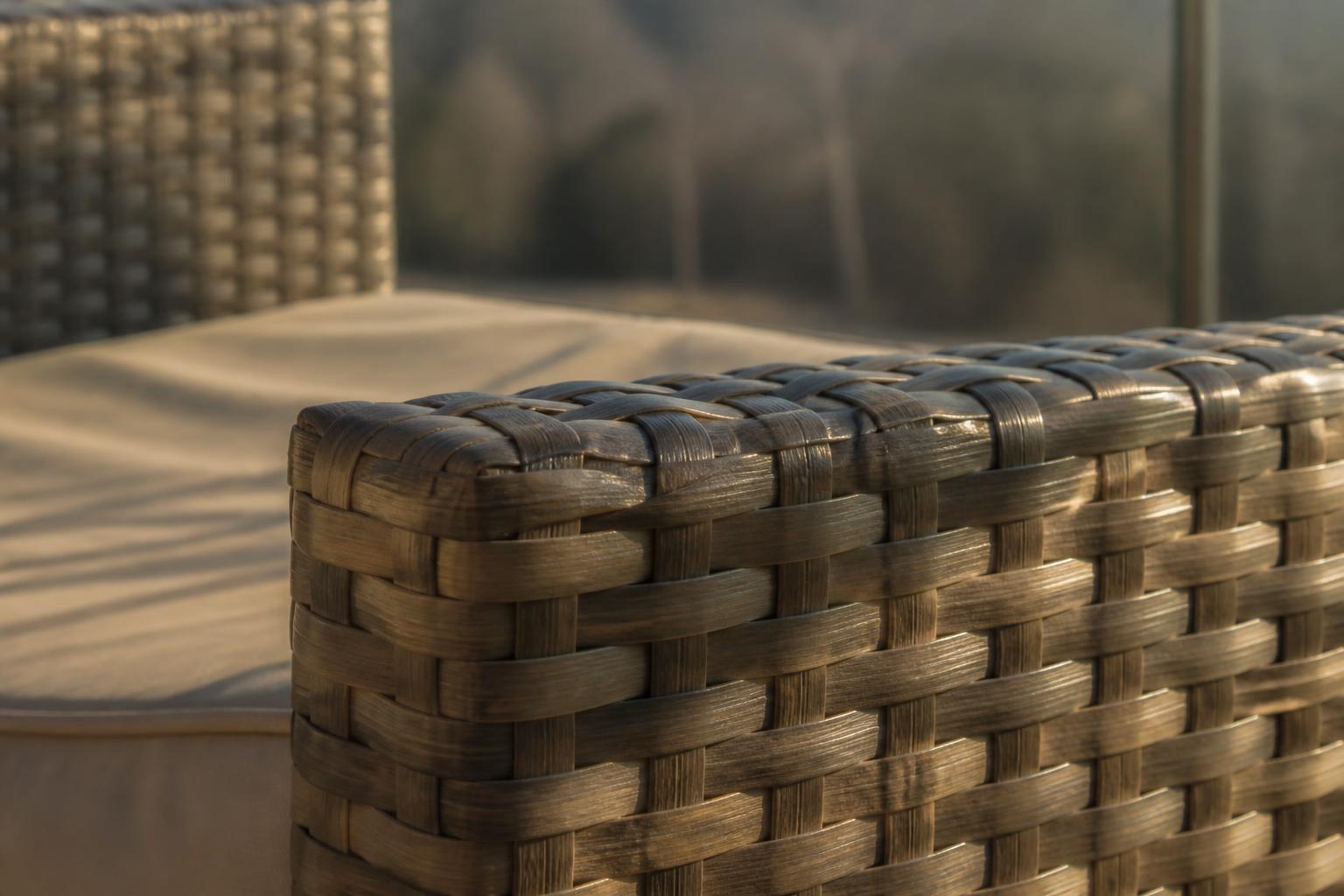
The terms describe the cross-section of the individual resin strand, not the furniture’s overall shape. Flat weave uses a ribbon-like strand that lies flush against its neighbors in a tight, basketlike pattern. The result is a smooth, almost woven-fabric surface with minimal texture and a contemporary, low-profile look that reads clean against modern architecture, sleek pavers, or a minimalist deck.
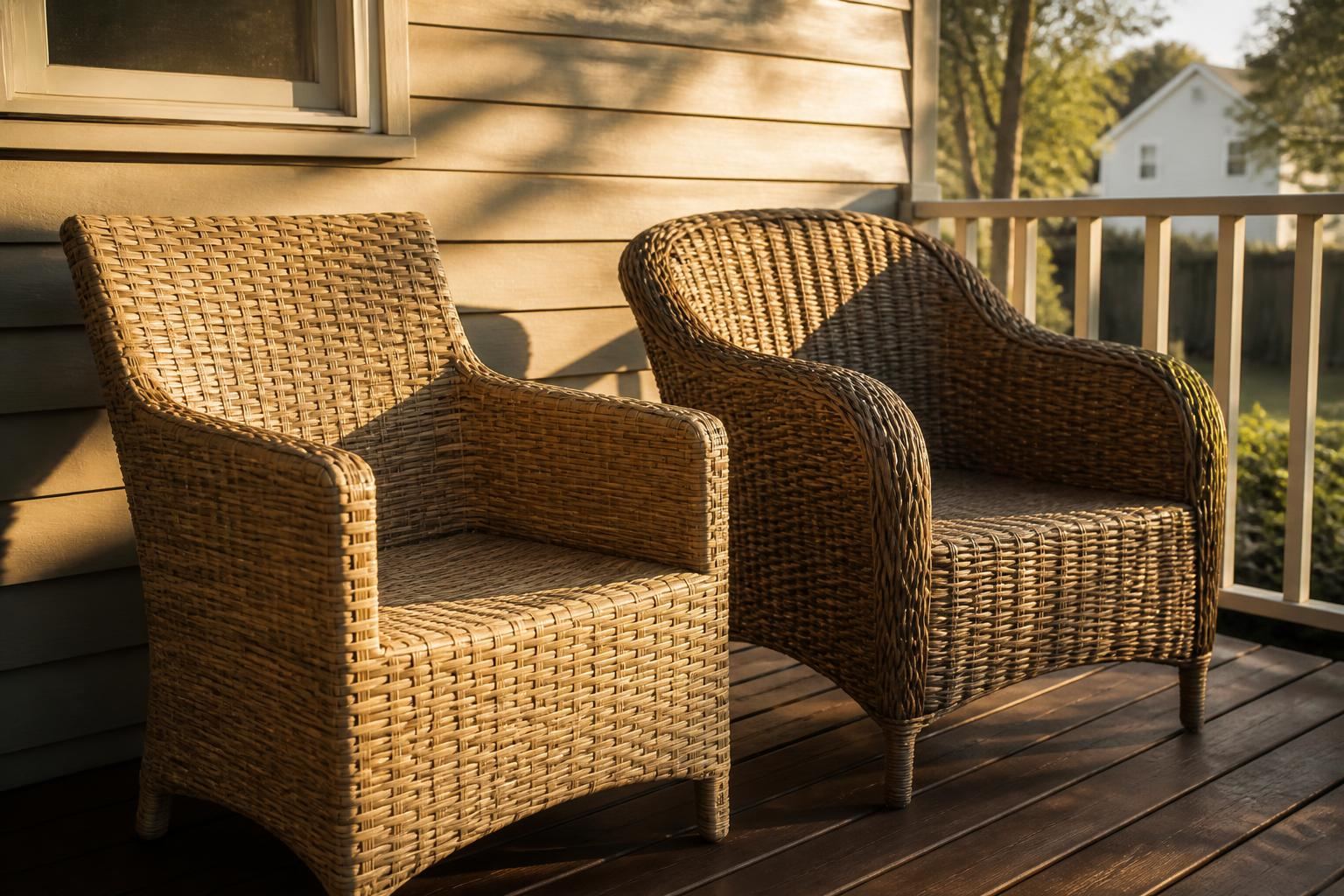
Round weave uses a cylindrical strand woven in a more open, rope-like pattern that casts small shadows and shows visible gaps between strands. This is the look most people picture when they think “wicker” — it mimics the rattan furniture that’s been popular on porches for generations, which is why it tends to suit traditional, coastal, or cottage-style patios better than a strictly modern space.
Both are considered resin wicker rather than natural wicker, meaning the strands are synthetic HDPE resin engineered to resist UV fading, moisture absorption, and insect damage in ways natural rattan simply cannot. If you’re new to the category altogether, our wicker patio furniture guide covers the broader construction differences between resin wicker lines before you narrow down to weave style.
Texture, Comfort, and Seating Feel
Sit in a flat weave chair and a round weave chair back to back and the difference is immediate. Flat weave’s continuous, ribbon-style surface distributes your weight more evenly across the seat and back, so it tends to feel firmer and slightly cooler against bare skin — a real consideration if you’re lounging in shorts through a 90-degree July afternoon. The smooth surface also means fewer pressure points, which some shoppers prefer for dining chairs where you’re sitting upright for an hour at a stretch.
Round weave has more natural give because the rounded strands flex individually rather than as a solid sheet. That can translate to a slightly softer, more cushioned feel even before you add a seat cushion, which some buyers like for deep-seating lounge chairs and sofas. The tradeoff is that the open weave pattern creates small gaps — generally 1/8 to 1/4 inch — that can catch a bare foot, a pet’s claw, or a swimsuit tie if you’re not paying attention.
Neither style is uncomfortable on its own; almost every sectional and dining set in this category is sold with a cushion set in mind, and the seat cushion does most of the comfort work. The weave style matters more for the exposed arms, chair backs, and side panels where your skin or clothing makes direct contact.
Cleaning and Upkeep Through Humid Carolina Summers
Charlotte’s combination of heavy spring pollen, high summer humidity, and occasional wind-blown storm debris means every resin wicker piece needs a rinse-down every few weeks during peak season, but the two weave styles collect grime differently.
Flat Weave Cleaning
The smooth, continuous surface of flat weave sheds pollen and dust more easily because there’s less surface texture for particles to cling to. A quick wipe with a microfiber cloth and a garden hose rinse every 2 to 3 weeks usually keeps it looking fresh. Because the strands lie flat against each other, though, water and pollen can settle into the seams between rows, so an occasional pass with a soft-bristle brush and a mild dish-soap solution once a month during pollen season helps prevent a dulled, chalky buildup.
Round Weave Cleaning
The open, rope-style gaps in round weave are more prone to trapping pollen, cobwebs, and small debris, especially where strands cross. A soft-bristle brush or an old toothbrush worked into the weave every 2 weeks in spring, followed by a hose rinse, keeps it from looking dingy. Compressed air or a low-pressure attachment on a shop vac can also clear out stubborn pockets without forcing dirt deeper into the weave.
For both styles, avoid pressure washers on the highest settings, which can force water behind the weave and into the aluminum frame joints, and skip bleach-based cleaners, which can prematurely fade the resin’s UV-stabilized color. A mild soap and water solution, rinsed thoroughly, is sufficient for routine maintenance according to most manufacturer care guidance, and for the cushions that pair with either weave, see Sunbrella’s cleaning resources.
Snag Resistance and Long-Term Durability
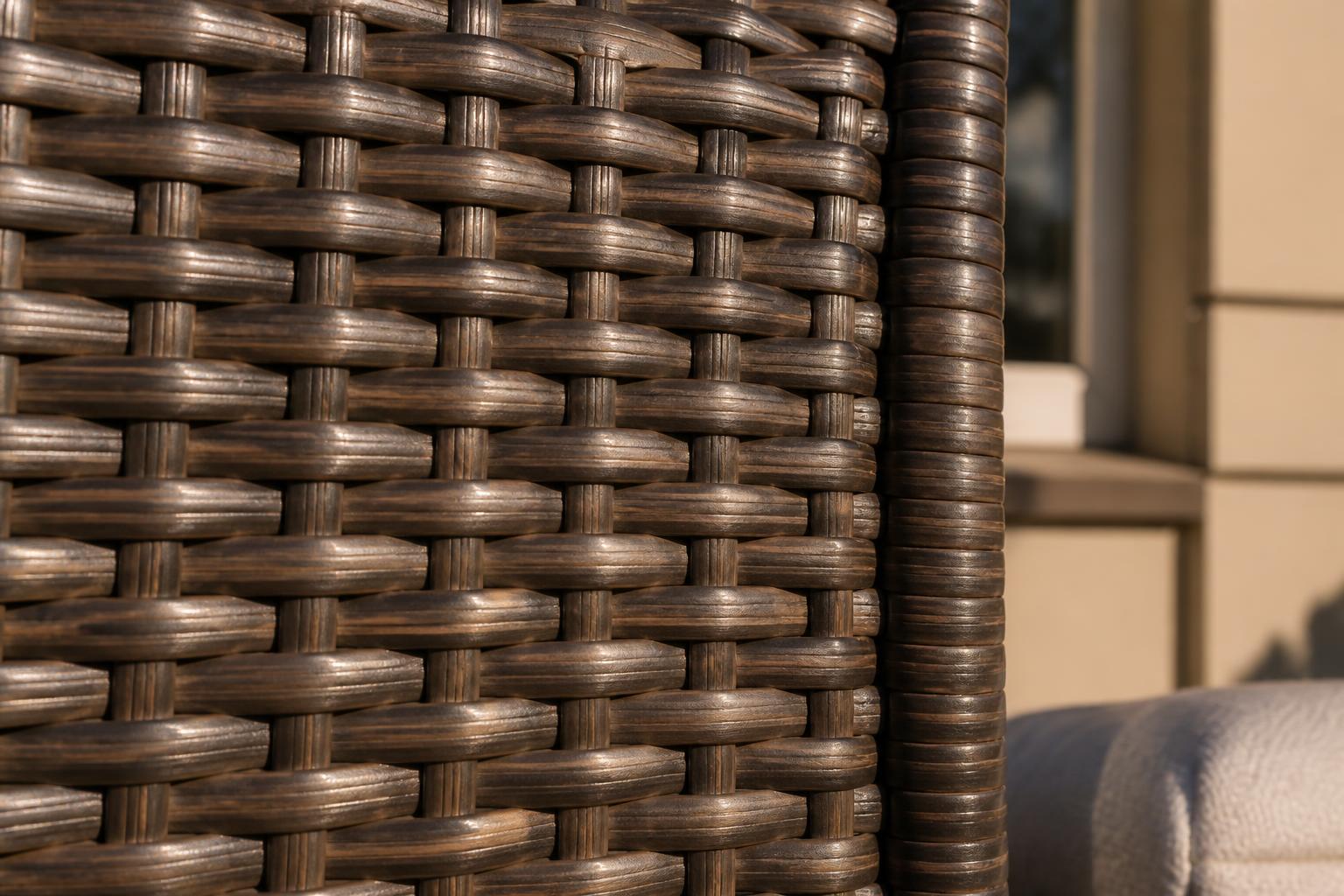
Both weave styles are woven from the same category of UV-stabilized HDPE resin, so their raw material durability is comparable — expect a well-built piece to hold its color and structural integrity for many years of regular outdoor use when it’s cared for properly. Where they diverge is in how each style handles physical wear and tear.
Flat weave’s tight, overlapping construction resists snagging from pet claws, jewelry, or rough fabric because there’s no raised edge or gap for a claw to catch. If you have a dog that likes to jump onto the furniture, flat weave generally holds up with fewer visible scuffs over time.
Round weave, with its more open pattern, is somewhat more prone to snagging on paws, buckles, or a zipper pull, and a broken strand can be more visually noticeable because of the pattern’s rhythm. That said, quality round weave construction wraps individual strands around the aluminum frame with enough tension that isolated snags rarely cause a strand to unravel the way natural rattan might. Weight capacity and frame durability for both weave styles depend more on the aluminum frame gauge and joinery than the resin weave itself, so ask about frame construction when you’re comparing pieces in person.
Matching Weave Style to Your Patio’s Design
Flat weave tends to suit contemporary and transitional patios: think clean-lined homes, poured concrete or large-format paver patios, black or bronze aluminum railings, and minimalist landscaping. Its smooth, tailored appearance pairs naturally with performance fabric cushions in solid colors or subtle textures rather than busy patterns.
Round weave leans traditional, coastal, or cottage in feel. It works well on covered porches, brick patios, and homes with more classic architectural detailing, and it pairs comfortably with striped or floral Sunbrella cushions that echo a porch-and-rattan heritage look. If your home has a mix of styles, round weave in a neutral tone like driftwood or espresso can bridge traditional and updated spaces more easily than flat weave, which reads more strictly modern.
Frame color also plays a role: frame color options vary by collection, so consider how the frame color interacts with your existing hardscape and house trim before finalizing a selection. You can browse current options in our resin wicker furniture collection to see how each weave style looks across sectionals, dining chairs, and lounge sets.
Frequently Asked Questions
Is flat weave or round weave resin wicker more durable in humid climates?
Both hold up well in Charlotte’s humidity because HDPE resin doesn’t absorb moisture or rot the way natural rattan does. Durability differences come down more to frame construction and UV-stabilization quality than weave shape. Flat weave resists snagging slightly better, while round weave’s open pattern needs more frequent brushing to prevent pollen buildup in the gaps.
Which weave style is easier to clean after pollen season?
Flat weave is generally easier to wipe clean because its smooth, continuous surface has fewer pockets for pollen to settle into. Round weave’s open gaps trap more pollen and debris, so it typically needs a soft brush worked into the weave every couple of weeks during peak pollen season rather than just a hose rinse.
Can I mix flat weave and round weave pieces on the same patio?
You can, though it works best when you keep the frame color and cushion fabric consistent across both styles so the mix reads as intentional rather than mismatched. Many homeowners use round weave for lounge seating and flat weave for a dining set, especially when the dining area has a more contemporary table base.
Does weave style affect how long resin wicker furniture lasts overall?
Weave style has a modest effect on wear patterns — flat weave resists snags better, round weave flexes more under weight — but the bigger factors in longevity are aluminum frame gauge, weld quality, and how consistently you rinse and store cushions. Ask about frame construction details when comparing specific pieces in the showroom.
Whether you’re drawn to the clean lines of flat weave or the classic texture of round weave, the best way to judge comfort and build quality is to sit in both side by side. Stop by the Carolina Patio Furniture showroom in Charlotte to compare weave styles, frame colors, and cushion fabrics in person, or call us at (704) 274-3222 and we’ll help you narrow down options before your visit — our wicker patio furniture guide is also a good starting point if you want to do some homework first.