
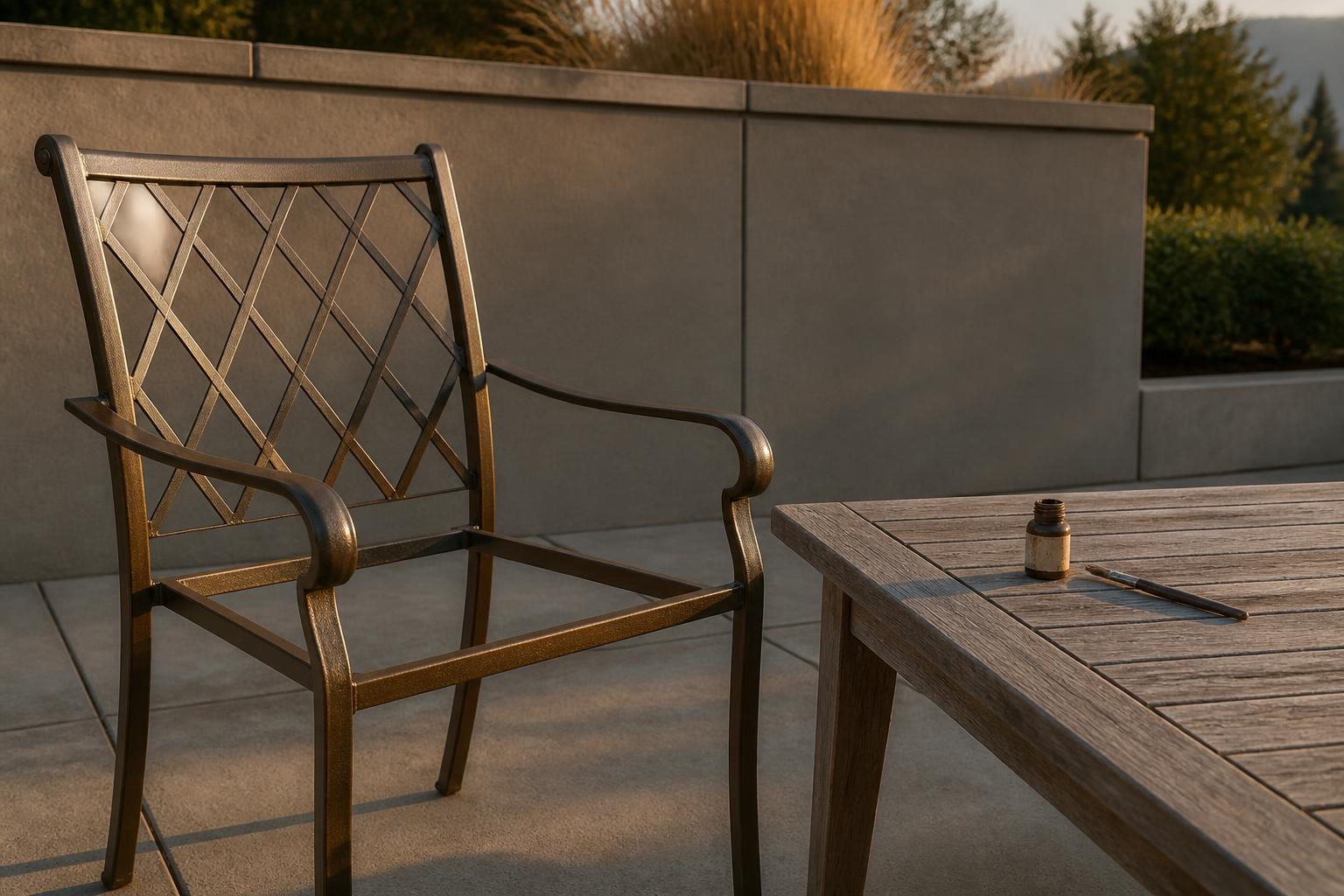
If you need to touch up powder coated aluminum patio furniture, the good news is that small chips are usually a cosmetic fix you can handle yourself in under an hour. A dropped chair, a bump from a grill cart, or a scrape during winter storage can knock a nick into the finish, and left alone that exposed spot can eventually invite corrosion around the edges. This guide walks you through cleaning, prepping, matching color, and applying thin coats so the repair blends in rather than standing out — plus how to tell when a chip is more than skin deep.
Assessing the Damage Before You Reach for Paint
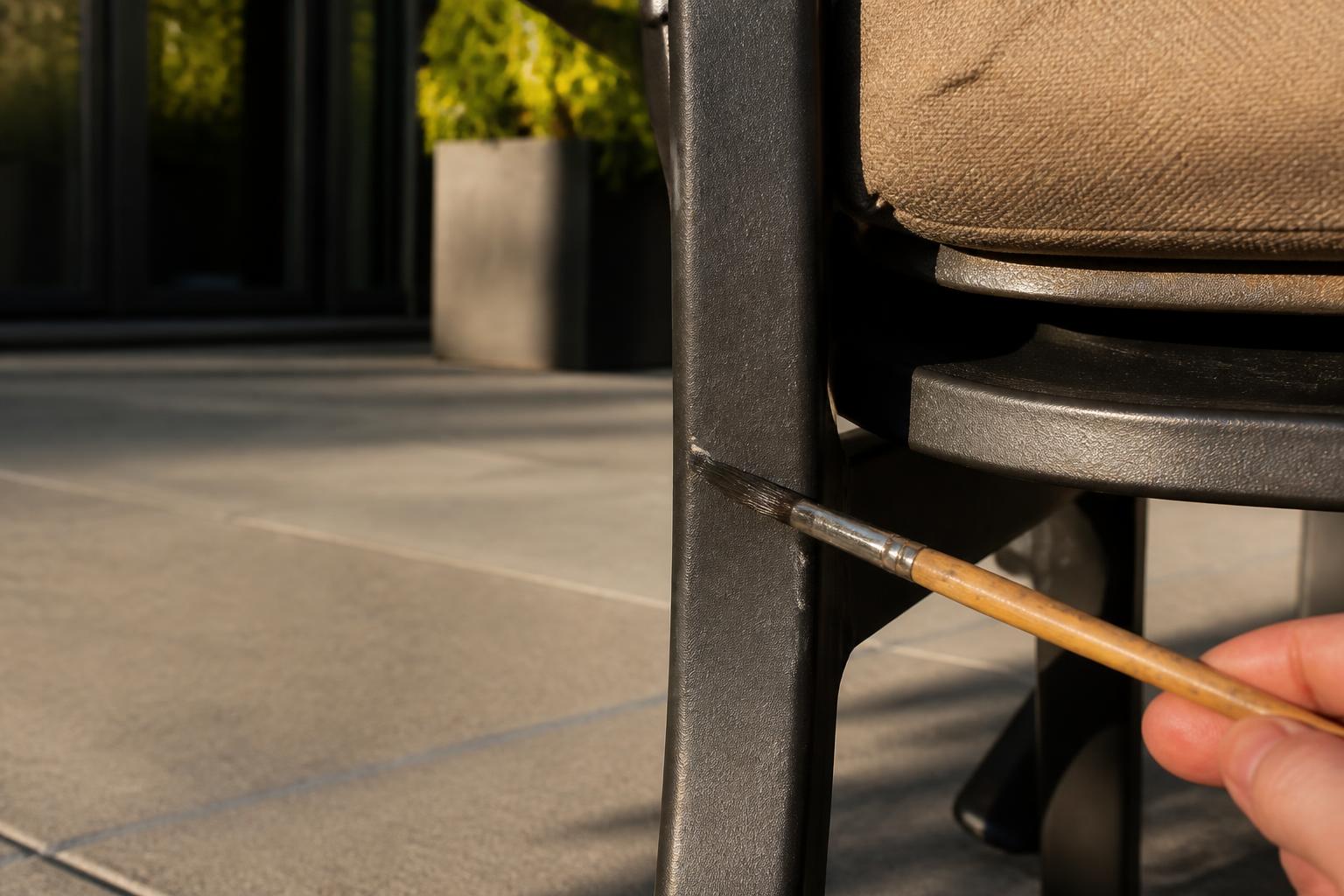
Not every mark on a frame needs the same treatment, so start by looking closely at what you’re dealing with. A true chip in powder-coated aluminum patio furniture goes all the way through the coating and shows bare metal, usually a dull gray or silvery color, at the center. A surface scratch, by contrast, only dulls the topcoat without breaking through to metal — those often respond to a light buff and a coat of finish restorer rather than full touch-up paint.
Run your fingernail across the spot. If you feel a distinct edge or lip where the coating has separated from the aluminum, that’s a chip. Measure it — most touch-up jobs on outdoor furniture involve chips under 1/2 inch across, which is well within what a touch-up pen or brush-on paint can handle in a single session. Anything larger than about 1 inch, or damage that runs along a weld seam or a stress point like an arm joint, deserves a second look before you paint over it, since it may indicate the coating is lifting in a wider area you haven’t spotted yet.
Also check whether the chip has already started to oxidize. Aluminum itself doesn’t rust the way steel does, but it can develop a chalky white oxidation layer when bare metal sits exposed to humidity and rain. If you see that white powdery residue, you’ll need to address it before painting — otherwise the touch-up won’t adhere and will flake off within a season. For frames showing broader white bloom or pitting beyond a single chip, it’s worth reading through our notes on preventing corrosion on aluminum furniture so you’re treating the cause, not just the symptom.
Cleaning and Prepping the Chip Site
Touch-up paint only bonds well to a clean, dry, slightly roughened surface, so don’t skip prep even on a chip the size of a pencil eraser. Wash the area and about 2 inches around it with mild dish soap and warm water, using a soft cloth or sponge — avoid anything abrasive at this stage. Rinse thoroughly and let the frame air-dry for at least 30 minutes in direct sun or a warm room; painting over any trapped moisture is one of the most common reasons touch-up jobs fail within weeks.
Once dry, wipe the chip and surrounding coating with isopropyl alcohol on a lint-free cloth to remove oils from sunscreen, skin, or cleaning residue. Let that flash off for a few minutes.
Light Scuffing for Adhesion
Using 400- to 600-grit sandpaper or a fine sanding sponge, lightly scuff just the chipped area and a thin margin of the surrounding powder coat — you’re aiming to knock down the sharp edge of the chip and dull the gloss slightly, not strip more coating. Wipe away dust with a dry microfiber cloth, then go over it once more with alcohol.
Spot-Priming Bare Metal
If bare aluminum is visible, apply a thin coat of self-etching primer rated for aluminum before your color coat, working in a ventilated area with gloves and eye protection. This step is easy to skip but it’s what keeps future touch-ups from chipping again at the same spot, since primer gives the paint something to grip instead of the slick native oxide layer aluminum forms naturally.
Matching the Finish and Applying Touch-Up Paint
Color matching is where most DIY touch-ups go sideways, so take your time here. Powder coat finishes come in textures ranging from smooth gloss to matte and fine-texture “wrinkle” finishes, and manufacturers don’t always use the same pigment formula from one production run to the next. If you still have paperwork or a swatch from when you bought the piece, check it for a color code or finish name before ordering touch-up paint — many aluminum furniture brands sell matched touch-up pens or small bottles specifically for this reason.
Without documentation, bring a removable part or clear photos taken in natural daylight into the showroom, since comparing chips against a paint chart in person is far more reliable than matching colors from a phone screen indoors. It’s also worth calling ahead with any questions before you make the trip.
Apply the touch-up paint in thin coats rather than one heavy pass. A single thick coat is the most common cause of a touch-up looking glossy, raised, or a shade off from the surrounding coating once it cures. Use the fine brush tip included with most touch-up pens, or a size 0 or 00 artist brush for bottled paint, and lay down a coat no thicker than the original coating — essentially a light film you can barely see building up. Let that dry per the manufacturer’s instructions, typically 15 to 30 minutes to the touch, then assess whether a second thin coat is needed to fully cover the bare spot. Most chips need 2 to 3 thin coats rather than one thick one.
Curing Time and Protecting the Repair
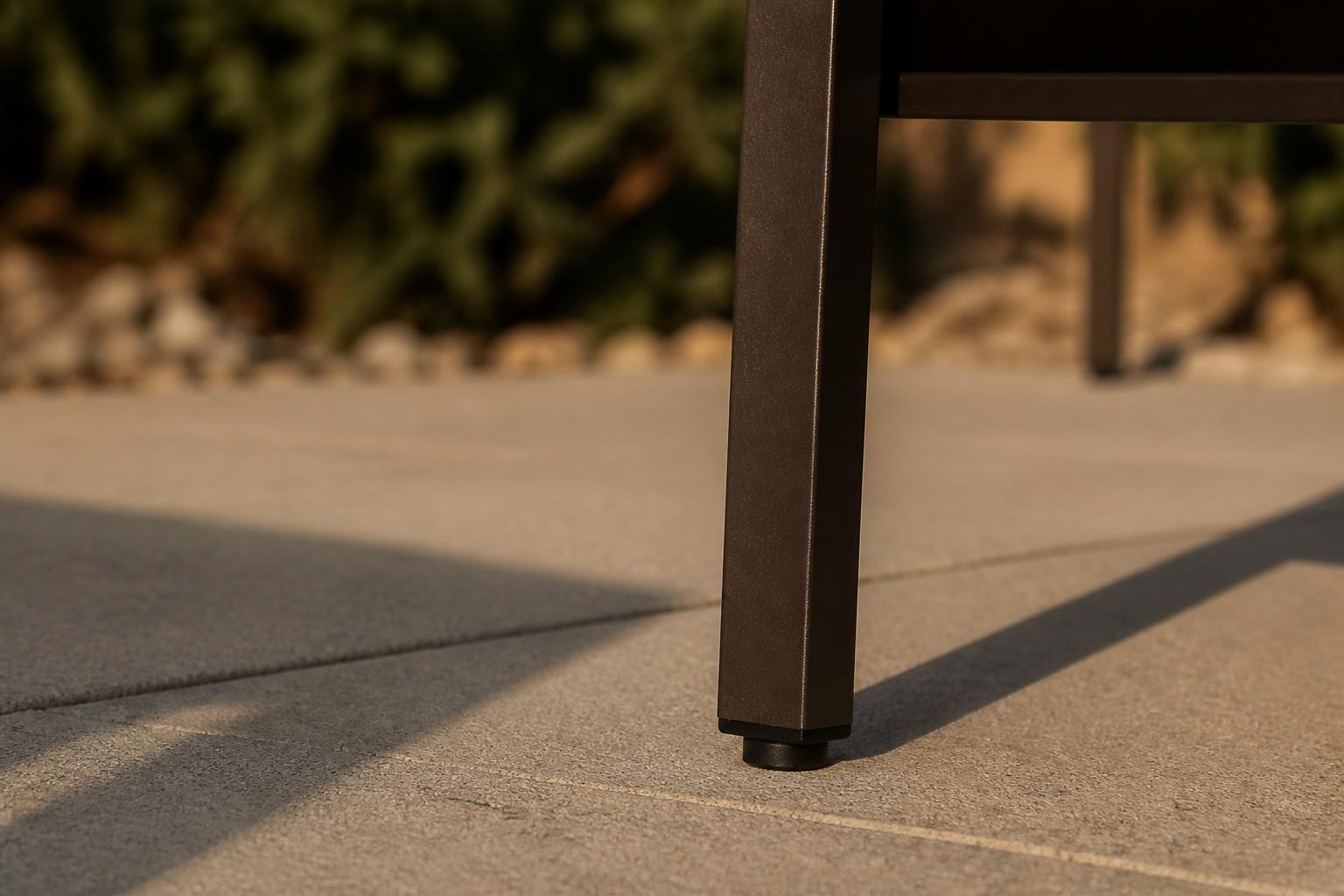
Patience during cure time matters as much as the application itself. Touch-up paint may feel dry to the touch within an hour, but full cure — the point at which the coating reaches its final hardness and adhesion — typically takes 24 to 72 hours depending on humidity and temperature. Keep the piece out of direct rain and out of use during that window; sitting or leaning on a chair arm before the paint has cured can smear or dent the repair.
Once cured, avoid pressure-washing the touched-up area for at least two weeks, and stick to hand-washing with a soft cloth and mild soap for the life of the repair rather than scrubbing pads, which can wear a thin touch-up coat faster than the original factory finish. If you’re doing this repair in fall ahead of winter storage, give the paint the full 72-hour cure window before covering or stacking furniture, since covers can trap moisture against a still-curing spot.
For frames that see six or more months of direct Carolina sun each year, expect touch-up paint to weather slightly faster than the original factory-applied coating, which is typically cured at higher temperatures for better UV resistance. A yearly inspection each spring — checking joints, chair legs, and table edges for new chips before pollen season coats everything in yellow dust — keeps small spots from turning into larger repair jobs.
When to Call the Store Instead of DIY
Some situations are better handled with a phone call than a paint pen. If a chip has spread into a crack that runs through the aluminum itself rather than just the coating, or if you notice pitting, white oxidation covering more than a few square inches, or coating that’s peeling in sheets rather than chipping at a single point, that’s a sign of a broader finish or material issue rather than isolated cosmetic damage. Trying to touch-up paint over active corrosion just seals moisture in rather than solving the problem.
It’s also worth reaching out if you’re not confident matching the finish yourself, or if the damage is on a highly visible piece like a dining table top where an imperfect match will bother you every time you set the table. Bring photos and, if possible, the piece itself or a small sample into the showroom. Routine inspection and prompt small repairs are generally more cost-effective than waiting until damage requires a full refinish, and that holds true for outdoor aluminum frames as much as anything else you own. If you’re shopping for a replacement piece instead of repairing, our aluminum furniture collection is a good place to compare current finishes and frame styles side by side. The Aluminum Association is a useful reference for how aluminum alloys resist corrosion.
Frequently Asked Questions
Can I use regular spray paint to touch up powder-coated aluminum furniture?
Regular spray paint will adhere temporarily but usually doesn’t match the sheen, flexibility, or UV resistance of powder coating, so it tends to chip again faster and can look mismatched under sunlight. Look for touch-up paint specifically formulated for powder-coated or aluminum outdoor furniture, ideally matched to your original finish, for the most durable and least noticeable repair.
How small does a chip need to be for a DIY touch-up?
Most touch-up pens and brush-on paints work well on chips up to about 1/2 inch across. Larger areas, chips along welds, or damage on structural joints are harder to blend and may signal a deeper coating issue, so it’s worth having those evaluated rather than layering paint over a larger compromised area.
Will a touch-up spot be noticeable once it dries?
With careful color matching and thin coats, a touch-up on a chip under 1/2 inch is usually only visible up close. Texture mismatch — gloss versus matte — is the most common giveaway, so matching finish type, not just color, makes the biggest difference in how well the repair blends.
How often should I inspect my frames for new chips?
A quick visual check twice a year — once in spring before heavy outdoor use and once in fall before storage or covering — catches most new chips while they’re still small and easy to touch up. Frames near high-traffic areas like pool decks or grill stations benefit from a closer look each season since they take the most incidental contact.
If you’re weighing a repair against a replacement, or you just want a second opinion on whether a chip is cosmetic or something more, stop by Carolina Patio Furniture in Charlotte or give us a call at (704) 274-3222. If new frames start to make more sense than another round of touch-up paint, take a look at our powder-coated aluminum patio furniture options in person.