
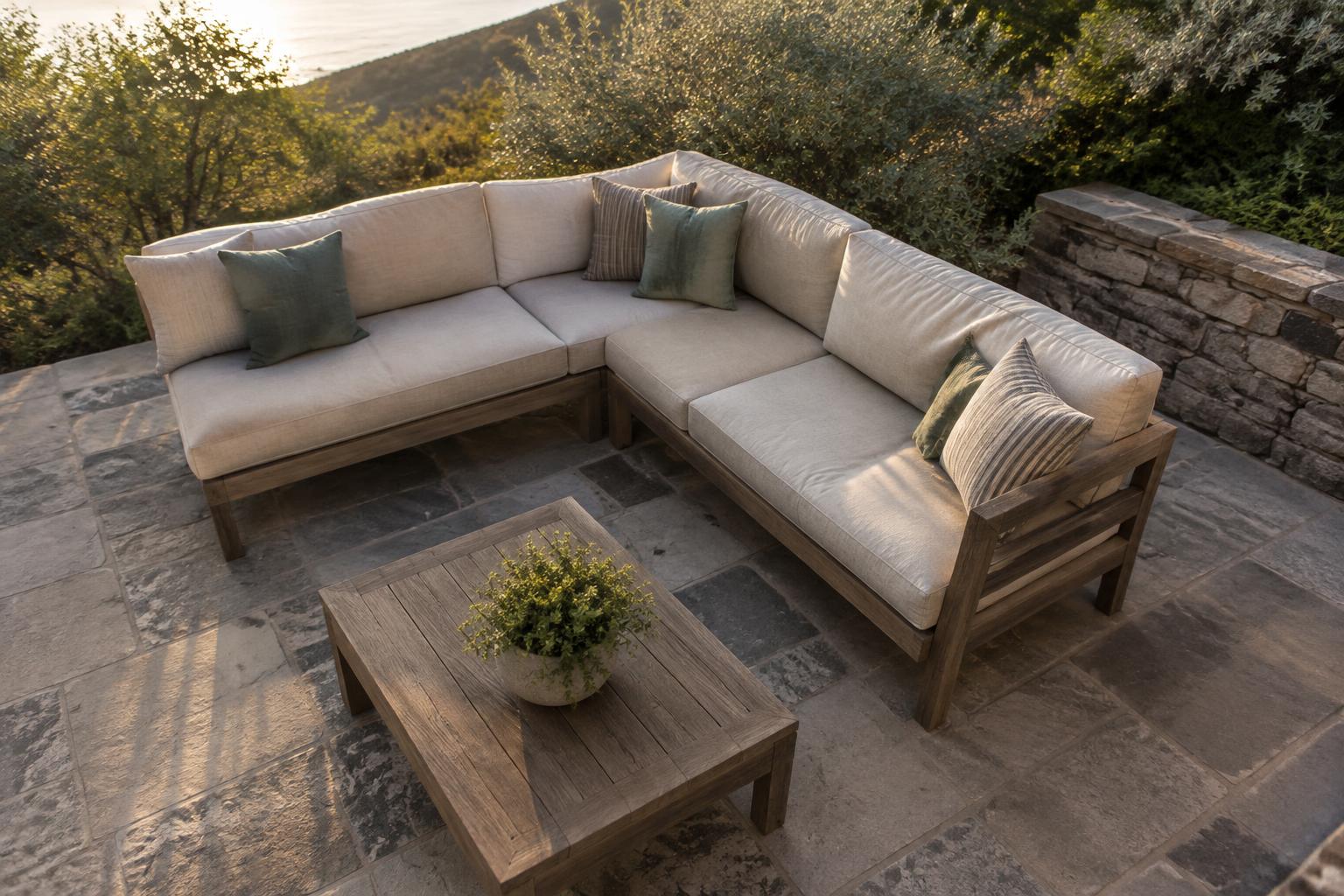


If you’ve ever stared at a sectional diagram and felt your confidence slip, you’re not alone: the difference between left-arm facing and right-arm facing outdoor sectional pieces trips up even experienced shoppers because it isn’t defined the way most people guess. It has nothing to do with which side you’d sit on. Once you understand the simple rule manufacturers use to label these pieces, ordering a corner sectional, chaise, or multi-piece sofa run for your patio becomes far less stressful. This guide walks through the definition, how the pieces combine, how to sketch your own space, and a checklist to bring along when you compare options.
How Left-Arm Facing and Right-Arm Facing Are Actually Defined
The industry convention, used across most outdoor and indoor furniture lines, is based on how the piece looks when you stand in front of it and face it, the same way you’d view it walking into a showroom. You are not sitting in the piece. You are standing a few feet away, looking at it head-on.
From that standing position, look at which side has the single raised arm. If the arm is on your left as you face the piece, it’s a left-arm facing (LAF) piece. If the arm is on your right as you face it, it’s right-arm facing (RAF). The open side, without an arm, is where the next piece in the sectional attaches.
This trips people up because once you sit down in the piece, the arm that was on your left while standing in front of it is now on your right from your seated point of view. Your brain wants to label it from where you’ll actually sit, but the manufacturer’s label was assigned from the viewing position, not the seated one. Keep repeating this to yourself while you shop: stand and face it, don’t sit and feel it.
One more wrinkle worth knowing before you order anything: not every manufacturer applies this convention with perfect consistency. Some smaller or import lines reverse the logic, or label pieces relative to the room rather than the viewer. Always confirm the exact definition on that specific maker’s spec sheet or layout diagram before you commit to an order, especially if you’re mixing pieces across different sectional lines.
How Armless, Corner, and Wedge Pieces Complete the Run
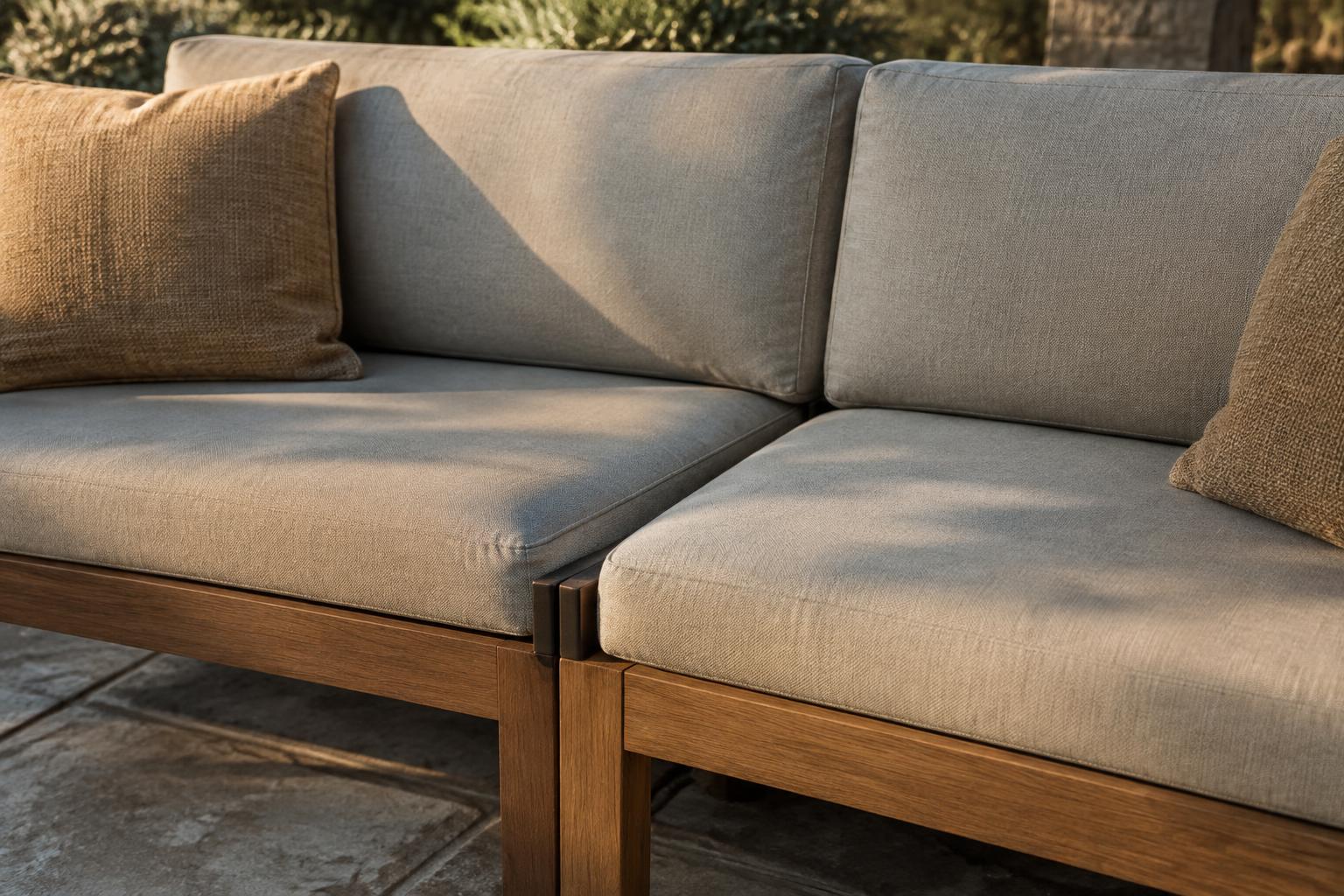
A sectional run is rarely just an LAF and RAF piece pushed together. Most configurations also include armless sections (no arms on either side, used in the middle of a straight run), a corner piece (which turns the run 90 degrees) or a wedge piece (which turns it in smaller angled steps), and sometimes an ottoman or chaise that extends the seating depth to around 60 to 65 inches instead of the standard 34 to 38 inches of a normal seat.
The LAF and RAF pieces act as bookends. Everything in between, armless seats, a corner, a wedge, needs to physically and visually connect without leaving a gap or mismatched cushion height. If you’re planning a compact layout, our guide on planning a modular outdoor sectional for a small patio walks through how fewer, smartly chosen pieces can still deliver a full turn without crowding a tight footprint.
A wedge piece is typically a trapezoid-shaped seat used to turn a corner at an angle rather than a hard square. A true corner piece is usually a 90-degree square unit that two armless or arm pieces attach to on adjacent sides; dimensions vary by collection, so check the spec sheet. Knowing which one your layout calls for before you order matters, because a wedge-based corner takes up noticeably more floor space than a square corner unit of similar seat count.
When you’re deciding between a 5-seat and 6-seat configuration, the number and type of these connecting pieces changes the total footprint more than people expect. Our 5-seat vs 6-seat outdoor sectional configuration guide breaks down how those middle pieces add up in inches, not just seats.
Sketching Your Patio Layout Before You Order
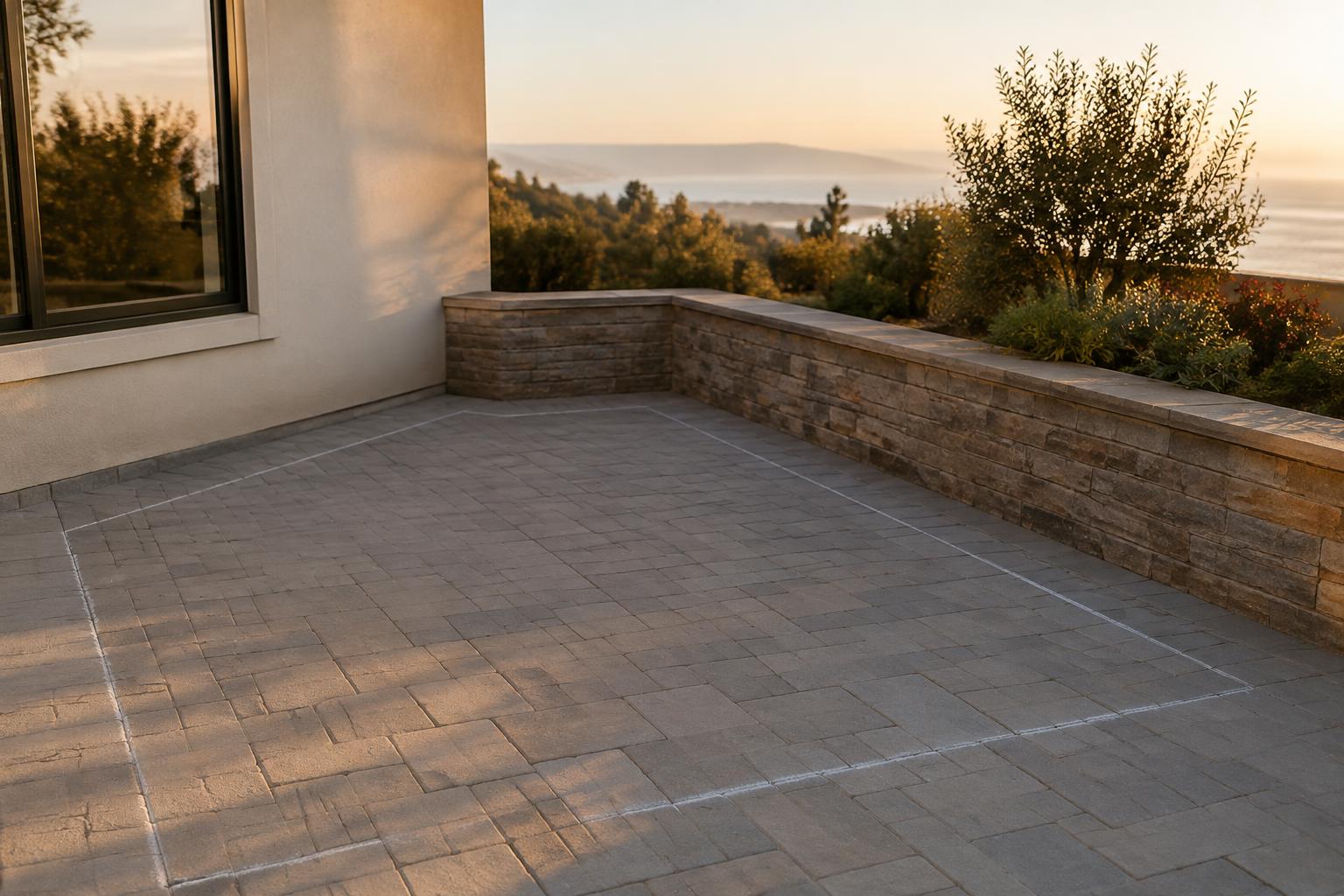
Before you worry about LAF versus RAF, sketch the space. A rough drawing on graph paper or a notes app, done to scale, prevents more regrets than any verbal description.
Measure the Footprint and Clearance
Start by measuring the full area where the sectional will sit, then subtract at least 30 to 36 inches of walking clearance on at least one side for people to move past comfortably. If the sectional backs up to a railing, wall, or planting bed, measure that fixed boundary first, since it usually determines which direction the run needs to face and, by extension, which arm orientation you need.
Mark the Direction You’ll Walk In From
Draw an arrow on your sketch showing the direction you’ll typically approach the seating area from, whether that’s a door, a gate, or steps down from a deck. Now imagine standing in front of the sectional, on the side people will sit toward, facing it. That is your viewing position for LAF versus RAF; your entry point only matters for where the open end of the run should point.
Note Drainage and Low Spots
Outdoor furniture sits in the same spot for months at a time, so note any area of the patio that holds water after rain or stays damp longer than the rest of the surface. General background on managing damp or poorly draining outdoor areas is available from Clemson Cooperative Extension, and it’s worth a look if your patio has a persistent soggy corner. Avoid placing a long sectional run, especially the chaise end, directly over a spot that doesn’t drain well.
Ordering a Sectional That Turns the Right Direction
Once your sketch is done, translate it into an order using the same stand-and-face method described above. Picture standing in front of the finished seating area, facing it, and decide which side you want the single arm to land on. That tells you whether you need an LAF or RAF piece as your anchor.
From there, work outward. If your run turns a corner, the piece attached to the open side of your LAF or RAF unit needs to be an armless or corner piece with connection points that match. Many outdoor sectional lines use interlocking clips or brackets to keep pieces aligned and prevent shifting on uneven pavers or windy days; our breakdown of outdoor sectional connector clips explains how these work and what to check before pieces arrive.
Double-check the manufacturer’s spec sheet for each piece you’re ordering, not just the collection as a whole. It’s common for a single sectional line to offer an LAF chaise paired with an RAF sofa, or vice versa, and the diagrams on the spec sheet will show the arm position using the same standing, facing orientation discussed earlier. If a diagram looks ambiguous, call and ask rather than guess, since an improperly matched pair simply won’t connect the way you expect.
A Mistake-Proof Checklist for the Showroom
Bring this list with you when you’re comparing pieces or reading a spec sheet:
- Stand in front of each piece, facing it as you would in a room, before deciding if it reads as left-arm or right-arm facing.
- Confirm the manufacturer’s specific LAF/RAF convention on the spec sheet, since terms can vary by maker.
- Match your sketch’s entry point and viewing angle to the orientation you’re ordering.
- Count every piece type you need: LAF or RAF anchor, armless seats, corner or wedge, and any chaise or ottoman.
- Measure seat depth and width for each piece type separately, since a chaise or corner unit is rarely the same depth as a standard armless seat.
- Verify that connector hardware is compatible across all pieces in the order, especially if you’re combining pieces from different collections or years.
- Check frame material and cushion fabric consistency across every piece, since finishes can shift slightly between production runs.
Keeping this list in hand turns an abstract diagram into a concrete decision you can make with confidence, whether you’re sketching at home or standing in front of the actual piece.
Frequently Asked Questions
Is left-arm facing defined by where I sit or where I stand?
It’s defined by where you stand. Face the piece the way you would walking into a room and look at it head-on. If the single arm is on your left from that standing position, it’s left-arm facing. It is not based on which side feels natural once you’re seated, which is the opposite perspective and the most common source of confusion.
Do all manufacturers use the same LAF and RAF definitions?
Most follow the standing-and-facing convention described above, but not universally. Some smaller or imported lines label pieces differently, so always check the specific manufacturer’s spec sheet or layout diagram before ordering, particularly if you’re mixing pieces from more than one collection or trying to match an existing piece you already own.
What’s the difference between an armless piece and a corner or wedge piece?
An armless piece has no arm on either side and sits in the middle of a straight run. A corner piece is typically a square unit that turns the layout 90 degrees, while a wedge piece is a trapezoid shape used for an angled turn. Each takes up a different footprint, so confirm dimensions before finalizing your layout.
Can I reconfigure an LAF/RAF sectional later if my patio layout changes?
Often yes, since many modular sectionals use removable connector clips that let you rearrange pieces into a new shape. Whether a full reversal works depends on the piece style and cushion design, so check compatibility before assuming every piece can be flipped or relocated to the opposite side of a new layout.
Questions about a sectional layout for your own patio? Call Carolina Patio Furniture at (704) 274-3222 or visit our Charlotte showroom with your sketch and measurements.