
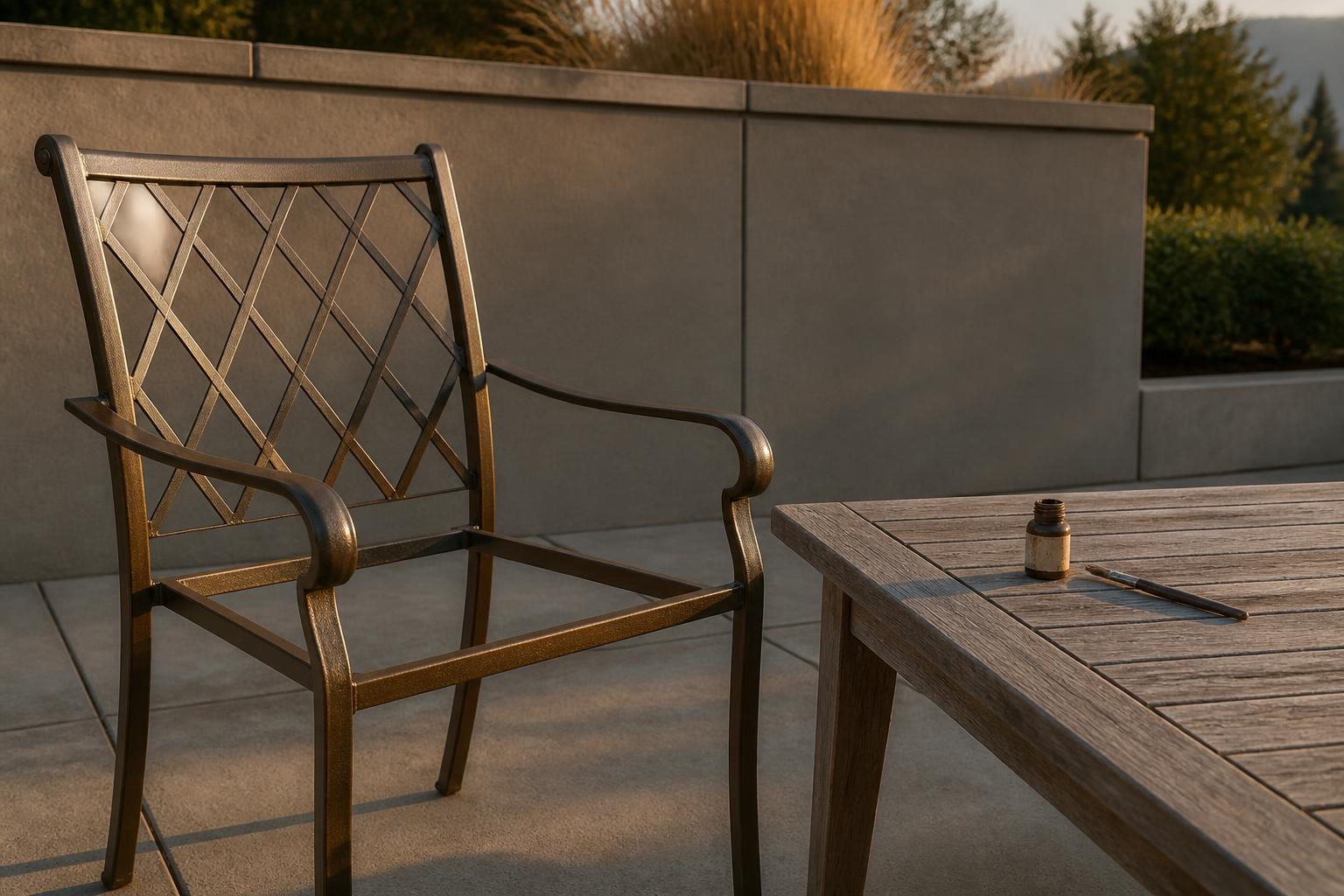
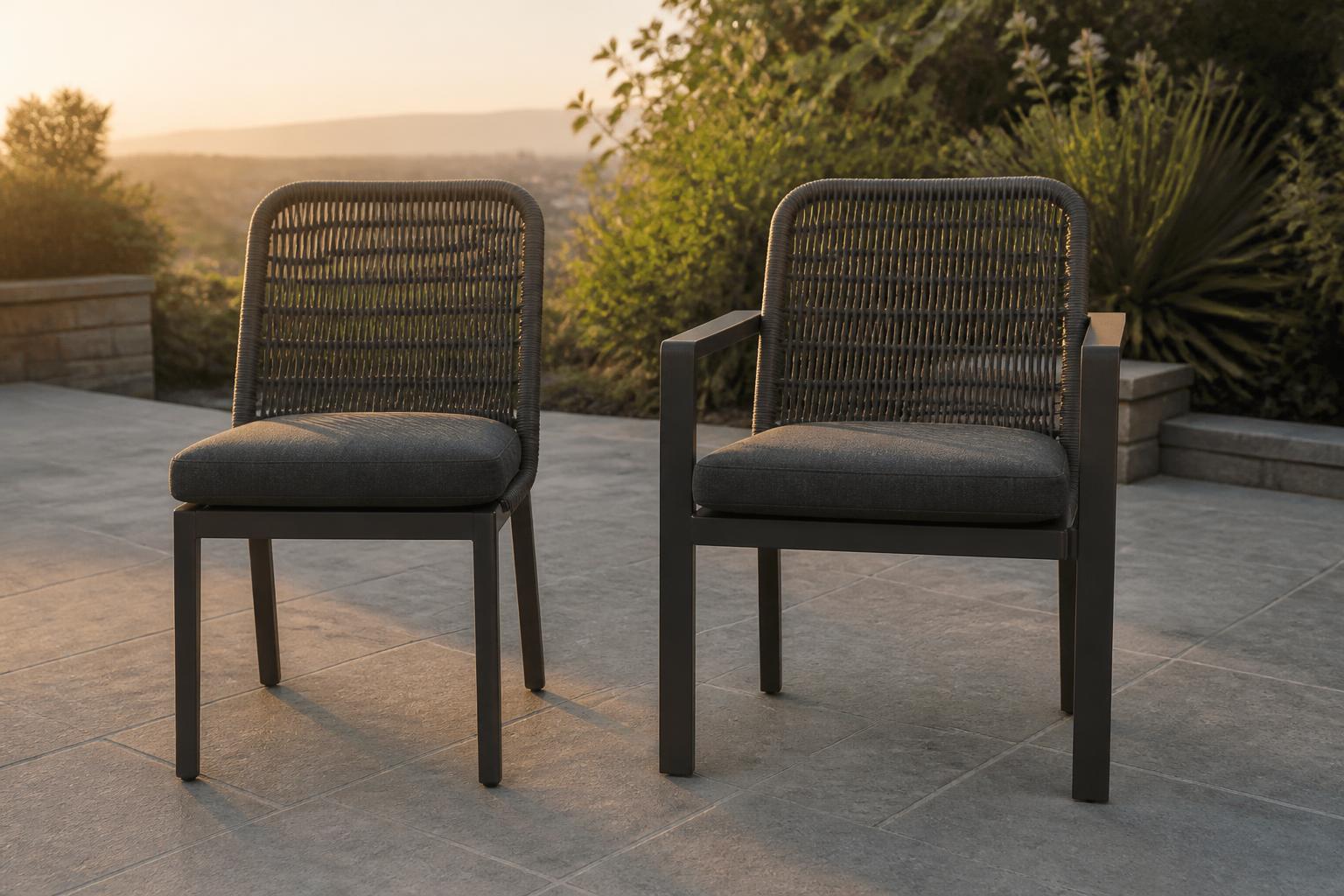
When you’re planning seating for a new patio table, the armless vs arm outdoor dining chairs question is one of the first decisions that shapes how many people you can actually fit around the table. Arm chairs are more comfortable for lingering over dinner, but they take up more space and cost more per seat. Armless chairs pack in tighter and cost less, but some people miss having a place to rest their elbows. This guide walks through the real measurements, comfort tradeoffs, and mixing strategies so you can plan a set that seats your household comfortably without crowding the table.
Table Clearance: How Much Room Each Chair Style Actually Needs
Table clearance is where the armless vs arm outdoor dining chairs decision gets practical fast. Most arm chairs measure 24 to 27 inches wide and need about 30 inches of linear table space to sit comfortably without bumping elbows with a neighbor. Armless chairs typically run 20 to 22 inches wide and only need about 24 inches of table space per seat. On a standard 72-inch rectangular table, that difference means you can often seat 3 people per side with armless chairs but only 2 with arm chairs, unless the table extends past 78 inches.
Height matters too. Arm chairs need at least 25 inches of clearance from the floor to the underside of the tabletop’s apron so the arms can slide under; many tables only offer 24 to 26 inches, which is tight. Measure your table’s apron clearance before you order arm chairs, especially with a cast aluminum or teak table that has a thicker apron than a glass-top design. If the clearance is under 25 inches, armless chairs or a chair with a low arm profile (under 7 inches above the seat) are the safer choice.
For round tables, the math shifts slightly. A 48-inch round table comfortably seats 4 with arm chairs or up to 5 with armless chairs. A 60-inch round table generally handles 6 arm chairs or 7 to 8 armless chairs. If you’re browsing outdoor dining sets and seating, checking the listed table width alongside the chair width specs will save you a return trip.
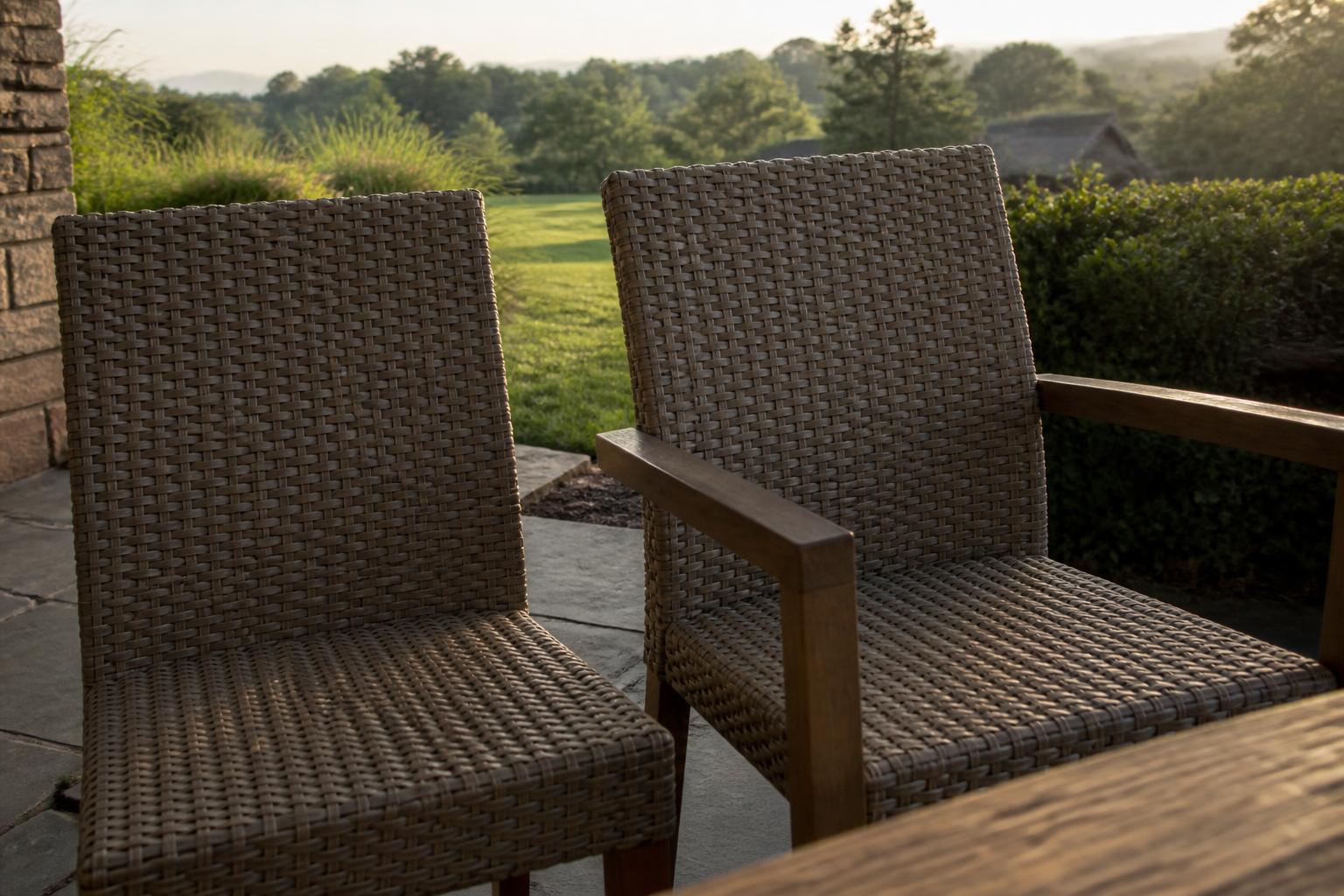
Comfort Differences for Long Meals vs Quick Bites
If your household tends to linger at the table through dessert and coffee, arm chairs earn their keep. The armrests give your shoulders and elbows a resting point, which reduces fatigue during meals that run an hour or more. Many outdoor arm chairs also come with a slightly deeper seat, often 20 to 22 inches front to back compared to 18 to 19 inches on armless versions, giving you a bit more room to shift position.
Armless chairs work well for households that eat quickly, entertain large groups, or use the dining table for games and projects between meals. Without arms in the way, it’s easier to slide a chair sideways to get up, pull a chair closer for a child’s booster seat, or tuck chairs flush against the table when not in use. This also makes armless chairs a better fit for smaller patios where every inch of walking space counts.
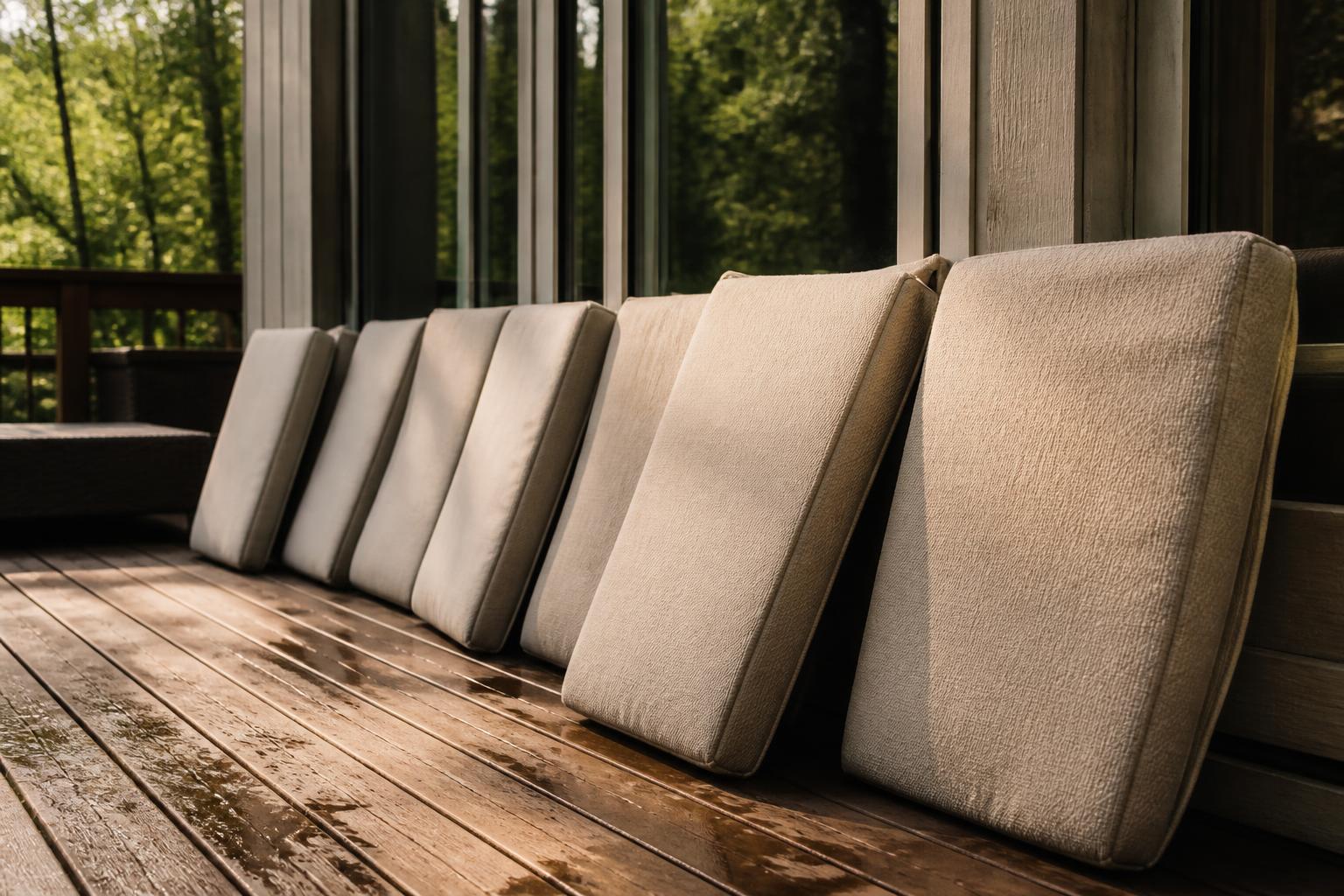
Cushion thickness affects comfort as much as arm presence. Look for cushions at least 3 inches thick with a Sunbrella or comparable performance fabric cover, since these dry faster after rain and resist fading better than uncoated polyester. A well-cushioned armless chair can be just as comfortable for a 30 to 45 minute meal as an arm chair with a thin cushion, so don’t assume arms alone solve comfort.
Mixing Arm and Armless Chairs for Better Seating Counts
Most experienced patio shoppers don’t choose exclusively one style — they mix armless vs arm outdoor dining chairs to balance comfort and capacity. A common approach for a rectangular table is placing one arm chair at each end (the head seats) and armless chairs along the two long sides. This gives the household’s primary seats a comfort upgrade while keeping the side seating tight enough to maximize headcount.
For a 7-piece set built around a 72 to 84-inch table, that typically works out to 2 arm chairs and 4 armless chairs. For an 84 to 96-inch table, you can often fit 2 arm chairs and 6 armless chairs, seating 8 total. When shopping a set as a package, confirm the manufacturer offers matching armless and arm versions in the same frame finish and cushion fabric — powder-coated aluminum collections almost always do, but some resin wicker collections only produce one style per frame design.
If you frequently host more people than your table technically seats, consider ordering 1 or 2 extra armless chairs beyond what comes in a boxed dining set. Armless chairs stack more easily for storage, with many stacking 4 to 6 high in about 40 inches of vertical space, so keeping spares on hand for overflow seating doesn’t require much storage room. This flexibility matters in the Carolinas, where a humid summer cookout might draw twice the guests of a quiet weeknight dinner.

Frame Materials and Weight Considerations
Frame material affects how easy each chair style is to live with day to day. Cast aluminum arm chairs often weigh 18 to 25 pounds, which keeps them stable in wind but still liftable for cleaning underneath. Powder-coated aluminum armless chairs typically weigh 12 to 16 pounds, light enough to rearrange frequently but occasionally too light for very windy sites without a table anchoring them nearby.
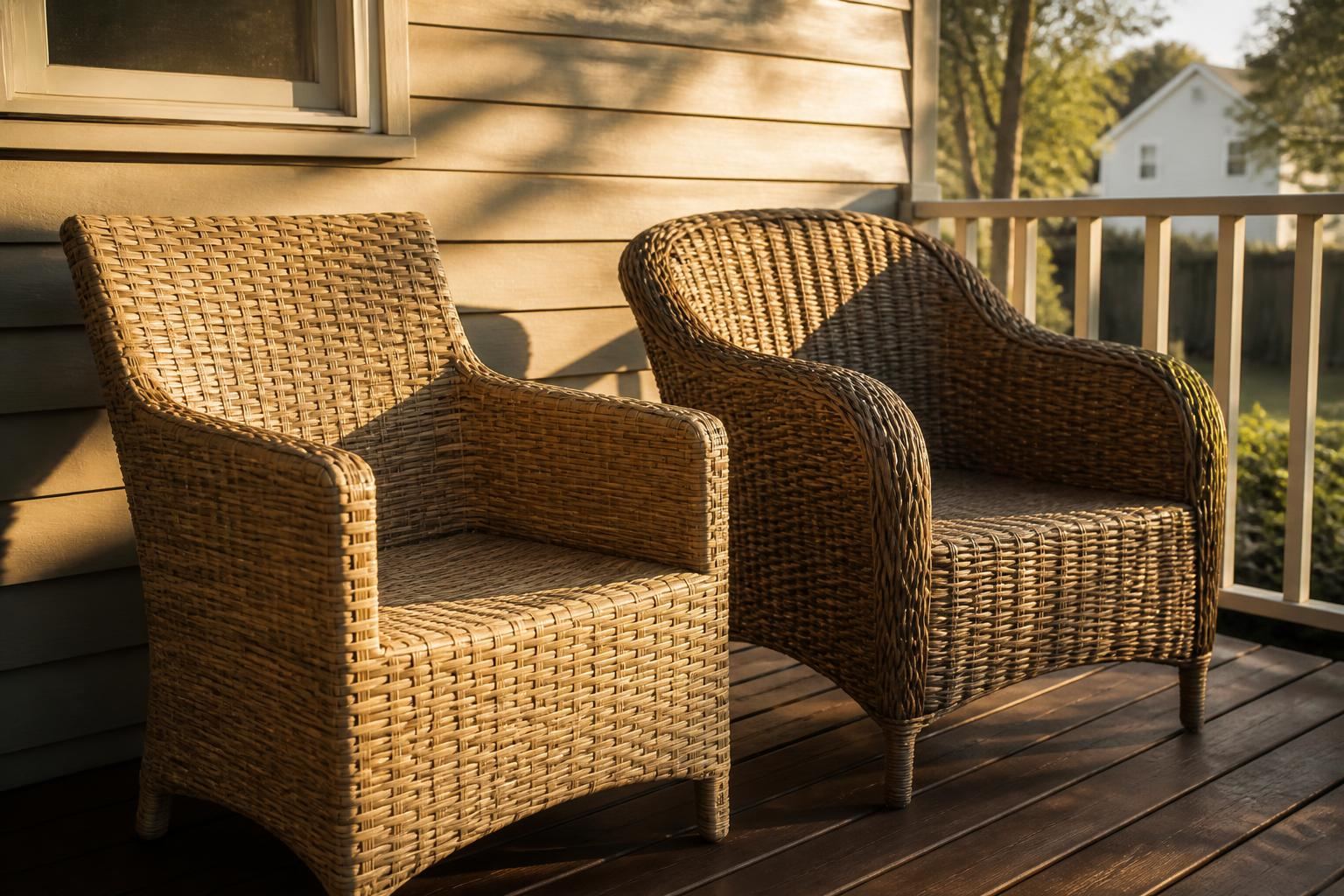
All-weather resin wicker chairs, whether armed or armless, tend to fall in a similar 15 to 20 pound range, since the woven resin adds bulk without adding much weight. Teak dining chairs run heavier, often 20 to 30 pounds for arm versions, which suits a permanent dining spot but makes seasonal moving or storage more of a chore. If you plan to store chairs indoors or in a shed over winter, check both the chair’s stacking height and its weight before committing to a full set of 6 or 8.
Regardless of material, plan on wiping down frames every 2 to 3 weeks during pollen season and hosing off cushion covers monthly through the humid summer stretch to prevent mildew. According to Sunbrella’s outdoor fabric care guidance, keeping cushions dry between uses and storing them off the ground extends fabric life significantly, which applies whether you’ve chosen arm chairs, armless chairs, or a mix of both.
Frequently Asked Questions
Do arm chairs cost more than armless chairs in the same collection?
Generally yes. Arm chairs use more frame material and often larger cushions, so they typically run higher per unit than the armless version in the same line. The difference varies by brand and material, but budgeting slightly more per arm chair when mixing styles into a set is reasonable.
Can I use armless chairs on all four sides of a square table?
Yes, and it’s a common approach for square tables between 36 and 42 inches, since armless chairs need less linear space per seat. This lets you seat 4 comfortably without crowding, whereas arm chairs on a table that size can feel tight, especially at the corners.
Will arm chairs fit under my current patio table?
Measure the clearance from the floor to the underside of your table’s apron. If it’s less than 25 inches, standard arm chairs likely won’t slide under fully. Some manufacturers offer low-profile arm chairs designed for tighter clearances, so check specs before assuming you need to switch to armless.
How many chairs should I order as spares for extra guests?
One or two extra armless chairs is a practical amount for most households, since they stack compactly and don’t require matching arm styling. If you frequently host 10 or more guests, consider a folding or stacking armless design specifically kept for overflow seating.
If you’re weighing armless vs arm outdoor dining chairs for a new table or trying to round out a set you already own, the team at Carolina Patio Furniture can walk you through clearance measurements and mixing options in person. Stop by our Charlotte showroom to sit in both styles side by side, browse our current selection and contact information, or call (704) 274-3222 with your table dimensions and we’ll help you figure out exactly how many of each chair style will fit.