
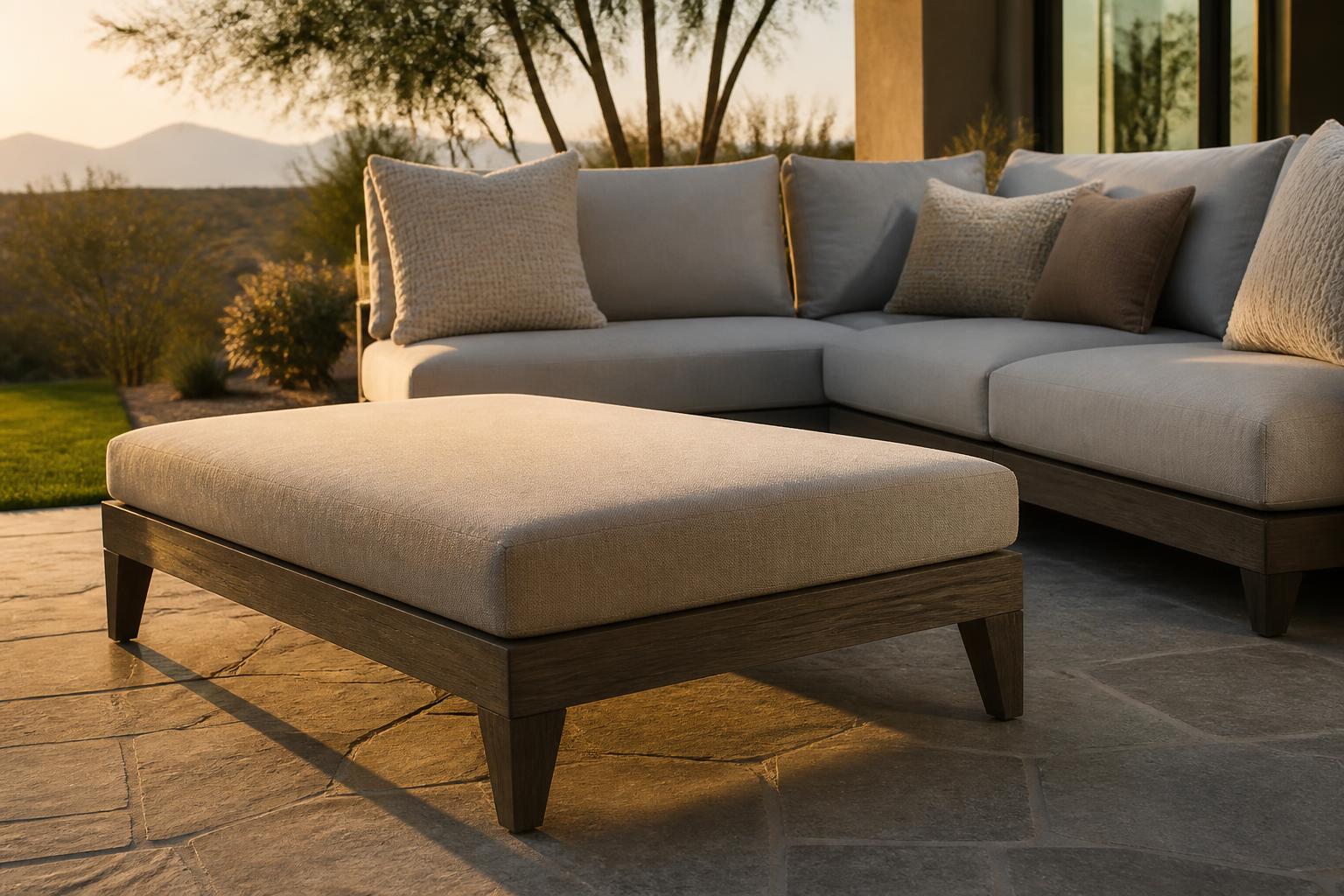

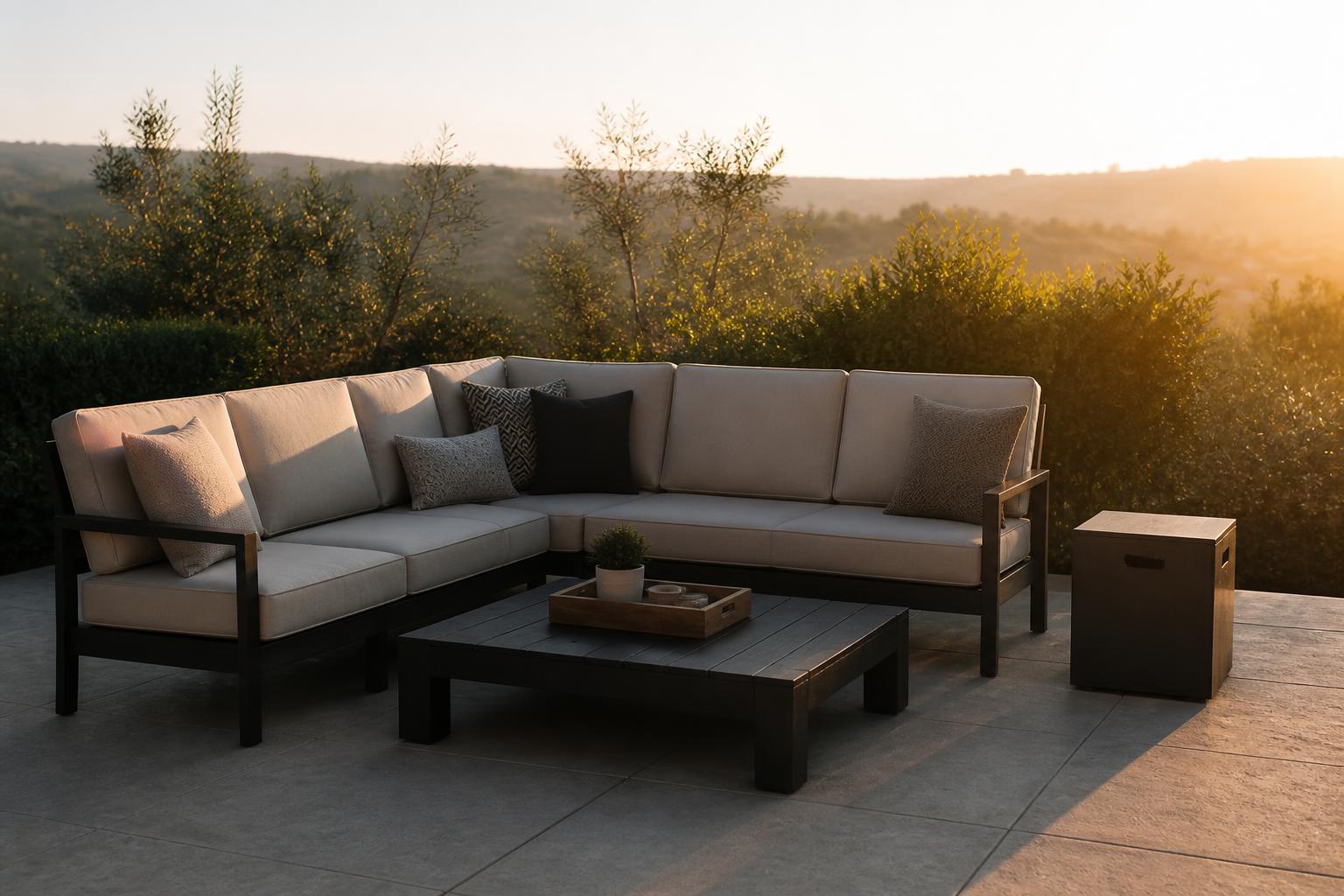
Getting ottoman sizing outdoor deep seating right is the difference between a cocktail table that doubles as extra seating and one that looks like an afterthought parked in front of your sofa. Deep seating collections along the Carolinas run wide and low, with seat depths often between 24 and 30 inches, and an ottoman that doesn’t match those proportions throws off both the look and the function of the whole grouping. This guide walks through the measurements that matter, how to coordinate height and depth with your existing pieces, and how to decide between one large ottoman or a pair of smaller ones for a Charlotte-area patio or porch.
Measuring Your Deep Seating Collection Before You Shop
Start with a tape measure, not a catalog photo. Measure the seat height of your sofa or lounge chair from the ground to the top of the cushion — most deep seating collections land between 16 and 19 inches, several inches lower than standard dining or bar-height chairs. Then measure seat depth, the distance from the front edge of the cushion to the back cushion, which on true deep seating typically runs 24 to 30 inches. Write both numbers down before you look at a single ottoman.
Next, measure the gap where the ottoman will sit. For a piece that functions as a footrest in front of a sofa, leave 14 to 18 inches of clearance between the sofa’s front edge and the ottoman so you can still walk past without shins scraping wicker or aluminum frames. If the ottoman will nest against a sectional corner or between two chairs, that clearance can shrink to 8 to 10 inches since foot traffic patterns differ.
Also note the width of your walking path from the door to the seating area. A general guideline used by furniture showrooms and echoed in outdoor-living buying guidance is to keep at least 30 inches of clear walkway through any furnished space, patios included. If your ottoman placement narrows that path below 30 inches, size down or choose a different shape before you order.
Matching Ottoman Height to Seat Height for a Comfortable Footrest
The single most common sizing mistake is choosing an ottoman that’s taller than the seat cushion it’s meant to serve. For a footrest to feel right, the ottoman top should sit within 1 to 2 inches of your seat height, and ideally an inch or so lower so your knees don’t end up higher than your hips when you kick back. If your sofa’s seat height measures 17 inches, look for an ottoman in the 15 to 18-inch range, cushion included.
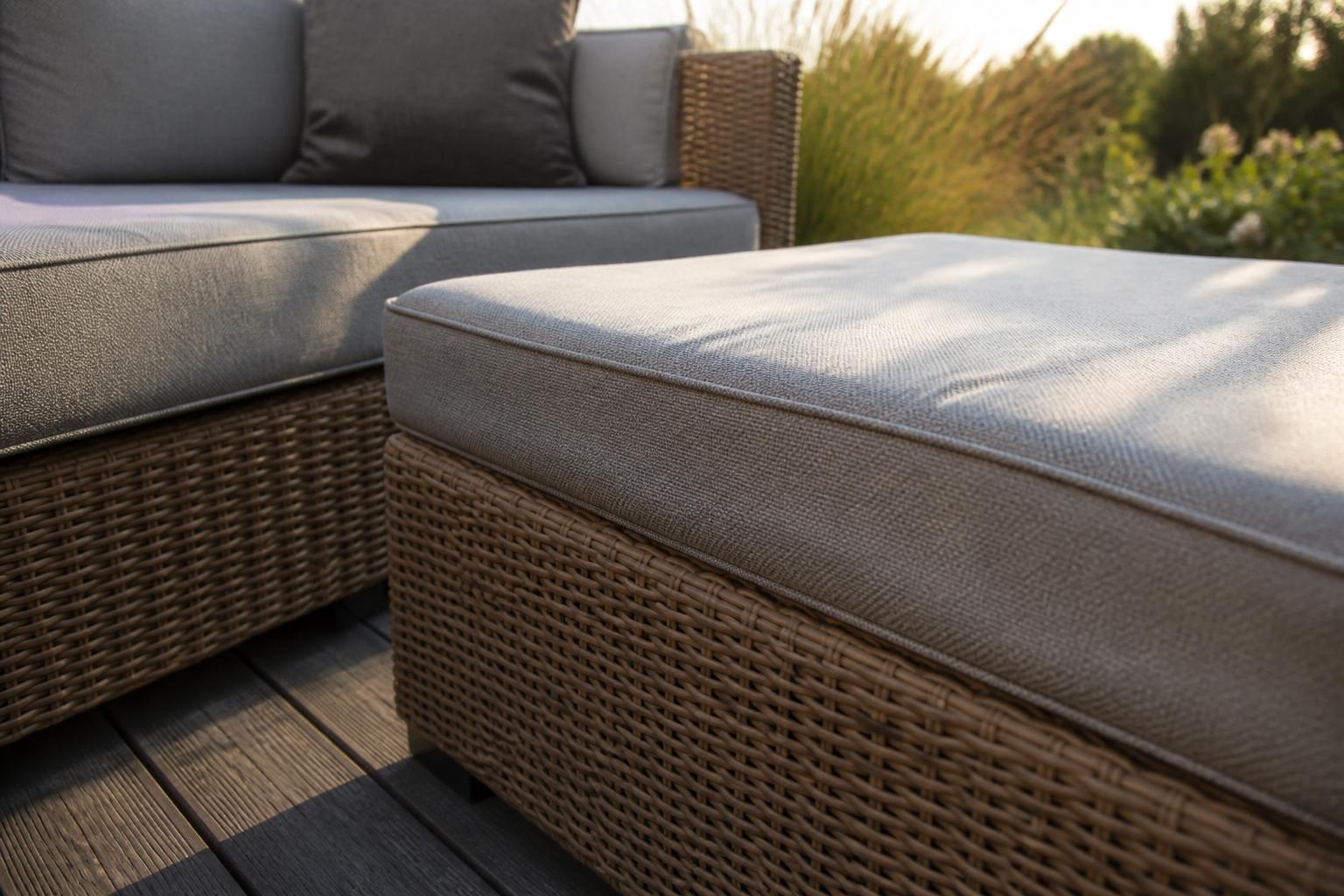
Frame material affects this more than shoppers expect. Cast aluminum ottomans tend to run slightly taller in the frame before cushions are added, often adding an inch of unaccounted height once a 3 to 4-inch-thick cushion goes on top. All-weather wicker and powder-coated aluminum frames with lower profiles are usually easier to match against low-slung deep seating, while HDPE or recycled poly lumber ottomans, built with the same slab-style construction as adirondack-style seating, tend to sit a bit higher and pair better with chairs rather than sectional sofas.
If you’re mixing brands or replacing a single damaged piece from an older set, bring your seat height measurement with you when you shop rather than relying on memory. A half-inch discrepancy is fine; a 3-inch mismatch will be obvious every time you sit down. When browsing our deep seating and ottoman selection, filter by collection first so frame heights and cushion thicknesses are already coordinated by the manufacturer.
Choosing Between One Large Ottoman and Two Smaller Ones
Single Large Ottoman for a Shared Coffee Table Effect
A single ottoman measuring 40 to 48 inches wide by 28 to 32 inches deep works well as a shared footrest and casual cocktail surface for a three-seat sofa. This size comfortably serves two people resting their feet at once and can hold a tray of drinks when guests aren’t using it as a footrest. Look for a top surface rated to support at least 250 to 300 pounds of static weight if you plan to set food or drinks on it regularly, since not every cushioned ottoman is built for that use.
Paired Ottomans for Flexible Seating Arrangements
Two ottomans, each around 24 to 28 inches square, give you the flexibility to slide one toward each end of a sectional or push them together in the middle for a longer footrest. This configuration adds informal seating capacity for up to two additional guests during a gathering, which matters if you host larger groups on a Charlotte deck or patio during spring and fall entertaining season. The tradeoff is that paired ottomans require more precise spacing to avoid looking scattered, so measure the full width of your seating run and divide evenly before ordering.
Accounting for Sectional Corners and Chaise Returns
If your deep seating collection includes a chaise return or curved corner unit, an ottoman isn’t always necessary there since the chaise already provides a footrest. In that case, reserve a single ottoman for the opposite end of the sectional to balance the visual weight of the grouping rather than duplicating footrest function you already have.
Coordinating Cushions and Fabric for a Cohesive Set
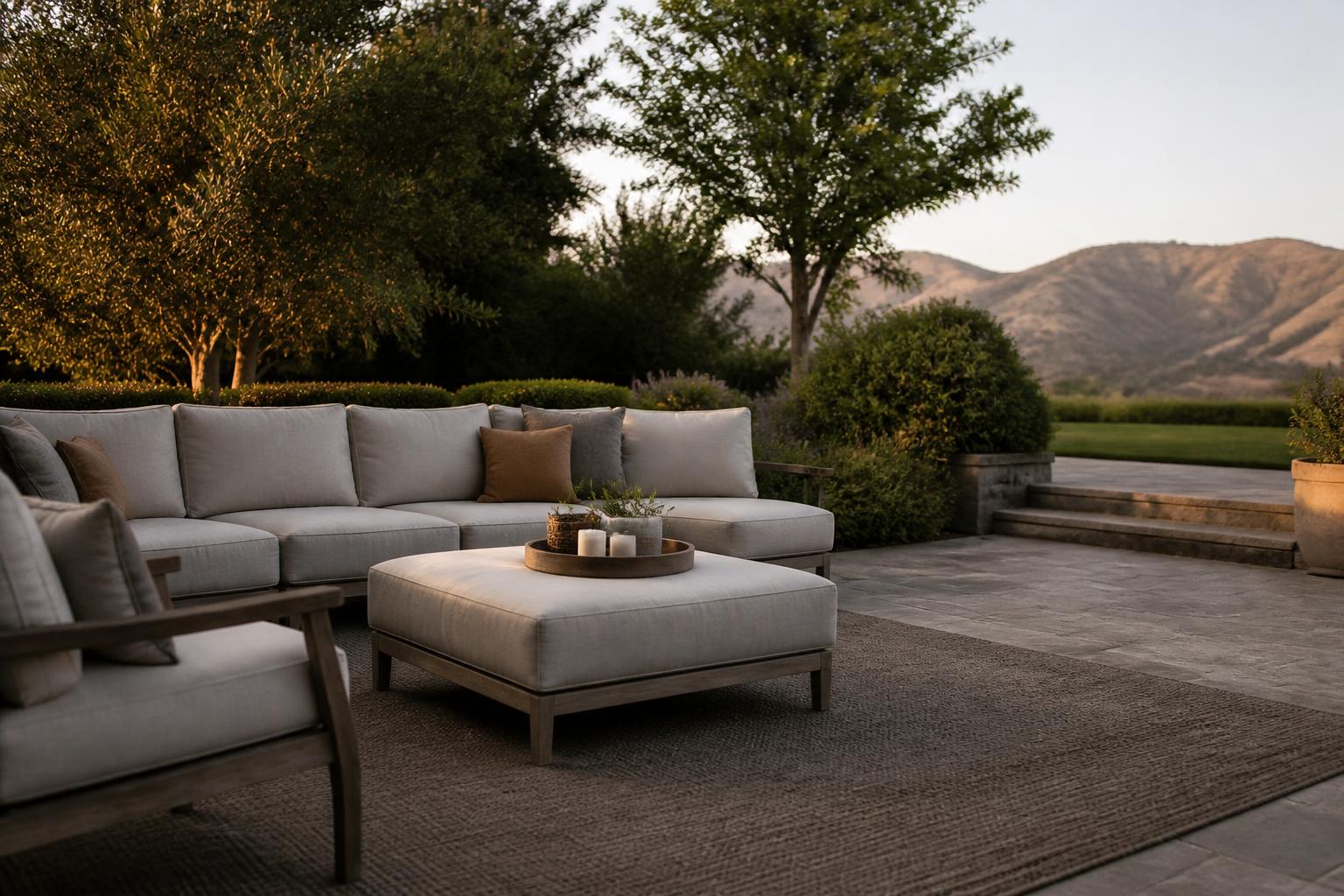
Once the frame dimensions work, match the cushion fabric to your seating collection rather than treating the ottoman as a stand-alone accent piece. Solution-dyed acrylic performance fabrics such as Sunbrella hold color and resist mildew through humid Carolina summers far better than uncoated polyester blends, and matching the exact fabric line across your sofa, chairs, and ottoman avoids visible color drift after a season or two of UV exposure. If your existing set uses a specific Sunbrella pattern, ask whether the ottoman cushion is available in that same bolt or dye lot rather than a close approximation.
Cushion thickness also affects how the ottoman reads next to your seating. A 4-inch cushion on the ottoman paired with 5-inch seat cushions on the sofa will look intentional and tailored; a 2-inch cushion next to 5-inch seating will look thin and mismatched even if the frame dimensions are correct. When possible, order ottoman cushions from the same collection line as your sofa and chairs so foam density and thickness match without guesswork.
For care, wipe down cushion fabric weekly during heavy pollen season with a soft brush and mild soap solution, and hose off frames monthly to prevent grit buildup in aluminum joints or wicker weave. Store cushions or use breathable covers ahead of winter storms if you don’t have covered patio space, since repeated freeze-thaw cycles on saturated foam shorten cushion life significantly faster than dry cold alone.
Frequently Asked Questions
What is the standard size for an outdoor ottoman?
Most outdoor ottomans range from 24 to 48 inches wide and 15 to 19 inches tall including cushions. Square accent ottomans typically measure 24 to 28 inches per side, while cocktail-style ottomans meant to serve a full sofa run 40 to 48 inches wide by 28 to 32 inches deep. Always confirm exact dimensions against your seat height rather than assuming a “standard” size fits every collection.
Should an ottoman match the same brand as my sofa?
It’s not required, but matching brand and collection makes coordinating seat height, cushion thickness, and fabric dye lot far easier. If you’re buying separately, bring exact measurements of your sofa’s seat height and depth, and request fabric swatches to compare against your existing cushions before ordering a mismatched ottoman.
How much clearance should I leave around an ottoman?
Leave 14 to 18 inches between the ottoman and the sofa it serves so you can step past comfortably, and keep at least 30 inches of open walkway elsewhere in the seating area. Tighter 8 to 10-inch clearances are acceptable when the ottoman nests against a sectional corner rather than serving as a walk-around footrest.
Can one ottoman serve two chairs instead of a sofa?
Yes, a single 40 to 48-inch ottoman placed between two matching lounge chairs works well if both chairs share the same seat height. Confirm both chairs measure within an inch of each other in seat height first, since mismatched chair heights on either side of one ottoman will make the footrest feel right for one seat and wrong for the other.
If you’d rather measure your space with someone who sizes deep seating collections every day, stop by Carolina Patio Furniture or call (704) 274-3222 to talk through your layout before you buy. Our Charlotte showroom keeps ottomans staged next to matching sofas and sectionals so you can sit down, check the height in person, and browse our full collection of outdoor furniture until you find the proportions that fit your patio.