
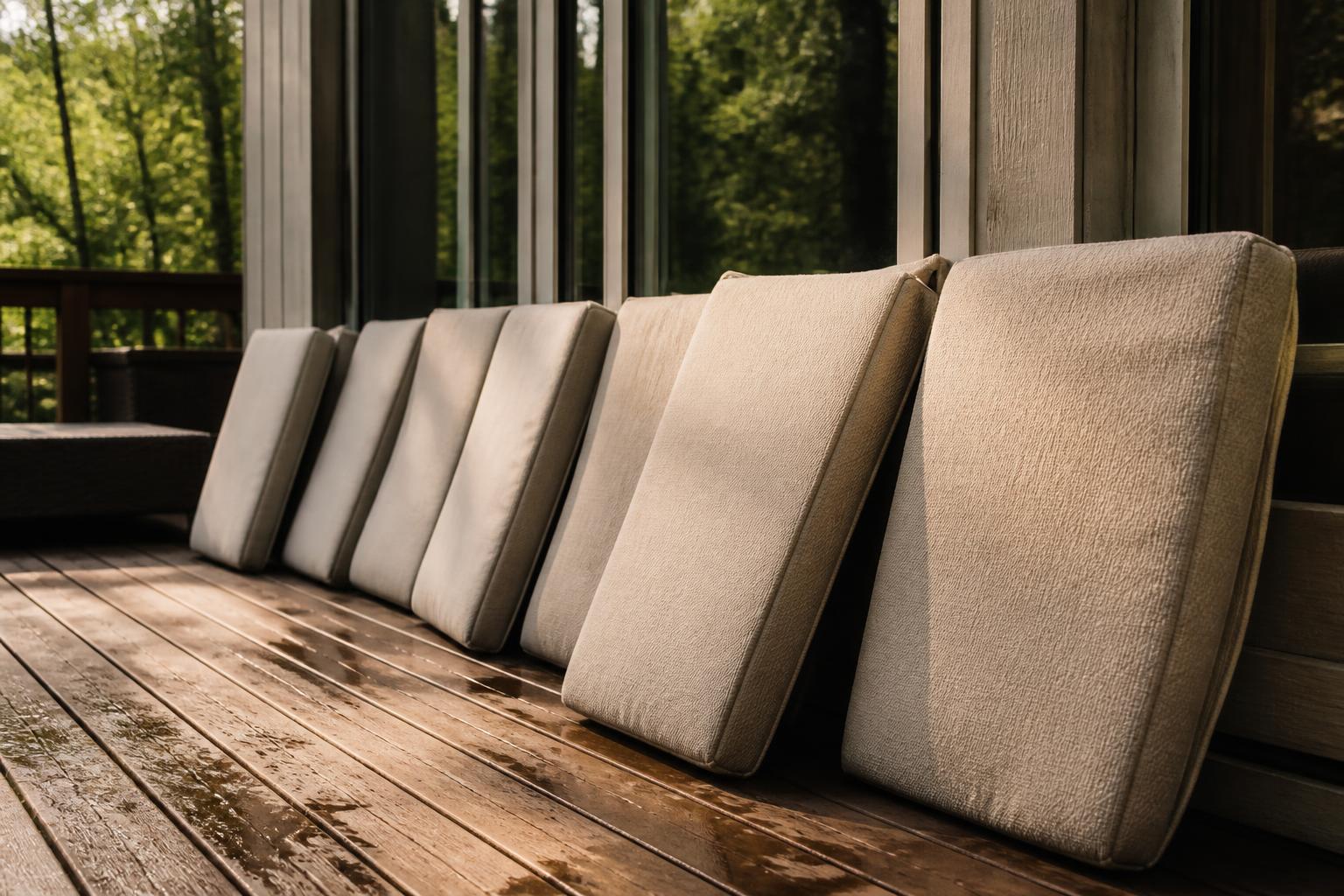

Knowing how to clean Sunbrella cushion covers correctly is the difference between fabric that still looks sharp after five Carolina summers and fabric that fades, stains, or loses its water repellency after one bad pollen season. Sunbrella and other solution-dyed acrylic fabrics are tougher than most people assume, but the wrong cleaner or a trip through a hot dryer can undo years of good performance in minutes. Below is a straightforward routine you can follow on your porch, patio, or driveway that protects color, keeps the fabric breathable, and gets you back to lounging faster than you’d expect.
Why Solution-Dyed Acrylic Behaves Differently Than Printed Fabric
Sunbrella fabric is woven from fibers that are colored all the way through before the thread is ever spun, rather than dyed or printed on the surface afterward. That’s why you can scrub it harder than a typical outdoor pillow cover without worrying about a faded patch appearing where you rubbed. It’s also why the fabric resists fading from UV exposure far longer than printed polyester covers, which is important in the Carolinas where cushions can sit in direct sun eight or nine hours a day from April through September.
That durability doesn’t mean the fabric is indestructible, though. The factory-applied water-repellent finish that makes rain and pollen bead up and roll off is a surface treatment, and it’s the part of the fabric most vulnerable to harsh detergents, bleach concentrations above what the manufacturer recommends, and high heat. Once that finish breaks down, the fabric still holds its color, but it soaks up moisture and dirt instead of shedding it, and pollen residue sits on the surface instead of rinsing away. Treat the repellency as the part you’re protecting, and the color will largely take care of itself.
If you bought custom covers or are shopping for new ones, it’s worth reviewing how different fill and fabric combinations hold up before you commit — our guide to custom outdoor cushions covers what to look for in zippers, foam density, and fabric weight, all of which affect how easy a cushion is to clean over time.
Step-by-Step: Cleaning Removable Sunbrella Covers
This process works for removable covers whether you’re addressing routine dust and pollen or a specific spill.
1. Brush Off Loose Debris First
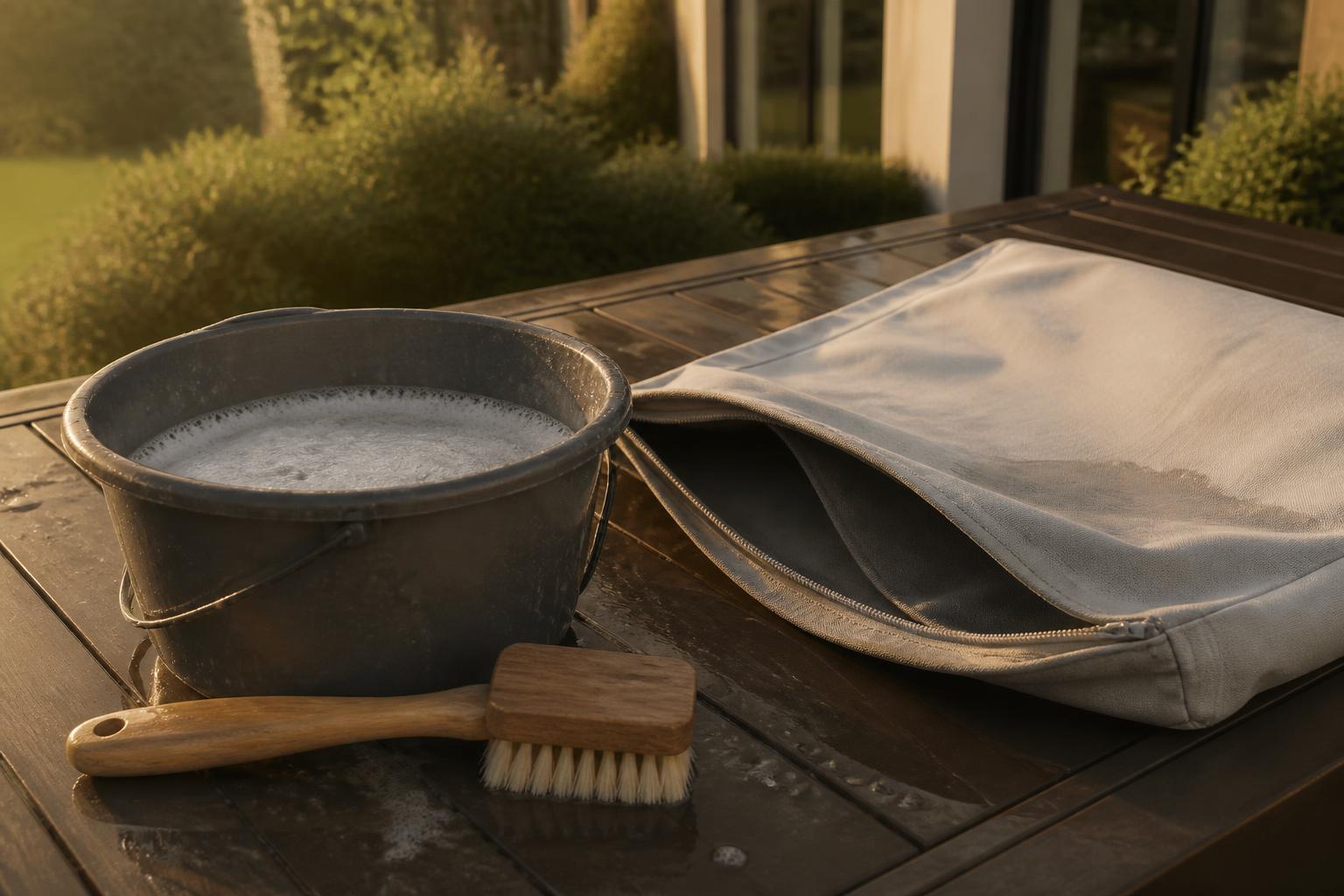
Before any liquid touches the fabric, use a soft-bristle brush or a dry towel to knock off pollen dust, leaf debris, and grit. Doing this outdoors, away from the cushion’s storage spot, keeps you from just working dry pollen deeper into the weave once you add water.
2. Mix a Mild Soap Solution
Combine 1/4 cup of a mild soap, such as a gentle wool wash or a mild dish soap without added degreasers, with a gallon of lukewarm water, no hotter than about 100°F. Avoid soaps with added degreasers or optical brighteners, and skip anything labeled “oxy” or “power” formula, since these are more aggressive than solution-dyed acrylic needs.
3. Hand-Wash, Rinse, and Air Dry
Sponge or soft-brush the solution into the fabric, working in sections, then let it sit for 5 to 10 minutes to loosen ground-in dirt. Rinse thoroughly with a garden hose set to a gentle stream until no suds remain — leftover soap residue attracts dirt faster and can leave the fabric feeling stiff. Air dry the covers fully, either laid flat or hung over a rail out of direct sun if you’re worried about pattern colors, though solution-dyed fabric can typically dry in full sun without issue. Avoid a hot clothes dryer, since high heat can damage the fabric and its water-repellent finish, and follow the care label.
Treating Mildew, Sap, and Stubborn Pollen Stains
Mildew on outdoor cushions is almost always growing on dirt, pollen, or oils sitting on the fabric surface rather than on the acrylic fiber itself, which is good news because it means a proper cleaning usually resolves it. For visible mildew spots, mix 1 cup of bleach and 1/4 cup mild soap per gallon of lukewarm water, and never combine bleach with vinegar, ammonia, or other cleaners. Sunbrella fabric can tolerate diluted bleach at this ratio without color loss, which is one of the real advantages of solution-dyed acrylic over printed fabrics — but always rinse extremely well afterward, since bleach residue left in the weave can degrade fibers over months even if it doesn’t cause immediate fading.
Tree sap and pollen film that won’t rinse out with soap and water alone sometimes responds to a small amount of isopropyl alcohol applied with a clean cloth (only after any bleach solution has been rinsed away completely, and never mixed with it), followed by a full soap-and-water cleaning and thorough rinse. Test any stain treatment on a hidden corner of the cushion or a welt seam first, and always work the treatment in a well-ventilated outdoor space.
For general maintenance, a light brushing and hose-rinse every 2 to 3 weeks during pollen season — typically March through May in the Piedmont region — keeps yellow-green dust from building into a film that’s harder to remove later. Our seasonal cleaning schedule for pollen season lays out a month-by-month routine for cushions, frames, and umbrellas so you’re not guessing when the next cleaning is due.
Restoring Water Repellency After Washing
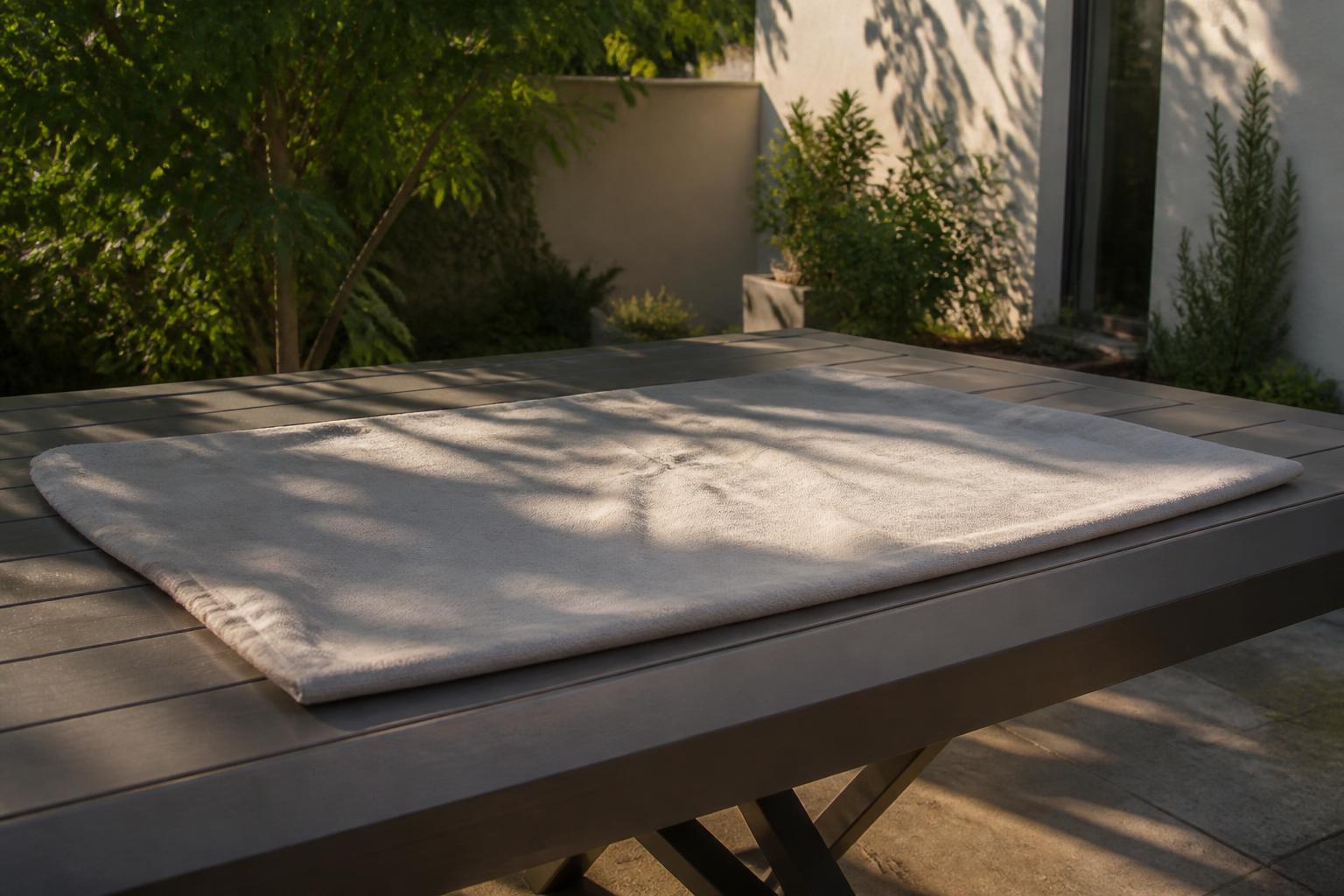
Even a gentle wash strips some of the factory finish over time, and you’ll notice water starting to soak in rather than bead up on the surface after a cushion has been cleaned several times over a season or two. When that happens, a fabric protector spray designed for solution-dyed acrylic can restore beading and stain resistance. Apply it outdoors to a completely clean, fully dry cover, using light, even coats and allowing several hours of dry time between coats per the product label — usually two coats is sufficient.
Reapplying protector once a year, typically at the start of the outdoor season in spring, is a reasonable interval for cushions that see regular use and regular cleaning. Cushions kept under a covered porch or patio roof that avoid direct rain exposure may need it less often, while cushions on an open deck exposed to full sun and storms may need it closer to twice a season. Periodic protector reapplication combined with routine light cleaning is a widely recommended way to extend fabric life, and Sunbrella publishes care and cleaning guidance for its fabrics that is worth a read.
What to Avoid When Cleaning Sunbrella Covers
A few habits shorten the life of otherwise durable fabric faster than sun and pollen ever will.
- Skip the pressure washer. High-pressure water can force soil and pollen deeper into the weave and stress seams and zippers; a standard garden hose provides enough rinsing force.
- Avoid petroleum-based cleaners and degreasers. These can break down the fabric’s finish and, in some cases, leave a residue that’s harder to remove than the original stain.
- Follow the care label before machine-washing or machine-drying cushion covers. Foam inserts and the fabric itself generally hold up better with hand-washing and air drying than with agitation and heat cycles.
- Never store damp covers. Zip covers back onto cushions or into a storage bin only once fully dry; sealing in moisture is one of the fastest ways to trigger mildew growth, even on treated fabric.
- Don’t ignore foam inserts. If the foam itself has absorbed moisture or odor, cleaning the cover alone won’t solve the problem; foam may need to be replaced separately.
If your current cushions are past the point where cleaning restores them — thinning foam, permanently discolored fabric, or broken zippers — it may be more practical to replace them than keep chasing stains. You can browse current options at our outdoor furniture and cushion selection to compare fabric weights and fill choices before deciding.
Frequently Asked Questions
Can I use regular laundry detergent to clean Sunbrella cushion covers?
It’s best avoided. Standard laundry detergents often contain brighteners, enzymes, or fragrance additives that can affect the fabric’s finish over repeated washes. A mild soap like a wool wash or a gentle dish soap without degreasers gives you effective cleaning power without the additives that gradually wear down water repellency.
How often should I clean my outdoor cushion covers in the Carolinas?
A light brush-and-rinse every 2 to 3 weeks during pollen season, plus a full soap-and-water wash once a month during regular outdoor use, keeps most Sunbrella cushions looking fresh. Cushions under a covered porch with less direct exposure can typically go longer between full washes.
Will bleach ruin the color on my Sunbrella cushions?
Diluted bleach, at roughly 1 cup per gallon of water mixed with mild soap, is generally safe for solution-dyed Sunbrella fabric because the color runs through the fiber rather than sitting on the surface. Always rinse thoroughly afterward and test on a hidden seam first, since trim and welting may be a different, less bleach-tolerant material.
Why does water no longer bead up on my cushions after washing?
This means the factory water-repellent finish has worn down, which happens naturally after repeated cleanings and sun exposure over a season or two. A fabric protector spray made for solution-dyed acrylic, applied in two light coats to clean, dry fabric, typically restores beading and stain resistance for another season.
If you’d rather bring your cushions in or want a professional opinion on whether they’re worth restoring or replacing, the team at Carolina Patio Furniture is glad to help — stop by our Charlotte showroom, browse the current cushion and furniture selection in person, or call us at (704) 274-3222 with questions about care, fabric options, or replacement cushions before pollen season hits again.