
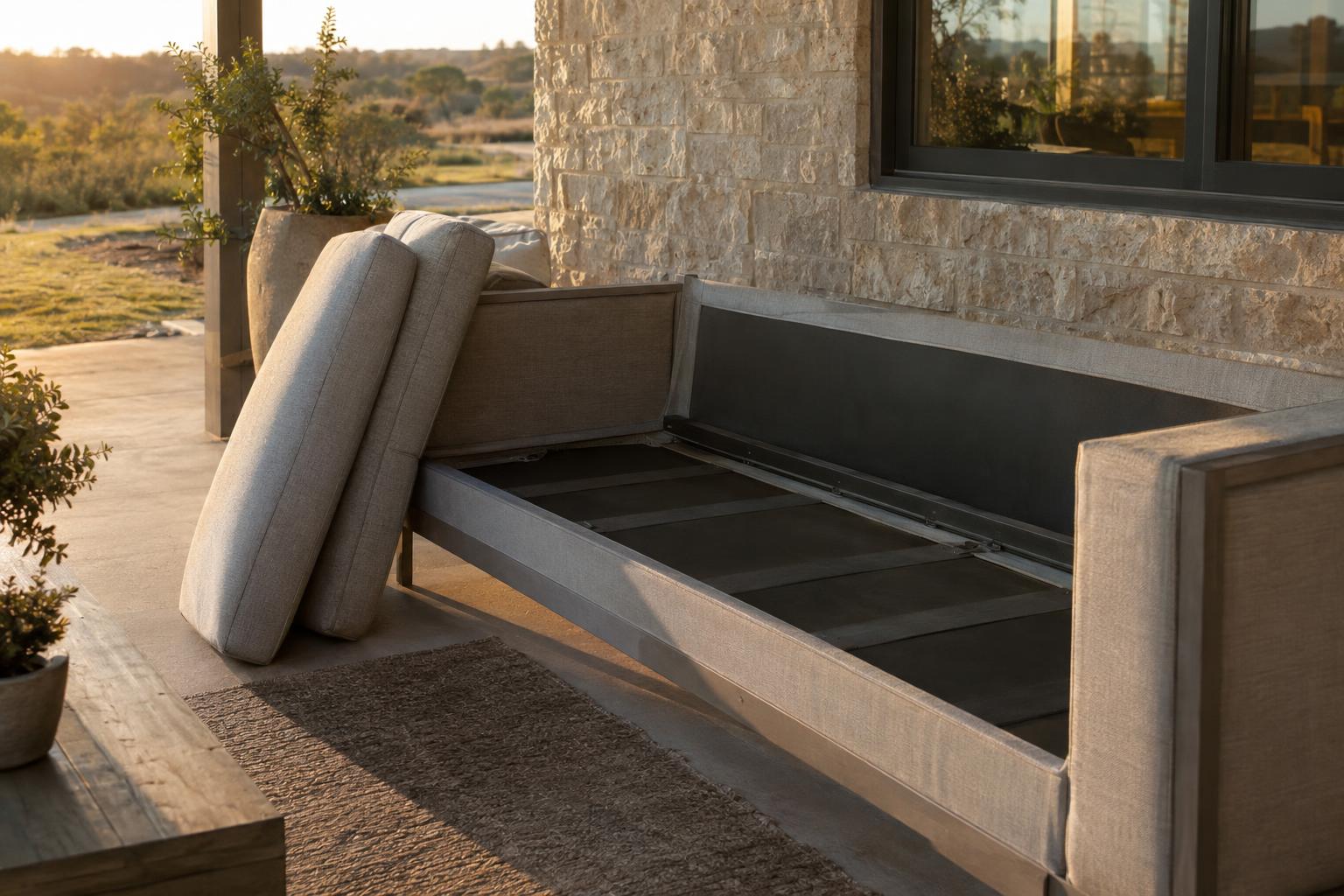

Knowing how to measure outdoor cushions for replacement saves you from the most common ordering mistake: sending in numbers taken from a flattened, stretched or shrunken old cushion. A faded cushion that has been sat on for years rarely matches the size it started at, so the old foam and fabric make an unreliable guide. The frame is the thing that does not change. With a tape measure, a notepad and about fifteen minutes, you can record every dimension a cushion maker needs, from seat width and depth to back height, corner shape and tie placement.
Measure the frame opening, not the old cushion
Start with the empty frame. Remove the old cushion and measure the space it is meant to fill. Cushions compress, bulge, and lose their corners over time, and a squashed one can read a half inch or more off from what the frame actually needs. The seat opening stays put, so it gives you the honest number.
Use inches, measure to the nearest quarter or half inch, and write every number down with a label as you go. If you can, do a second pass on each measurement. Two matching numbers mean you can trust them; two different numbers mean you should look again before you order anything.
Gather what you need before you start
You do not need special tools, only a few basics:
- A rigid or cloth tape measure that reads in inches
- A notepad and pencil, or the notes app on your phone
- A phone camera to photograph each frame and the old cushion
- Kraft paper or newspaper for tracing curved seats
- A second person to hold the tape on long sofa seats
Take photos of the empty frame from the front and from above, plus a close-up of the old cushion’s ties, zipper and any piping. Those pictures answer questions later that numbers cannot.

How to measure outdoor cushions for replacement: the seat first
Seat cushions need three numbers, plus a note about shape:
- Width. Measure side to side across the front of the opening, then again across the back. On many frames these two numbers match. When the back is narrower than the front, write down both, because the cushion will need to taper.
- Depth. Measure from the front edge to the back, where the seat meets the backrest or the back cushion. Check the left side and the right side, since frames are not always perfectly square.
- Thickness. Seat cushions are commonly in the range of about 3 to 5 inches thick, but the number you want is the one that feels right with your frame’s height. Measure the old cushion’s thickness only if you liked how it sat, and note whether you want more or less.
Write down whether the cushion sits inside a recessed seat or on top of a flat deck. A drop-in seat needs a snug fit between the frame rails, while a deck seat can overhang slightly. Ask the cushion maker how much allowance they recommend for your frame.
Back cushions: height, width and taper
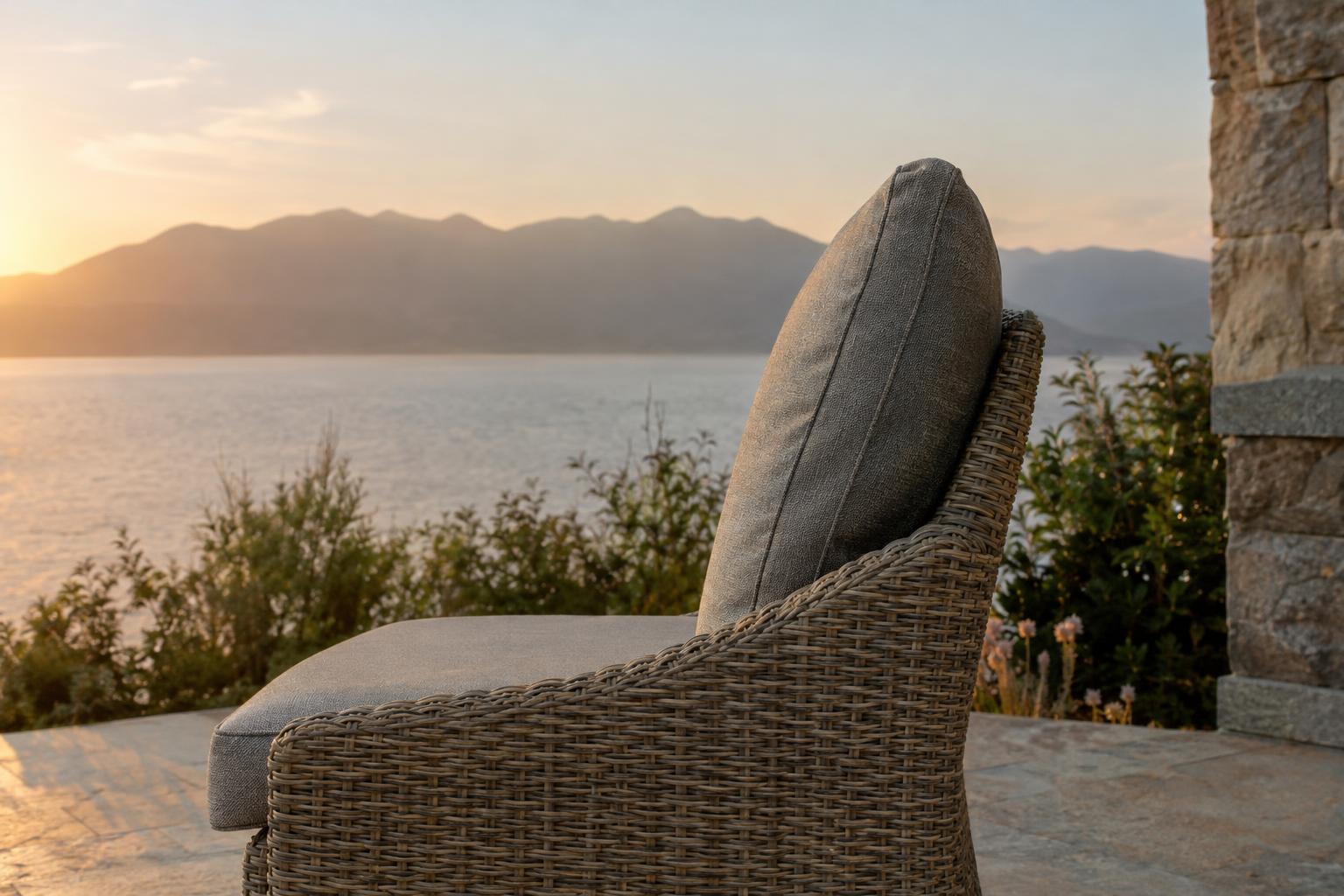
Back cushions need a slightly different set of numbers. Measure the height from the seat surface to the top of the frame, or to the height where you want the cushion to end. Then measure the width at the bottom and at the top, since many chair backs narrow as they rise. If the top is narrower than the bottom, the cushion needs the same taper.
Next, record the thickness. Back cushions are often thinner than seat cushions, and a few inches of difference changes how far the sitter is pushed forward. Note whether the frame has a solid back, a slatted back or a woven one, since that affects whether ties or a different attachment style will help the cushion stay put.
Finally, decide on the construction. A boxed cushion has a defined side wall and sharp edges, while a waterfall style rolls over the front edge. Which one fits your frame depends on the seat rail and how you sit, and our comparison of boxed vs waterfall outdoor cushions shows how each one changes the fit.
Curved seats and rounded corners
Round, oval and rounded-corner seats are where a tape measure alone falls short. Rather than guess, make a template. Lay kraft paper or newspaper over the empty seat opening, trace the edge with a pencil, cut along the line and test that the paper sits flat without buckling. Label the front, mark which edge is the back, and photograph it flat. A paper template gives a maker every curve at once.
For corners that are only slightly rounded, measure the radius by laying a ruler across the corner and noting how far in from the corner the curve begins on each side. Write that as a rough distance, and attach a photo. If your seat has one cut-out for a frame post or arm, mark where it sits on the template.
Ties, zippers, welt and fabric choices
Once the size is settled, make a note of the details that determine how the cushion behaves. Check where the old cushion had ties, since the position should line up with the frame’s slats or rails. Mark whether you want the zipper at the back or the bottom, and whether the cover needs to come off for washing.
Write down the existing fabric label, edge detail, tie locations and zipper position alongside your measurements. Before ordering, ask the furniture manufacturer or cushion supplier which frame models and dimensions they support, which construction options are available, and which measurements they require. A measuring checklist does not establish that a particular replacement will fit or that every supplier offers those options.
Your measurement checklist
Run through this list once before you contact a cushion maker. If a line is blank, go back to the frame and fill it in.
| Item | What to record | Notes |
|---|---|---|
| Seat width | Front and back, in inches | Different numbers mean a taper |
| Seat depth | Left and right sides | Frame may not be square |
| Thickness | Seat and back separately | Think about comfort and frame height |
| Back height and width | Bottom, top and height | Note any taper |
| Corner shape | Square, rounded or traced template | Add a photo |
| Ties and zipper | Locations and preferences | Match frame slats or rails |
| Fabric and welt | Choices and color notes | Bring photos |
After the new cushions arrive, keep them looking their best with regular care. If you choose Sunbrella fabric, the maker publishes a Sunbrella cleaning guide that recommends cleaning spills as soon as they happen and rinsing thoroughly after using any cleaning solution.
Frequently asked questions about measuring outdoor cushions
Should I measure the old cushion or the frame?
Measure the frame whenever you can. Old cushions compress, stretch and lose their shape, so their dimensions often differ from the original. The empty seat opening and back space stay constant and show what a new cushion has to fill. Use the old cushion only as a reference for thickness, ties and construction details.
What measurements do I need for a seat cushion?
You need width at the front and back, depth on both sides, and the thickness you want. Add the shape of the corners, and note whether the seat is recessed or flat. If the seat is curved, trace a paper template. Photos of the frame and the old cushion make the order much easier to get right.
How do I measure a curved or rounded cushion?
Lay kraft paper or newspaper over the empty seat, trace the edge, then cut and test the template until it lies flat. Mark the front and back, then photograph it. A traced template captures curves that a tape measure cannot, which is especially useful for round chairs and seats with rounded corners.
Do I need to write down tie and zipper placement?
Yes, record it now, since those choices are easiest to build into a new cushion from the start. Note where ties line up with the frame, whether you prefer the zipper at the back or underneath, and any other detail from the old cover. Photos of the old ties and zipper help.
Comparing patio furniture for your space? Call Carolina Patio Furniture at (704) 274-3222 or visit our Charlotte showroom at 2438 Park Rd to discuss the furniture you are considering.