
Oiling teak patio furniture is a choice every teak owner reaches sooner or later: keep the warm honey-brown color by oiling the wood on a schedule, or let it weather naturally to a soft silver gray. Neither path harms the wood, and neither one is the wrong answer. What changes is how much time you spend on upkeep, how the furniture looks next to your plants and stonework, and how often you pick up a rag instead of a glass. Here is how to weigh the two, starting with the cleaning step that comes first either way.
What teak does when you leave it alone
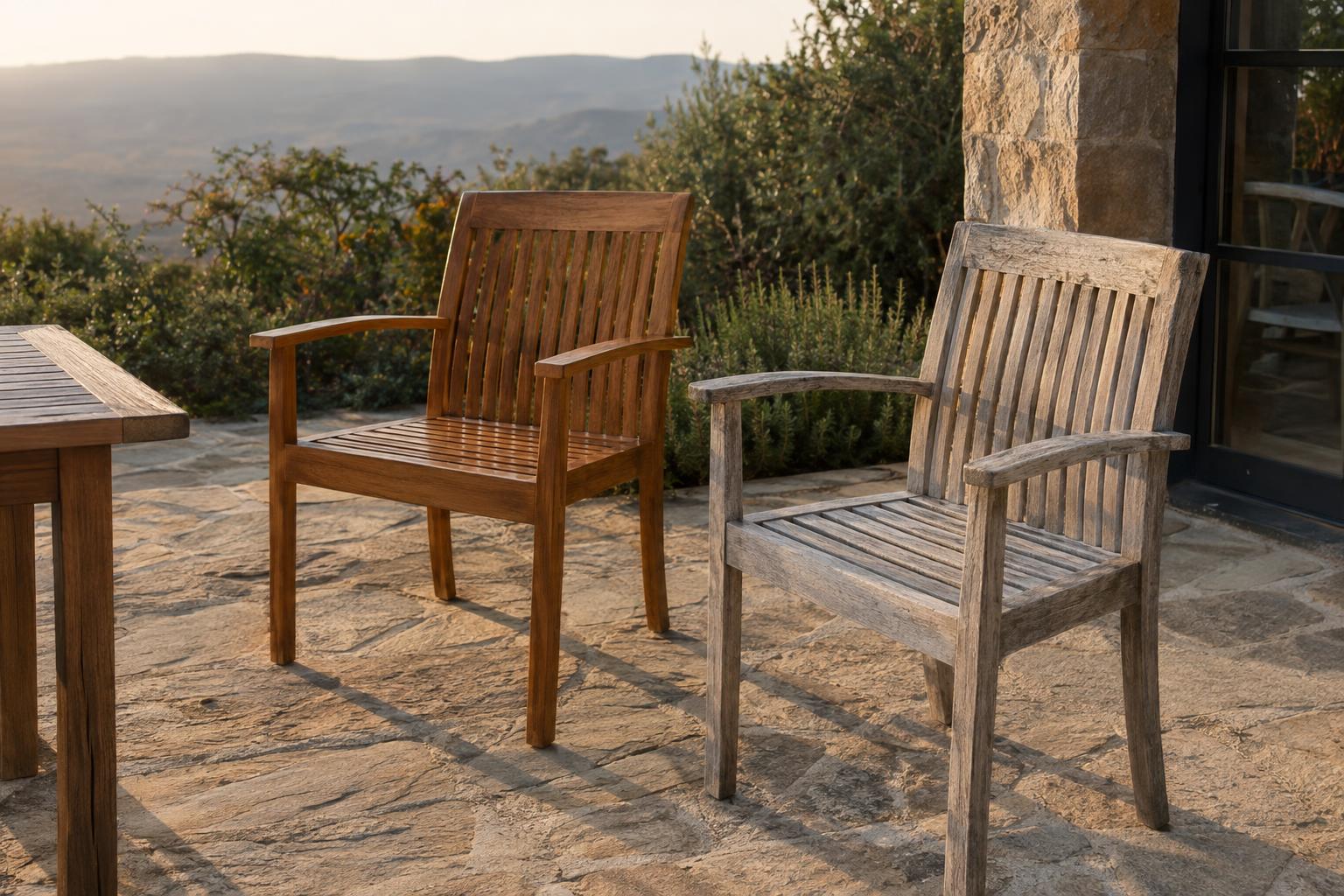
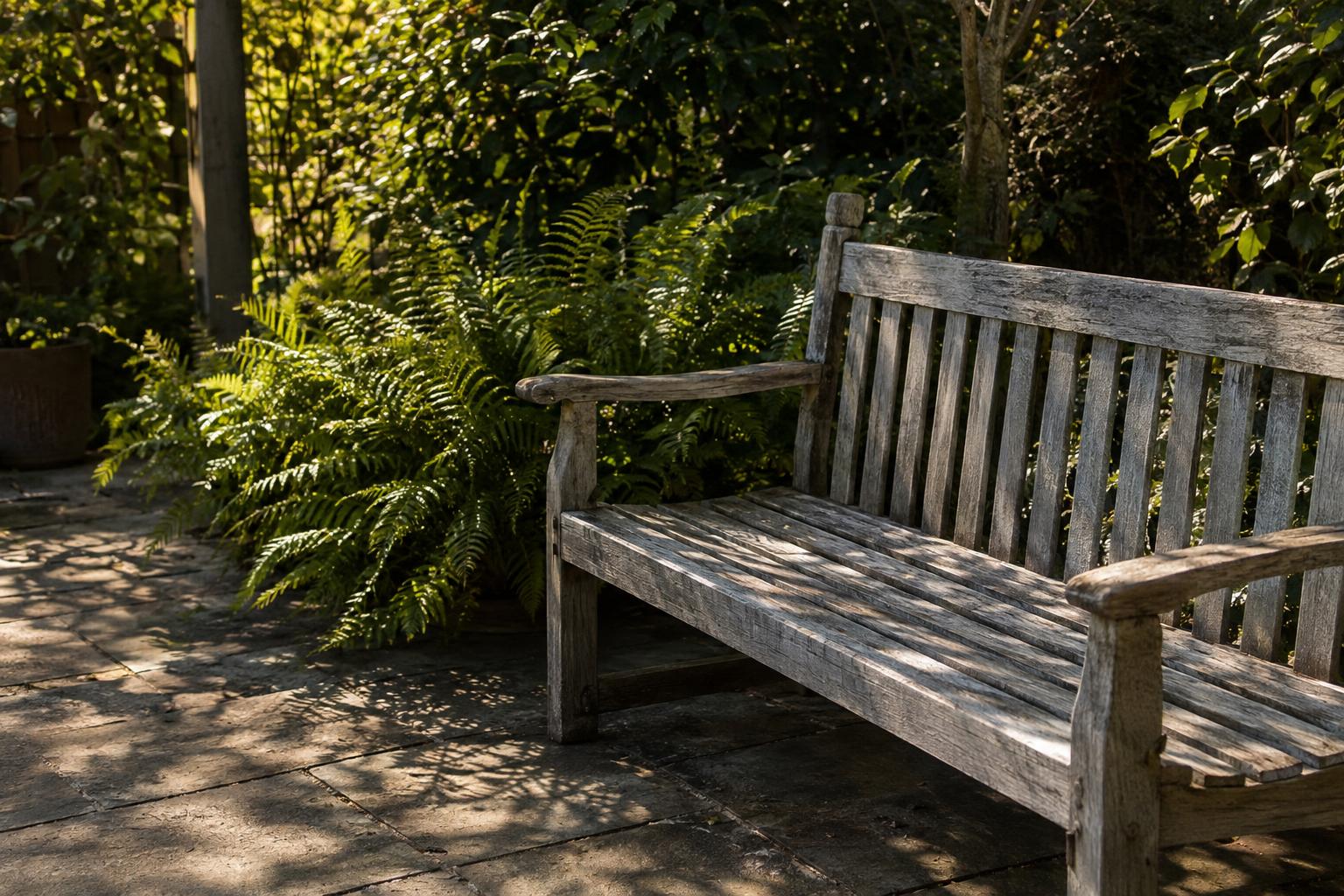
Teak is a dense hardwood with natural oils that make it a long-time favorite for outdoor seating. Fresh or freshly sanded teak is golden to honey brown. Left outside, sun and rain slowly pull that color toward silver gray. The change usually starts as a tired, slightly dry look and finishes as an even, soft gray with a smooth feel.
That gray is cosmetic. It is a surface change, not rot and not a sign the furniture is failing. Plenty of owners choose it on purpose because it suits coastal-style and modern patios. If you are still deciding whether teak belongs on your patio at all, our teak patio furniture shopping guide covers what to look for in the wood and the joinery.
How to clean teak furniture before you do anything else
Cleaning comes before oiling, before sealing and before you decide to let the wood go gray. Oil applied over dirt, pollen or mildew traps all of it in the surface. A basic routine works for nearly every piece:
- Brush off loose dirt, leaves and pollen with a soft brush or dry cloth.
- Mix a little mild dish soap into a bucket of warm water.
- Scrub gently with a soft brush, working along the grain rather than across it.
- Rinse with a garden hose on a gentle setting and let the water run off the slats.
- Let the furniture dry completely, which often means a full sunny day, before it gets any oil or sealer.
Skip harsh scrapers and aggressive pressure washing, since both can roughen the grain and leave fuzzy, raised wood. Spring is the natural time for this wash, and our outdoor furniture cleaning schedule for pollen season shows where teak fits among the rest of your seasonal chores.
What teak oil actually does, and what it does not
Teak oil is a surface finish that deepens the wood color and gives it a richer, slightly glossy look. It helps the wood resist the dried-out, thirsty appearance that sun can cause. It does not make the furniture stronger, and it does not stop the wood from eventually graying; it only slows the fade and has to be repeated.
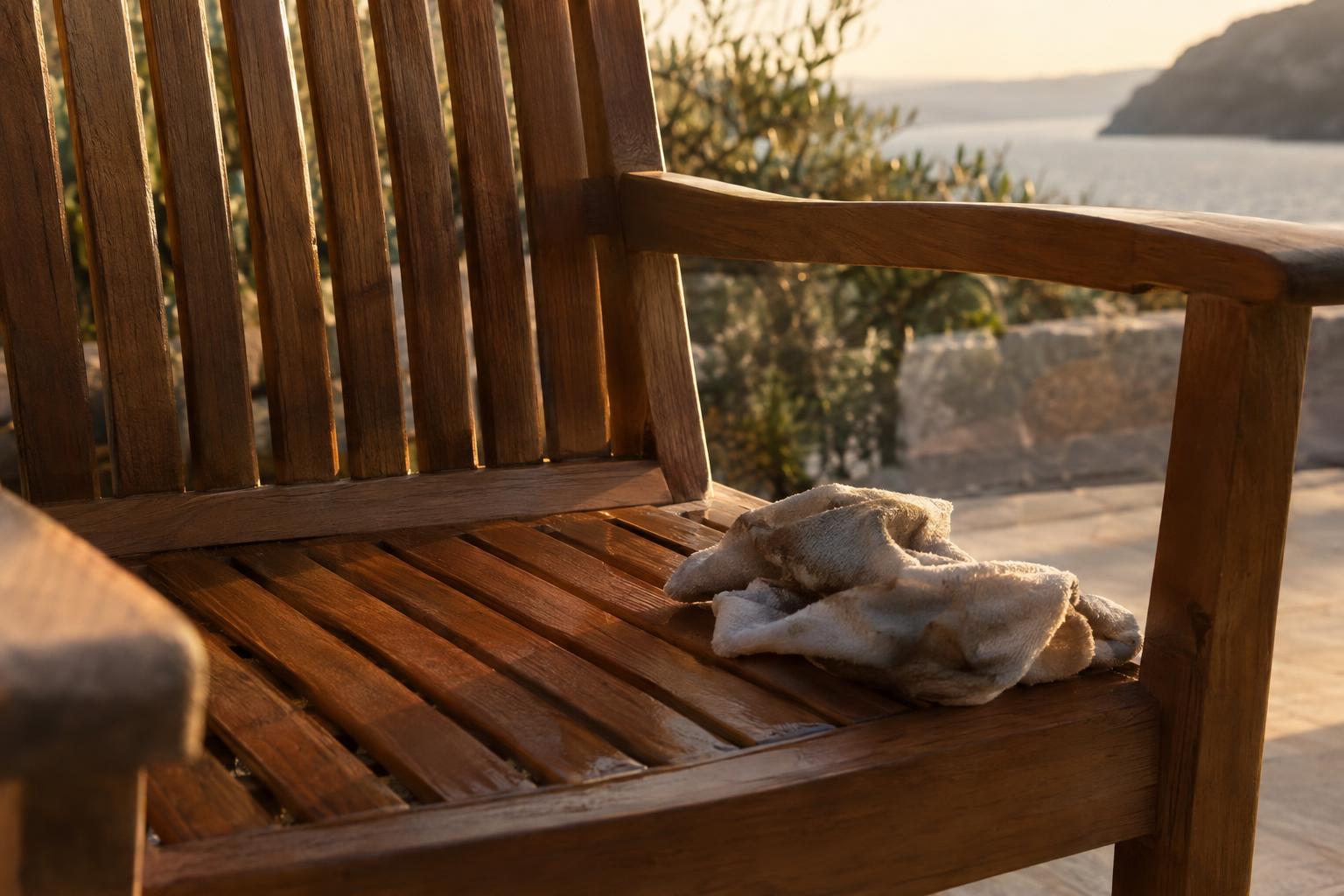
Products sold under the same name vary quite a bit. Some are true oils, some are blends with solvents or resins, and some include added color or UV filters. Read the label for the intended use, the number of coats and the drying time, and follow the maker’s instructions for application. Oily rags can heat up as they dry, so lay used rags flat outdoors until they are dry or seal them in a metal container filled with water. When you shop for teak, ask the manufacturer how a piece is finished and what upkeep that finish needs.
How often to re-oil teak in a humid climate
There is no single calendar that fits every patio. A chair under a covered porch keeps its color far longer than a dining table in full afternoon sun. As a typical pattern, owners who want to hold the honey tone plan to re-oil once or twice a year, and they re-oil sooner when the wood starts to look dry or pale.
In a hot, humid place like Charlotte, light coats matter more than heavy ones:
- Apply thin coats. A thick layer can stay tacky and attract pollen and dust.
- Wipe off the excess. After a short soak-in time, wipe the surface until it feels dry to the touch.
- Pick a dry stretch. Oil goes on best when the wood is dry and the forecast stays clear for a day or two.
- Watch for dark spots. Mildew grows where moisture and residue sit, so clean it off before the next coat.
The EPA’s guide to mold and moisture makes the underlying point plainly: controlling moisture is the way to control mold. On a patio, that means letting teak dry between rains and avoiding finishes that stay damp.
Teak oil, teak sealer, or nothing at all
Oil is only one of three ways to handle teak. This quick comparison shows how they differ in day-to-day terms:
| Approach | Look over time | Upkeep | Good fit if you |
|---|---|---|---|
| Teak oil | Deeper honey brown, fades as the oil wears | Repeat coats on a regular schedule | Love the warm color and enjoy a seasonal project |
| Teak sealer | Holds color longer, often with a more even finish | Reapply less often, but follow the label closely | Want color with fewer touch-ups |
| No finish | Gradual change to silver gray | Occasional washing only | Prefer low maintenance and a weathered look |
Sealers are designed to sit on or in the surface and slow the color change, and many include UV filters. They are not all the same, so check whether a product is meant for outdoor furniture and how it should be reapplied. If you switch from oil to a sealer, or the reverse, the wood generally needs a thorough cleaning and complete drying first.
Choosing between honey brown and silver gray
Think about the whole patio rather than the chair alone. Honey-brown teak looks warm against green foliage and brick. Silver-gray teak tends to disappear gracefully into stone, gravel and weathered fences, and it pairs well with neutral cushions. Your own tolerance for upkeep matters just as much: a patio you use every weekend from April through October will show wear faster than a seldom-used side bench.
It also helps to compare teak to your other options. If you want a low-maintenance frame with no finish to renew, the tradeoffs in our teak vs cast aluminum dining set comparison cover weight, care and climate fit. Many owners also end up in the middle: oil the first season or two, then let the wood go gray once they are comfortable with how it ages.
One practical rule keeps this simple. Commit to a plan before you start. Oiling one chair and leaving its twin bare gives you two very different colors on the same patio, and mixed finishes are a frequent source of regret with teak sets.
Frequently asked questions about teak oil and patio teak care
Do I have to oil teak patio furniture?
No. Teak holds up outdoors without oil, and the silver-gray color it develops is cosmetic. Oiling is a choice about appearance. If you like the honey tone, you oil on a recurring schedule. If you like the weathered gray or want less upkeep, wash the furniture now and then and leave the finish alone.
Should I clean teak before applying oil?
Yes. Wash with mild soap and warm water, scrub gently along the grain with a soft brush, rinse well, and let the wood dry completely before you apply anything. Oil applied over dirt, pollen or mildew locks it in and can leave blotchy patches that are hard to correct later.
Can I turn gray teak back to honey brown?
Often, yes. Gray teak can be cleaned and, with the right product and careful preparation, brought back toward a warmer tone. The process is more involved than regular oiling, so follow the instructions of the cleaner or restorer you choose, test a hidden spot first, and expect the color to fade again over time.
Does oiling teak cause mildew?
It can if the oil is applied too heavily or over a damp surface, because residue and moisture give mildew something to feed on. Use thin coats, wipe off the excess, apply only to clean, dry wood, and follow the product label. Good airflow and dry weather around the application also help.
If you are weighing teak against lower-upkeep frames, call us at (704) 274-3222 or visit our Charlotte showroom at 2438 Park Rd, and sit in a few pieces to compare how each one feels before you commit to an upkeep routine.