
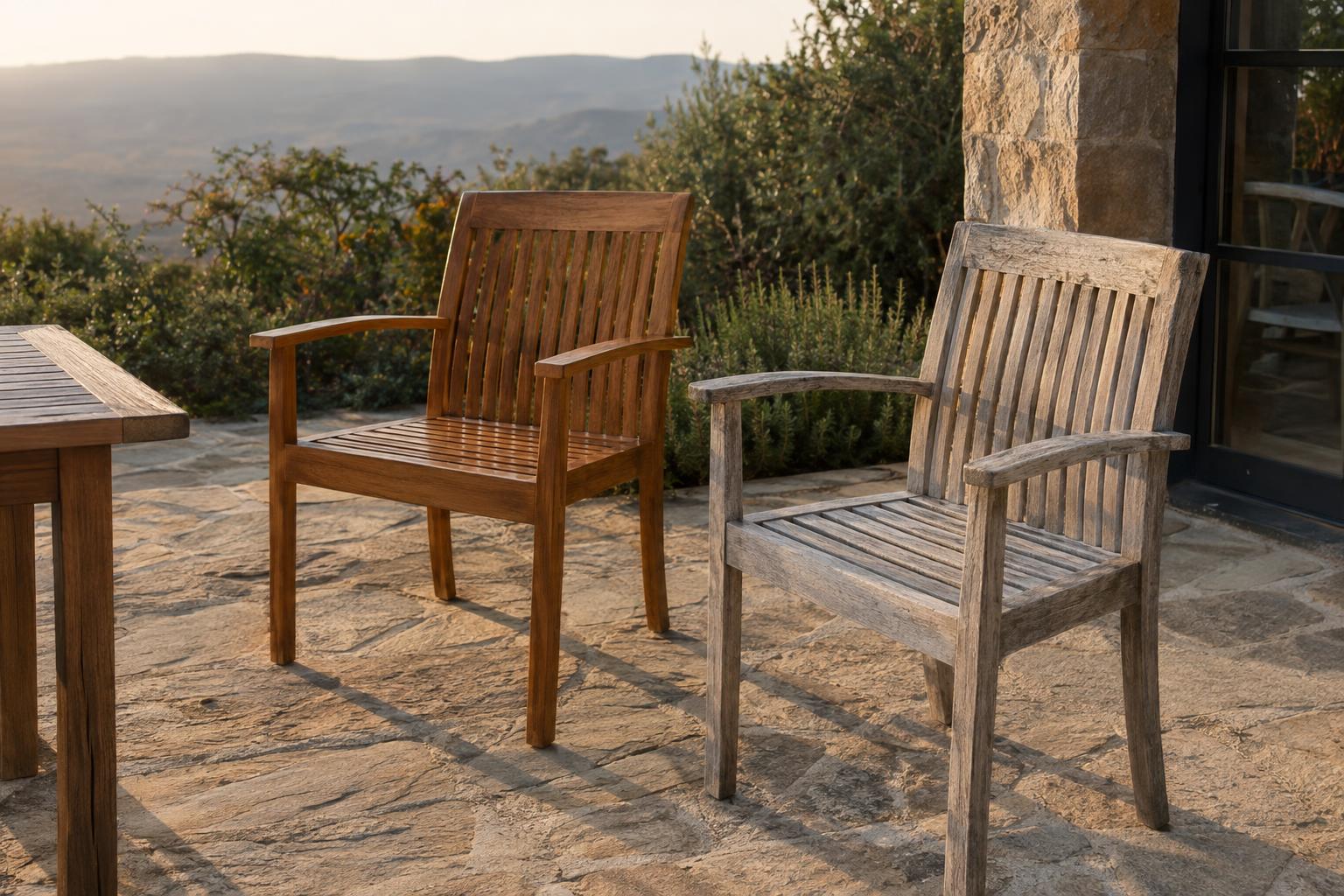
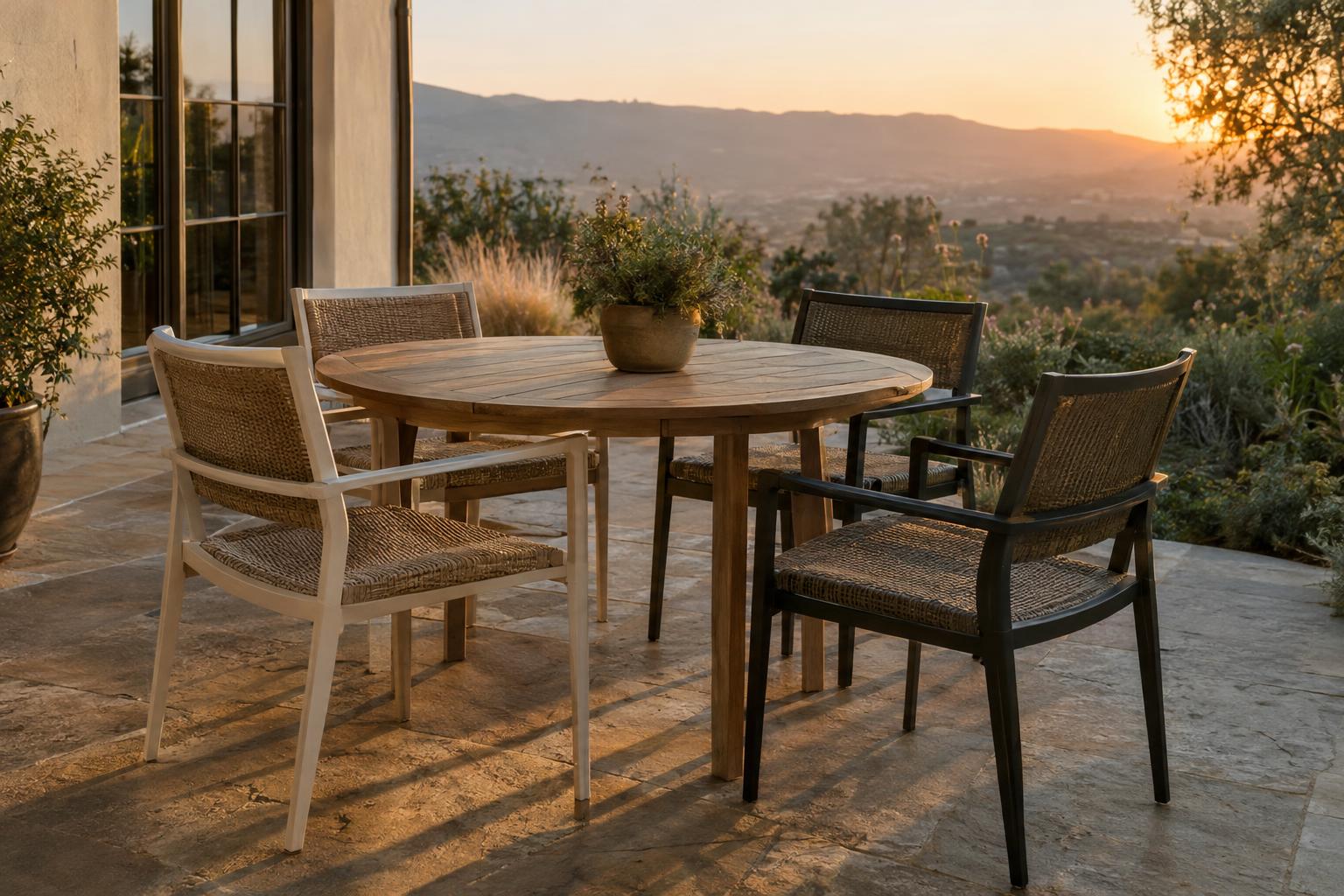
You can mix and match outdoor dining chairs and still end up with a table that looks planned, not accidental. The trick is to treat the mismatch as a design decision: keep a few things identical so the eye sees order, and let one or two things differ on purpose. Chairs that share a seat height, a similar scale and one repeating element, such as a metal finish or a cushion fabric, read as a collected set. Chairs that differ in every way read as leftovers. Here is how to choose which rules to keep and which to bend.
Start with one shared seat height
Seat height is the one thing that should not vary. If one person sits two inches lower than their neighbor, the table feels uneven and the lower chair never quite lines up with the tabletop. Most dining chairs fall in a typical range of about 17 to 19 inches from floor to the top of the seat, and dining tables commonly sit around 28 to 30 inches. Measure the actual seat height of each chair you plan to combine, with the cushion in place, and aim to land within an inch of each other.
Cushions are where heights drift apart. A thick, deep cushion on a low frame can match a thin cushion on a taller frame, so compare finished seat heights, not frame heights alone. Our patio chair seat height guide walks through how seat height affects comfort and how to measure it correctly.
Put armchairs at the ends and armless chairs on the sides
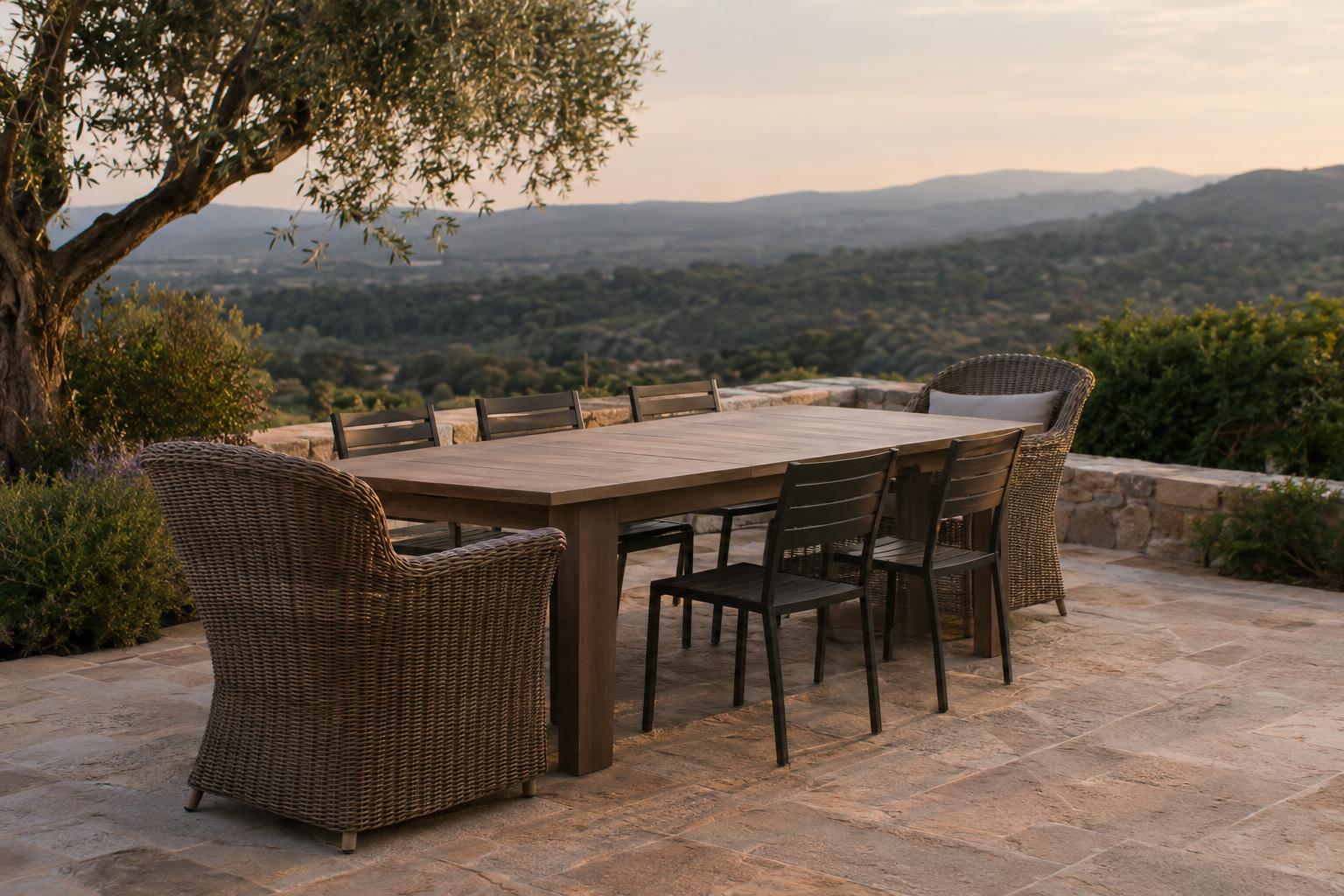
The most reliable layout for a rectangular table is a pair of armchairs at the head and foot, with armless chairs along the long sides. It gives the table a clear structure, and the armless chairs slide in and out more easily, so you can add a seat without crowding. If you are deciding which style belongs where, our guide to armless versus arm dining chairs covers comfort, spacing and fit in more detail.
This split is also a gentle way to introduce difference. The two end chairs can be a different style from the side chairs, as long as the seat heights match and the pieces feel like the same family in size and weight.
How to mix and match outdoor dining chairs by changing one thing at a time
The simplest rule is to vary one variable and hold the rest steady. Pick the variable that matters most to you, then lock the others in place:
- Vary the finish: keep the same chair shape and cushion fabric, but combine two frame finishes, such as a dark and a lighter metal.
- Vary the shape: keep the same finish and cushion, but mix a rounded back with a straighter one.
- Vary the cushion color: keep the chair identical and alternate two coordinating cushion colors around the table.
Changing two variables at once is possible, but it takes a steadier hand. If you change both finish and shape, anchor the look with something that is the same on every chair, like the seat cushion fabric.
Choose one thread that ties every chair together
A shared element makes a mixed set look deliberate. The two easiest threads are a common frame finish and a common cushion fabric. If the frames are different materials, a matching cushion across every chair does most of the unifying. If the cushions vary, a matching frame color can do the same job.
The same logic applies to scale. A heavy, chunky chair next to a slim, open-framed one looks lopsided even when the colors agree. Choose chairs with a similar visual weight, similar back height and a similar seat width so no single chair dominates.
| Keep the same | Safe to vary | Result |
|---|---|---|
| Seat height and cushion fabric | Frame material and shape | Looks collected and comfortable |
| Frame finish and seat height | Cushion color or pattern | Looks layered and easy to refresh |
| Chair shape and cushion color | Frame finish | Looks like a two-tone set |
Mixing wicker and aluminum chairs, or adding a bench
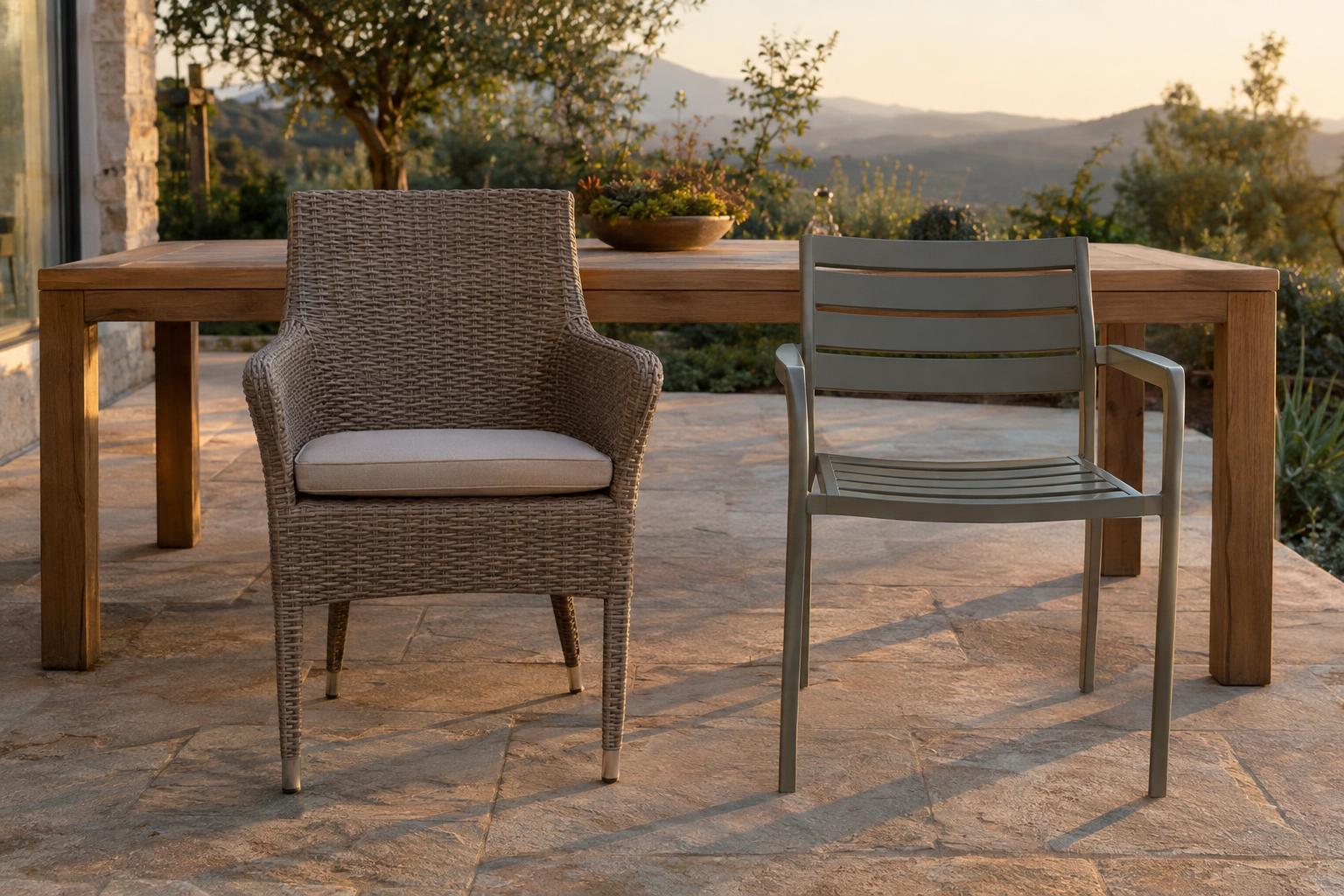
Wicker and aluminum make a good pairing because they contrast in texture while sharing a lot of practical ground. A woven armchair at each end with slatted aluminum chairs along the sides gives you softness and structure in one table. Pick a metal finish that echoes the darker strands in the weave, and use one cushion fabric across both materials to bring them together.
A bench on one side can be a handy way to seat an extra person or two, especially against a wall. Match the bench seat height to the chairs, and remember that it has no back to push against, so leave a little extra space for sliding in and out. A bench usually suits a long side better than an end, because the ends are where people expect the more generous armchairs. Look at the frames together in daylight, since color and scale read differently outdoors than under indoor lighting.
Check clearances and weight before you commit
A mixed set still needs room to move. A common guideline is to leave about 36 inches between the table edge and any wall or obstacle so someone can pull back a chair and walk behind it. Arm height matters too: armchairs need arms that clear the underside of the table apron, or the chair will never tuck in.
Weight is the other quiet variable. A very light chair next to a heavy one can feel unbalanced, and light chairs can slide or tip in a gust. The National Weather Service notes that high winds can blow objects around, so on an open patio it is worth choosing chairs with some heft or planning to move the lightest ones in before a storm. When you are ready to compare options, browse the outdoor dining chairs section.
If one of your chairs is wicker and the others are aluminum, our ideas for mixing aluminum and wicker go further on that pairing.
Finally, sit in the chairs together before you decide. Photos hide how a seat feels after an hour at the table, and a combination that looks balanced on paper can feel different once the backs, arms and cushion depth are side by side. Bring a notepad, jot down each seat height, and test how the chairs tuck under your table if you can. Those few minutes usually settle the questions that measurements alone leave open.
Frequently asked questions about mixing outdoor dining chairs
Do outdoor dining chairs have to match?
No. Chairs can differ in style, finish or material as long as a few things stay consistent: seat height, overall scale and one repeating element such as a frame finish or cushion fabric. When those line up, a mixed set looks collected and intentional. Matching chairs are simply the lowest-effort route, not the only good-looking one.
How many different chair styles can I mix at one table?
Two styles are usually plenty. A common pattern is one style at the ends and another along the sides. Three or more can work at a large table, but each added style makes it harder to keep the scale and finish consistent, so hold seat height and cushion fabric constant if you go that route.
Can I mix wicker and metal dining chairs?
Yes, and it is one of the easier combinations. The contrast in texture adds interest while both materials suit an outdoor table. Match the seat height, pick a metal finish that echoes the weave color, and use the same cushion fabric on every chair to tie them together visually.
Should the head chairs be different from the side chairs?
They can be. Armchairs at the ends with armless chairs on the sides is a classic way to build variety into a rectangular table, because the arms signal the head and foot while the armless chairs keep the sides open and easy to slide in. Just confirm all the seats sit at a similar height.
Call us at (704) 274-3222 or visit our Charlotte showroom at 2438 Park Rd, then sit in a few chairs and judge how they feel.