
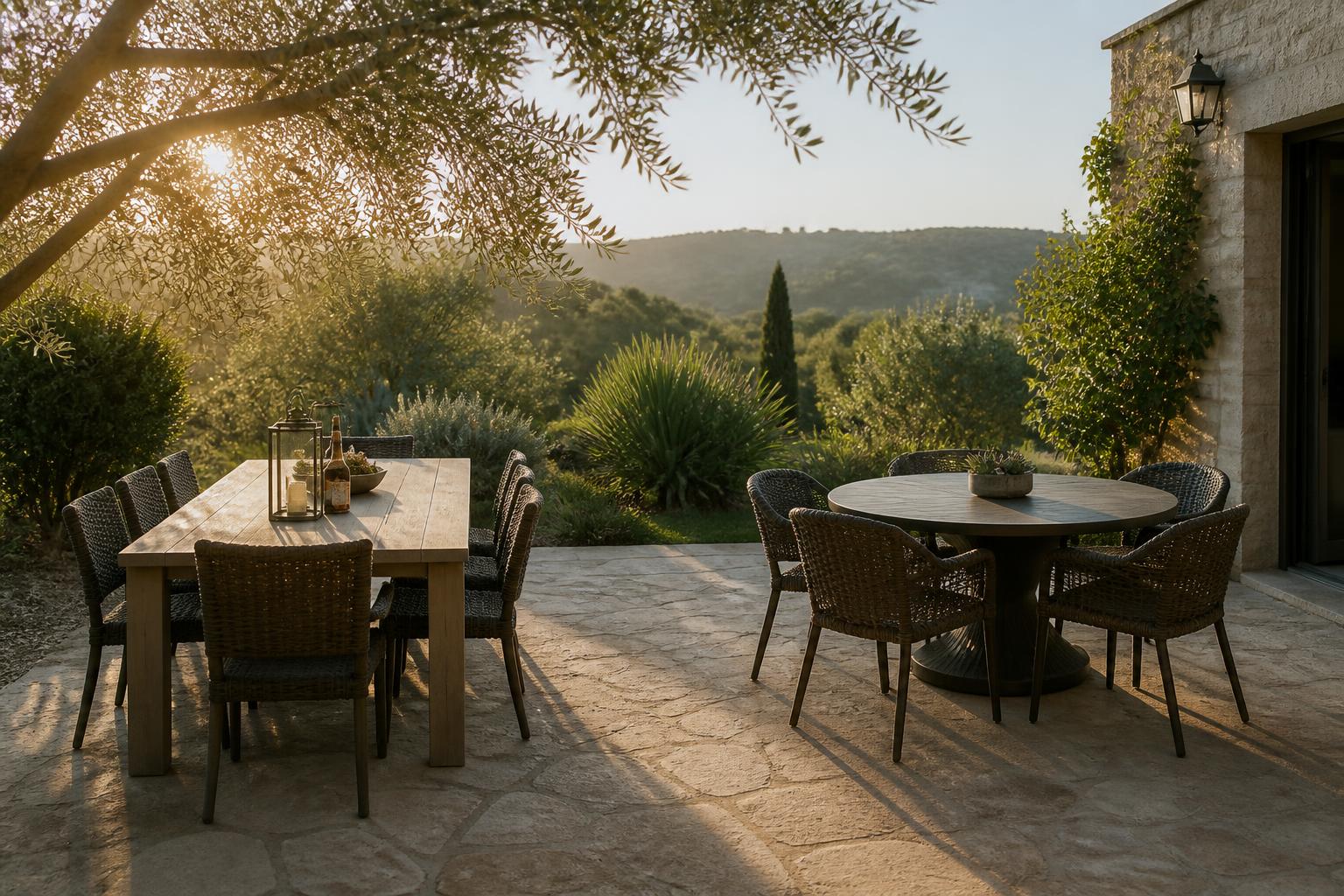
Choosing between a rectangle vs round outdoor dining table comes down to three practical questions: how many people you need to seat, what shape your patio actually is, and how much room you have for chairs to slide back and people to walk past. Both shapes have real strengths, and the wrong choice usually shows up fast as bumped elbows, wasted corners, or a table that looks stranded on a big slab. This guide walks through seating capacity, proportions, and traffic flow so you can measure your space once and order the table that actually fits it.
Seating Capacity: How Many People Each Shape Really Fits
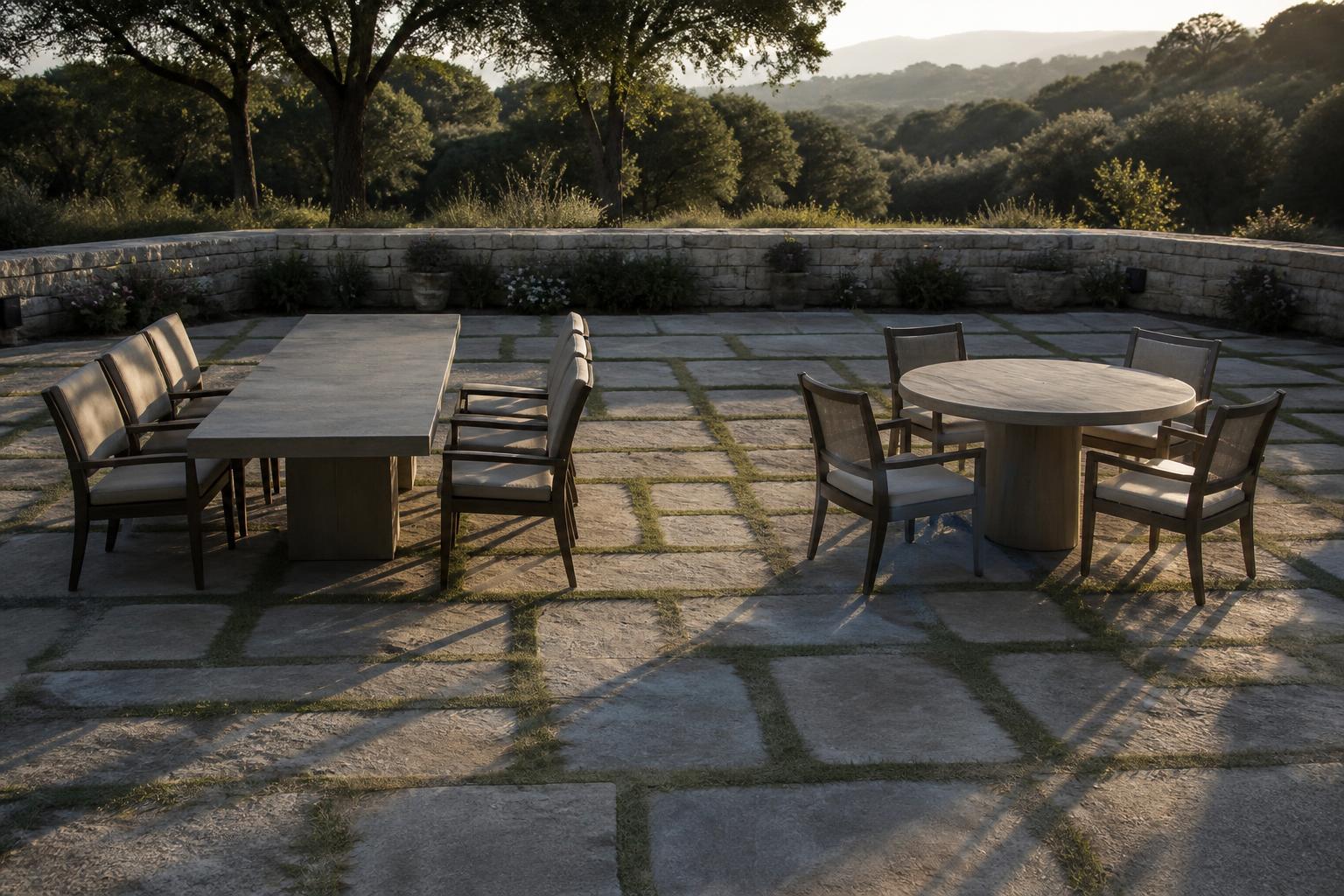
A round outdoor dining table works well for smaller, intimate groups. A 42- to 48-inch round table typically seats four comfortably, while a 54- to 60-inch round can stretch to six if you use armless dining chairs. Beyond 60 inches, round tables get harder to reach across — passing a platter to the far side of a 72-inch round means standing up, so most manufacturers cap round designs around 60 to 64 inches.
Rectangle tables scale more efficiently for larger groups. A 68- to 72-inch rectangle seats six, an 84- to 96-inch rectangle seats eight, and anything over 100 inches can handle ten with the right chair spacing. Rectangles also accommodate bench seating on one or both long sides, which lets you fit an extra person or two without adding chair legs to trip over. If you regularly host extended family or entertain groups of eight or more, a rectangle or a rectangle-with-extension design is usually the more practical route.
Plan on roughly 24 inches of table edge per seated person and at least 32 to 36 inches from the table edge to any wall, railing, or planter so chairs can push back fully. For material, look at powder-coated aluminum or cast aluminum frames for either shape — both resist rust in humid Carolina summers — and pair the table with a top in HDPE poly lumber, tempered glass, or a weather-rated sintered stone for easy wipe-down after pollen season.
Matching Table Shape to Patio Proportions
Patio shape drives this decision as much as guest count does. Square or nearly square patios — say 12 feet by 12 feet — tend to look better with a round or square table, because a long rectangle in a square space leaves awkward triangular gaps in the corners that are hard to furnish. A round table centers naturally and lets you walk a consistent path around it.
Narrow, elongated patios or covered porches, common on Charlotte-area townhomes and rowhouses, favor rectangle tables. A rectangle follows the long axis of the space, leaving usable width on either side for a grill station, planters, or a side table instead of dead air. If your patio runs 10 feet wide by 20 feet deep, a 40-inch-wide by 84-inch-long rectangle will look proportional, where a round table of equal seating capacity would need a footprint nearly as wide as the patio itself.
Odd-shaped or irregular patios — L-shaped layouts, spaces broken up by a fire pit or built-in kitchen — often do better with a round or oval table positioned as its own zone, separate from the cooking or lounge area. This keeps the dining zone visually distinct without forcing sharp corners into a space that doesn’t have any. When you’re comparing options, it helps to measure your patio’s length and width first, then browse dining sets sized for your footprint rather than starting with a table you like and hoping it fits.
Traffic Flow and Clearance Around the Table
Traffic flow is where shape differences become most obvious in daily use. Rectangle tables have four distinct corners that people tend to walk wide around, especially when chairs are pushed in. That means a rectangle needs a slightly larger clear path — figure 42 to 48 inches on at least one side if that’s the main walkway to a door or grill — to avoid a bottleneck.
Round tables have no corners to navigate, so foot traffic flows around them more smoothly in tighter quarters. This makes round tables a better fit near a single entry point, a pool deck with one main walking lane, or a covered patio where the table sits close to a railing on two sides. A 48-inch round table can work in a footprint as small as 9 feet by 9 feet, while a rectangle seating the same four to six people generally needs at least 10 feet by 12 feet to leave comfortable clearance on all sides.
Extension and Modular Options
If your guest count varies, look at rectangle tables with a leaf or slide-out extension, which let you go from a 68-inch six-seater to a 90-inch eight-seater without buying a second table. Some round tables offer a similar trick with a removable center leaf that converts them to an oval, adding 18 to 24 inches of length while keeping the softer edge profile.
Chair Style and Spacing
Armchairs need roughly 26 to 28 inches of width per seat versus 22 to 24 inches for armless side chairs, so swapping chair styles can change how many people either shape realistically seats. Sling and woven resin wicker chairs are typically slimmer than deep-seat cushioned chairs, which matters most on rectangle tables where every extra inch per seat adds up across six or eight places.
Frame, Top Material, and Weather Considerations for the Carolinas
Whichever shape you choose, the frame and tabletop material matter more for longevity than the shape itself. Powder-coated aluminum frames resist the rust that steel frames develop after a few humid summers and occasional winter freezes, and they’re light enough to move for storm prep without help. Cast aluminum offers a heavier, more traditional look and holds up well left outdoors year-round.
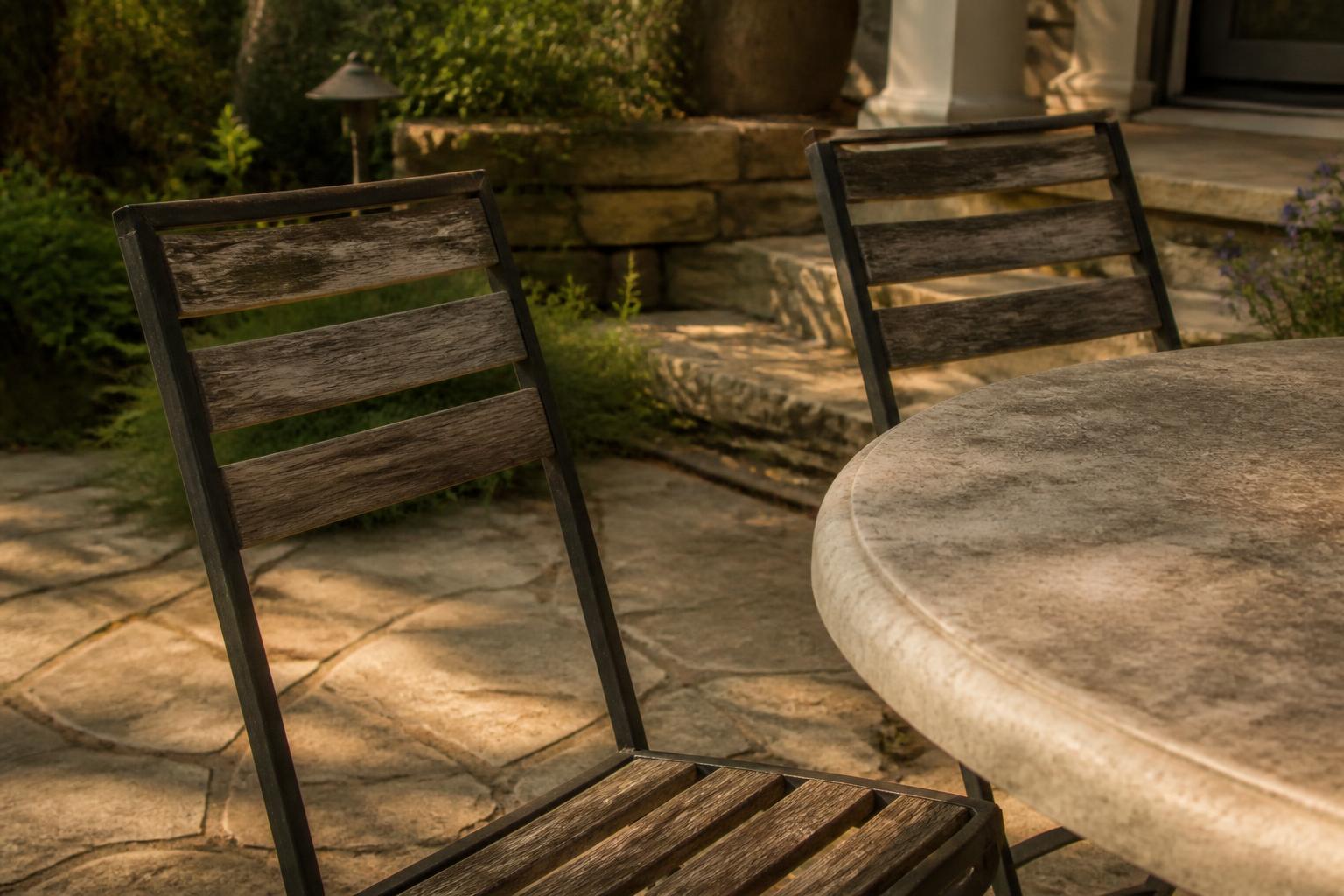
For tabletops, HDPE recycled poly lumber won’t crack, splinter, or fade the way untreated wood can, and it wipes clean of pollen with a damp cloth. Tempered glass tops look sharp on round tables especially, though they need regular wiping to stay smear-free in high-pollen months. Teak is a classic choice for either shape and will weather to a silver-gray patina if left untreated, or can be oiled every few months to keep its honey-brown tone — either look is stable outdoors. If you go with cushions on your dining chairs, choose a solution-dyed acrylic performance fabric such as Sunbrella, which resists mildew and holds color far longer than standard polyester in direct sun. According to outdoor furniture buying guidance from This Old House, frame material and fabric quality are consistently bigger predictors of long-term durability than table shape, which is worth keeping in mind once you’ve settled on rectangle or round.
Plan on covering or storing cushions during extended winter freezes, and rinse frames with a garden hose every few weeks during heavy pollen season to prevent yellow residue from staining lighter finishes.
Frequently Asked Questions
Is a rectangle or round outdoor dining table better for a small patio?
For patios under 10 feet by 10 feet, a round table is usually the better fit. A 42- to 48-inch round seats four without corners jutting into walkways, while a rectangle sized to seat the same number typically needs more length than a small patio can offer without crowding the space.
How much clearance do I need around an outdoor dining table?
Leave at least 32 to 36 inches between the table edge and any wall, railing, or fixed object so chairs can slide back fully. If the table sits along a main walking path, increase that to 42 to 48 inches on that side to prevent a bottleneck when chairs are occupied.
Can a round table seat as many people as a rectangle?
Up to about six people, yes — a 60-inch round table seats six comfortably. Beyond that, rectangles scale more efficiently because you can extend length without making the table impossible to reach across, and bench seating adds capacity that round tables can’t match.
What table material holds up best to Carolina summers and winters?
Powder-coated or cast aluminum frames resist rust through humid summers and occasional winter freezes better than steel. HDPE poly lumber tops need no sealing and wipe clean of pollen, while teak and tempered glass both perform well if you’re willing to do periodic oiling or wiping to keep them looking their best.
If you’re still weighing a rectangle against a round table for your specific patio dimensions, the team at Carolina Patio Furniture can walk through your measurements and seating needs in person — browse our contact page to reach us or stop by the Charlotte showroom to see both shapes in frame and fabric options side by side. Call (704) 274-3222 with questions before you visit, and we’ll have the right tables pulled out on the floor for you to sit at and compare.