
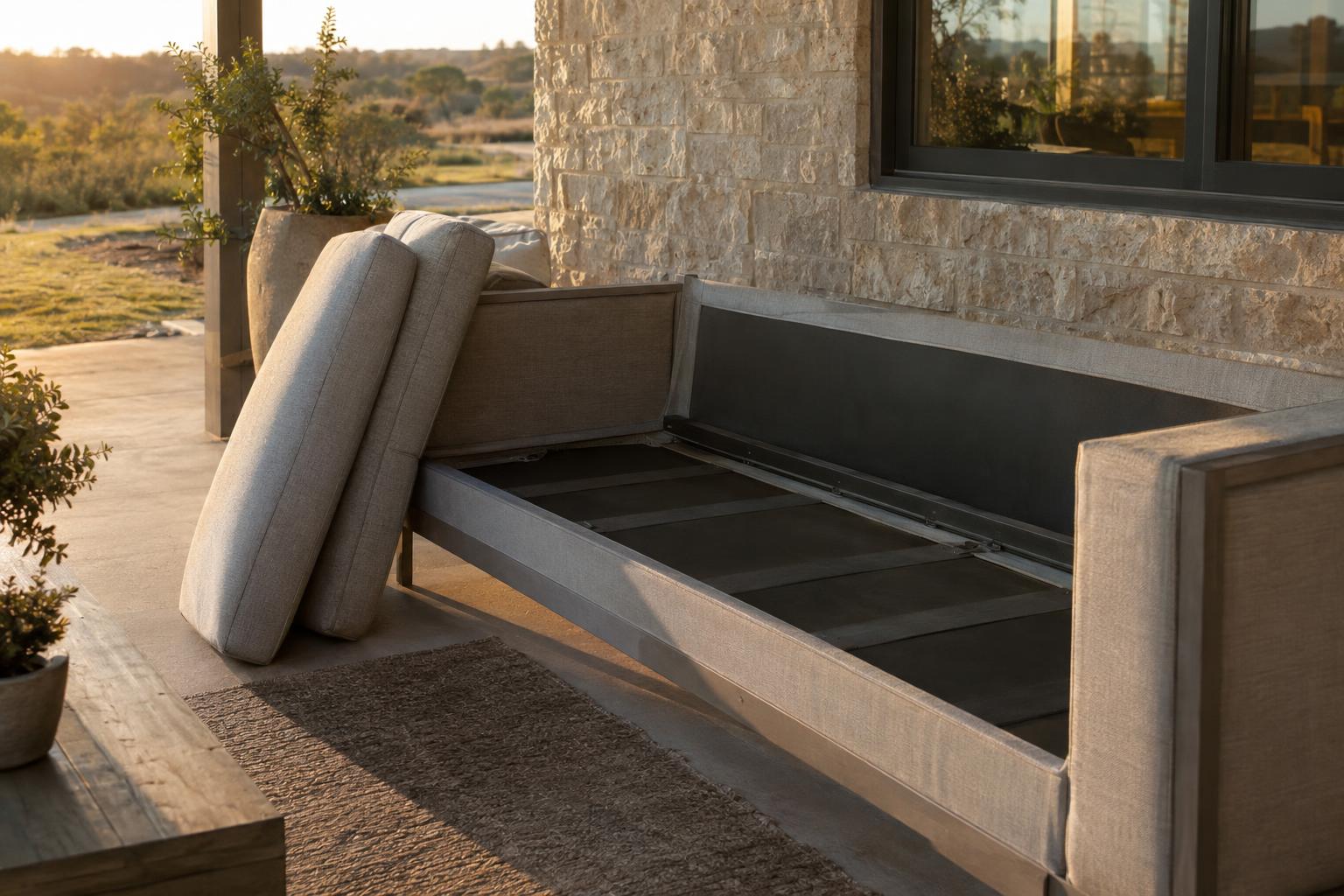



A patio umbrella crank is the mechanism most people picture when they think of a big umbrella over a dining table, but it is only one of several ways to raise a canopy. Push-button, pulley and tilt systems each suit a different canopy size, a different user and a different amount of tolerance for fiddling. The lift you choose decides whether the umbrella gets opened every afternoon or left closed because it is a chore. This guide explains how each mechanism works, which sizes they suit, what tends to wear out first, and how to close and secure the umbrella when wind picks up.
How the four common lift systems work
Every umbrella has to do the same job: push a canopy up a pole and hold it there. The difference is how much effort that takes and where the load goes.
- Crank lift. A handle turns a gear or a winding drum inside the pole housing. A cord or cable winds around the drum and pulls the canopy open. The gearing means a small amount of turning does a lot of lifting, which is why cranks are common on larger canopies.
- Push-button lift. You slide the canopy up the pole by hand, and a spring-loaded button clicks into a hole in the pole to hold it open. Pressing the button releases it. There are very few moving parts to think about.
- Pulley or rope lift. A cord runs through a pulley at the top of the pole, and you pull the cord and tie it off on a cleat. It is simple and often seen on smaller or lighter canopies.
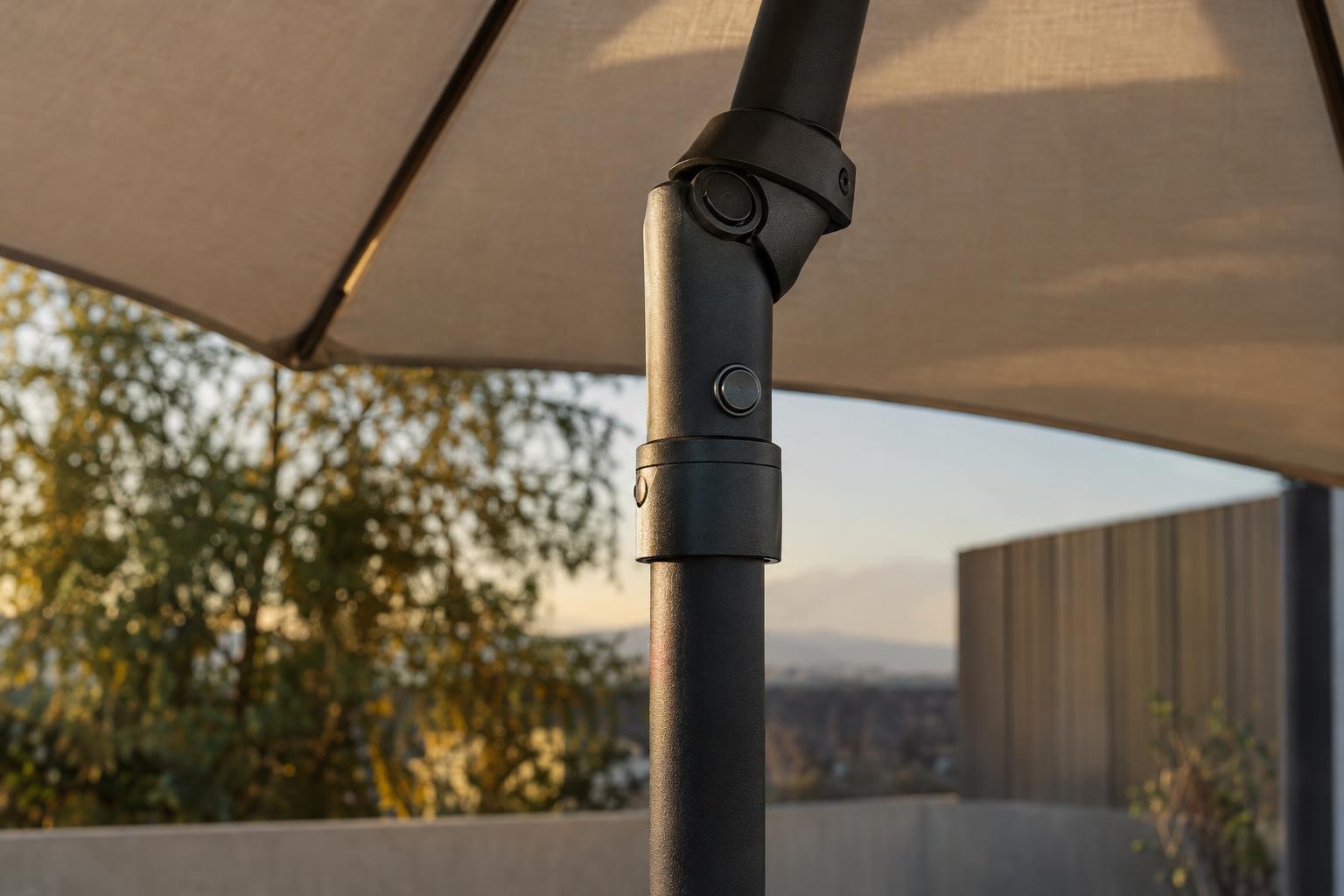
- Tilt option. Tilt is a separate feature, not a lift style. A knuckle or hinge near the top of the pole angles the canopy to block low sun, and it can be paired with crank or push-button designs.
If you want to compare styles first, our collection of patio umbrellas is a good place to start.
Which lift suits which canopy size
Canopy size is the first filter. A canopy only a few feet across is light enough to push up by hand, and a push-button or pulley system does the job without any extra hardware. As the canopy gets wider, it gets heavier and catches more air, and lifting it by hand becomes awkward and tiring. A crank gives you leverage, so a large round or rectangular canopy rises smoothly instead of fighting you.
| Lift type | Typically suits | Effort to open | Watch for |
|---|---|---|---|
| Crank | Larger canopies | Low, several turns of the handle | Handle and gear wear |
| Push-button | Smaller to mid-size canopies | Moderate, you lift by hand | Spring button and pole holes |
| Pulley or rope | Smaller, lighter canopies | Low to moderate | Cord fraying |
| Crank with tilt | Mid to large canopies | Low, plus a tilt adjustment | Tilt hinge loosening |
These are general patterns, not rules. Pole diameter and the way the canopy attaches also influence how smoothly any lift works, and the pole diameter and table fit guide explains how to match an umbrella to the table hole and base.
Ease of use for different people
Think about who will open the umbrella most often. A crank is easy on shoulders and wrists because the effort is spread across several gentle turns, which helps anyone who has trouble reaching overhead or lifting. The tradeoff is that you need to be near the pole and have space to turn the handle, and a stiff crank can feel slow when a shower is starting.
A push-button umbrella is quick when it works. You grab the pole, slide the canopy up and click it into place. For smaller canopies this is fast and needs no practice, but it takes more upper-body strength than a crank, and a stiff slide can pinch fingers. A pulley is calm and quiet but depends on pulling a cord hand over hand and tying it off correctly each time.
The best test is to try each one: open and close it the way you would at home and notice which feels easy from your usual spot.
What tends to wear out first
Every mechanism has a weak point, and knowing it helps you check an umbrella before you buy and care for it afterward.
- Cords and cables. On crank and pulley umbrellas, the cord takes the load every time the canopy opens. Fraying, kinks or stretching are early signs that it needs attention.
- Crank handles and gears. The handle can loosen, and gear teeth can wear if the umbrella is cranked against resistance, such as when a strap is still tied or the canopy is snagged.
- Tilt knuckles. The hinge near the top carries the weight of the canopy at an angle, so it can loosen over time with frequent adjusting.
- Push-button springs and holes. The button can stick if dirt or pollen collects around it, and the holes in the pole can wear after many open and close cycles.
Keep in mind that care matters as much as design. Wipe dust and pollen from moving parts, never force a stuck mechanism, and check the cord now and then. Manufacturers publish their own care instructions, so follow them for lubrication and cleaning.
Closing and securing a patio umbrella in wind
Whatever lift you choose, the umbrella needs to come down before the wind builds. The National Weather Service notes on its wind safety page that high winds can blow objects around and pose a significant threat to your safety, and that damage becomes possible when winds are sustained around 40 to 50 mph. A patio umbrella is one of the first objects on a patio that a gust can lift, so a habit of closing it early is worth more than any feature.
- Lower the canopy fully by cranking, releasing the button or releasing the cord.
- Fasten the tie or strap around the furled canopy so it cannot flap open.
- Confirm the pole sits firmly in a weighted base. Base weight matters too, because a base that is too light is a common reason an umbrella tips.
- If a storm is expected, lay a small umbrella down or bring it indoors rather than leaving it standing.
Canopy shape matters in wind too, since vented or aerodynamic shapes behave differently from flat ones. Our guide to wind-resistant patio umbrella canopy shapes goes through those differences.
Choosing the right lift for your patio
Start with canopy size and how often the umbrella will go up and down. For a large canopy over a dining table that you open every day, a crank is usually the comfortable choice. For a small canopy over a bistro table, push-button or pulley systems are simple and quick. If low sun is your problem, a tilt feature can help, but only if you are willing to adjust it as the sun moves.
Then think about the wind. In a spot where afternoon storms arrive fast, you want a lift that is quick to close, easy to secure, and not fussy. Lastly, test the mechanism yourself. A feature that looks clever in a photo is no use if the handle is awkward for your hand.
Frequently asked questions about patio umbrella lifts
Is a crank lift better than push-button?
It depends on canopy size and the person using it. Cranks give leverage, so they usually suit larger, heavier canopies and anyone who finds lifting tiring. Push-button designs are fast and simple on smaller canopies. Neither is better in every case, so try both and see which feels natural.
What breaks first on a crank umbrella?
The cord and the handle are the usual early wear points, along with the tilt hinge if the umbrella has one. Cords can fray from friction, and handles can loosen with use. Avoid cranking against resistance, clear the canopy from anything that snags, and keep moving parts free of pollen and dirt.
Can I tilt any patio umbrella?
No. Tilt is a separate feature that needs a hinge near the top of the pole, and not every umbrella has one. If you want to follow the sun, look for a model that lists tilt, and ask how the tilt is controlled and held in place before you choose.
Should I leave my umbrella open during windy weather?
It is safer to close and secure it. High wind can lift an open canopy and carry the base with it. Lower the canopy, tie it, and make sure the pole is seated in a weighted base. In forecast storms, consider bringing the umbrella indoors or laying it flat.
Planning shade for a patio set? Call us at (704) 274-3222 or visit our Charlotte showroom at Carolina Patio Furniture, where you can sit in different pieces and compare them side by side. Bring a photo of your patio and its table size.