
Deciding between a cantilever vs market patio umbrella comes down to how your seating area is arranged and how much you want that shade to move throughout the day. Both styles do the same basic job of blocking sun, but they solve the problem in different ways — one plants a pole through your table, the other holds the canopy off to the side on an offset arm. If you’ve stood in a showroom staring at two very different-looking frames and wondered which one actually fits your patio, this guide walks through canopy size, base weight, wind behavior, and how each style holds up during a Carolina thunderstorm season.
How Market Umbrellas Cover a Dining or Bar Table
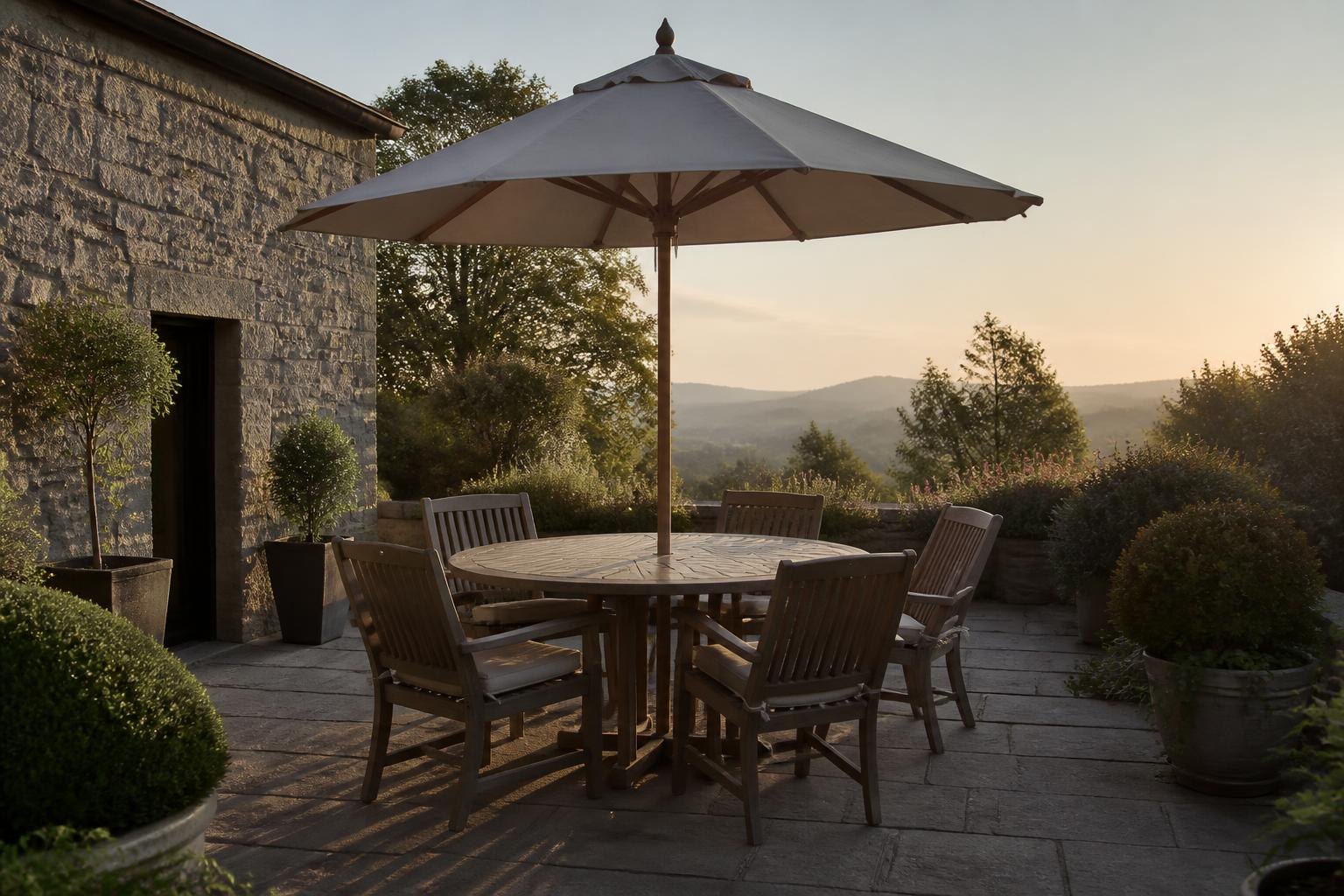
A market umbrella is the classic center-pole design: the pole runs straight down through a hole in your table, anchored by a base that sits on the ground or is weighted from below. Canopies typically run 7.5 to 11 feet across, which comfortably shades a 42- to 48-inch round table with four chairs, or a 6-foot rectangular table seating six. The pole itself usually measures 1.5 to 2 inches in diameter, so double-check your table’s umbrella hole before you buy.
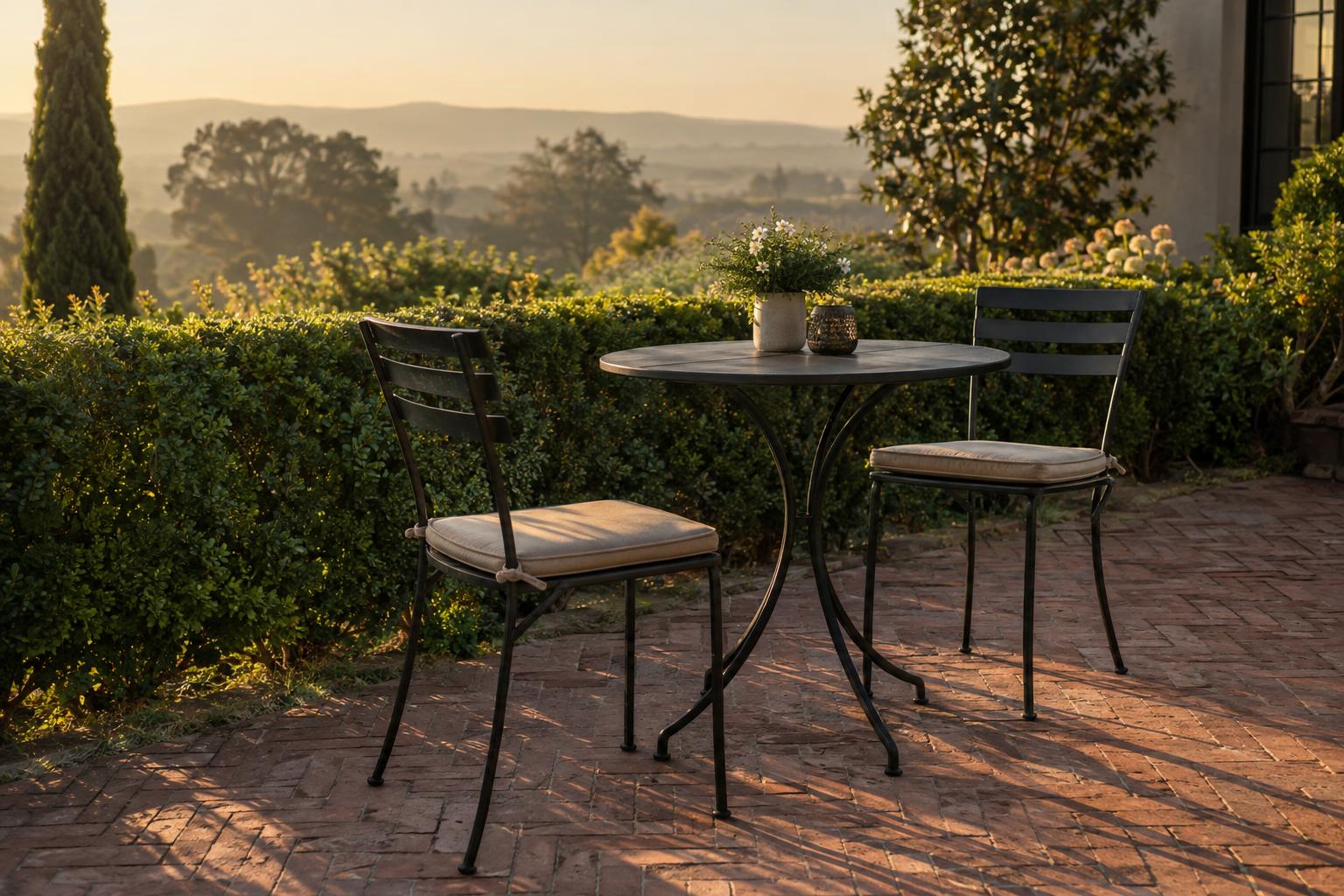
Because the pole sits in the center of the table, a market umbrella works best when the table is the seating destination — think dining sets, bistro tables, or a bar-height counter set on a deck. The tradeoff is that the pole occupies the middle of your surface, which can crowd a serving platter or a centerpiece on a smaller table. Market umbrellas also tend to cost less than cantilevers of comparable canopy size, and their simpler frame means fewer moving joints to maintain. Most tilt at the pole using a crank or push-button mechanism, letting you angle the canopy a few degrees to chase late-afternoon sun without repositioning the whole umbrella.
If your patio centers on a dining table where people gather to eat rather than lounge, a market umbrella is generally the more space-efficient and budget-friendly choice.
How Cantilever Umbrellas Shade Sectionals and Open Seating
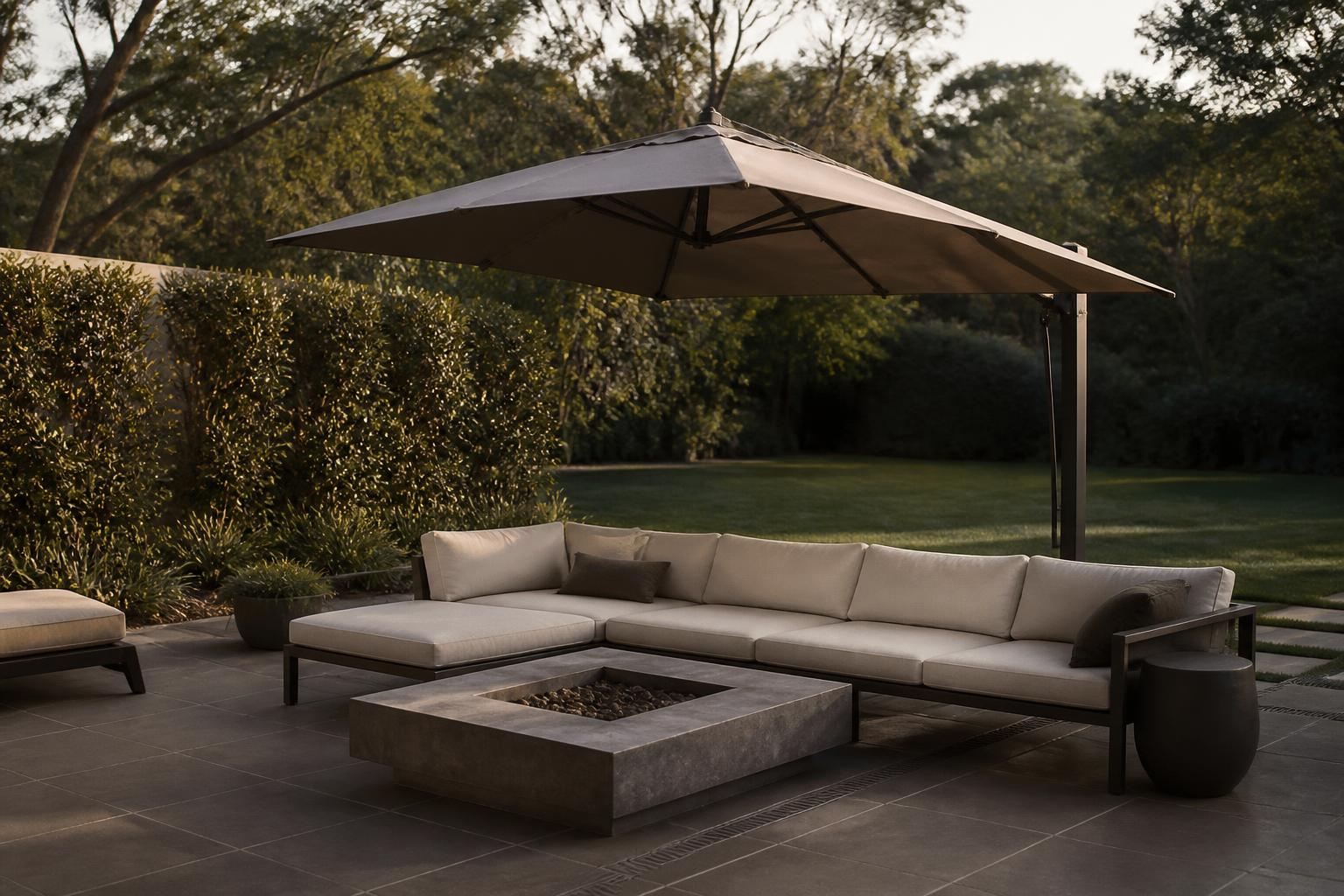
A cantilever, or offset, umbrella holds its canopy on an arm extending from a base positioned outside the seating area entirely. Canopies commonly range from 9 to 13 feet, and because there’s no pole running through the middle of your furniture, the entire footprint underneath stays open. That makes cantilevers the better match for deep seating sectionals, conversation sets, and chaise lounges where a center pole would land awkwardly in the middle of a coffee table or an ottoman.
The arm and rotating collar let you swing the canopy through a wide arc, so one cantilever can shade a sectional in the morning and pivot to cover a nearby lounge chair by afternoon. Most residential models rotate a full 360 degrees and tilt independently, giving you far more flexibility in how shade moves through the day compared with a fixed center-pole design.
That flexibility comes with tradeoffs. Cantilever frames are more complex, with more hardware, larger cross bases or weighted plates, and a higher price point for a comparable canopy size. Because the entire umbrella cantilevers off one side, base weight and placement matter even more here than with a market umbrella — an under-weighted cantilever base is one of the more common reasons these umbrellas tip in a gust.
Base Weight, Wind Behavior, and Placement
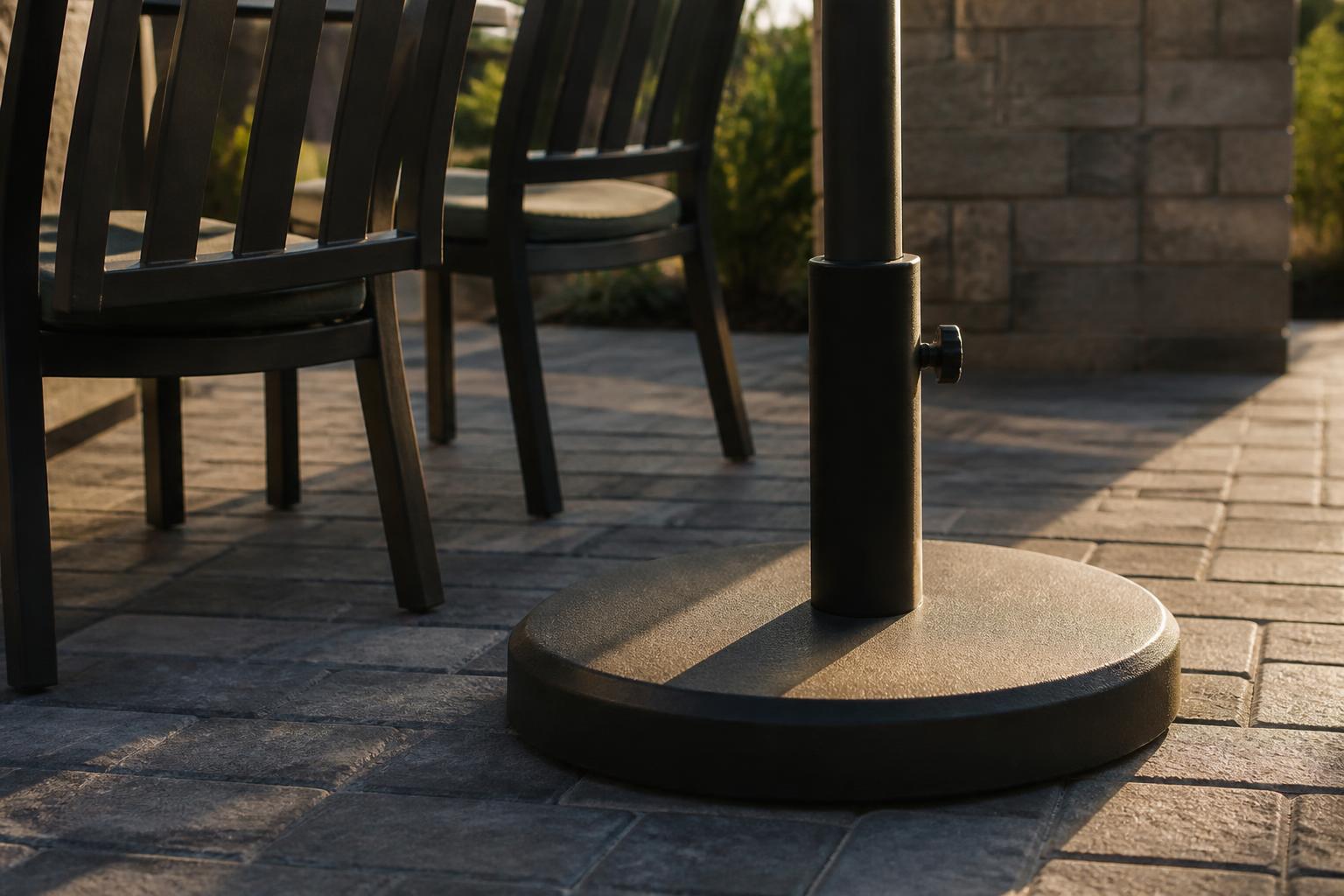
Wind is where the cantilever vs market patio umbrella decision gets practical rather than aesthetic. A market umbrella’s pole runs straight down into a table or a ground-set base, distributing wind load more directly downward, but light canopies on undersized bases can still lift in a strong gust. As a general guideline, a 9-foot market umbrella needs roughly 50 to 75 pounds of base weight, while larger canopies in the 10- to 11-foot range call for 75 to 100 pounds or more. Our umbrella base weight guide breaks this down by canopy size if you want specific numbers before you shop.
Cantilever umbrellas need even more weight relative to canopy size because the base sits off-center and has to counterbalance the full length of the extended arm. Many cantilever bases start at 90 pounds and climb past 150 pounds for larger canopies, often built as a cross-foot design filled with sand or using stacked weight plates. Canopy shape also affects wind behavior — vented canopies shed gusts more predictably than solid ones, a detail covered in our guide to wind-resistant umbrella shapes.
In either case, plan for clearance: leave at least 24 to 30 inches between the open canopy edge and any wall, railing, or grill to avoid fabric rubbing against fixed structures as the umbrella tilts or rotates.
How Shade Moves Through a Charlotte Afternoon
Charlotte’s summer sun sits high and hot from late morning through early evening, and how each umbrella style handles that arc matters more than most shoppers expect before they own one. A market umbrella’s shade shifts modestly with its tilt mechanism, but since the pole is fixed in the table, the coverage area stays centered over that spot all day. That’s fine for a dining table used mainly at breakfast or dinner, when the sun angle is lower anyway.
A cantilever’s independent rotation and tilt let you actively track the sun, shifting the canopy every hour or two if you’re out on the patio for a full afternoon. This is a real advantage for anyone who spends extended time in a sectional or lounge area rather than moving in and out for meals. It’s also useful during the region’s heavier pollen weeks in spring, when adjusting the umbrella angle can keep a seating area shaded and slightly more sheltered from windblown pollen settling on cushions.
Neither style eliminates the need for good performance fabric underneath — Sunbrella and similar solution-dyed acrylics resist fading and mildew far better than printed polyester canopies, which matters given how much UV and humidity a Carolina summer delivers.
Storm-Season Habits for Either Umbrella Style
The Carolinas see enough summer thunderstorms and the occasional tropical system that umbrella storage habits are worth planning, regardless of which style you choose. Close and, where possible, remove market umbrellas from their table base before any storm with sustained winds forecast above 20-25 mph; the pole and canopy act like a sail even when closed if the base isn’t weighted heavily enough.
Cantilever umbrellas should be fully closed and, if the arm allows, lowered toward the base during high wind warnings, since an open cantilever catches wind at a greater height and distance from its anchor point than a market umbrella does. For both styles, check the canopy fabric and finial cap for wear each spring, tighten any loose bolts at the rotation collar or crank housing, and store the canopy indoors or in a weatherproof cover during the winter months when it won’t be in regular use. A quick rinse with mild soap and water every 4 to 6 weeks during peak season keeps pollen and mildew from setting into the fabric weave.
Frequently Asked Questions
Which is more stable in wind, a cantilever or market umbrella?
A properly weighted market umbrella is generally more stable because its pole sits centered in a table or ground base, putting wind load directly over the anchor point. Cantilevers can handle wind well too, but only with a heavier, properly rated base, since the offset arm creates more leverage. Base weight matters more than umbrella style in most tipping incidents.
Can I use a market umbrella over a sectional instead of a table?
You can, but only if the sectional has a table with a center hole and pole clearance, which is uncommon in deep seating layouts. Most sectionals and lounge arrangements don’t have a natural spot for a center pole, which is why a cantilever’s offset base and swinging arm usually fits open seating areas more practically.
What canopy size do I need for a 6-foot dining table?
A 9- to 11-foot canopy typically covers a 6-foot rectangular table with chairs pulled out, leaving a few feet of shade overhang on each side. For round tables in the 42- to 48-inch range, a 7.5- to 9-foot canopy is usually sufficient. Always measure your table with chairs extended before choosing a canopy size.
How often should I replace an umbrella canopy?
A quality solution-dyed acrylic canopy, properly closed during storms and cleaned regularly, can hold its color and water repellency for many seasons of Carolina summers before fading or fabric fatigue sets in. Cheaper printed polyester canopies typically show wear in 2 to 3 seasons, especially with consistent UV exposure and humidity.
If you’re still weighing canopy sizes, base weights, or how a cantilever might fit around your specific sectional, the team at Carolina Patio Furniture can walk you through it in person — stop by our Charlotte showroom to compare frames side by side, or explore how to pair an umbrella with your deep seating set before you buy. Call us at (704) 274-3222 with any questions about sizing or wind ratings before your next storm season.