
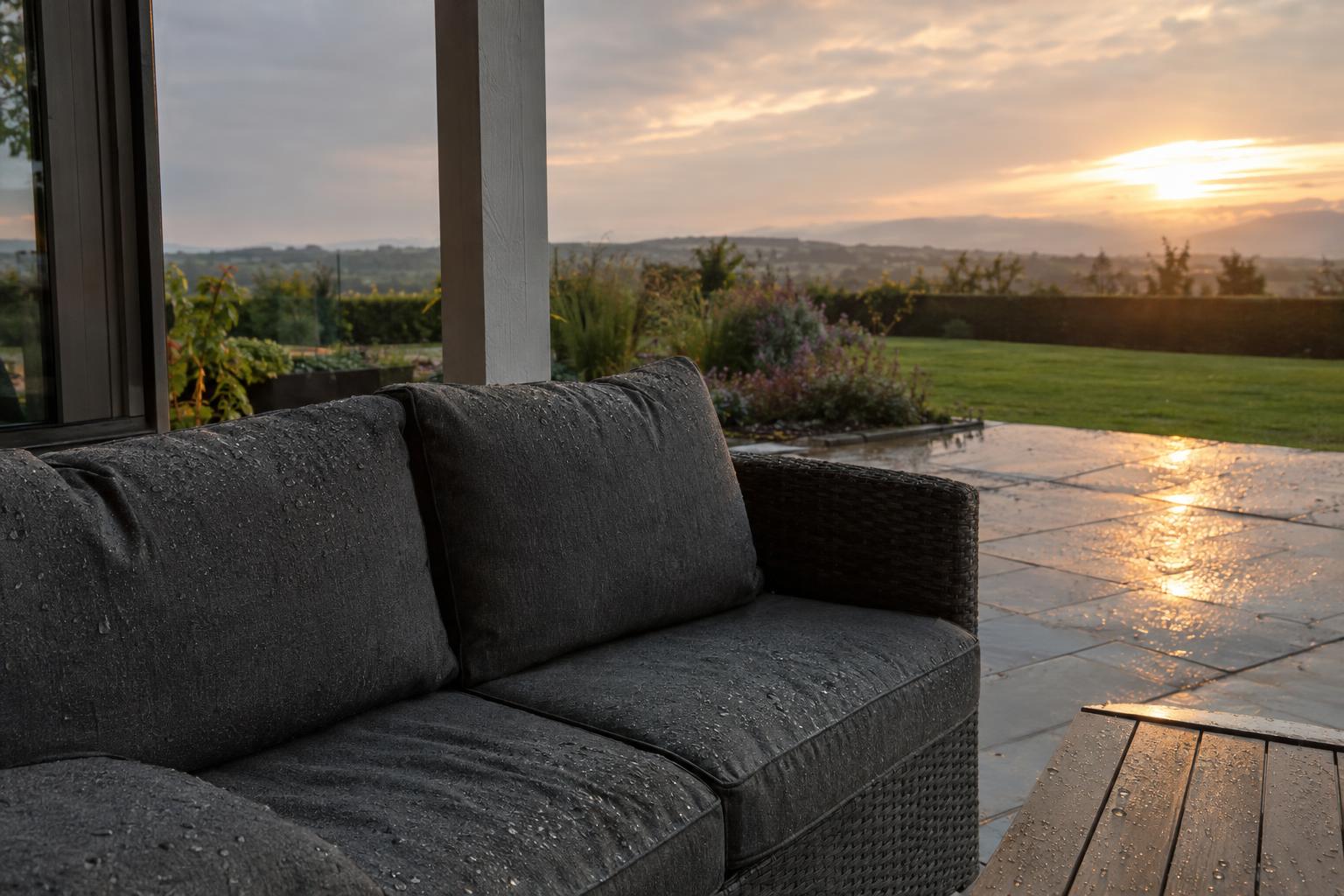
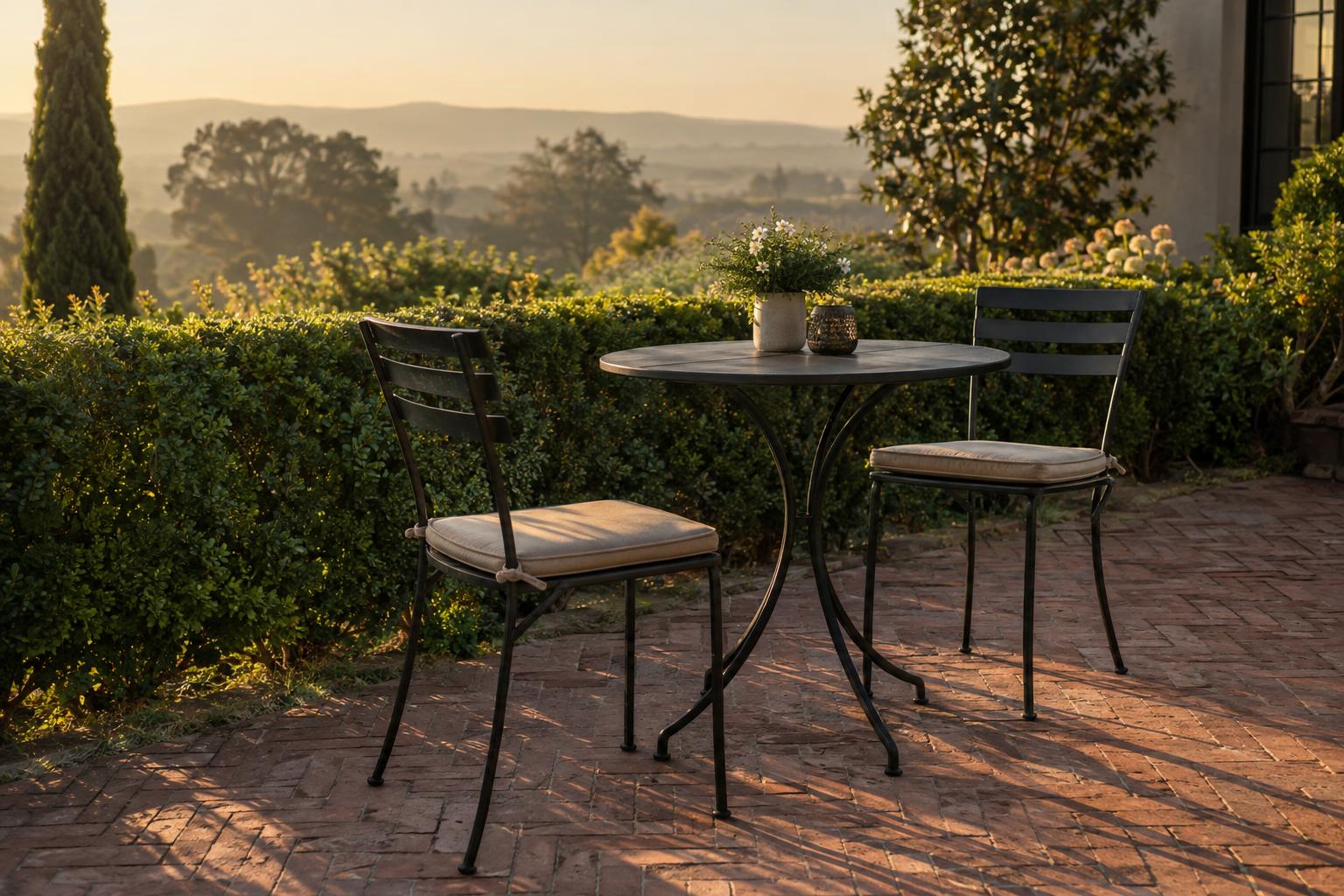

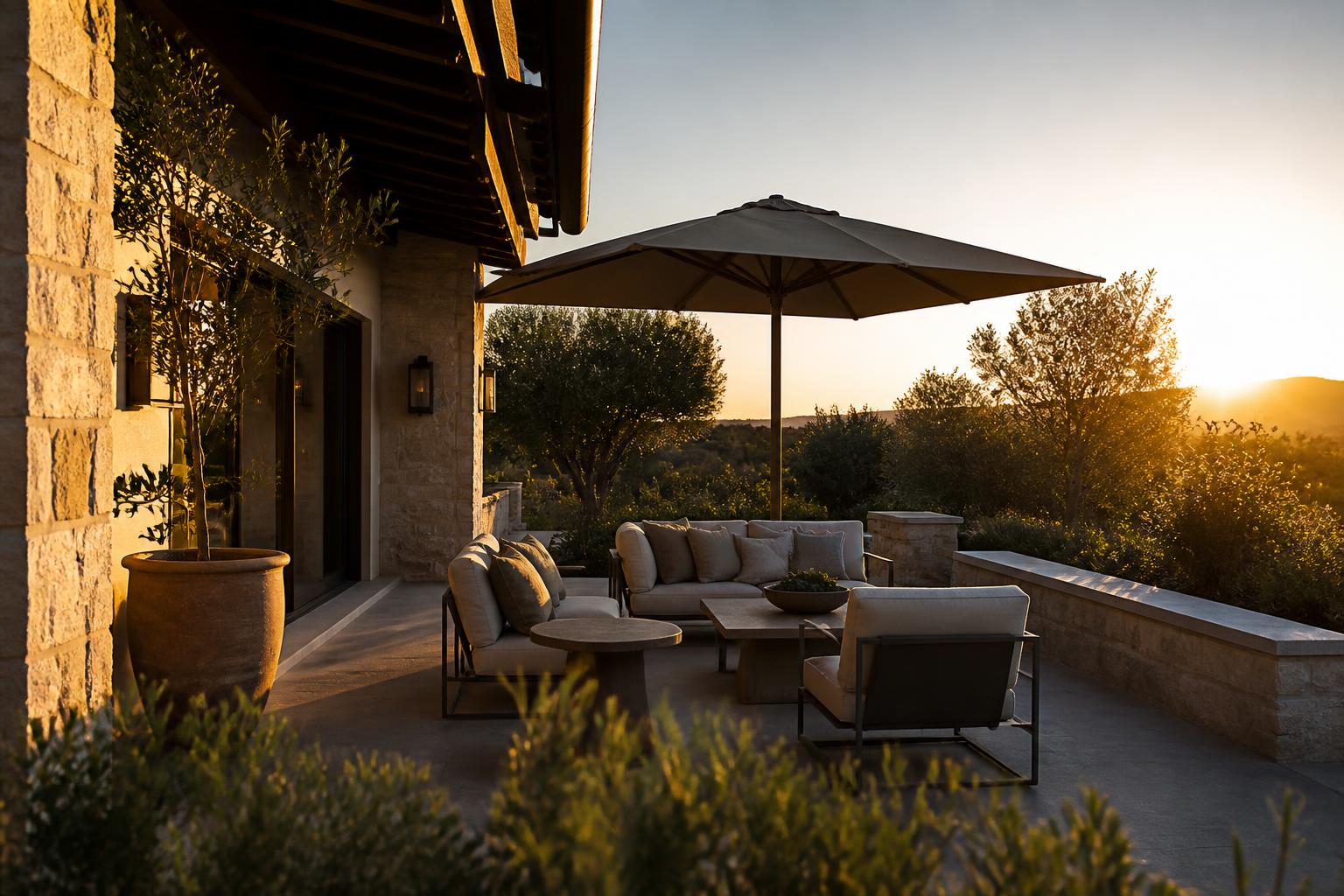
West-facing patio furniture has to survive a different kind of exposure than furniture on a shaded porch or an east-facing patio that only catches gentle morning sun. From roughly 2 p.m. until sunset, a west-facing space in Charlotte takes the hottest, most direct light of the day, and in a Carolinas summer that means surface temperatures on dark cushions and metal arms that are genuinely uncomfortable to touch. Choosing the right frame material, fabric, and shade setup up front saves you from replacing cushions and refinishing frames every couple of seasons.
Before you shop, it helps to understand exactly what afternoon sun does to different materials, because the failure points are different for metal, wicker, and fabric.
Why Afternoon Exposure Is Different From Morning Sun
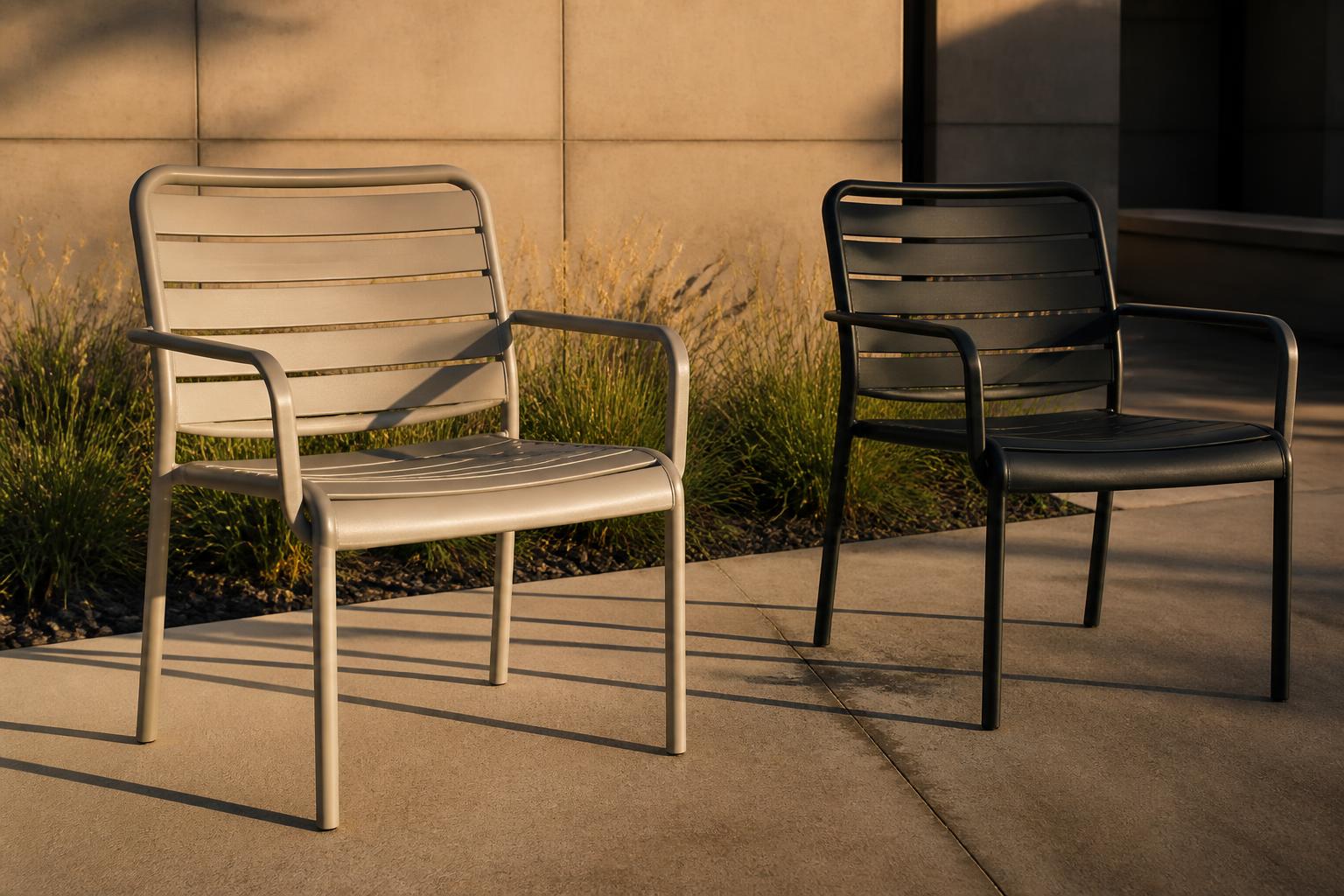
A west-facing patio doesn’t just get more total sun than an east- or north-facing one — it gets sun at the hottest part of the day, when air temperatures in Charlotte regularly climb into the low 90s from June through August. That combination of high air temperature and direct, low-angle sun raises surface temperatures on furniture well above ambient air. Dark powder-coated aluminum or black wicker resin left in full afternoon sun can reach surface temperatures 40 to 60 degrees above the surrounding air, which is why a black armrest that feels fine at 11 a.m. can be uncomfortable to touch by 4 p.m.
The length of that exposure matters for UV, too. A west-facing patio keeps taking direct sun for hours through the afternoon, and it’s UV — not just heat — that breaks down fabric dyes and degrades resin wicker and plastic components over time. A cushion that sits in full west sun for four to six hours a day will show fading noticeably sooner than the same cushion on a covered porch, even if both experience similar daytime high temperatures. This is the core reason material and fabric selection matters more on a west-facing patio than almost any other orientation, and it’s worth reading through our UV protection guidance for outdoor furniture before you buy anything for a sun-heavy space.
Frame Materials: Light Finishes Over Dark, and Why Metal Behaves Differently Than Wood or Resin
For a west-facing patio, frame color and material both affect how comfortable the furniture is to actually use in the late afternoon. Powder-coated aluminum in a light taupe, driftwood gray, or white finish stays noticeably cooler to the touch than the same frame in matte black or bronze, because darker pigments absorb more solar radiation. If you’re set on a dark finish for style reasons, plan on keeping those pieces at least partially shaded, or expect to avoid touching bare metal arms and tabletops between about 1 and 6 p.m. in mid-summer.
Aluminum and Cast Aluminum
Powder-coated aluminum is the most common frame material for a reason: it’s lightweight, rust-resistant, and the powder coat itself resists UV chalking better than raw paint. Cast aluminum, used for heavier dining sets and sectionals, holds up structurally to heat cycling, unlike wood.
All-Weather Wicker and HDPE Poly Lumber
Resin wicker and HDPE (recycled poly lumber) are both engineered to resist UV, but quality varies — lower-grade resin can become brittle and discolor within two to three summers of heavy west sun exposure, while UV-stabilized HDPE and better resin weave products are formulated to hold color for years. Ask about the UV inhibitor rating when you’re comparing options, and see our breakdown of materials that stay cooler in direct sun for a side-by-side look at aluminum, resin, and teak performance.
Teak
Teak handles heat and UV naturally well because of its high oil content, and it doesn’t transfer heat the way metal does, making it comfortable to sit on even after hours of direct sun. It will silver over time regardless of exposure, which is a natural weathering process rather than damage.
Fabric Selection: Solution-Dyed Acrylics and Fade-Resistant Weaves
Cushion fabric is usually the first thing to show wear on a west-facing patio, and it’s also the easiest thing to get right if you know what to look for. Solution-dyed acrylic fabrics, including Sunbrella and comparable performance brands, have color pigment added to the fiber before it’s spun rather than printed or dyed onto finished fabric afterward, which is why they resist fading even under sustained direct sun. Solution-dyed acrylics are built specifically to resist color loss from UV exposure, which is the single biggest fabric failure point on a west-facing exposure, and Sunbrella’s fabric care guidance is a good reference for keeping them looking their best.
Avoid printed or piece-dyed outdoor fabrics for a patio that gets four or more hours of direct afternoon sun; the color sits on the surface of the fiber rather than running through it, so fading and streaking show up faster, sometimes within a single season of heavy exposure. Lighter and mid-tone fabric colors also tend to show fade less obviously than deep navy, black, or red, simply because the contrast between faded and unfaded fiber is less visible. For a deeper comparison of fabric options rated specifically for Carolinas sun and humidity, take a look at our guide to fade-resistant outdoor fabrics for the Carolinas.
Beyond fabric choice, rotating cushions every 4 to 6 weeks during peak summer evens out UV exposure across all sides and seams, and standing cushions on edge or bringing them under cover during stretches of consecutive 90-plus-degree days slows fading meaningfully. A quick rinse with a garden hose every 2 to 3 weeks, followed by air drying in the shade, keeps pollen and grit from grinding into the fabric weave and accelerating wear.
Shade Strategy: Umbrellas, Angle, and Layout

A cantilever or market umbrella with a 9- to 11-foot canopy diameter covers a standard 4-seat dining table or a small seating group and can be angled to track the sun as it moves lower in the sky through the afternoon. Because west sun comes in at a low angle rather than straight overhead, a center-pole umbrella often needs to be paired with a taller pole or positioned with the canopy tilted toward the west to actually block the light hitting seat level, rather than just shading the tabletop.
Layout matters as much as the umbrella itself. Placing a sectional or dining set 3 to 5 feet from the house on the east side of the patio, if your layout allows it, lets the house itself provide shade during the harshest 3 to 6 p.m. window. If your patio backs up to a fence or pergola, a retractable shade sail or louvered pergola cover angled to block low western light adds several more usable hours to the space without needing to move furniture at all. For patios with no fixed shade structure, keep furniture on furniture dollies or choose lighter aluminum pieces you can realistically slide into a shaded corner as the sun moves — a heavy cast-iron dining table isn’t practical to relocate daily, but a lighter powder-coated aluminum set is.
Cushion Storage and Seasonal Care for Heavy Sun Exposure
On a west-facing patio, plan on more frequent cushion care than you would on a shaded or north-facing space. Wipe down frames weekly during peak summer to remove pollen and sunscreen residue, both of which can stain fabric and etch into resin finishes if left for weeks. Store cushions indoors or in a deck box during any stretch of severe weather, and definitely before the first hard freeze — repeated freeze-thaw cycles combined with UV-degraded fibers make fabric more prone to cracking at the seams.
Reapply a fabric protectant spray once or twice a year, typically in spring before pollen season and again in mid-summer, to restore water and stain repellency that heavy UV exposure gradually breaks down. If a cushion has faded noticeably on one side, flipping and rotating it going forward — rather than waiting until it’s uniformly worn — extends usable life by another season or two in most cases.
Frequently Asked Questions
Does a west-facing patio really need different furniture than other orientations?
Not entirely different, but the priorities shift. You’ll want to weight your decision more heavily toward light-colored frames, solution-dyed fabrics, and built-in or portable shade than you would for a shaded porch or an east-facing patio that only gets gentle morning light. The furniture itself doesn’t have to be a different category, just built and finished for heavier UV and heat exposure.
How much hotter does dark furniture get in direct west sun?
Dark powder-coated metal or black resin can run 40 to 60 degrees hotter than the surrounding air temperature when sitting in full afternoon sun, compared to a much smaller temperature rise for light gray, taupe, or white finishes. On a 92-degree Charlotte afternoon, that can mean a black armrest reaching well over 130 degrees, uncomfortable to touch without a cushion or sleeve.
Will an umbrella alone protect furniture on a west-facing patio?
An umbrella helps significantly but rarely covers everything, since low-angle afternoon sun sneaks in under most canopies unless the umbrella is tilted or paired with a taller pole. Combining an umbrella with a shaded layout near the house, a pergola cover, or seasonal cushion rotation gives more complete protection than shade alone.
How often should I replace cushions on a heavily sun-exposed patio?
With solution-dyed acrylic fabric and regular rotation and cleaning, cushions on a west-facing patio typically hold color and shape well for 5 to 8 years. Lower-grade printed fabrics in the same exposure often show visible fading within 1 to 2 summers, which is the main reason fabric quality matters more here than on shadier patios.
If you’re furnishing a west-facing patio in Charlotte and want to see how different frame finishes and Sunbrella fabric options actually feel and hold up before you buy, stop by our showroom to compare options in person. Our team can walk you through frame and fabric combinations suited to your patio’s exposure and help you plan a layout that makes the most of your shade. Call us at (704) 274-3222 or come see the collection in Charlotte.